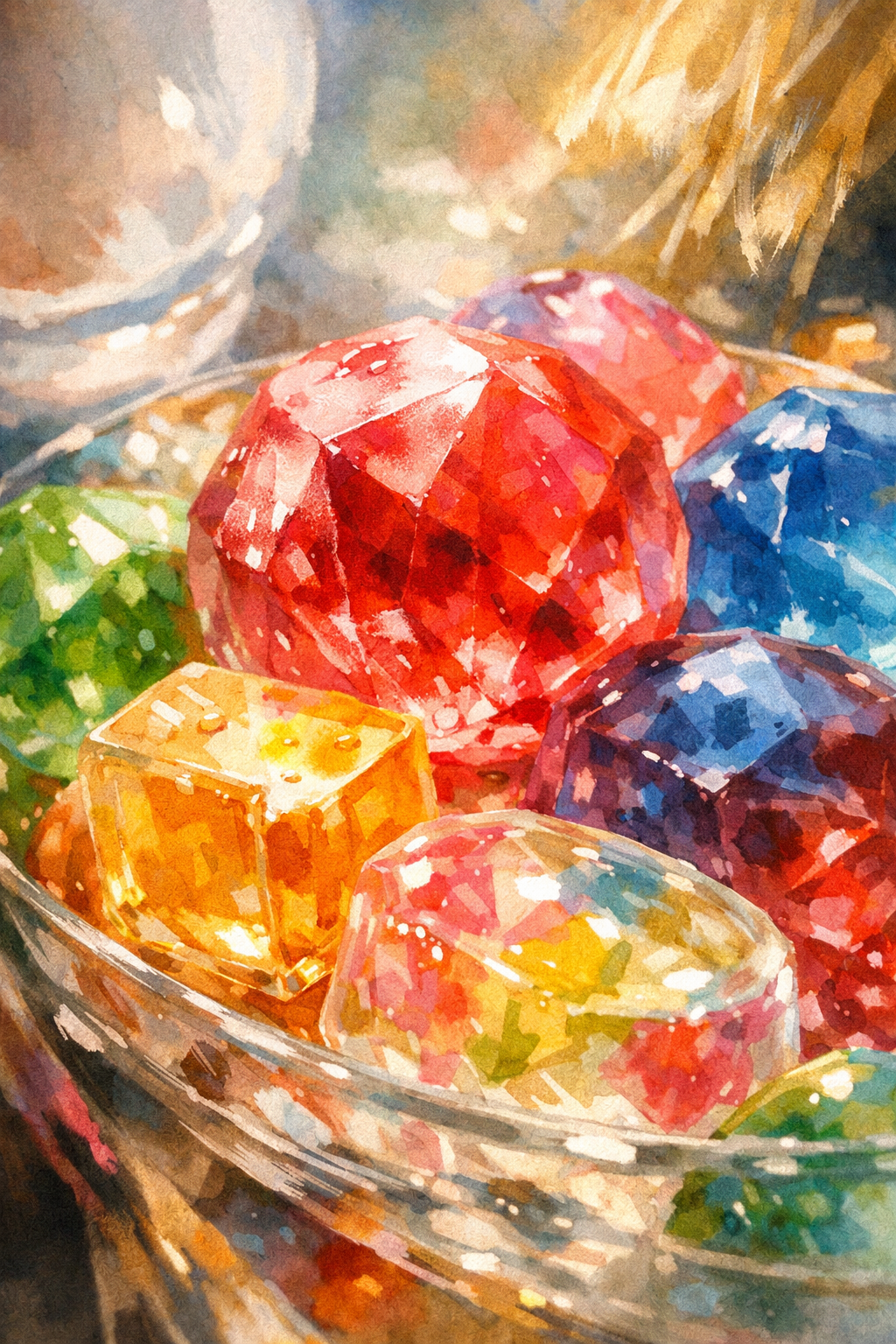
Prismatic Sugared Gems
Critique
1. Introduction The artwork is a vibrant watercolor still life featuring Kohakutou, a traditional Japanese crystal candy often described as "edible gems." Centered in a glass bowl, these multi-faceted candies are rendered with a focus on luminous color and the complex refraction of light. The painting utilizes the inherent transparency and fluid movement of watercolor to capture the contrast between the candy's dry, crystalline exterior and its succulent, jelly-like interior. This critique examines the interplay of material texture and light, which serves as the primary thematic focus of this visually striking piece. 2. Description The composition is crowded with jewel-like candies in a kaleidoscope of colors, including deep ruby, sapphire blue, and vibrant amber. Each piece is cut with sharp geometric facets that reflect and refract ambient light, creating intricate internal patterns and brilliant highlights. The candies are held within a clear glass bowl, its rim providing a subtle, curved boundary in the foreground. The background is softly suggested with warm, golden washes that evoke a sunlit interior, allowing the brilliant saturation of the candies to dominate the viewer's attention. 3. Analysis The color palette is exceptionally bold, utilizing high-chroma pigments that create a sense of dynamic energy throughout the frame. The artist skillfully employs the transparency of the medium to mimic the translucent nature of the sugar crystals, where colors bleed and blend into one another within each facet. Sharp white highlights, achieved through the preservation of the paper's surface, emphasize the hardness and clarity of the crystal edges. Light enters from the upper right, casting colorful shadows that incorporate complementary hues, further enhancing the chromatic richness of the overall arrangement. 4. Interpretation and Evaluation This work can be interpreted as an aesthetic exploration of the microcosms found within everyday objects. By reimagining traditional confectionery as geometric crystals, the artist elevates a simple sweet to the status of a precious object of contemplation. The technical execution is superb, particularly in the handling of watercolor to suggest varied textures—from the powdery matte finish of the dried sugar coating to the glossy depths of the inner gel. This original approach bridges cultural heritage with modern visual language, resulting in a composition that is both sophisticated and sensory-rich. 5. Conclusion While the initial impression is one of intense color, closer study reveals a masterful orchestration of light and a profound understanding of the watercolor medium's unpredictability. The artist succeeds in tackling the challenging themes of transparency and refraction with remarkable clarity. The piece ultimately offers a radiant spectacle that celebrates the hidden beauty of the mundane, inviting the viewer into a world of crystalline wonder. It stands as a highly accomplished work of contemporary still life, demonstrating excellence in technique, color theory, and compositional balance.
Same Subcategory
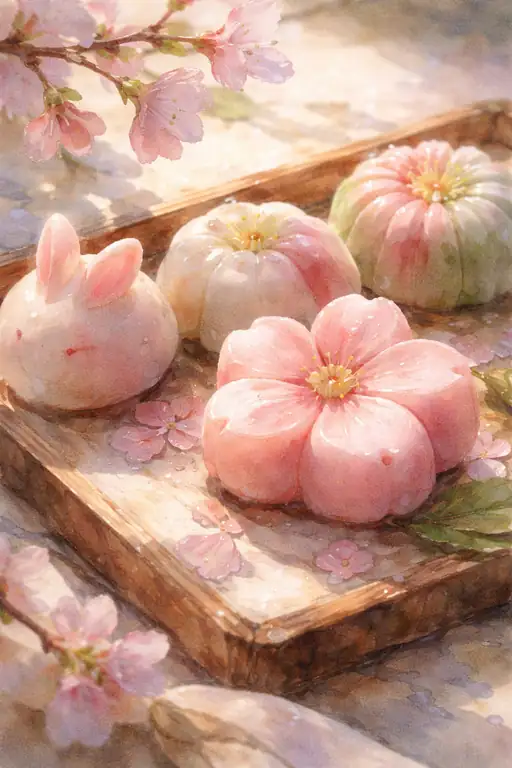 A Sweet Spring Reverie
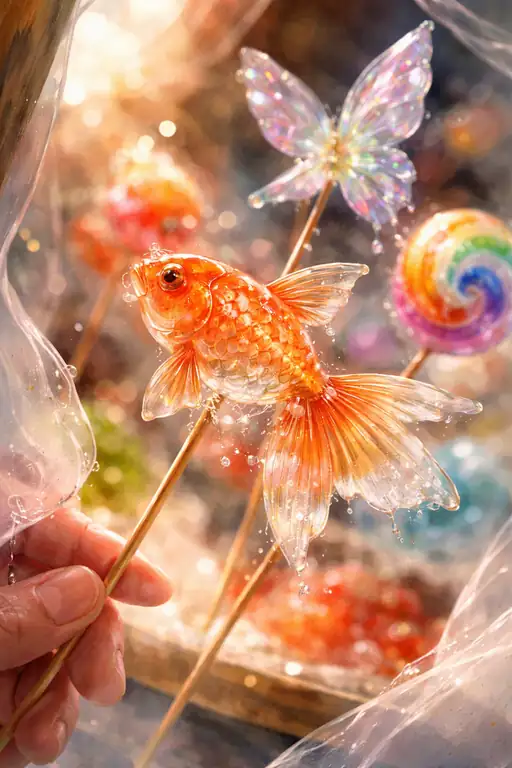 Golden Shimmering Sugar Goldfish
Similar Artworks
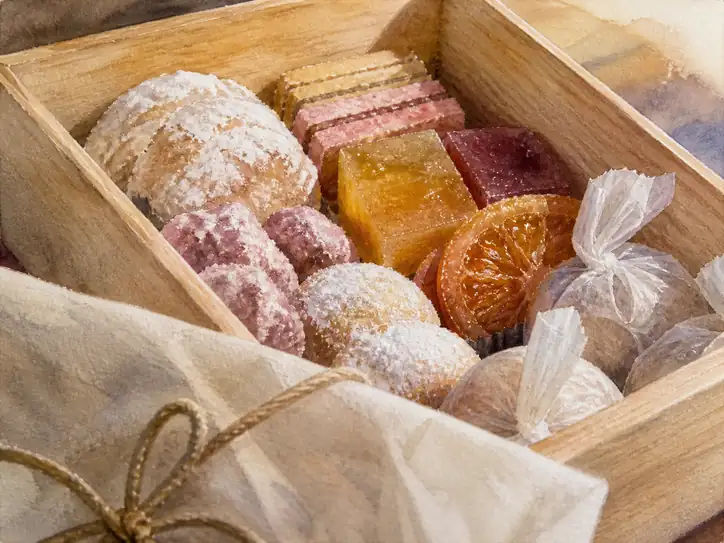 Gifts of Quiet Happiness
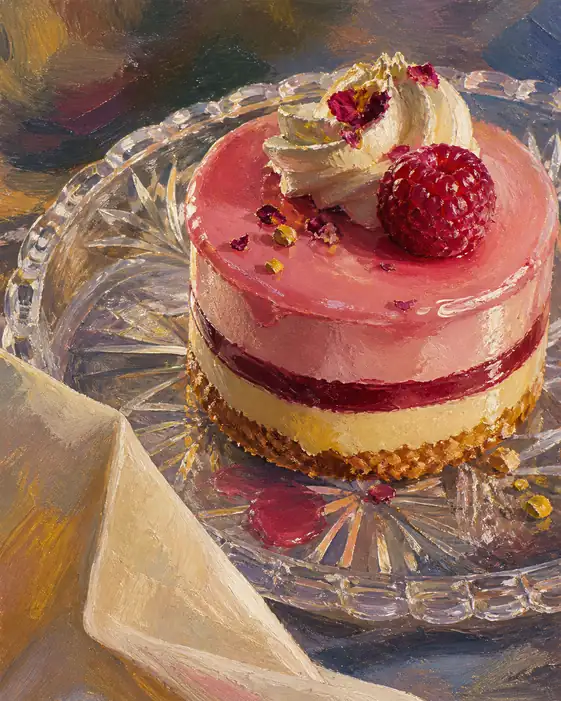 Raspberry Velvet Symphony
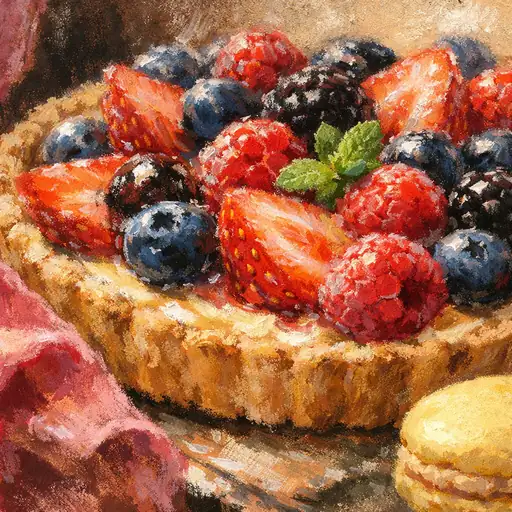 The Tactile Joy of Berry Abundance
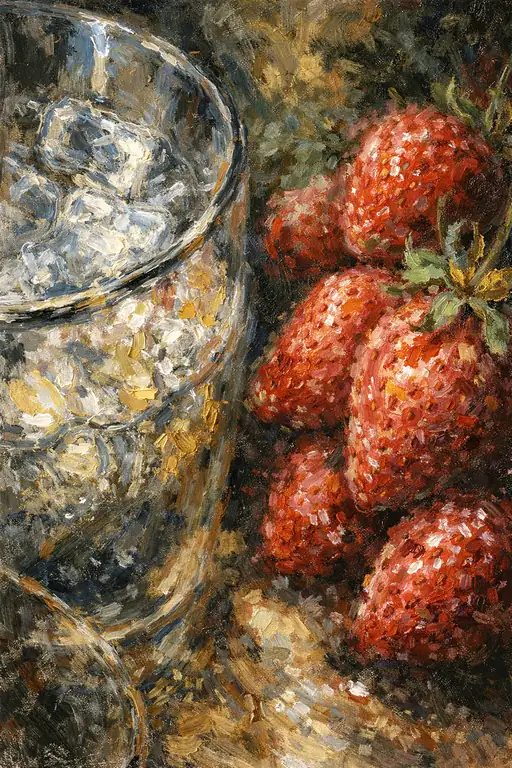 Frozen Sweetness in the Golden Light
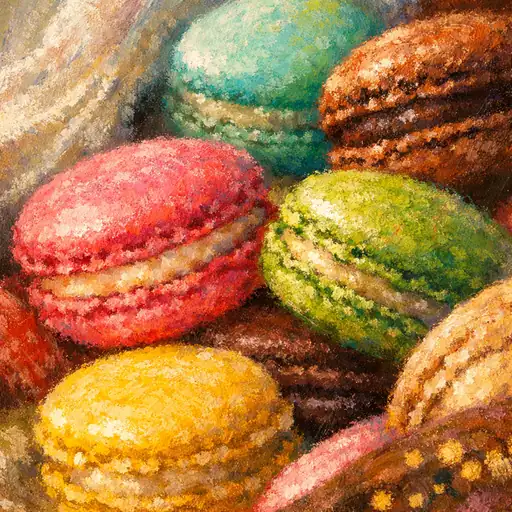 Rhapsody of Colorful Sweetness
 A Crystallized Garden Unfolding Under Summer's Breath
 Scent of Rainbows in Golden Prisms
 Fading Petals, Timeless Grace
 Symphony of Nature's Bounty
 A Whimsical Dance of Sweetness