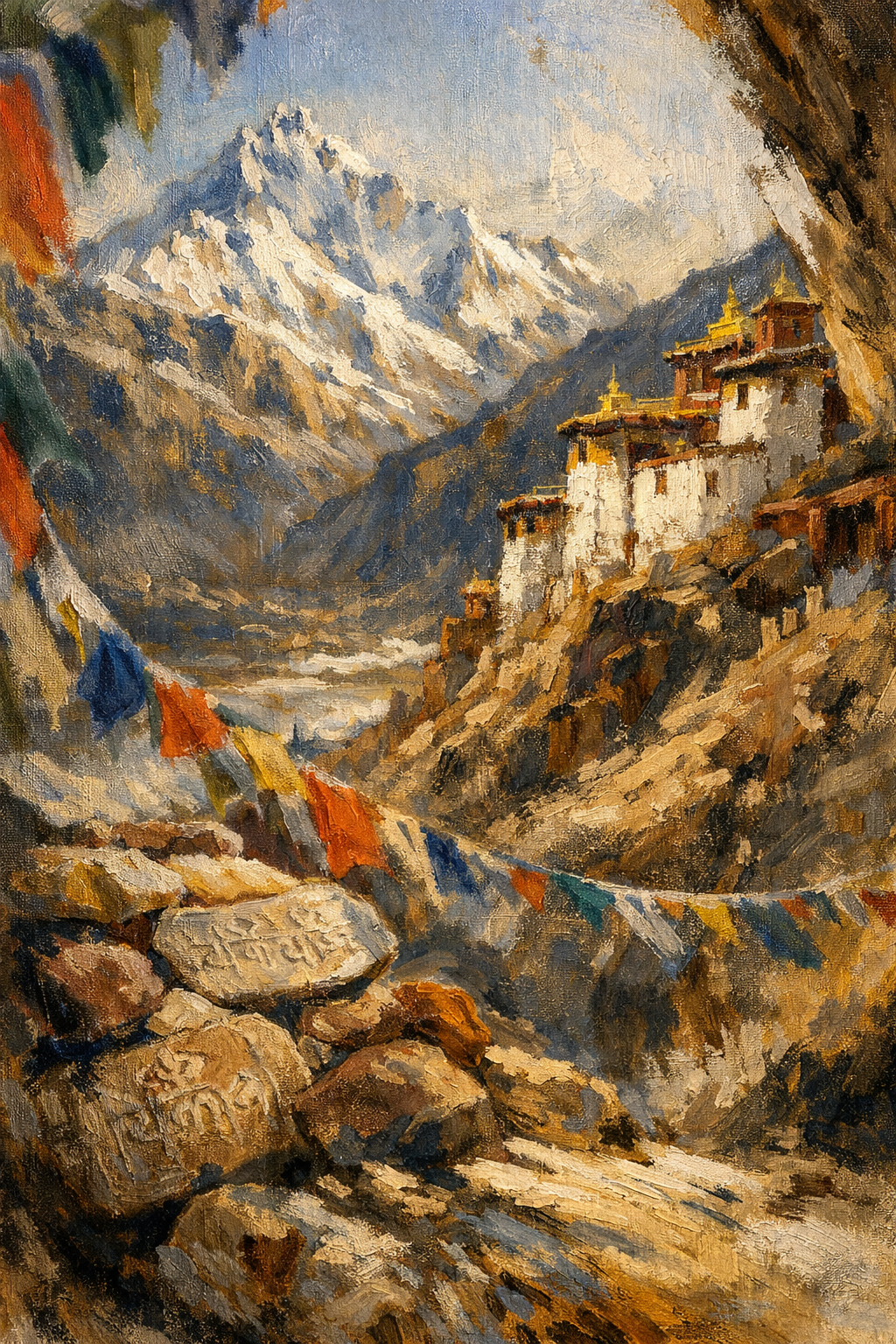
Whispers of the Wind and Snow
Critique
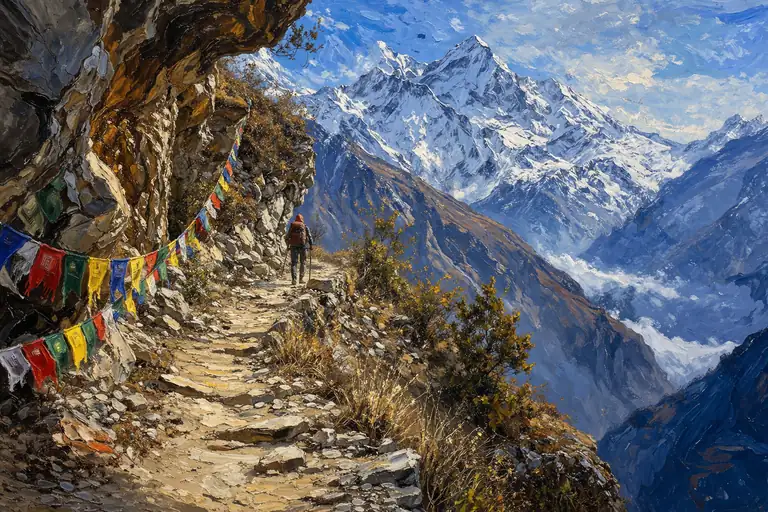
1. Introduction This powerful oil-on-canvas composition captures the spiritual and physical grandeur of a high-altitude mountain landscape, likely inspired by the Himalayan region. The artwork masterfully juxtaposes the raw, elemental force of the jagged peaks with the quiet, persistent presence of human faith. Through a robust application of impasto and a keen eye for atmospheric perspective, the artist creates a scene that is both a documentary-like record of a specific cultural setting and a profound meditation on the relationship between humanity and the sublime forces of nature. 2. Description The composition is dominated in the background by a towering, snow-capped mountain peak that pierces a clear cerulean sky. In the middle ground, a traditional Buddhist monastery, or gompa, clings tenaciously to a steep, rocky precipice, its whitewashed walls and golden-topped roofs gleaming in the sunlight. The foreground features a cluster of "mani stones," or rocks inscribed with sacred mantras, resting along a precarious mountain path. Interweaving through the scene are vibrant, multicolored prayer flags, known as lungta, that flutter in the wind, their bright primary colors contrasting sharply with the earthy browns and grays of the terrain. 3. Analysis The artist employs a vertical composition that leads the viewer’s eye upward from the heavy, grounded mani stones to the ethereal height of the snow-covered summit. The use of directional lighting from the upper right creates deep, dramatic shadows that emphasize the rugged topography of the cliffs and the intricate textures of the stone engravings. A saturated color palette is used, where the brilliance of the prayer flags provides a rhythmic visual counterpoint to the monochromatic white of the monastery and the distant snow. The heavy, gestural brushwork lends a sense of movement to the clouds and the flags, contrasting with the solid, immovable presence of the architecture and the mountains. 4. Interpretation and Evaluation This work serves as a moving tribute to the resilience of the human spirit in a harsh yet beautiful environment. The prayer flags and inscribed stones act as visual metaphors for the constant presence of prayer and the desire for spiritual elevation, which mirrors the physical ascent toward the peaks. Technically, the painting is exceptional in its ability to balanced chaotic energy with structural clarity. The artist succeeds in conveying the thin, crisp air of high altitudes through the clarity of the light and the sharpness of the contrasts. It is an outstanding example of how landscape painting can transcend mere geography to touch upon the metaphysical. 5. Conclusion Upon initial viewing, the painting strikes the observer with its immense scale and the stark beauty of its mountain setting. A deeper exploration reveals that the true subject is the enduring dialogue between the earthbound and the divine, articulated through the symbols of a living faith. The artwork successfully captures the awe-inspiring majesty of the peaks and the humble dignity of the mountain dwellings. Ultimately, the piece stands as a powerful testament to the quest for transcendence, concluding that the most profound human expressions are often found at the intersection of the formidable and the sacred.
Same Subcategory
Similar Artworks
 Winds of Prayer on the Silent Ridge
 Whispers of Wind and Faith on the High Peaks
 Echoes from the Misty Heights
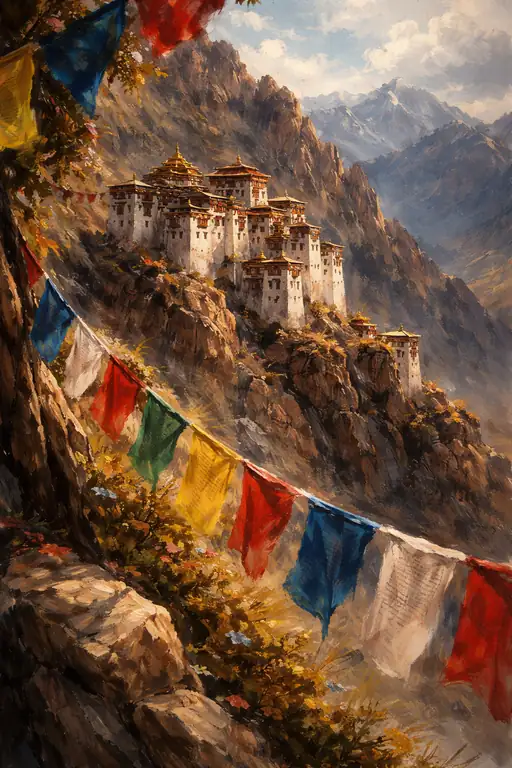 Sacred Serenity at the Edge of the Sky
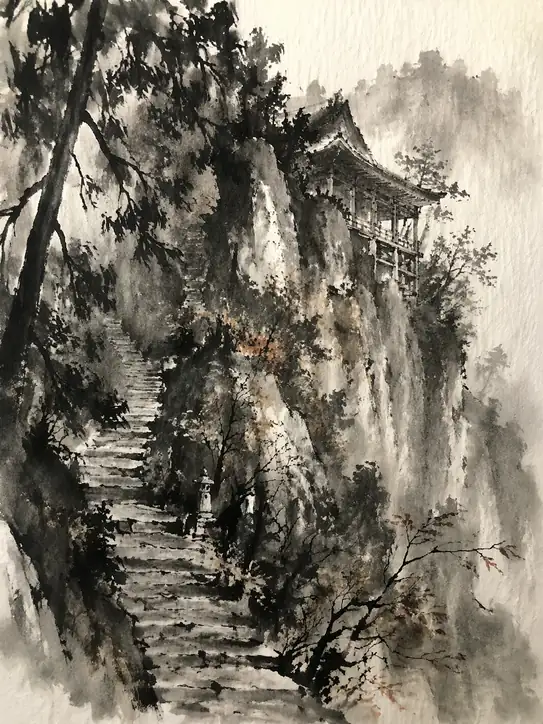 Springtime Symphony of Shadows and Cherry Blossoms
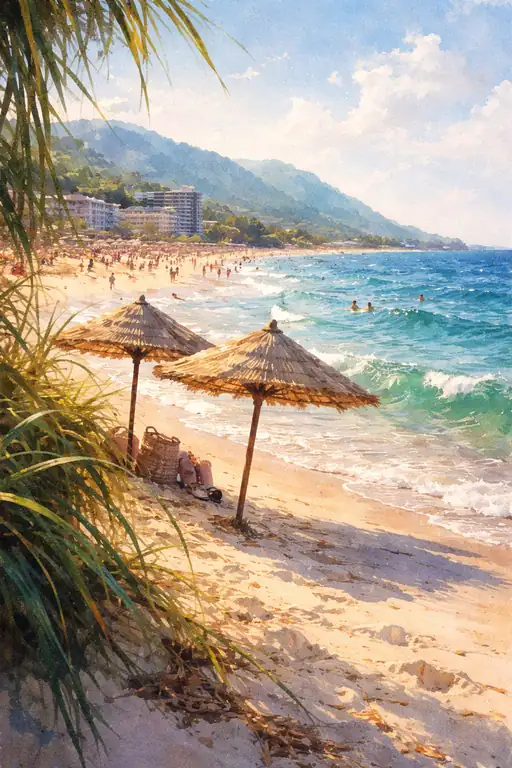 Sanctuary on the Misty Cliffs
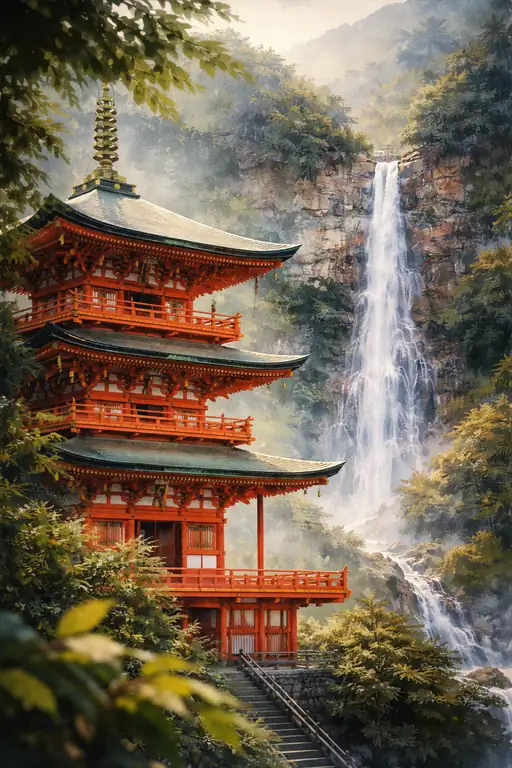 Harmony of the Sacred Falls
 Pilgrimage to the Indigo Valley
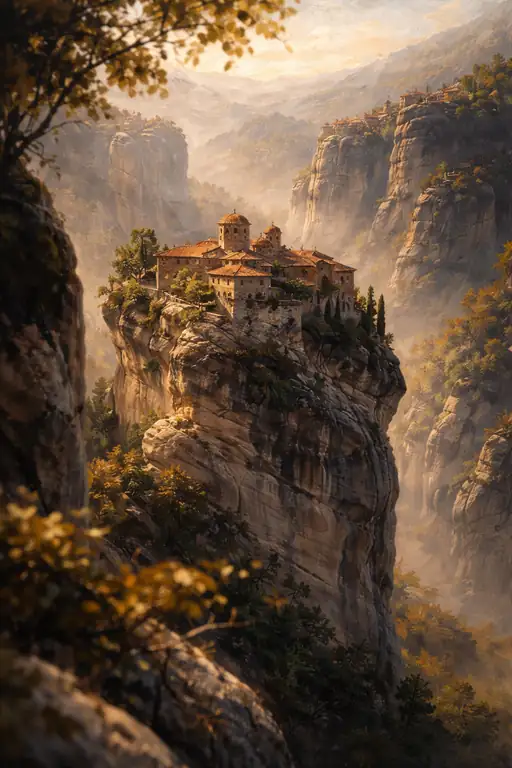 Sanctuary Above the Clouds
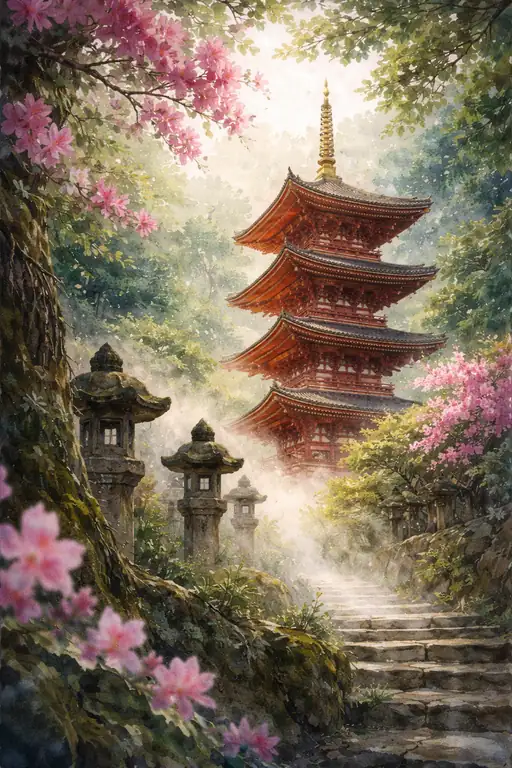 Sacred Pagoda Rising from the Morning Mist