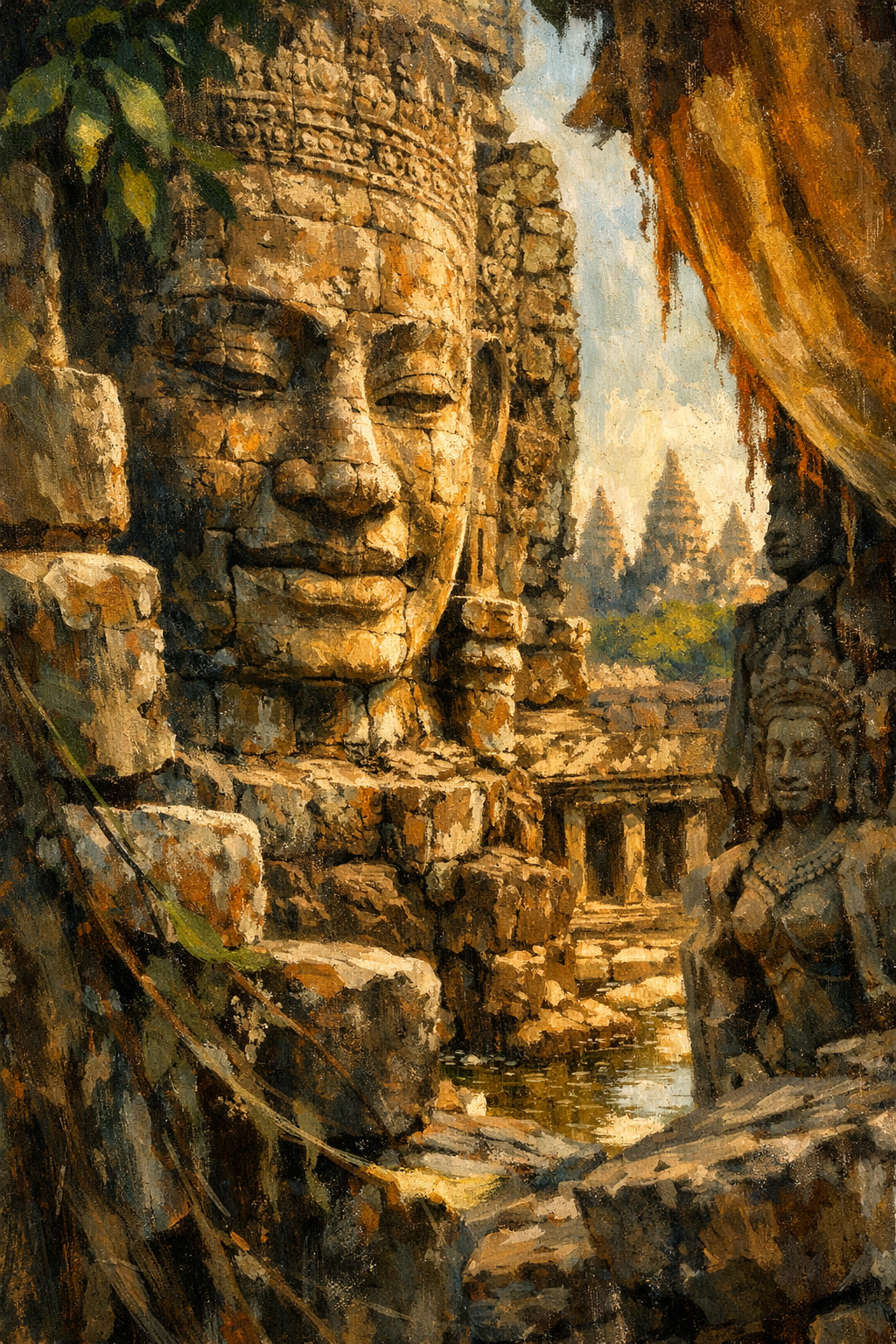
The Smiling Stone of Time
Critique
1. Introduction This powerful painting depicts the ancient ruins of an Angkor-style temple, characterized by a massive serene stone face. The work captures the haunting beauty of a civilization reclaimed by nature, where stone and vegetation are intricately intertwined. Through a masterful use of light and shadow, the artist explores the themes of time, spirit, and historical endurance. It invites the viewer to reflect on the quiet majesty of these weathered monuments. 2. Description The primary subject is a large, smiling face carved into a stone pillar, which dominates the left foreground. Thick vines and green foliage cling to the crumbly surface, suggesting the long passage of centuries. In the background, the distinctive towers of a larger temple complex rise against a bright sky, partially framed by a tattered orange cloth hanging from above. A small body of water at the base of the ruins reflects the golden highlights of the scene. 3. Analysis The artist employs a dramatic chiaroscuro effect, with a strong light source from the right side illuminating the facial features and the rough texture of the stone. The color palette is earthy, consisting of various shades of ochre, sienna, and deep browns, contrasted by the vibrant green of the leaves and the bright orange of the fabric. The vertical composition emphasizes the towering height of the ruins. The visible, textured brushwork mimics the eroded and porous nature of the ancient sandstone. 4. Interpretation and Evaluation The work succeeds in conveying the "Bayon smile" as a symbol of eternal peace amidst the decay of physical structures. The technical rendering of the weathered stone is exceptionally skilled, providing a tactile sense of weight and history. Furthermore, the inclusion of the orange cloth, possibly a monk's robe, adds a layer of contemporary spiritual significance and a splash of focal color. The piece is highly effective in evoking a sense of wonder and deep respect for the architectural achievements of the past. 5. Conclusion In conclusion, the painting offers a profound and visually rich interpretation of a significant cultural heritage site. The initial impression of overwhelming size and age is balanced by the delicate handling of light and the serene expression of the central figure. It serves as an evocative reminder of the cyclical relationship between human creation and the natural world. The finished work is both historically resonant and aesthetically masterful, leaving a lasting impression of tranquil strength.
Same Subcategory
 Enduring the Elements
Similar Artworks
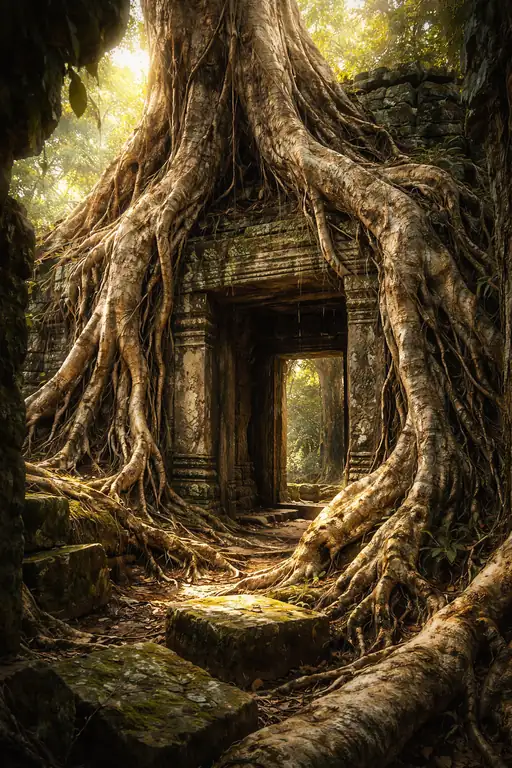 Nature's Embrace on Forgotten Architecture
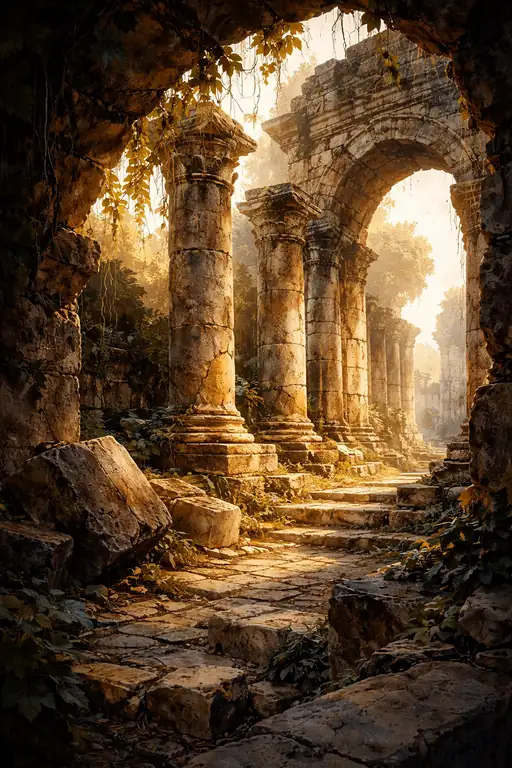 Nature's Reclamation: Echoes of Antiquity
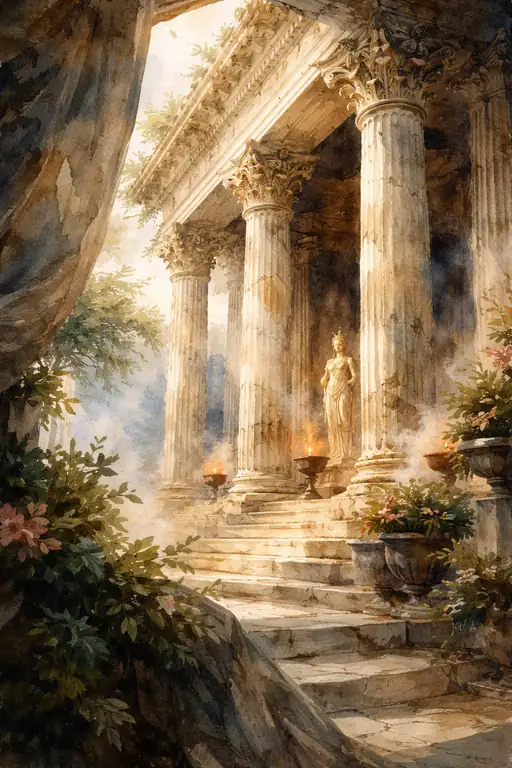 The Golden Shrine of Antiquity
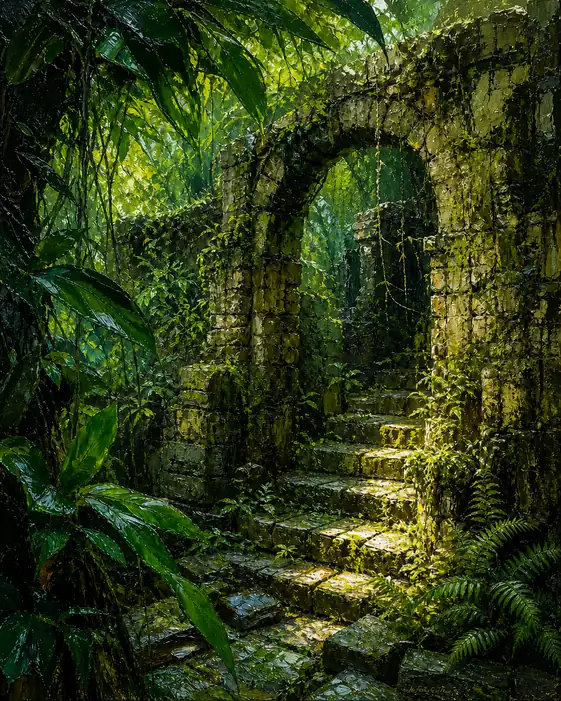 Whispers of an Overgrown Kingdom
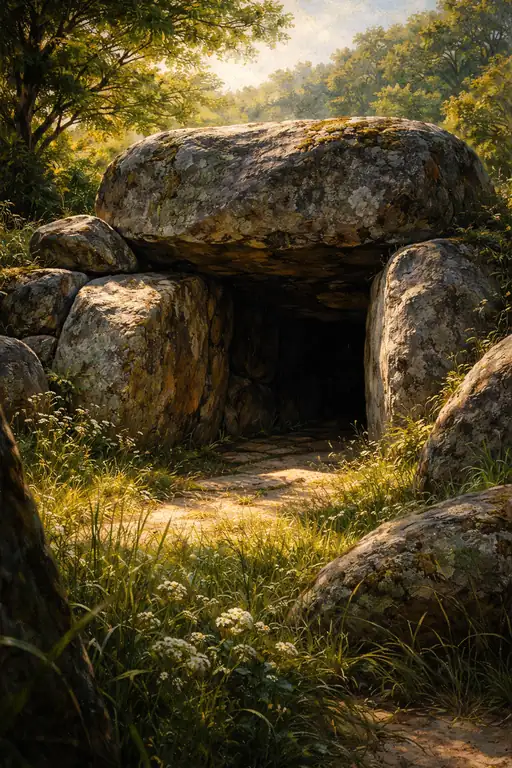 Echoes in the Mossy Stones
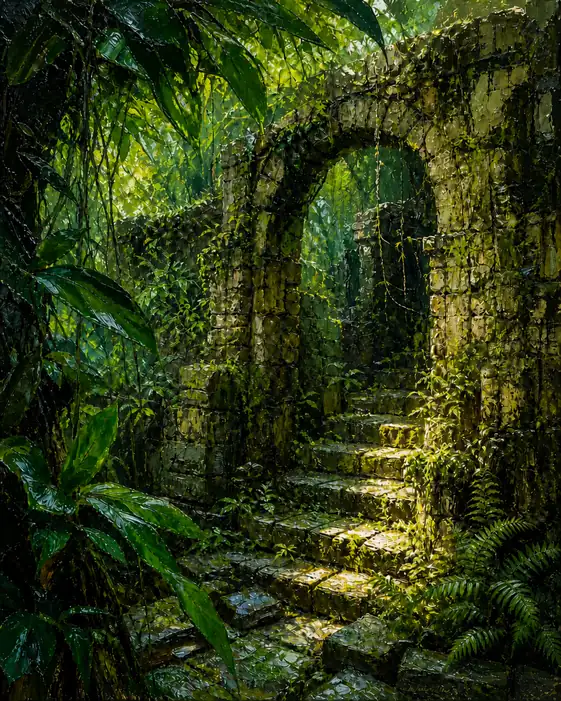 Threshold of the Emerald Silence
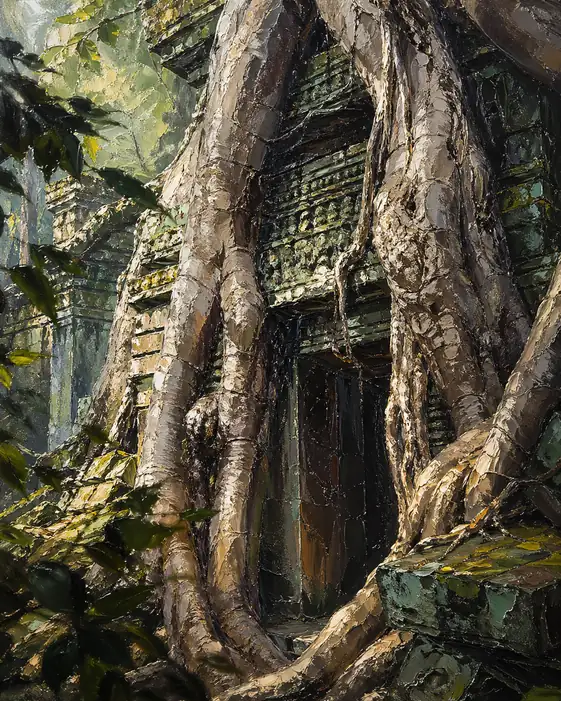 Eternal Embrace of the Jungle Root
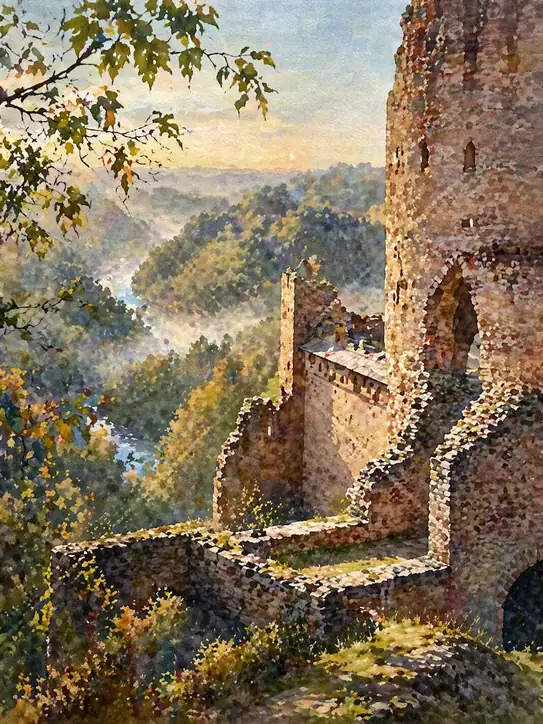 Fortress in the Mists
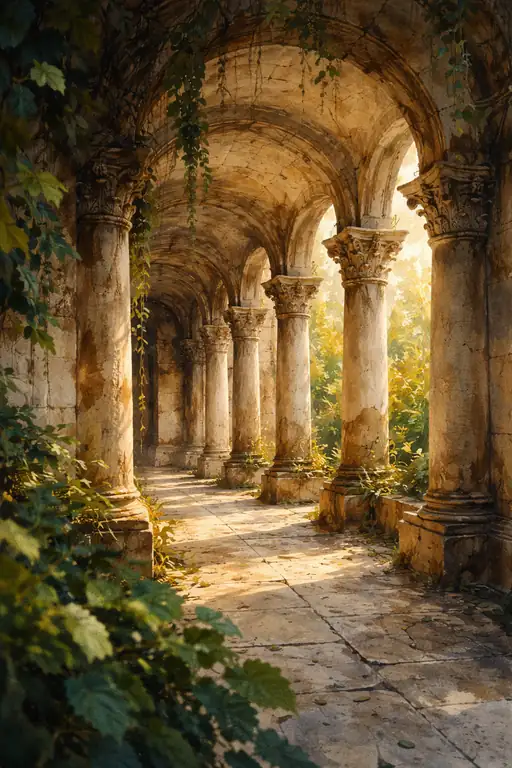 Nature's Quiet Reclaim
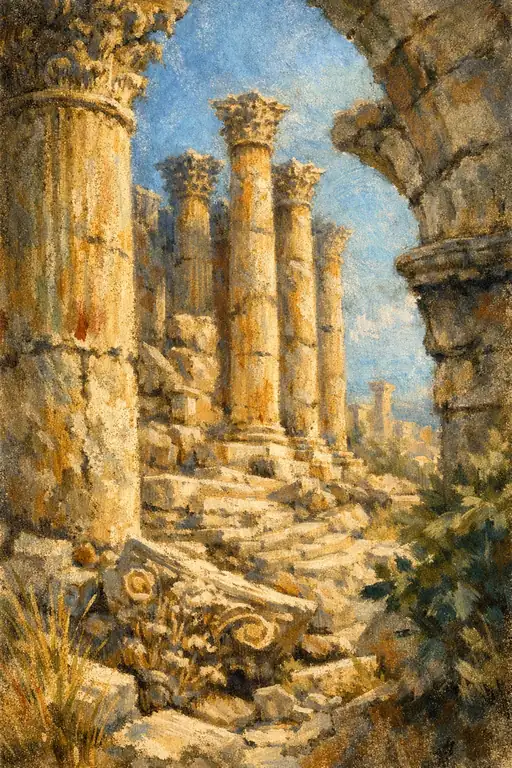 Timeless Grandeur: Weathered Corinthian Columns