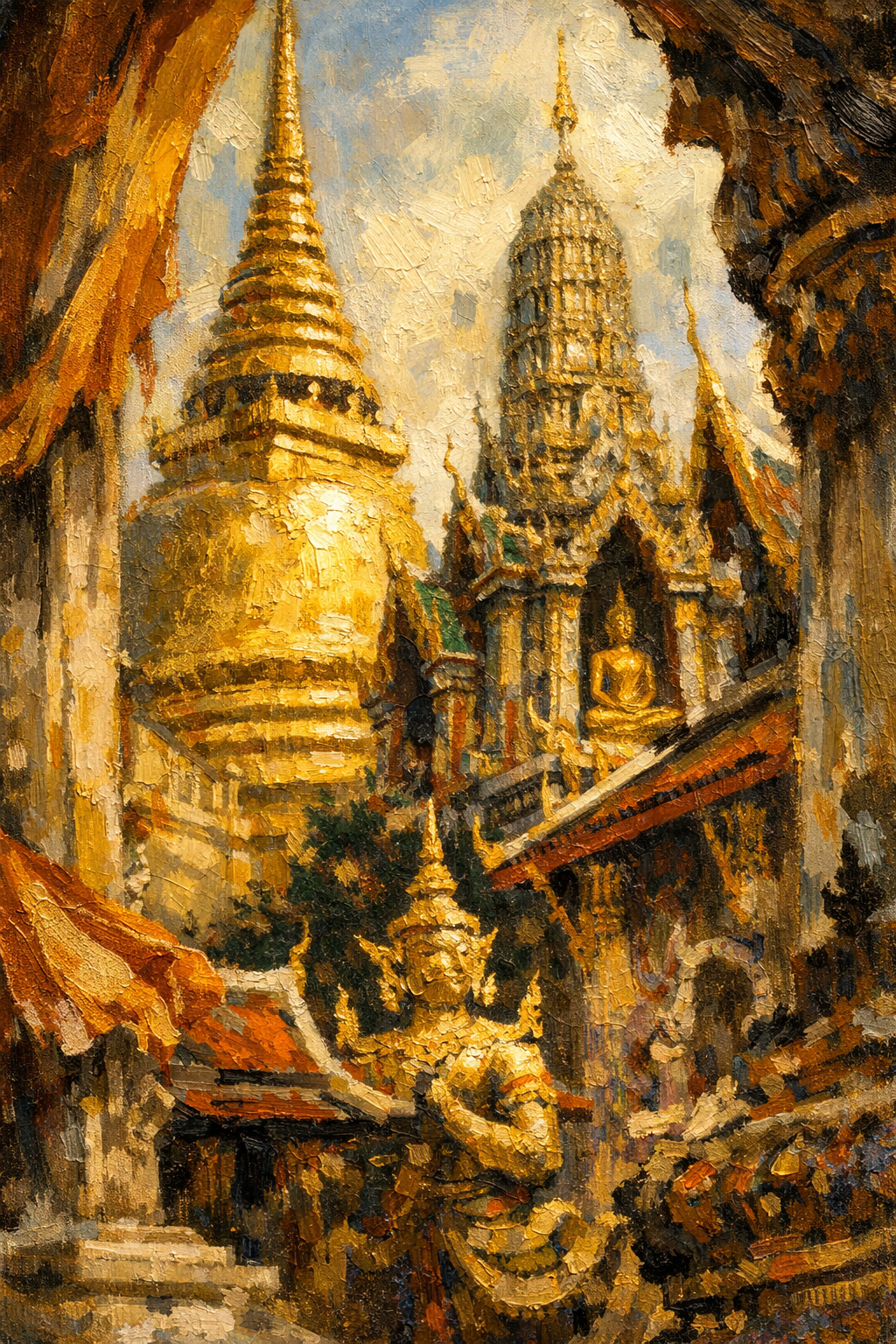
Golden Echoes of the Heavens
Critique
1. Introduction This oil painting presents a dramatic and majestic view of a Thai temple complex, likely inspired by the iconic architecture of Bangkok. The composition is characterized by its grand scale and the brilliant use of golden hues to depict the various chedis and ornate structures. Through a highly textured and expressive application of paint, the work captures the spiritual radiance and cultural richness of this sacred space. 2. Description The vertical canvas is dominated by several towering golden stupas that reach toward a bright, sunlit sky. In the middle ground, a Buddha statue is visible within an architectural niche, while a guardian figure stands prominently in the lower foreground. The structures are adorned with intricate details, rendered through bold strokes of yellow, orange, and earth tones. The surrounding buildings and framing elements are depicted with darker, more shadowed colors, highlighting the luminosity of the central golden monuments. 3. Analysis The artist employs an intense impasto technique, where thick layers of paint create a physical topography on the surface of the canvas. This heavy texture effectively mimics the weathered yet glittering surfaces of the temple's architectural ornaments. The color palette is centered on a range of golds and ambers, contrasted with deep blues in the sky and dark browns in the shadows. The lighting appears to emanate from within the golden structures themselves, giving the entire scene a divine and transcendent quality. 4. Interpretation and Evaluation The work succeeds in conveying the awe-inspiring atmosphere of a religious site through its emphasis on light and materiality rather than precision. By utilizing such a vigorous painterly style, the artist captures the movement of light across the complex surfaces, suggesting a living, breathing spiritual environment. The composition is masterfully framed, leading the viewer's eye upwards through the layers of architecture toward the heavens. It represents a powerful fusion of traditional subject matter and modern, expressive technique. 5. Conclusion An initial impression of shimmering gold gradually gives way to an appreciation of the complex interplay between texture, light, and shadow. The painting effectively summarizes the grandeur of Thai ecclesiastical architecture while imbuing it with a unique emotional resonance. It stands as a vibrant and technically assertive celebration of cultural heritage and spiritual devotion, leaving a lasting impression of brilliance and serenity.
Same Subcategory
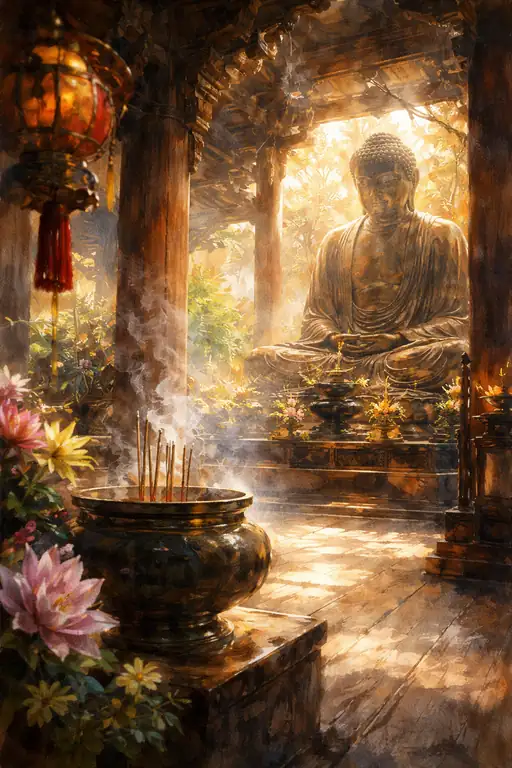 Incense and the Golden Zen
 Silent Prayers Under the Sacred Canopy
Similar Artworks
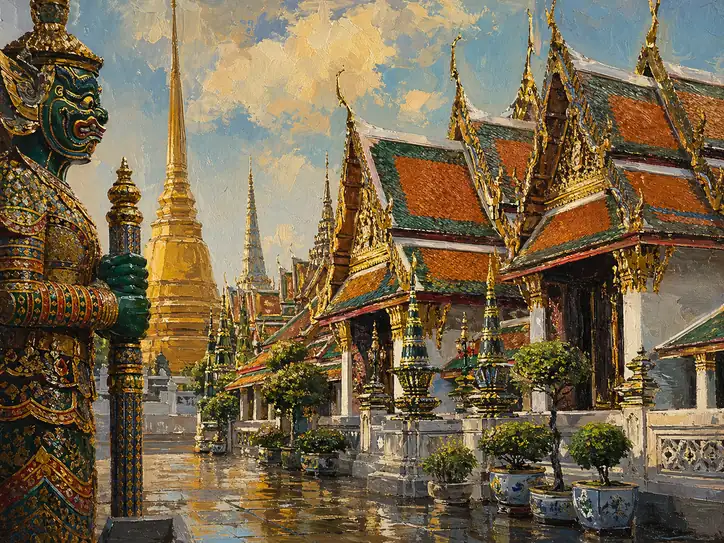 Guardian of the Golden Soul
 Golden Echoes of Devotion
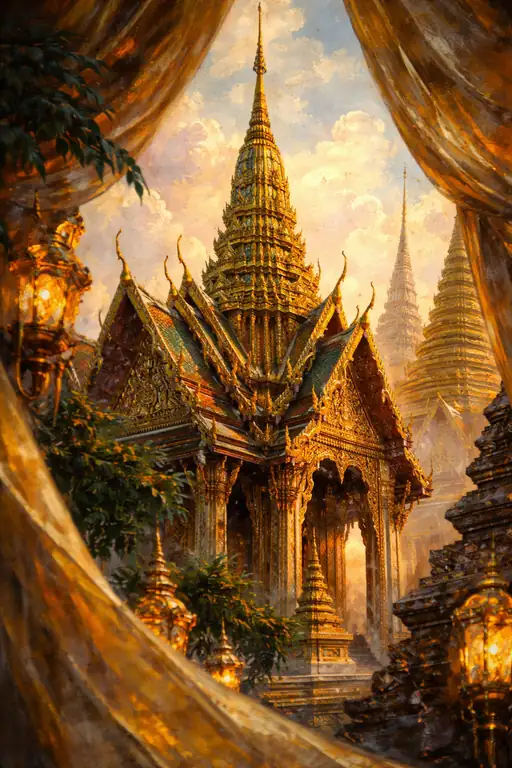 Glimmering Portal to the Divine
 Breath of the Winds: The Golden Stupa's Radiant Prayer
 Ascending Splendor Under Violet Skies
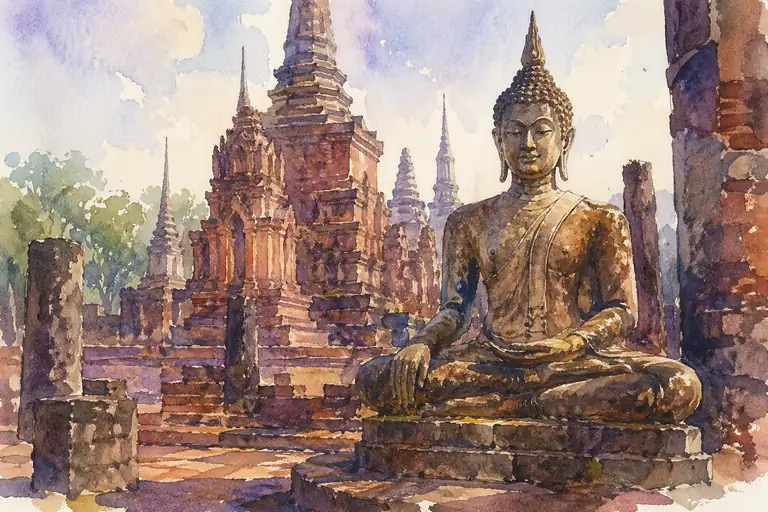 Stillness Across the Ages
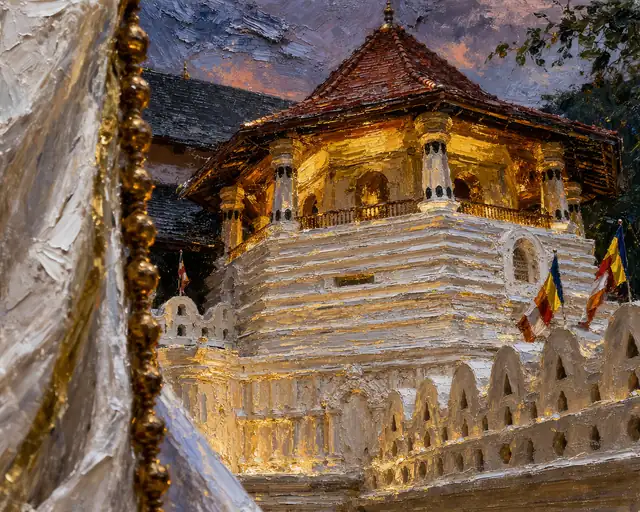 Night Light of the Sacred Tooth\n
 Silence of the Thousand Pagodas in the Golden Mist
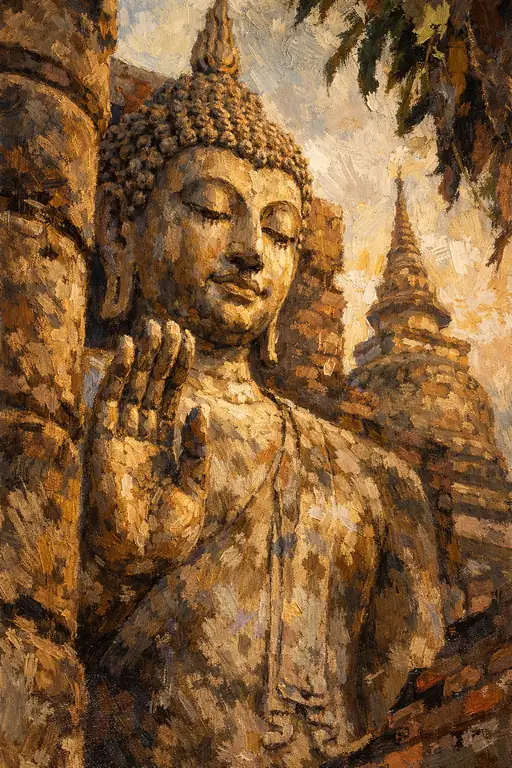 The Serene Gaze of Ancient Enlightenment
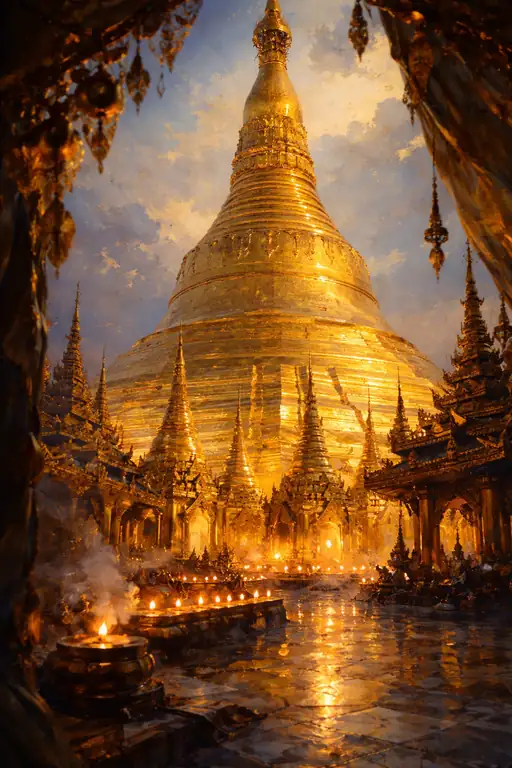 Luminous Devotion in Golden Reflections