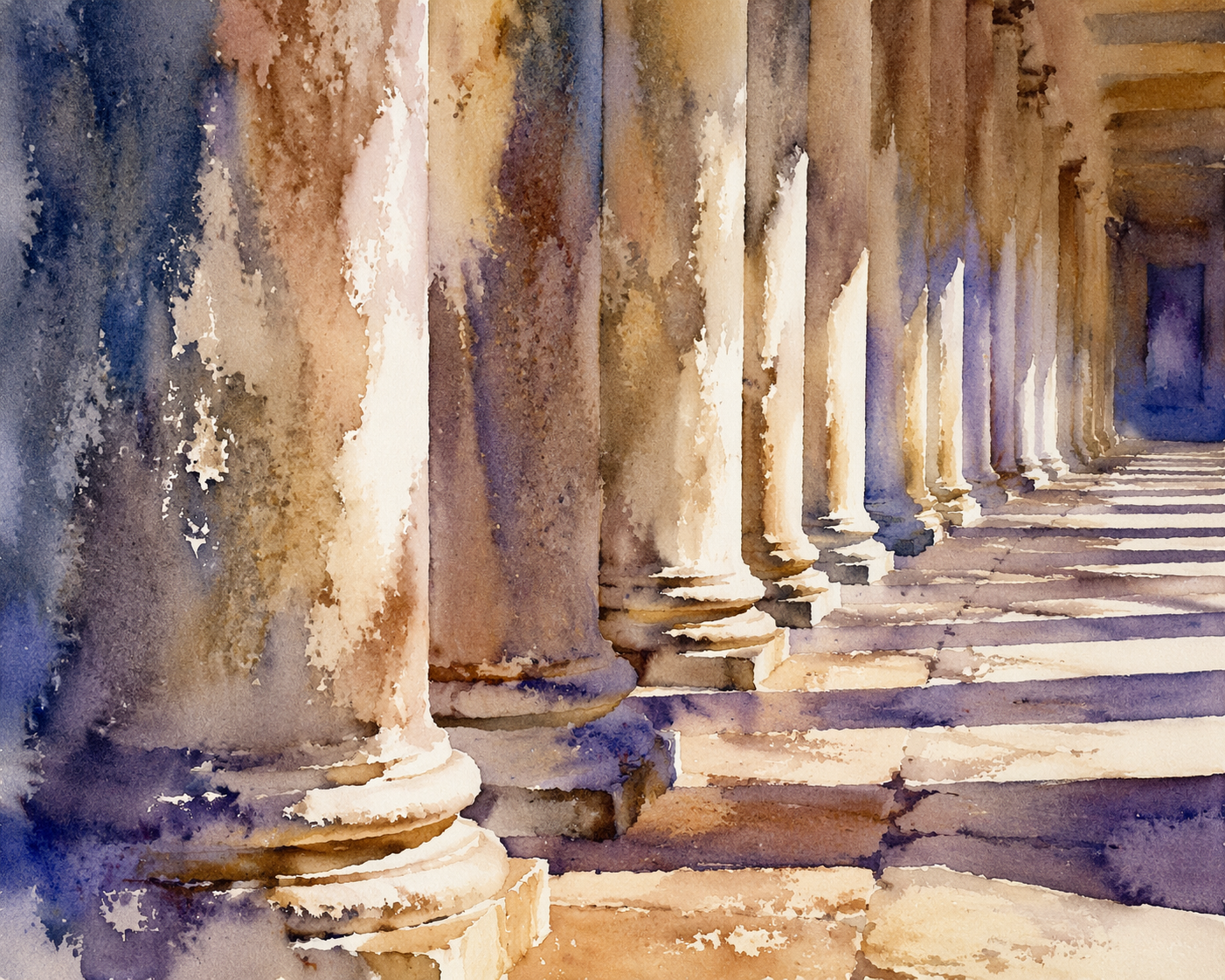
Whispers in the Colonnade
Critique
1. Introduction This watercolor painting presents a rhythmic and atmospheric view of a classical colonnade, likely inspired by ancient Greek or Roman architecture. The work utilizes the unique properties of the watercolor medium to create a scene that feels both historically grand and emotionally ephemeral. The focus is not on archaeological detail, but on the interplay of light and shadow within a monumental space. 2. Description The composition features a long row of massive, fluted columns that recede into a deep perspective. The stone surfaces are rendered in soft washes of ochre and warm beige, suggesting the weathered texture of ancient marble. Across the sun-drenched floor, the columns cast long, dramatic shadows in deep indigo and violet, which seem to bleed into the stone like ink on paper. 3. Analysis The artist expertly handles the transparency of watercolor, allowing layers of color to overlap and create a sense of luminous depth. The repetition of the vertical columns establishes a strong visual rhythm, which is echoed by the horizontal stripes of the shadows. Subtle splatters and irregular washes add a sense of spontaneity and physical energy to the otherwise rigid architectural structure. 4. Interpretation and Evaluation The painting can be interpreted as a poetic meditation on the fading of empires and the passage of time. The way the solid stone forms appear to dissolve into the atmospheric washes evokes a sense of nostalgia and the fragility of human achievement. The technical mastery of the "wet-on-wet" technique and the bold use of high-contrast colors demonstrate a sophisticated command of the medium. 5. Conclusion Initially appearing as a simple architectural study, the work reveals itself to be a profound exploration of light, space, and memory. The successful balance between the disciplined geometry of the columns and the fluid unpredictability of the watercolor creates a compelling visual tension. It stands as a vibrant tribute to the enduring aesthetic power of classical form and the expressive potential of watercolor.
Same Subcategory
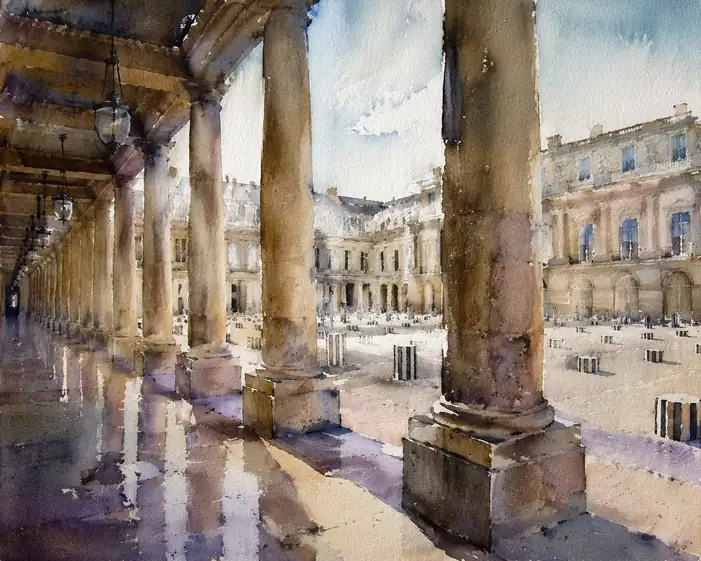 Palais-Royal: Shadows and Striped Reflections
Similar Artworks
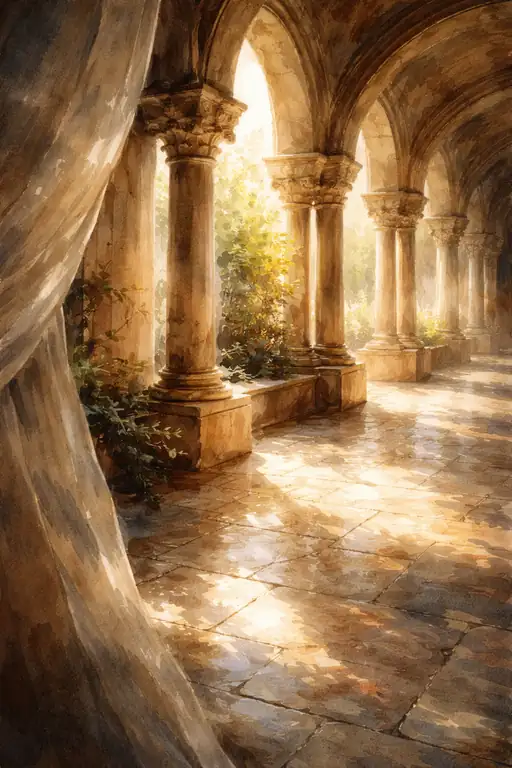 Sunlit Silence in the Golden Arcade
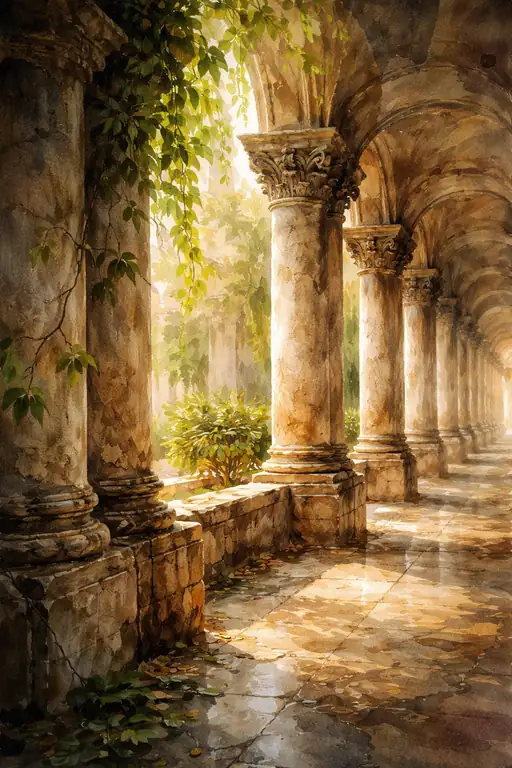 Sunlit Echoes in the Corridor
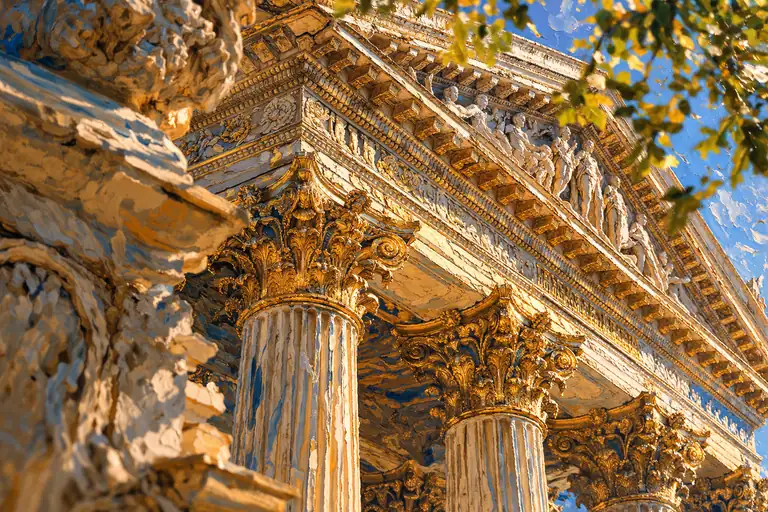 Majesty of the Corinthian Gold
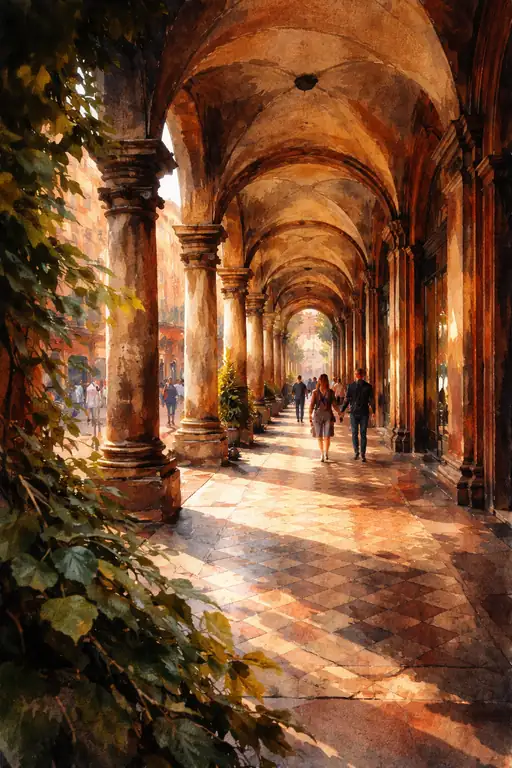 Shadows of Bologna's Arcades
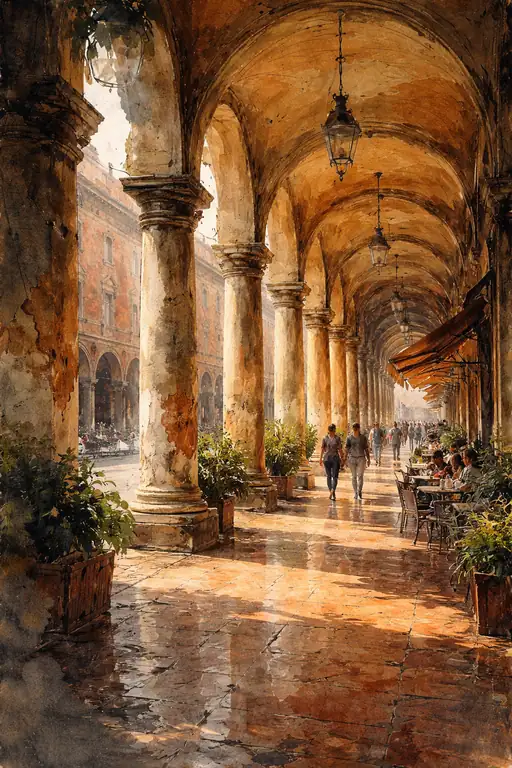 The Golden Corridor: A Symphony of Stone and Light
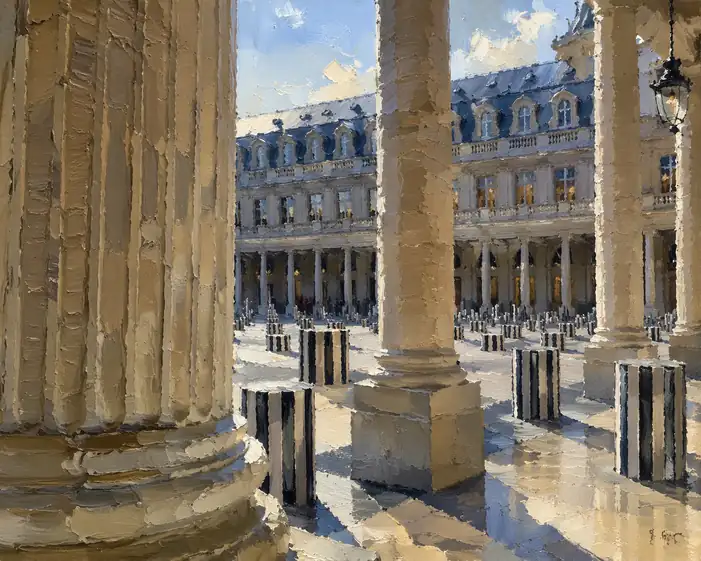 Timeless Steps: The Sunlit Alley's Descent
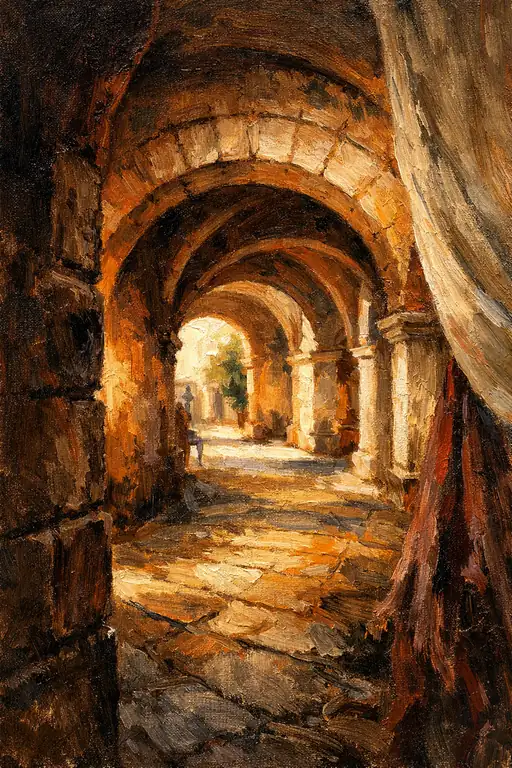 The Amber Corridor of Time
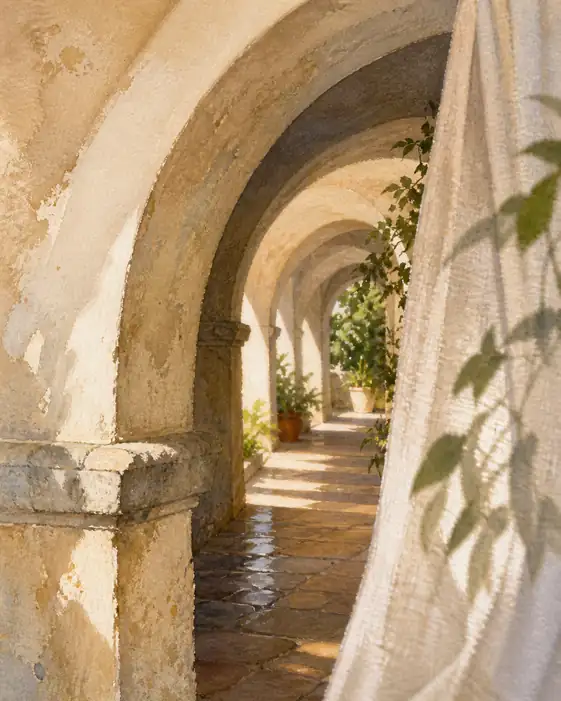 Breeze Through the Eternal Arch
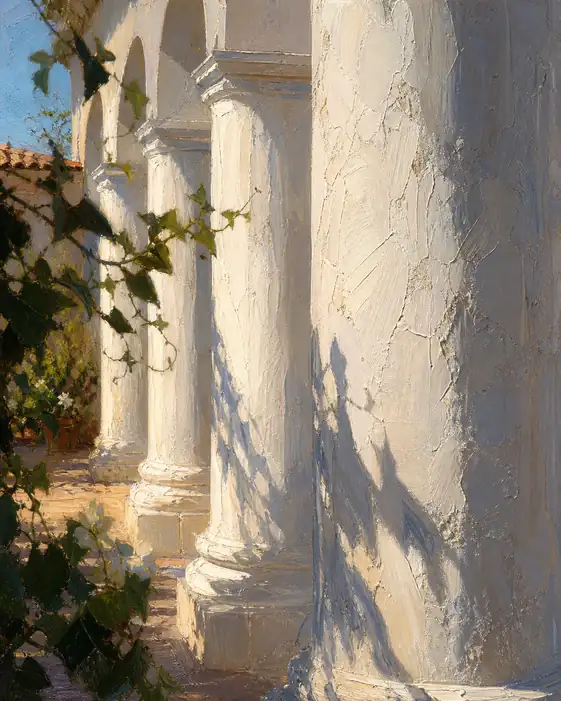 The Sunlit Soul of Stone
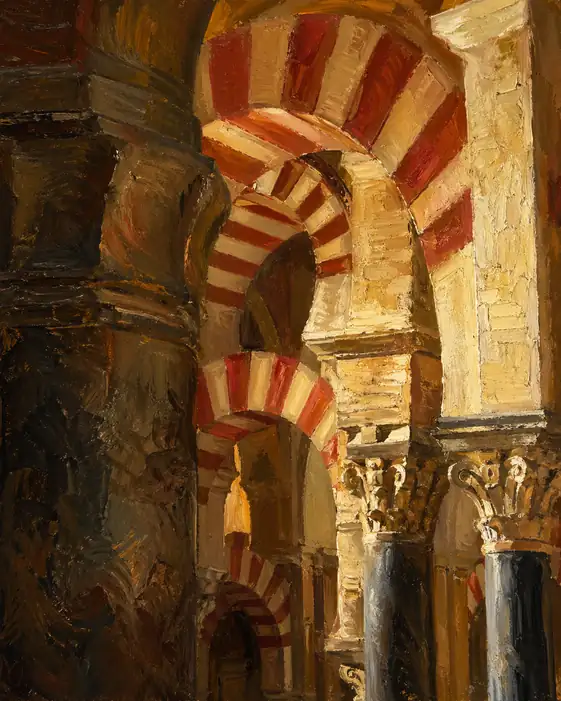 Rhythms of the Sacred Labyrinth