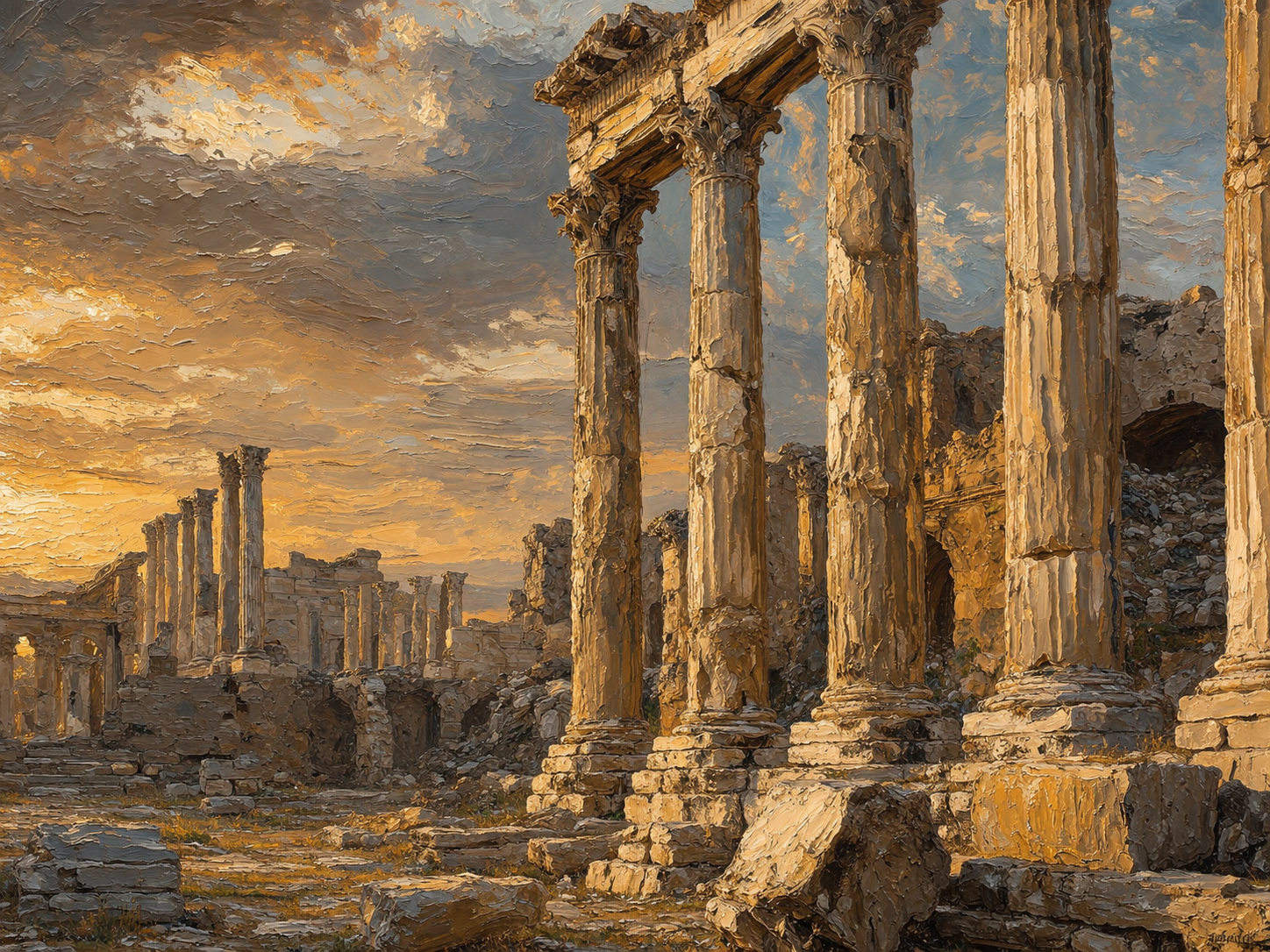
Echoes of the Golden Columns
Critique
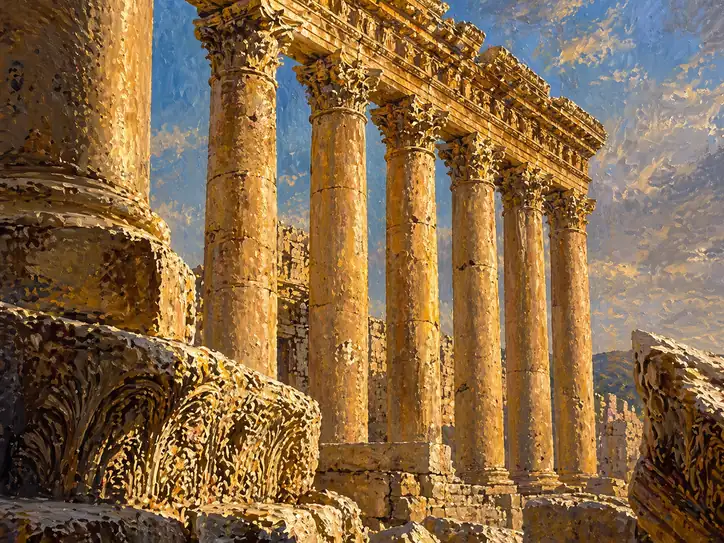
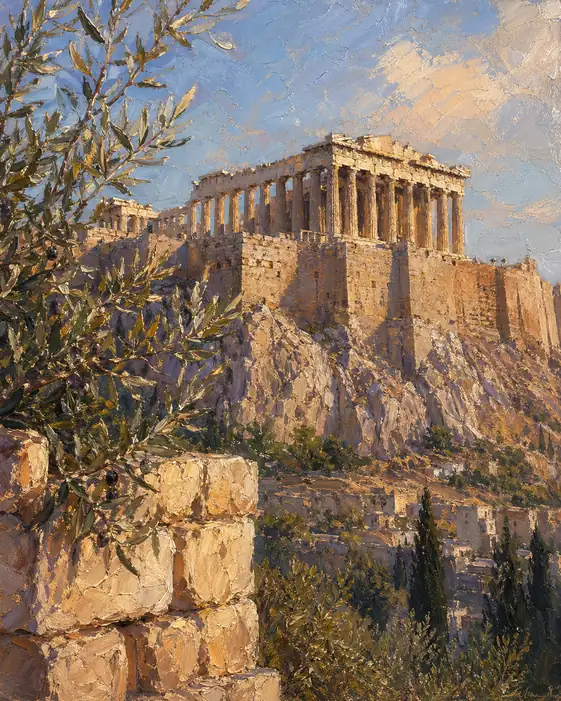
1. Introduction This oil painting presents a magnificent view of ancient classical ruins bathed in the warm, radiant glow of a setting sun. The composition centers on a row of towering Corinthian columns that stand as resilient witnesses to a bygone era. Through a masterful application of the impasto technique, the artist creates a tactile surface that enhances the rugged beauty of the weathered stone. The work establishes a profound atmosphere of historical grandeur and the quiet passage of time. 2. Description The foreground is dominated by large, broken blocks of stone and the bases of massive pillars, rendered with thick, expressive brushstrokes. In the middle ground, several well-preserved columns rise vertically toward a dramatic sky filled with churning clouds of amber, gold, and slate grey. The sun, positioned low on the horizon, casts long, soft shadows and illuminates the textures of the fluted columns. Further in the distance, additional ruins fade into the hazy, luminous atmosphere of the evening. 3. Analysis The artist employs a high-contrast color palette, pitting the vibrant oranges and yellows of the sunset against the cooler, earthy tones of the shadowed stone. The heavy use of palette knives and thick paint creates a three-dimensional quality, giving the ruins a palpable sense of weight and physical presence. Vertical lines of the architecture provide a strong structural foundation, which is softened by the organic, swirling patterns of the clouds. Perspective is used effectively to draw the viewer's eye through the colonnade. 4. Interpretation and Evaluation This piece serves as a poignant meditation on the endurance of human achievement and the inevitable cycle of decay. The choice to depict the ruins at sunset suggests a nostalgic longing for the past while celebrating the enduring beauty found in fragmented remains. Technically, the work is exceptional for its bold handling of texture and its ability to capture the ephemeral quality of light. The interplay between the solid, unyielding stone and the fluid, ever-changing sky creates a compelling narrative of permanence and change. 5. Conclusion Initially, the painting fascinates with its brilliant colors and energetic textures, but a closer study reveals a somper reflection on history. The artist has successfully combined architectural precision with an emotive, impressionistic style that elevates the subject beyond mere documentation. This powerful depiction of classical ruins reminds the viewer is that even in decay, there is a sublime grace that transcends the centuries. Through this sun-drenched scene, one experiences a renewed appreciation for the monumental legacy of antiquity.
Same Subcategory
 Pillars of Antiquity Awash in Gold
Similar Artworks
 Eternal Sun Through Ancient Arches
 The Golden Echo of Antiquity
 The Eternal Glow of Forgotten Wisdom
 The Enduring Pillars of Time
 Echoes of a Forgotten Kingdom
 Whispers of the Golden Stone
 Golden Echoes of the Ages
 Echoes in the Silent Canyon
 Whispers of Eternal Stone
 Silent Whispers of the Mossy Stones