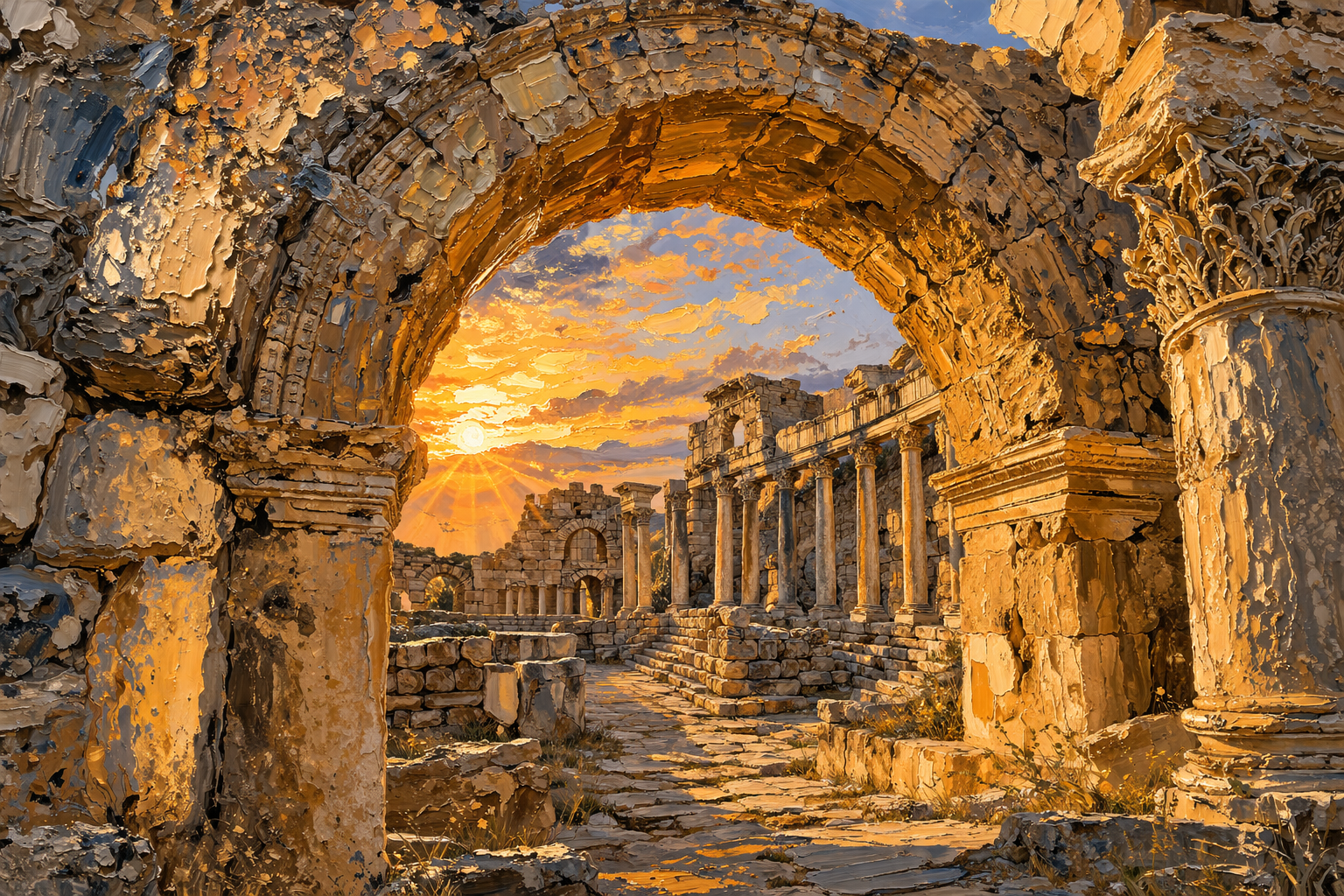
Eternal Sun Through Ancient Arches
Critique
1. Introduction This oil painting captures a breathtaking vista of classical ruins viewed through the majestic framework of a crumbling stone arch. The composition utilizes the arch as a powerful framing device, drawing the eye toward a vibrant sunset that bathes the ancient city in a golden radiance. Rendered with an energetic impasto technique, the painting emphasizes the tactile quality of the weathered masonry. The work establishes a sense of discovery and reverence for the monumental remnants of a lost civilization. 2. Description The foreground is defined by the massive, textured curve of a stone arch, its surface thick with layers of warm-toned paint that mimic the cracks and crevices of aged rock. Through this opening, a stone-paved path leads the viewer's gaze toward a distant colonnade and the setting sun, which radiates sharp rays of light. To the right, the remains of a Corinthian column provide additional architectural detail. The sky above is a brilliant tapestry of orange, yellow, and soft violet clouds, reflecting the intense solar glow. 3. Analysis The artist effectively employs a "repoussoir" technique, using the dark, heavily textured foreground arch to create a dramatic sense of depth and three-dimensional space. The color story is one of monochromatic warmth, punctuated by cooler indigo shadows within the architectural recesses. The application of paint is particularly bold on the stones, where thick dabs of ochre and cream suggest the physical weight of the ruins. The radial lines of the sunbeams create a dynamic movement that counters the static stability of the stone structures. 4. Interpretation and Evaluation The archway serves as a symbolic portal, inviting the viewer to step into a nostalgic and idealized past. By centering the sun within the ruins, the artist suggests a theme of spiritual or historical enlightenment, where the light of nature continues to dignify the works of man. Technically, the painting is highly successful in its use of texture to convey environmental age. The balance between the massive, unyielding foreground and the ethereal, glowing distance creates a compelling tension that speaks to the duality of permanence and transience. 5. Conclusion At first glance, the painting impresses with its theatrical lighting and rich surface texture, but deeper reflection reveals a celebratory tribute to cultural heritage. The artist has masterfully captured the emotional weight of antiquity, transforming a ruin into a site of profound beauty and inspiration. This immersive scene offers more than a historical record; it provides a sensory experience of light and stone that resonates with a timeless grandeur. Ultimately, the work stands as a testament to the enduring power of classical architecture to captivate the human imagination.
Same Subcategory
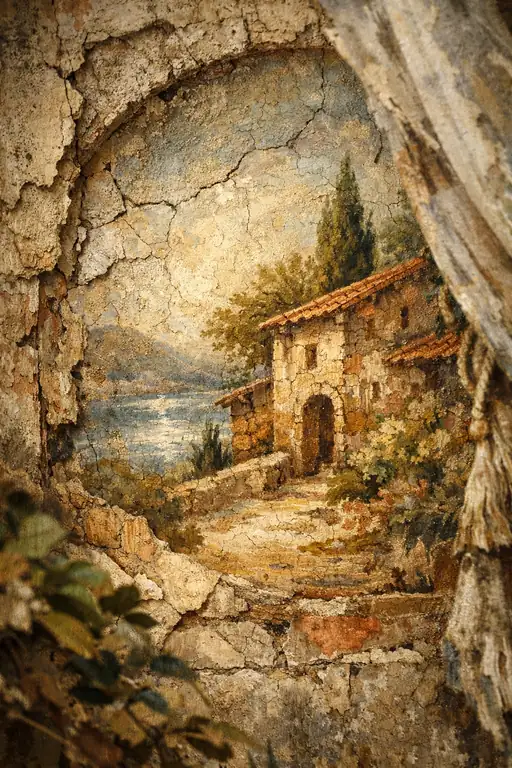 Beyond the Cracks of Time
Similar Artworks
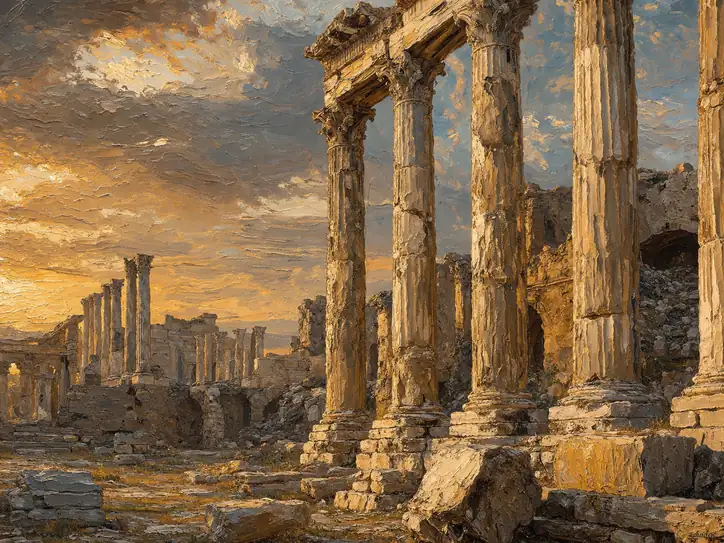 Echoes of the Golden Columns
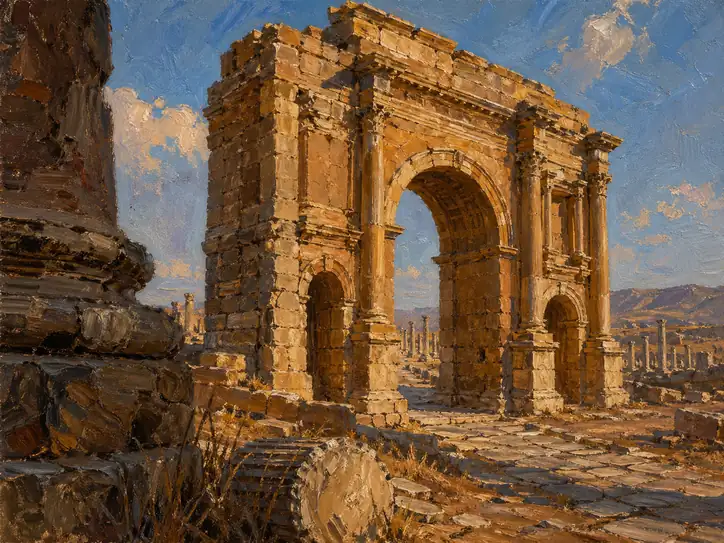 Sovereign of Silence: The Triumphal Arch of the Forgotten Sands
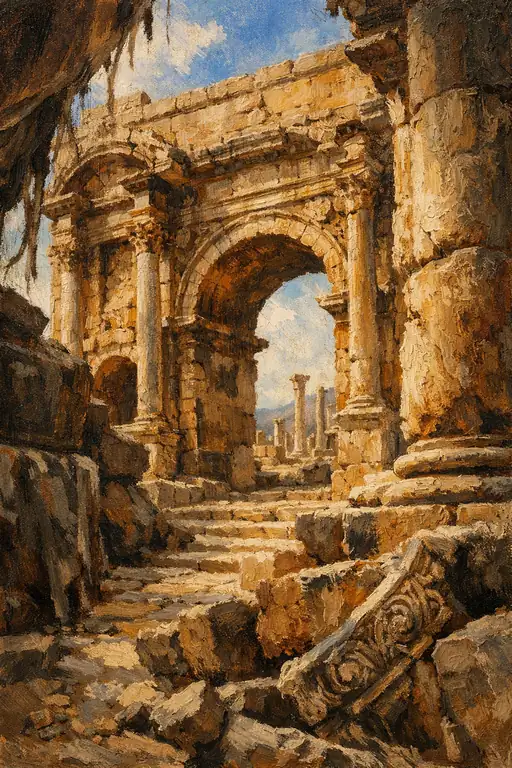 Echoes in the Stones of Time
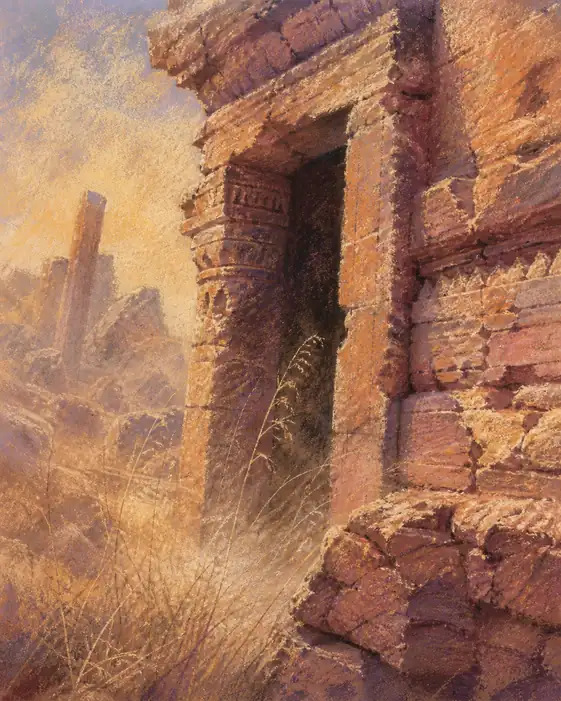 Whispers from the Ancient Threshold
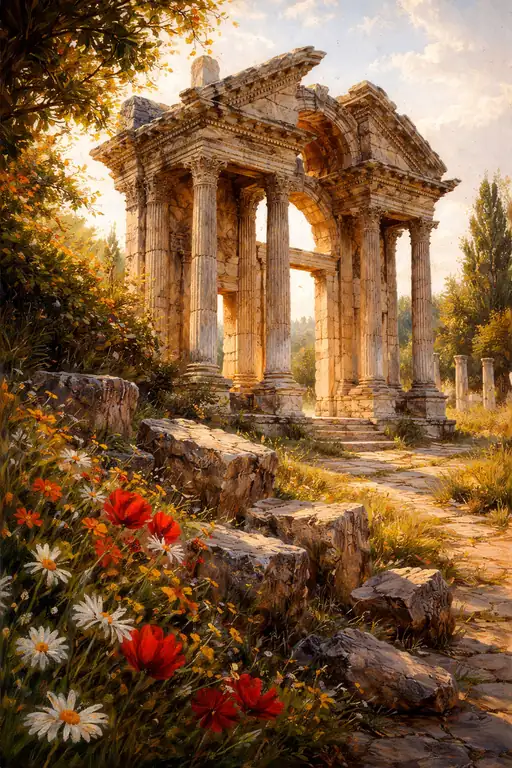 Timeless Pillars Among the Poppies
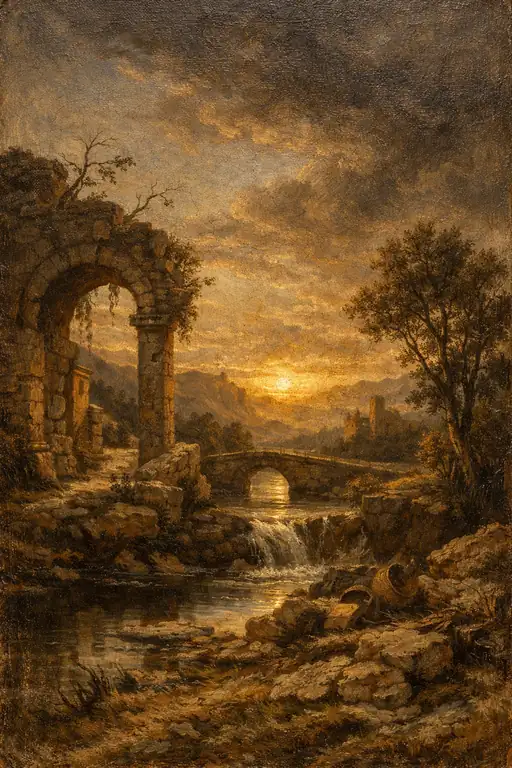 A Ruined Arch at Sunset
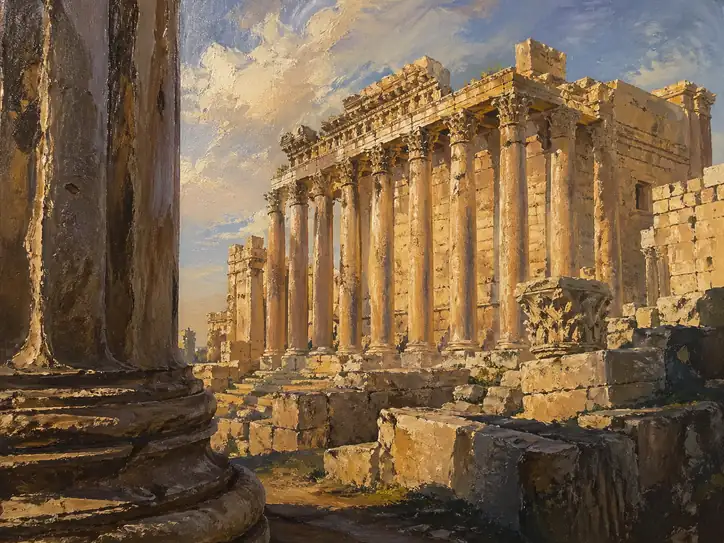 The Golden Echo of Antiquity
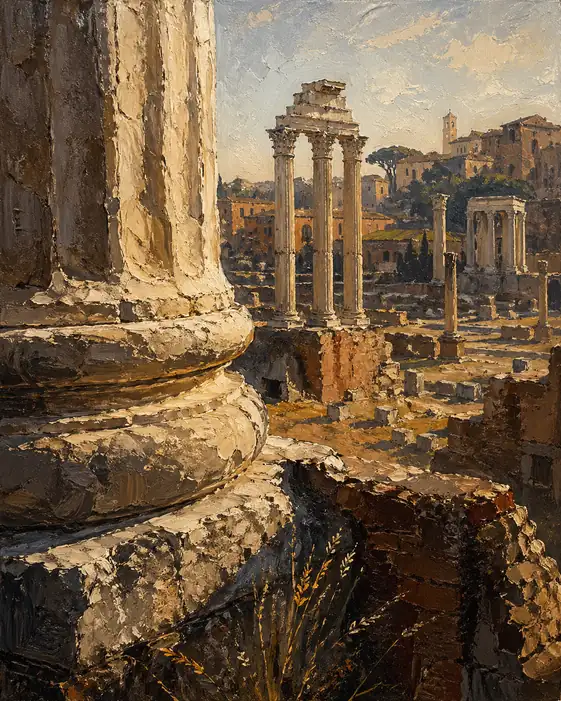 Whispers of the Gilded Forum
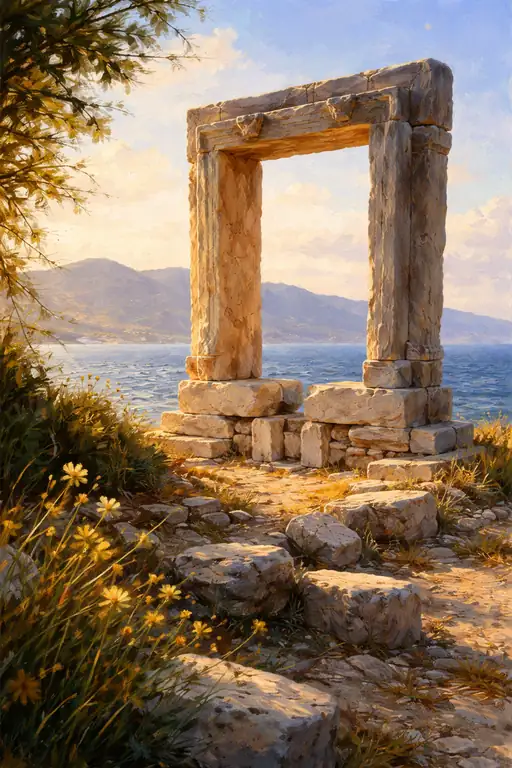 Eternal Silence of the Great Portara
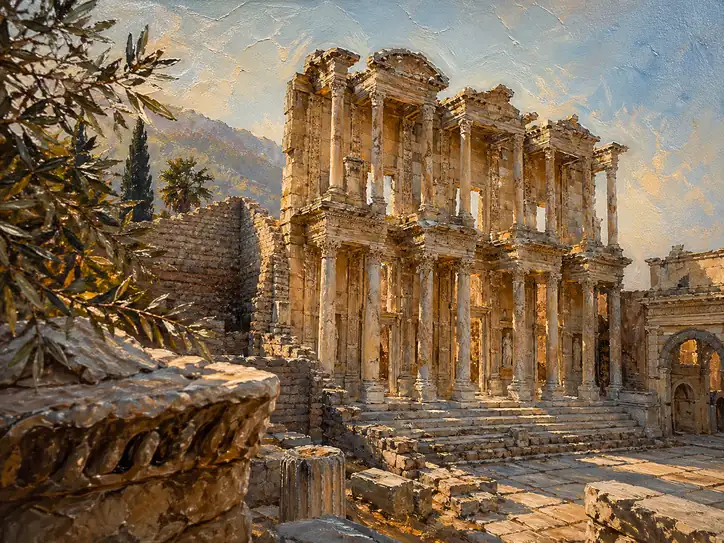 The Eternal Glow of Forgotten Wisdom