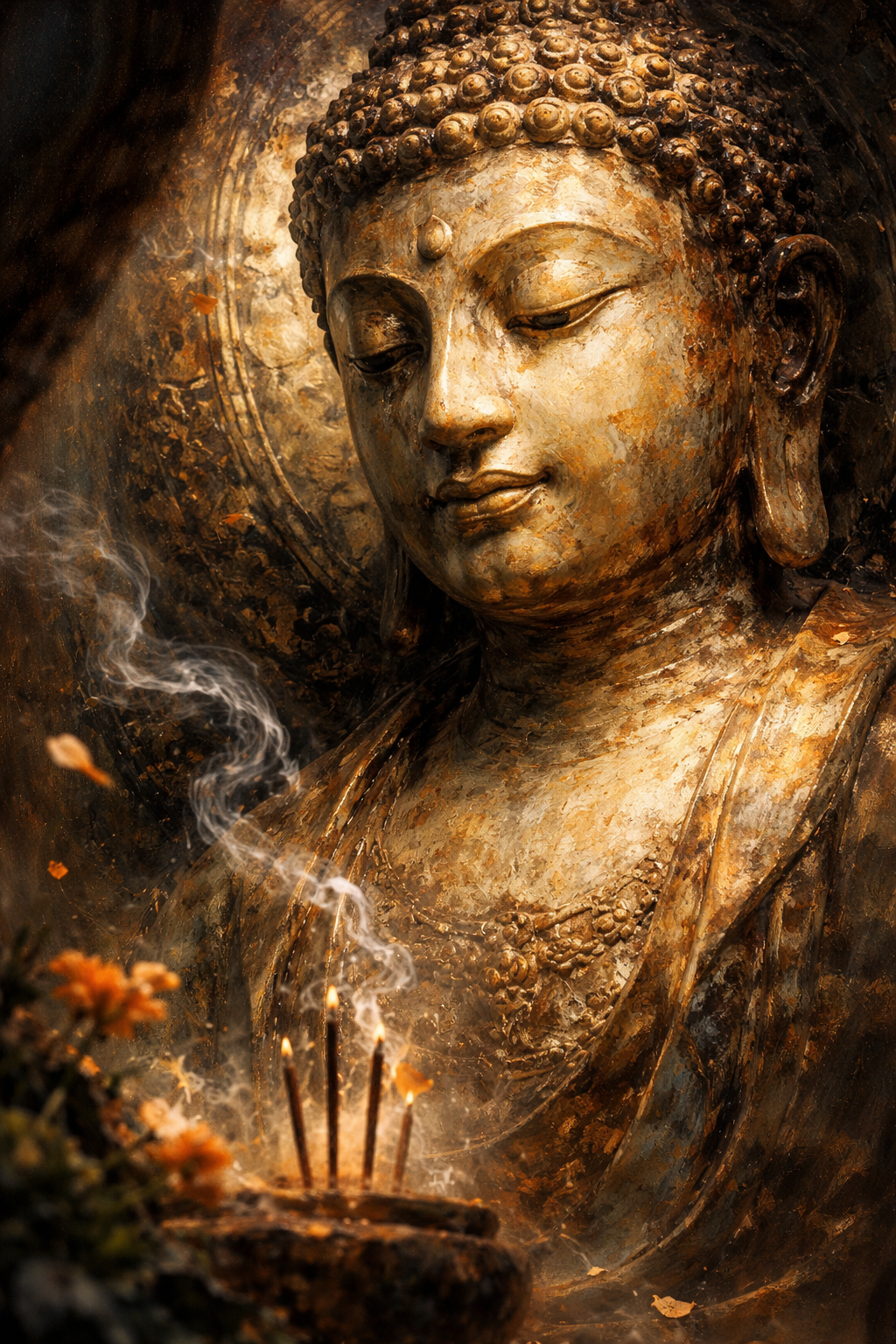
Whispers of the Golden Face
Critique
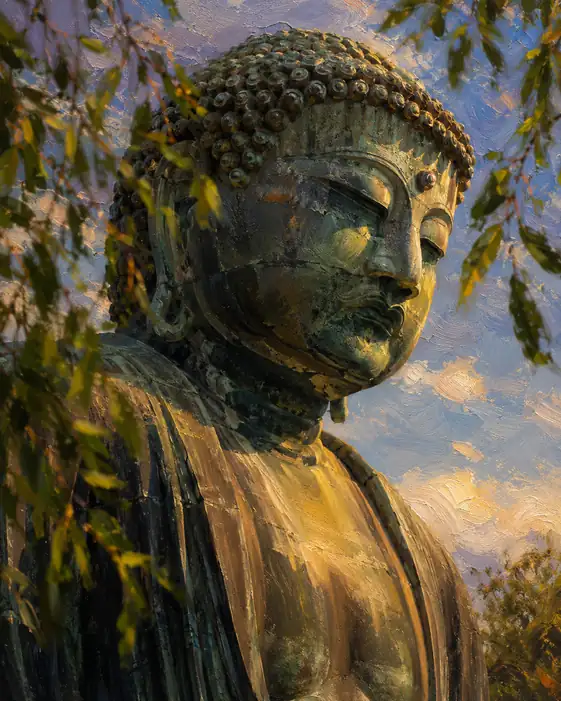
1. Introduction The work presents a serene and majestic portrayal of a Buddha figure draped in an aura of ancient gold and profound silence. It captures a moment of spiritual contemplation, drawing the viewer into a space where time seems to have paused. The initial impression is one of overwhelming tranquility and reverence, defined by an exquisite balance between divine symbolism and weathered mortality. 2. Description A central Buddha statue, characterized by a compassionate facial expression and closed eyes, dominates the composition. Its surface displays a complex texture of peeling gold leaf and oxidized metal, suggesting the accumulation of centuries. In the foreground, several incense sticks burn with small flames, releasing delicate wisps of white smoke that curl upwards. To the left, warm orange flowers are softly rendered, with some petals drifting like embers through the hazy, dimly lit environment. 3. Analysis The color palette is strictly limited to warm tones of gold, amber, and deep sepia, creating a unified and atmospheric quality. A soft light source from the upper left highlights the contours of the face and robes, providing a strong sense of three-dimensionality through dramatic chiaroscuro. Compositionally, the contrast between the solid, immobile form of the statue and the ethereal, fluid motion of the smoke creates a visual tension that animates the otherwise static scene. 4. Interpretation and Evaluation This piece can be interpreted as a meditation on the concept of "impermanence," contrasting the eternal presence of the deity with the fleeting nature of incense smoke and falling petals. The artist demonstrates exceptional technical skill in rendering textures, particularly the tactile quality of the decayed surfaces. The lighting and composition are handled with sophisticated precision, merging traditional aesthetics with a contemporary cinematic sensitivity that elevates the work's expressive power. 5. Conclusion Upon closer examination, the visual splendor of the piece reveals a deeper philosophical layer concerning the cycle of life and the peace found in detachment. The interplay of light, shadow, and movement transforms a traditional subject into a compelling sensory experience. Ultimately, the work stands as a powerful testament to the beauty of silence and the enduring nature of human spirituality.
Same Subcategory
Similar Artworks
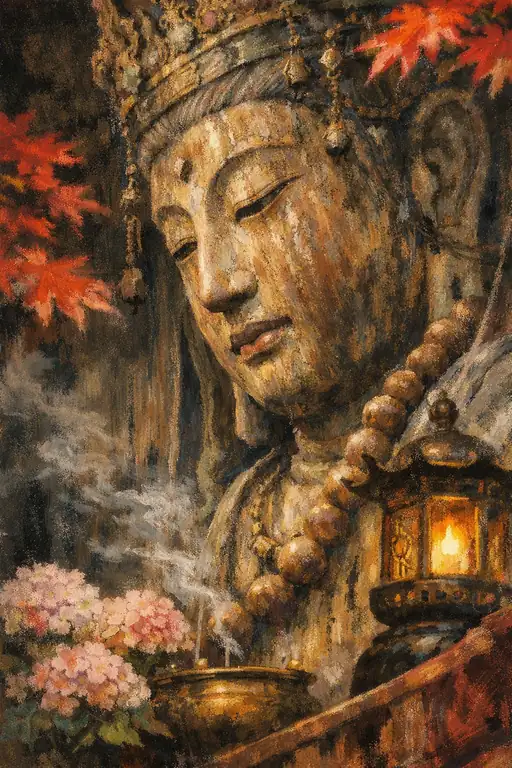 The Radiant Compassion of Autumn
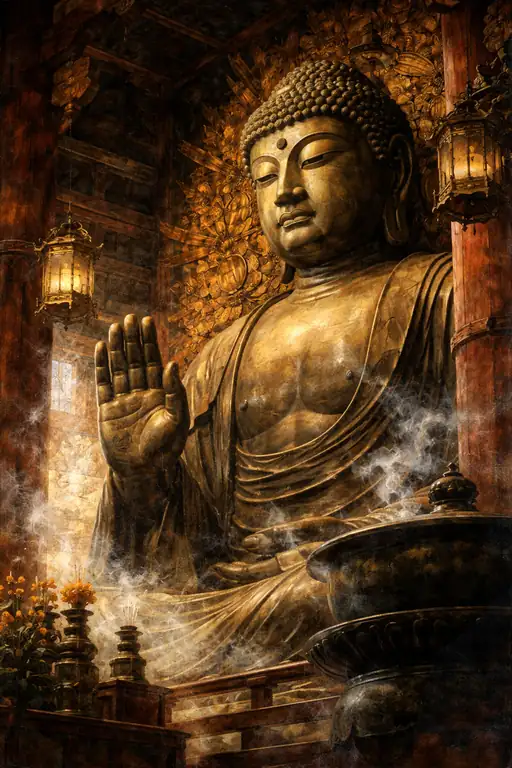 Silent Majestic Gaze Within the Incense Mist
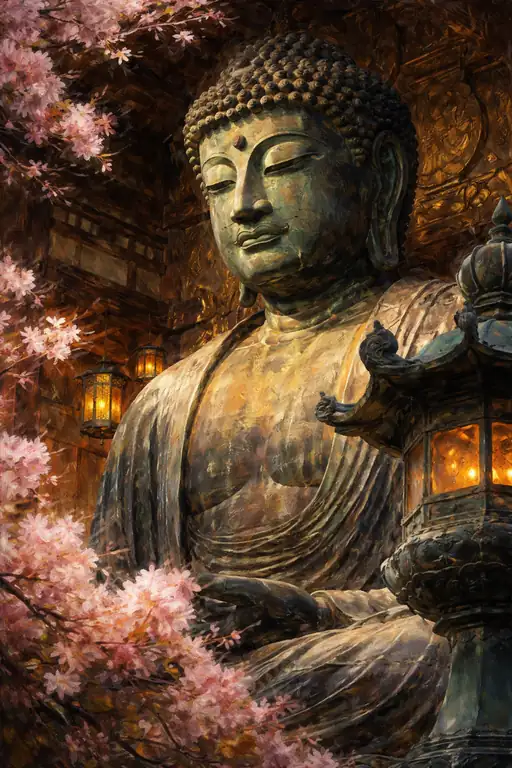 Golden Lanterns Blessing the Grand Bronze Buddha
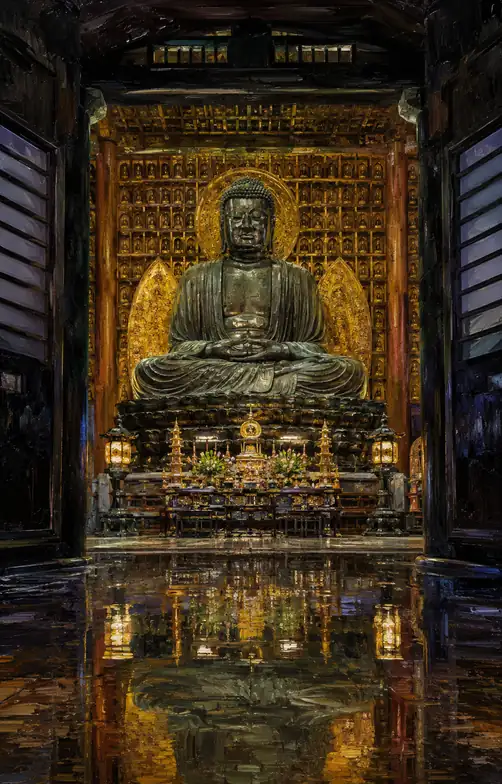 A Thousand Silences Face the Light
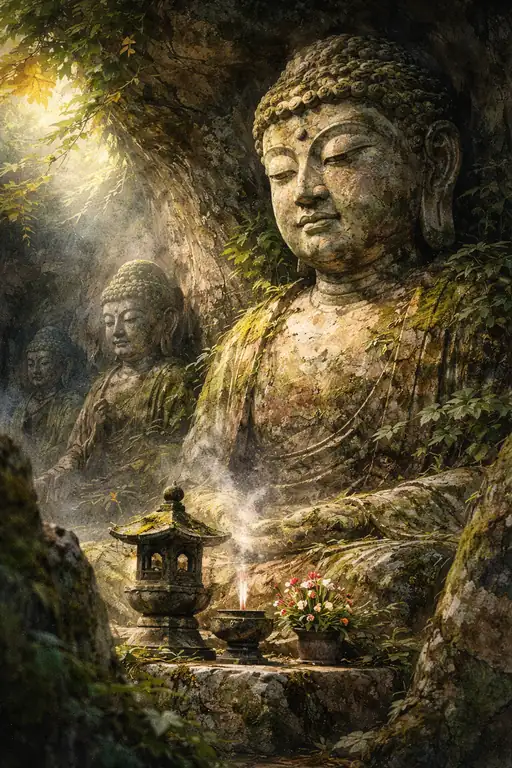 Eternal Stillness: The Sunlit Path of the Stone Buddha
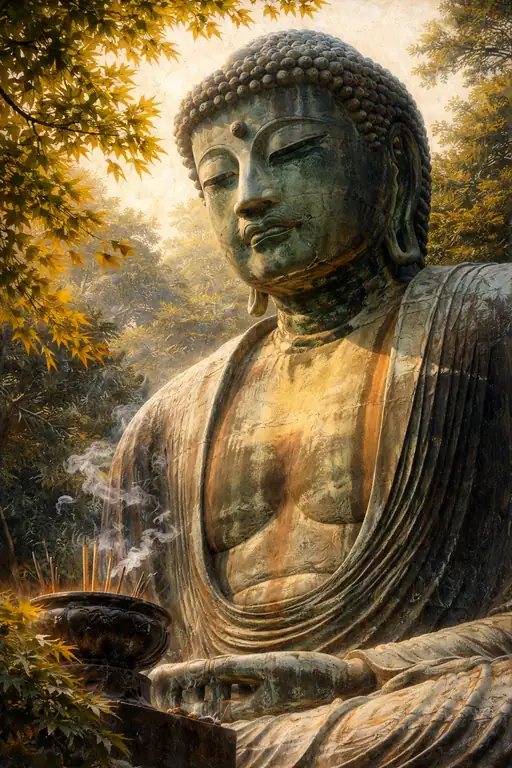 Tranquility in the Autumn Incense
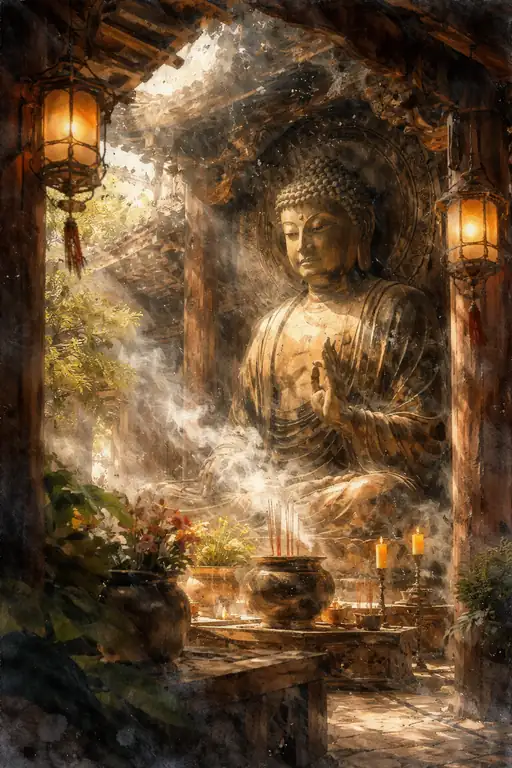 Incense and the Ray of Divine Light
 Golden Echoes in the Ancient Forest
 Gaze of the Infinite
 Eternity Engraved in Stone