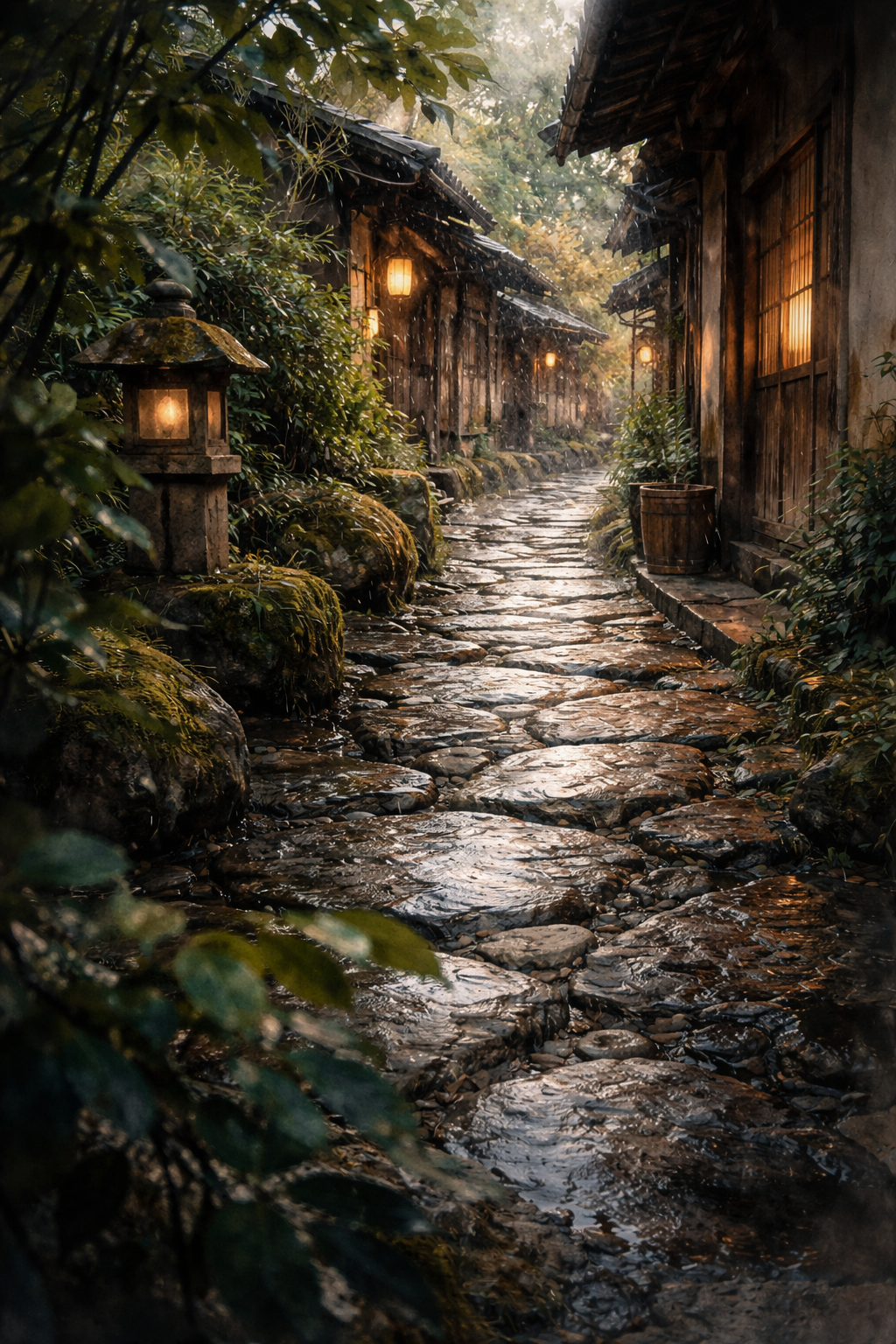
The Rain Washes Away the Present
Critique
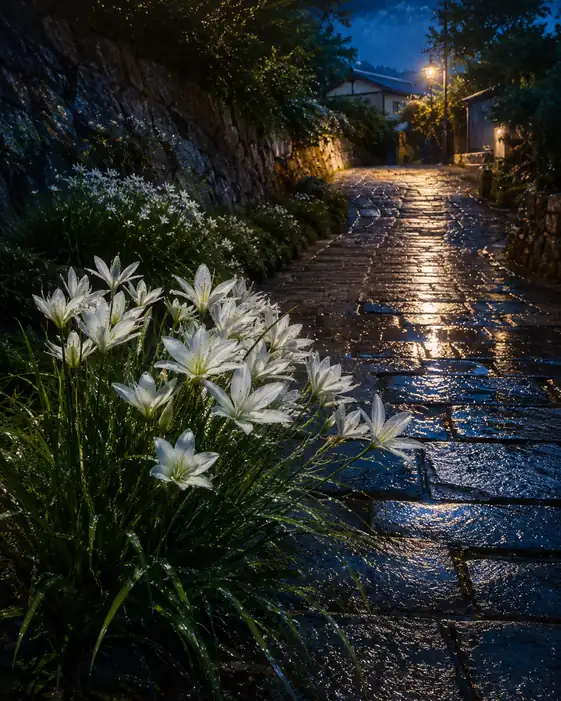
1. Introduction This vertical landscape painting captures an atmospheric moment in a traditional Japanese village during a light rain. The scene, inspired by historical post-towns, is bathed in a soft, misty light that creates a dreamlike quality. The artwork serves as an evocative study of mood, balancing natural elements with enduring traditional architecture and quiet contemplation. 2. Description The composition features a narrow, winding path of large stones that glisten with rainwater. To the left, a moss-covered stone lantern glows with a warm light, mirrored by lanterns further down the street. Traditional wooden buildings flank the path, their dark forms softened by mist. Lush green foliage and bamboo frame the scene, reflecting subtle, diffused sunlight. 3. Analysis The artist employs a muted color palette dominated by deep greens and earthy browns, punctuated by warm orange glows. The treatment of light is the work's primary strength, particularly the reflections on the wet stones and the soft diffusion of lantern light. A central perspective leads the eye deep into the alley, emphasizing its local historical character. 4. Interpretation and Evaluation This work masterfully evokes the Japanese aesthetic of "wabi-sabi," finding beauty in the weathered and the melancholic. The rain acts as a unifying veil, creating a sense of tranquil isolation. The contrast between the cold exterior and the inviting warmth from the houses serves as a powerful metaphor for sanctuary and domestic comfort. 5. Conclusion A masterfully atmospheric piece, this painting effectively captures the quiet soul of a traditional Japanese landscape. Initially seen as a simple depiction of a rainy street, it reveals itself as a sophisticated exploration of the emotional resonance in the intersection of nature, history, and light.
Same Subcategory
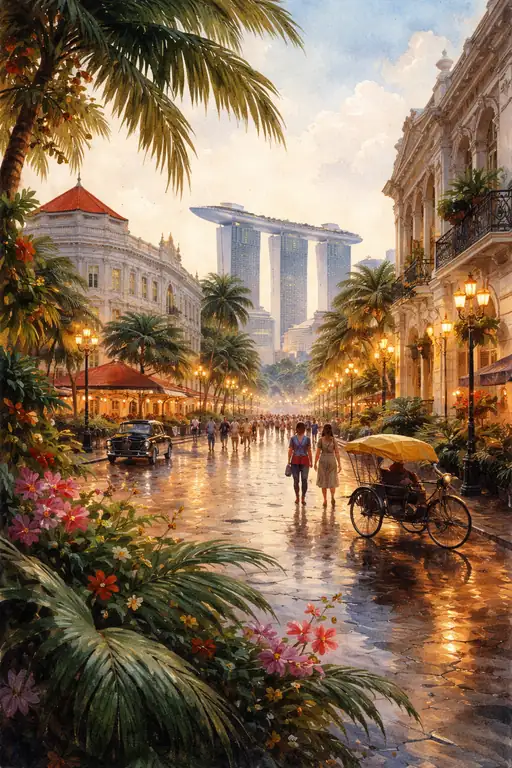 Echoes of Time on the Golden Pavement
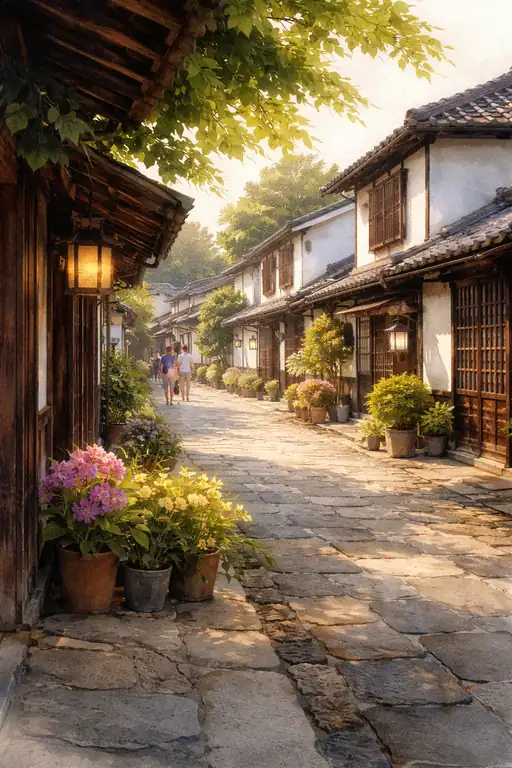 Echoes of a Forgotten Path
Similar Artworks
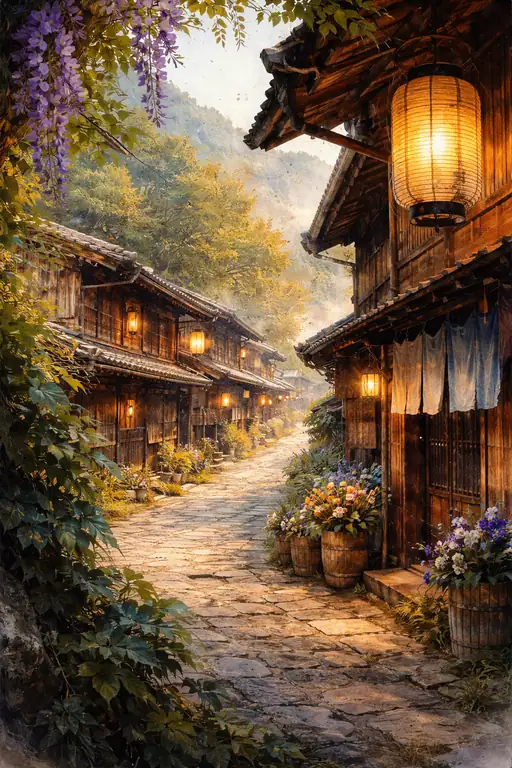 Wisteria Dreams in the Quiet Town
 Whispers of the Rain-Washed Stone
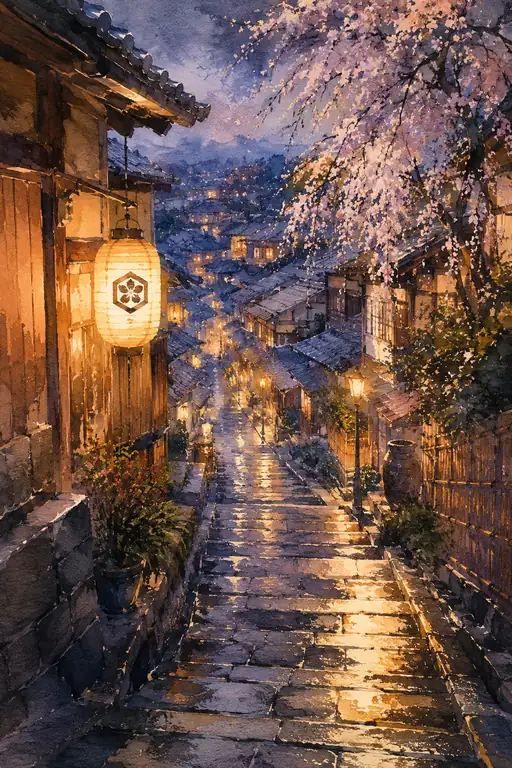 Blooming Lanterns and Night Cherry on Wet Stone Steps
 Echoes of a Passing Shower
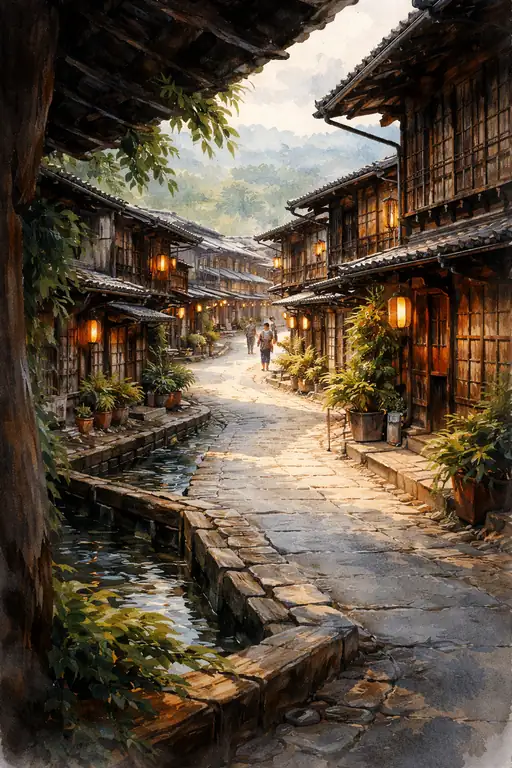 Whispers Along the Stone Path
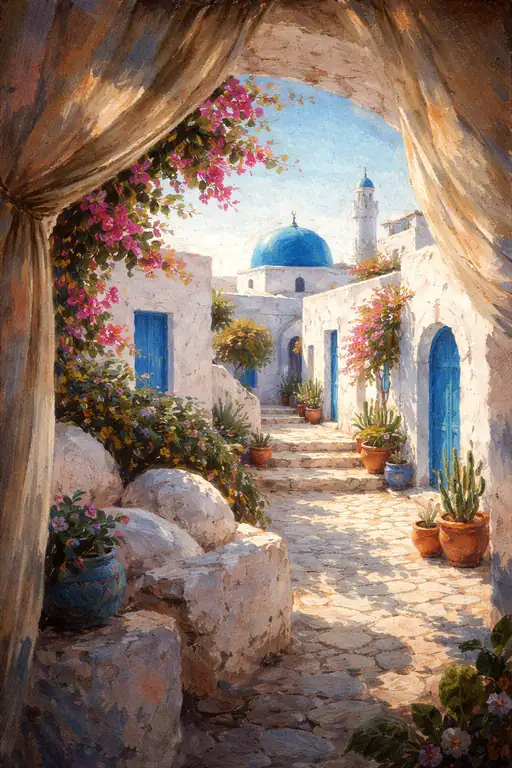 Sunlight in the Alleys
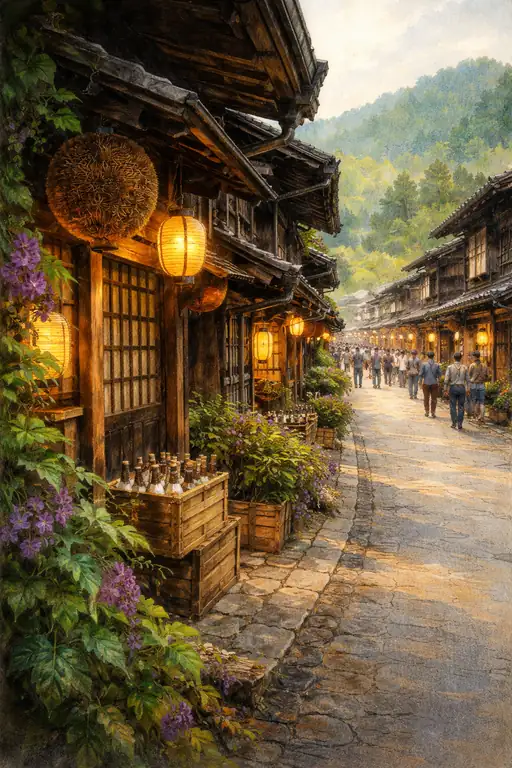 Dusk Awakens the Lantern's Memory
 The Warmth of a Nostalgic Night
 Gleaming Stones and Nighttime Blossoms
 The Light That Welcomes Me Home