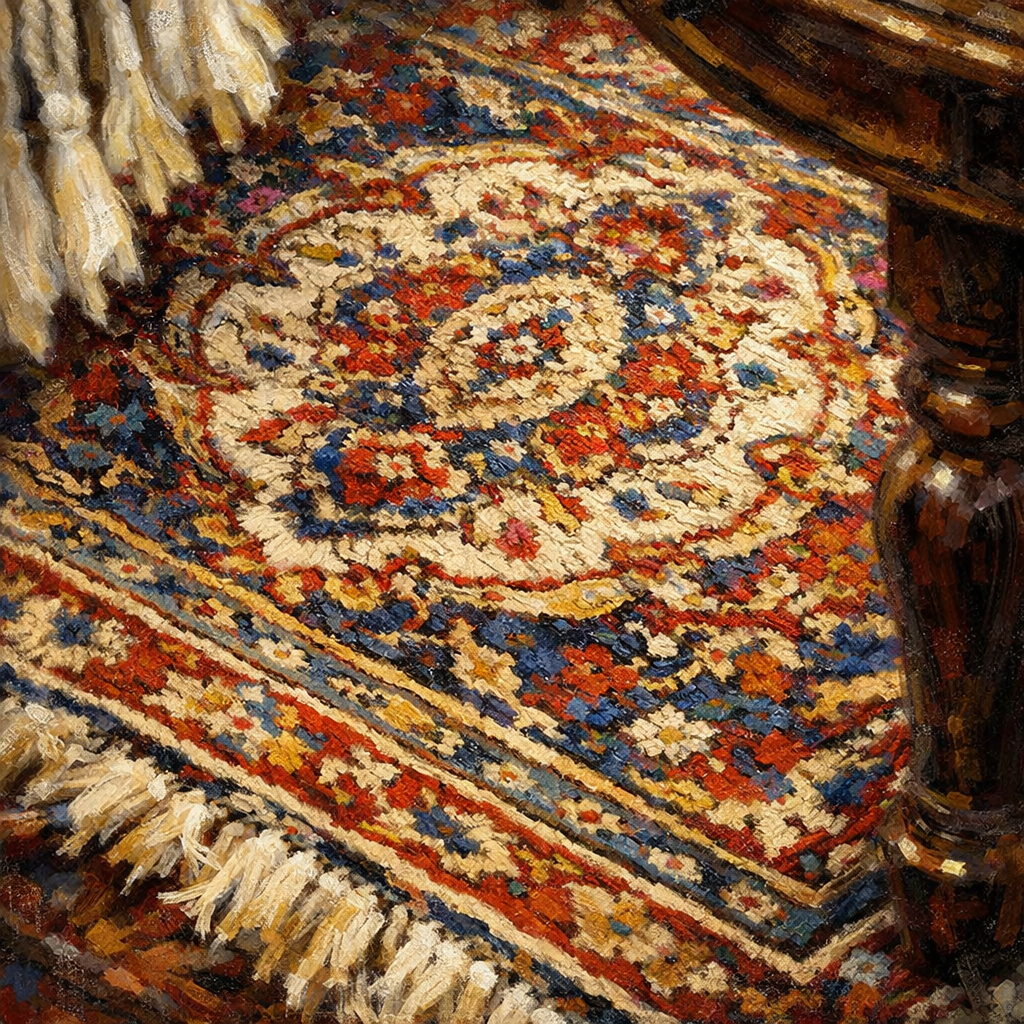
Threads of a Quiet Afternoon
Critique
1. Introduction This painting presents an intense, close-up study of interior elements, executed with a powerful, impasto-like technique. The composition focuses on a vibrantly patterned rug and the sturdy leg of a wooden piece of furniture, creating a space of high visual density. The artist’s vigorous brushwork emphasizes the physical presence of these objects, transforming a domestic fragment into a dynamic and colorful visual drama. 2. Description The central portion of the frame is occupied by a rug featuring a complex, circular pattern rendered in bright shades of red, blue, yellow, and white. To the left, several cream-colored tassels or fringes hang in thick clusters, their soft texture contrasted against the rug's surface. On the right side, a dark brown, polished wooden furniture leg stands vertically, its smooth and reflective surface providing a stark contrast to the rough textile patterns of the carpet. 3. Analysis Technically, the work is characterized by short, rhythmic brushstrokes that build up a tactile surface, effectively mimicking the heavy weave of the rug. The color palette utilizes bold, near-primary colors that interact dynamically; for instance, the juxtaposition of red and blue enhances the vibrancy of the patterns. The contrast between the rigid, dark furniture leg and the soft, frayed tassels creates a compelling tension and adds structural balance to the composition. 4. Interpretation and Evaluation The strength of the depiction lies in its ability to convey the weight and tactile quality of the materials through heavy paint application. The originality of the composition is found in its extreme proximity to the subject and the bold vertical division created by the furniture leg. While the colors are intense, the dark tones of the wood ground the image, demonstrating a sophisticated mastery over color and textured execution. 5. Conclusion What initially appears as a straightforward depiction of a rug reveals itself to be a profound exploration of the materiality of both the subject and the paint. The initial impact of the vivid colors eventually leads to an appreciation of the carefully layered textures that provide aesthetic structure. Ultimately, the work succeeds in transcending simple representation, offering a captivating tactile experience that celebrates the unique properties of the painted medium.
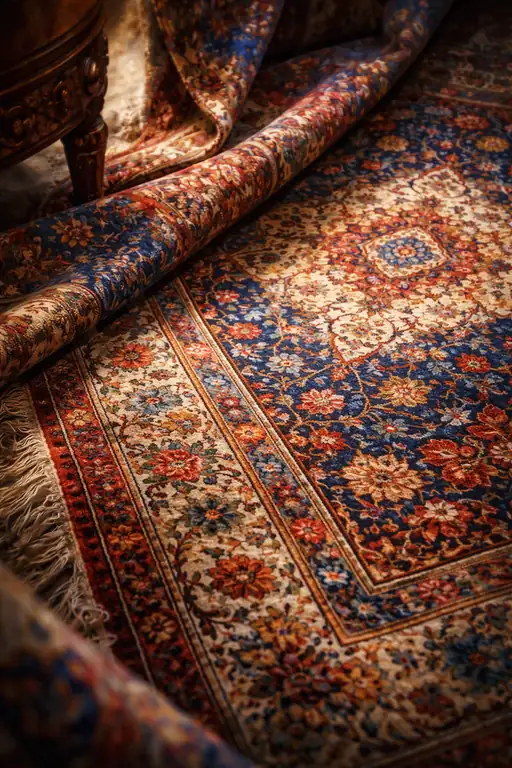 Warm Echoes in the Weave
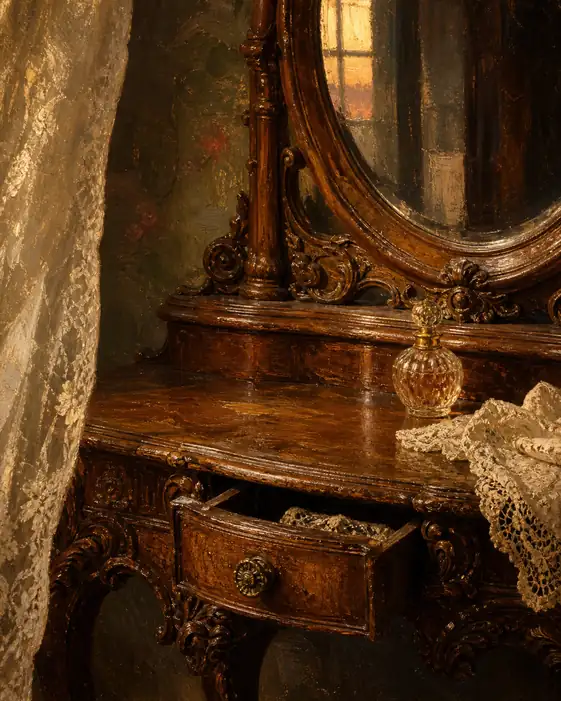 Fragrance of a Fading Dream
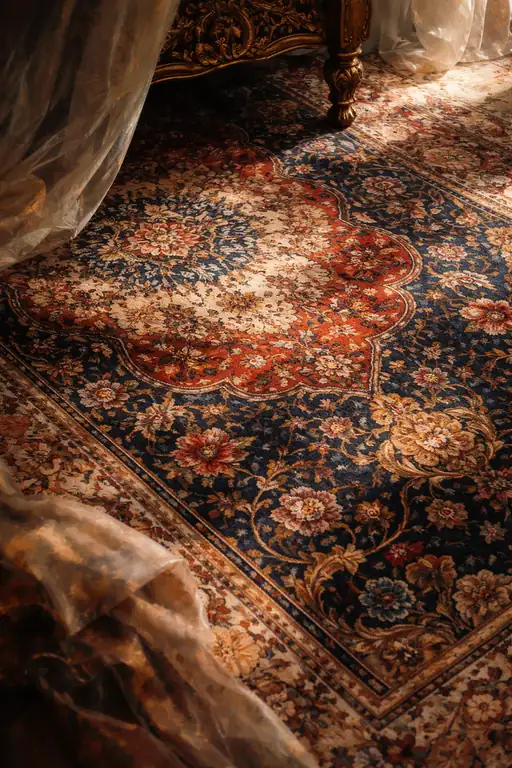 Veiled Echoes of Grandeur
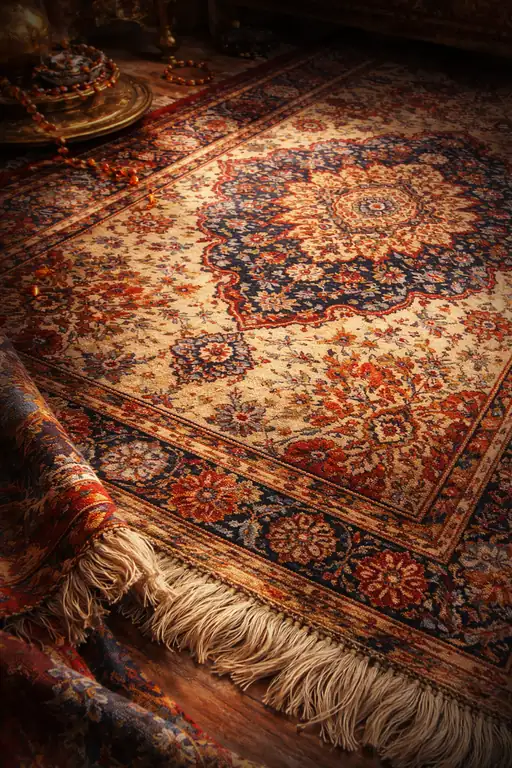 Silent Threads of Time
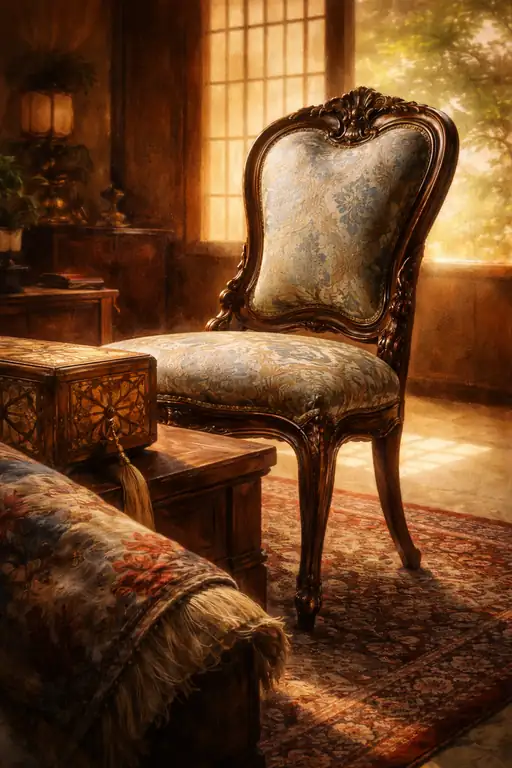 Sanctuary of Light
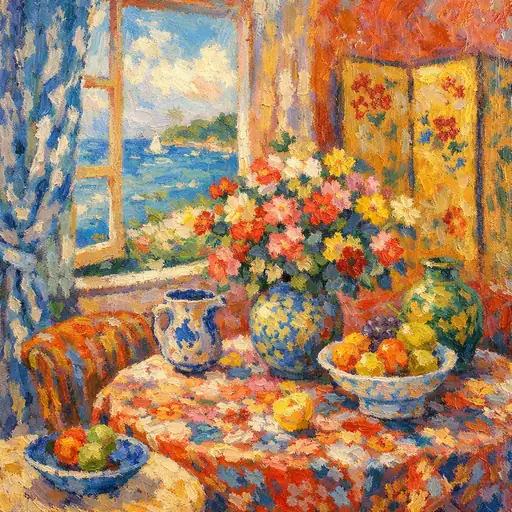 Sunlight Through the Open Window
 Fierce Hearth Fire
 Blooms of a Quiet Golden Grace
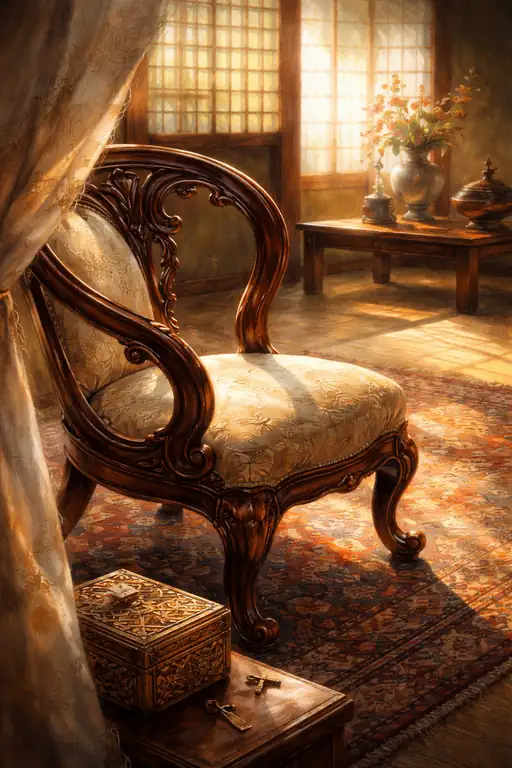 Sunlight on the Empty Chair
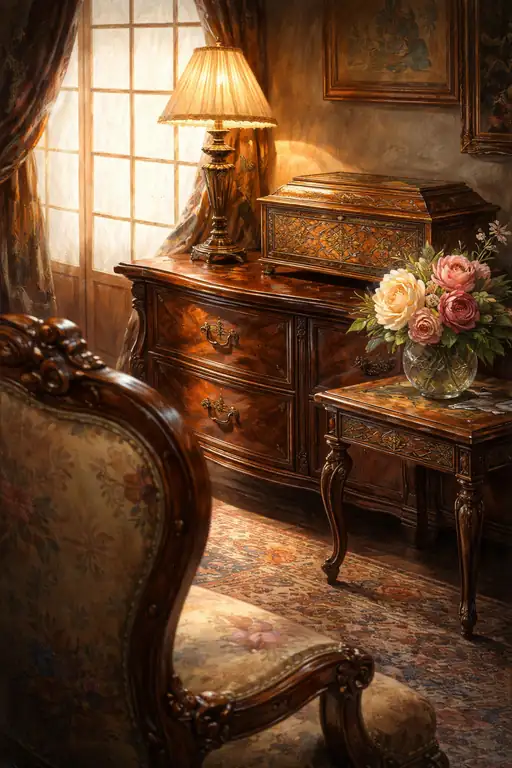 Elegance in the Shadows