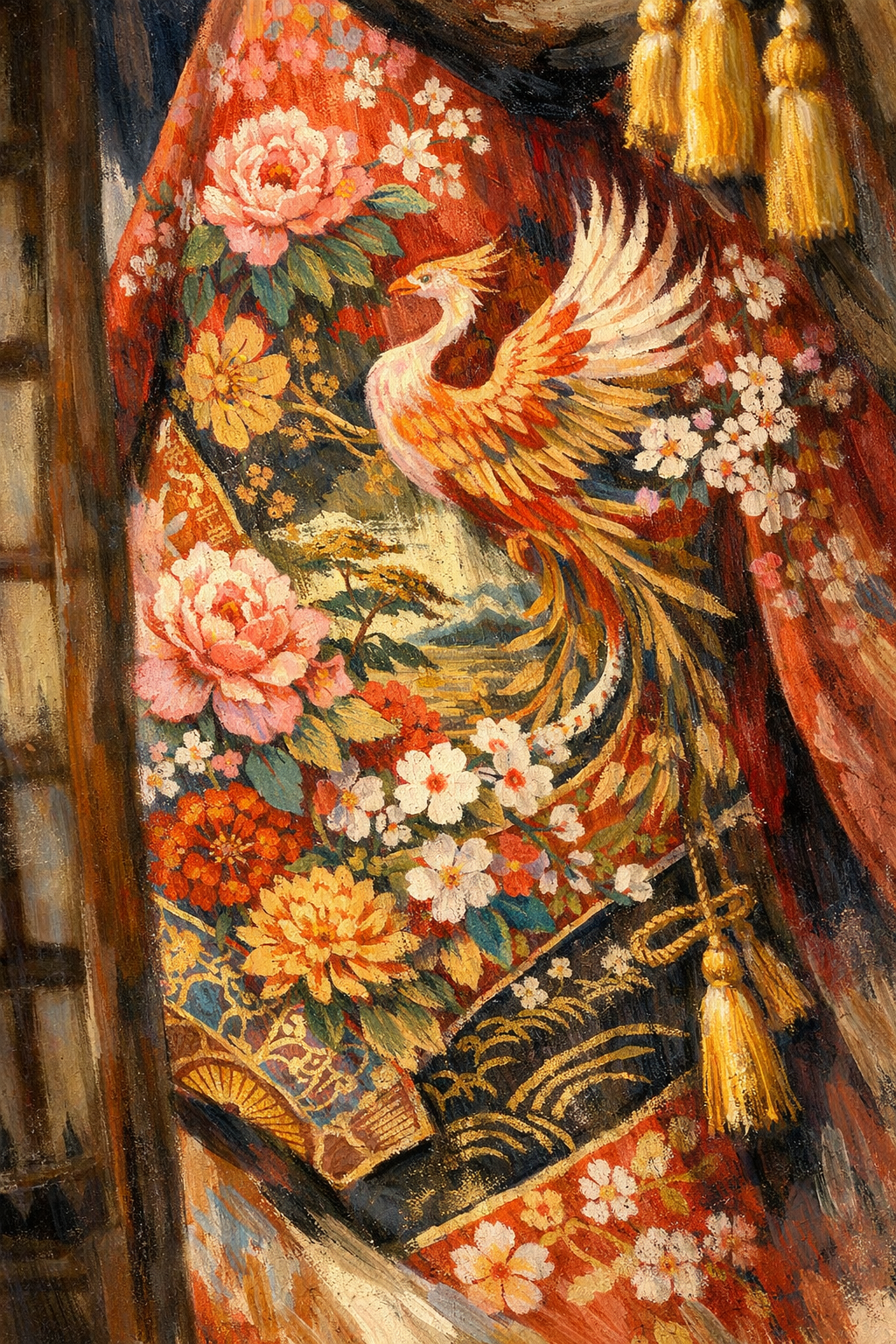
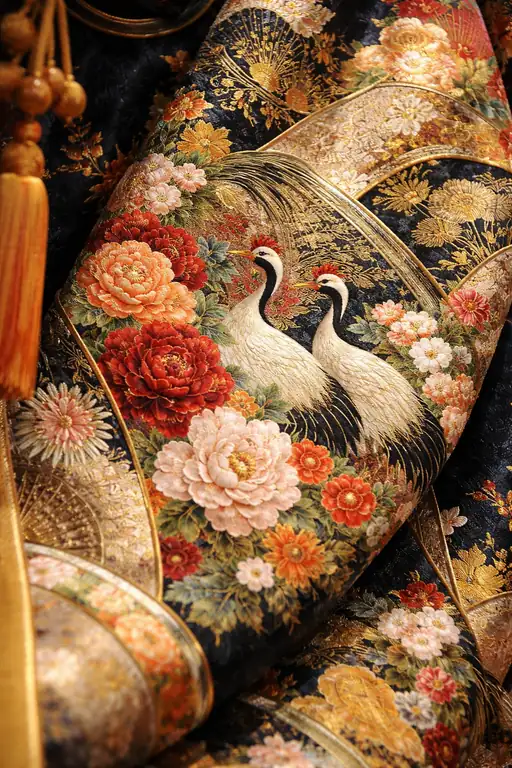
Flight of the Golden Phoenix
Critique
Introduction This striking oil-on-canvas work provides an intimate and highly textured look at an ornate garment, focusing on the symbolic power of the phoenix and seasonal flora. The painterly approach emphasizes the physical weight and luxury of the fabric, transforming a decorative item into a central artistic subject. The composition is charged with a sense of vitality and historical grandeur. Description A majestic phoenix, rendered in radiant shades of white, orange, and gold, occupies the center of the frame, its wings swept back in a dynamic posture. It is surrounded by lush pink peonies, vibrant yellow chrysanthemums, and delicate clusters of white blossoms. The deep red background of the fabric is further embellished with golden tassels and intricate blue-and-gold embroidery, while a dark wooden structure frames the scene on the left. Analysis The artist employs a dense, impasto-like technique that grants a literal Three-dimensional quality to the floral petals and the bird’s plumage. The composition follows the upward curve of the phoenix’s tail, which creates a rhythmic movement leading the eye through the dense layers of pattern. A warm, consistent light source illuminates the scene, highlighting the reflective properties of the gold elements and the depth of the reds. Interpretation and Evaluation By choosing the phoenix—a symbol of immortality—the work evokes a sense of auspiciousness and renewal. The painting succeeds in capturing the tactile essence of historical textiles while using bold brushstrokes to maintain an expressive, fine-art quality. The technical handling of light on the varied surfaces, from the matte silk to the metallic tassels, demonstrates a sophisticated understanding of material representation. Conclusion This work is a masterful bridge between traditional decorative motifs and contemporary painting. Initially, the viewer is drawn to the vibrant colors and iconic central figure, but a closer study reveals a deep appreciation for the craft of the original textile. Ultimately, the piece stands as a powerful testament to the enduring beauty and symbolic richness of classical design.
Same Subcategory
Similar Artworks
 The Hidden Observer's Gaze
 Tapestry of the Floating World
 Grace Hidden Behind the Folding Fan
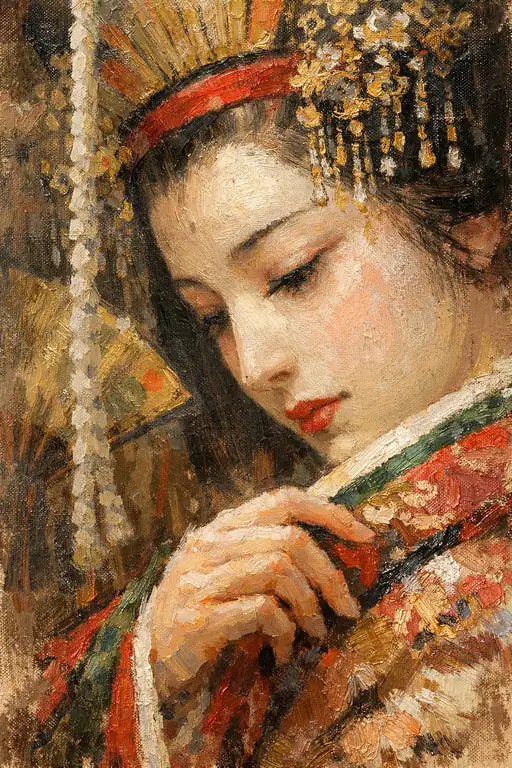 Embrace of the Twilight Sky
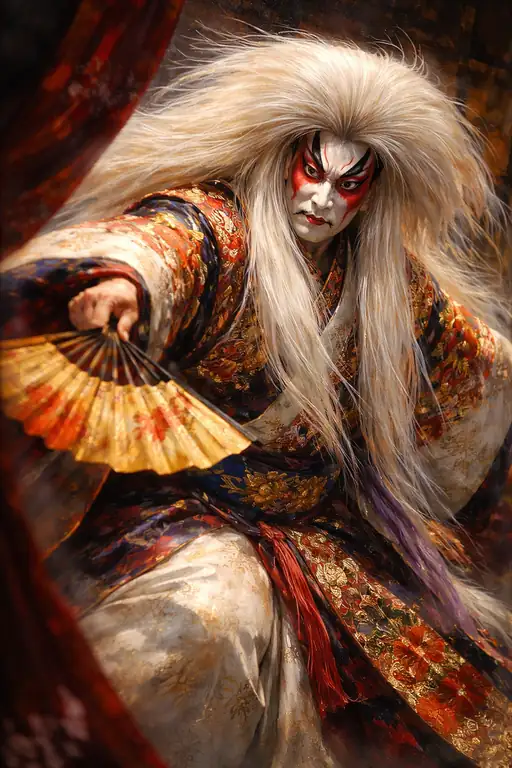 The Fierce Visage of Kumadori
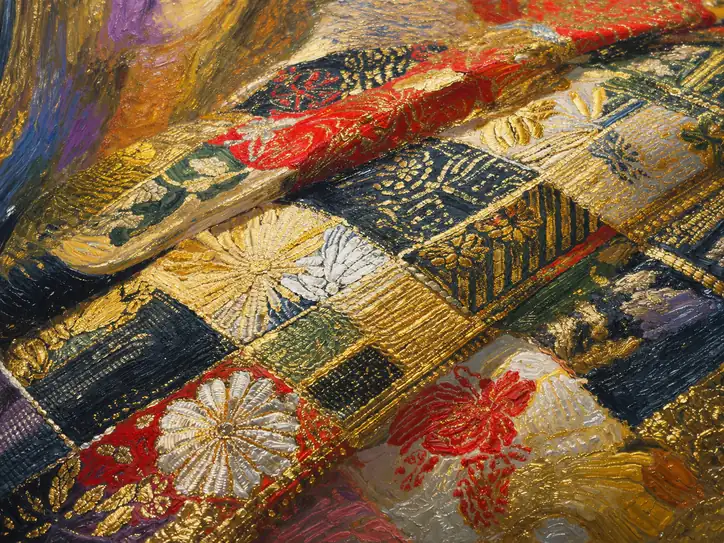 Lustrous Layers of Tradition
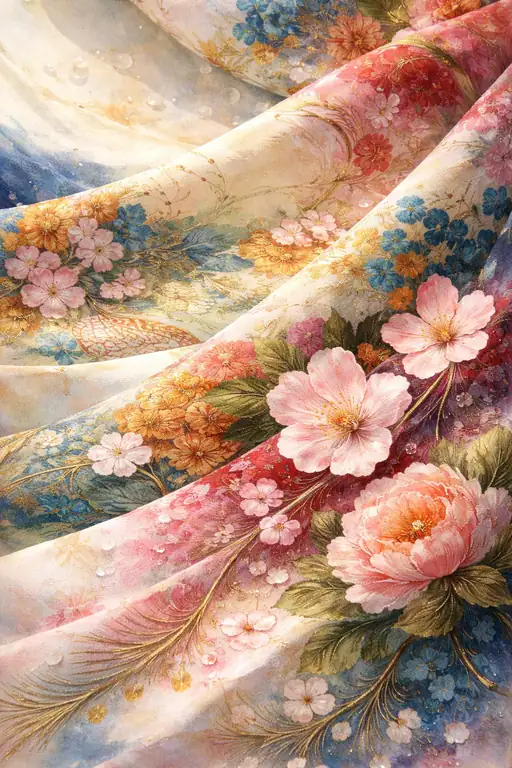 Ephemeral Dewdrops on Woven Silk
 Dance of the Silk Guardian
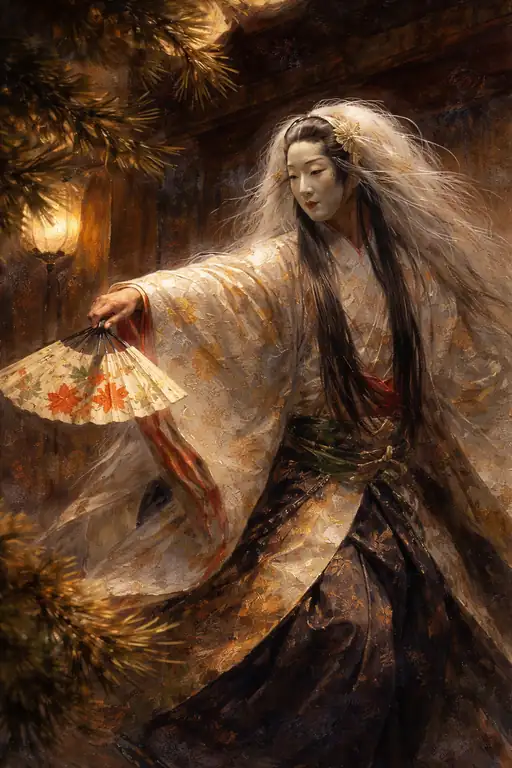 The Mystical Gaze of the Ghostly Figure
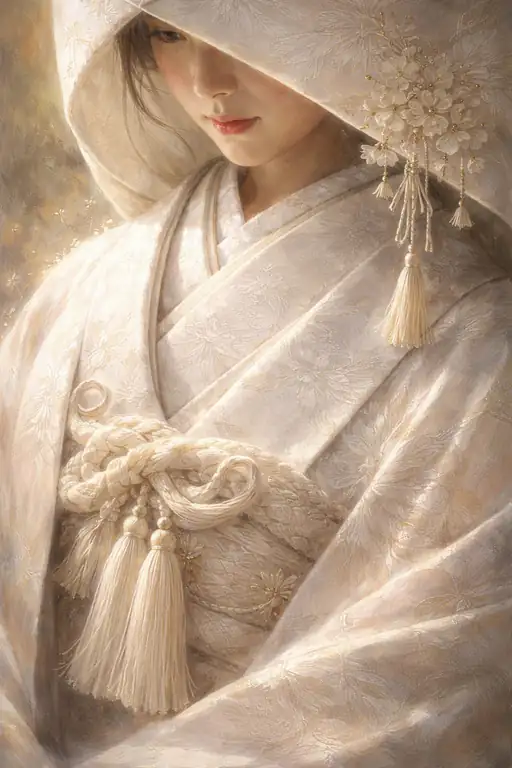 Silent Reverence Beneath the Ivory Veil