
Embroidered Slumber
Critique
1. Introduction This portrait offers a compelling exploration of the human form through the unconventional medium of fiber art and embroidery. By utilizing woven threads to construct a realistic face, the work challenges the boundaries between traditional handicraft and contemporary portraiture. The piece invites viewers to consider the relationship between the macro-scale image of a person and the micro-scale texture of the materials used to create it. 2. Description The composition is a tight, extreme close-up of a person's face with eyes closed in a peaceful, sleeping expression. The skin is rendered through a dense, intricate weave of fine threads in beige and cream tones, with reddish fibers integrated to simulate blush on the cheeks. The lips are highlighted with vibrant red, textured threads that suggest a glossy finish. Framing the face are golden-brown strands representing hair, while a delicate white lace border appears on the left and a floral element with a pearl-like detail occupies the lower right. 3. Analysis Technically, the artist demonstrates a remarkable command over the direction and density of the threads to create three-dimensional volume. Variations in the weaving pattern effectively mimic the subtle contours of the nose, eyes, and chin, using shadows generated by the physical relief of the surface. The transition from the fine, mesh-like skin texture to the thicker, more chaotic fibers of the hair provides a dynamic tactile contrast. This structural approach allows the work to function both as an abstract pattern of lines and as a coherent representational image. 4. Interpretation and Evaluation The choice of thread as a primary medium adds a layer of vulnerability and domestic intimacy to the depiction of the sleeping figure. The laborious process inherent in embroidery suggests a deep sense of care and time invested in capturing a single, fleeting moment of rest. The integration of lace and pearls further reinforces a sense of fragility and classical beauty. This work is highly successful in its ability to translate the softness of human skin into a structured, physical object without losing its expressive quality. 5. Conclusion Ultimately, the painting—or more accurately, the textile construction—succeeds in bridging the gap between tactile craftsmanship and emotional resonance. The initial fascination with the unusual technique eventually leads to a deeper appreciation for the serene mood of the subject. It stands as a sophisticated example of how innovative material choices can breathe new life into the traditional genre of portraiture.
 Roots of the Primeval Dream
 Gaze of the Mosaic Night
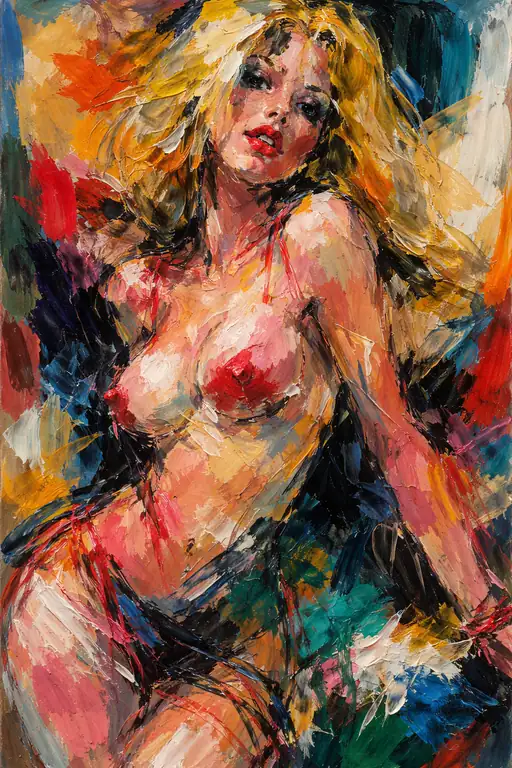 The Crimson Impulse Within
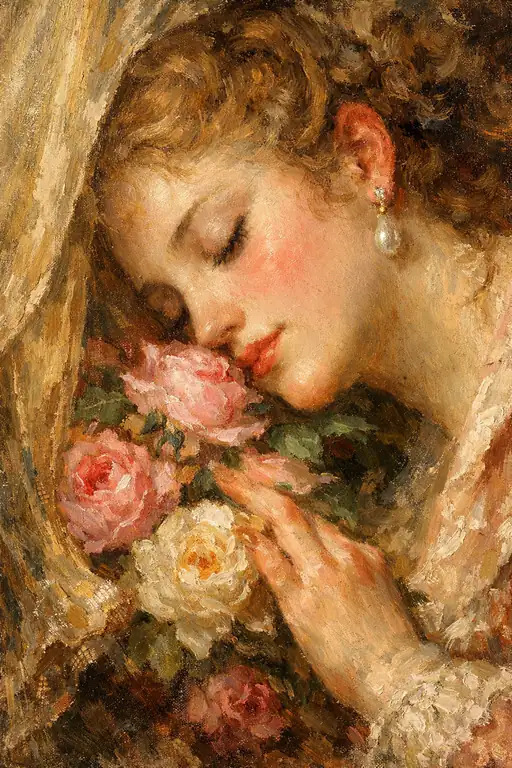 Lost in the Scent of Velvet
 The Silent Guardian's Rest
 Whispers of the Summer Meadow
 Vivid Visage
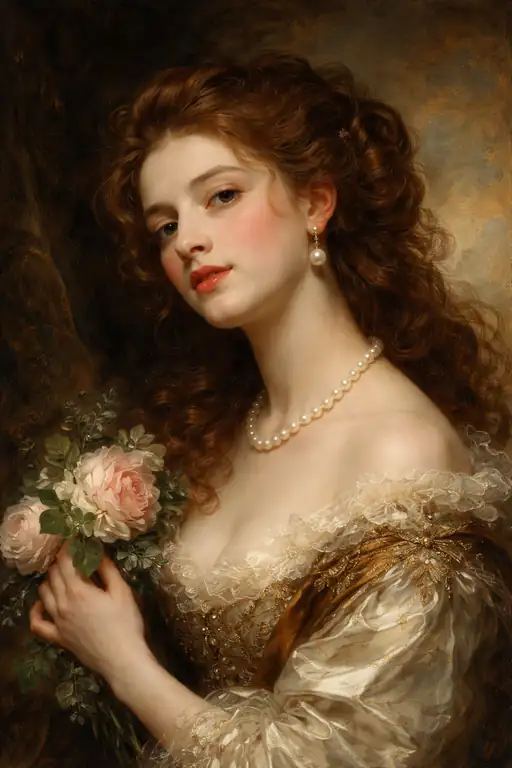 Grace Wrapped in Pearl and Rose
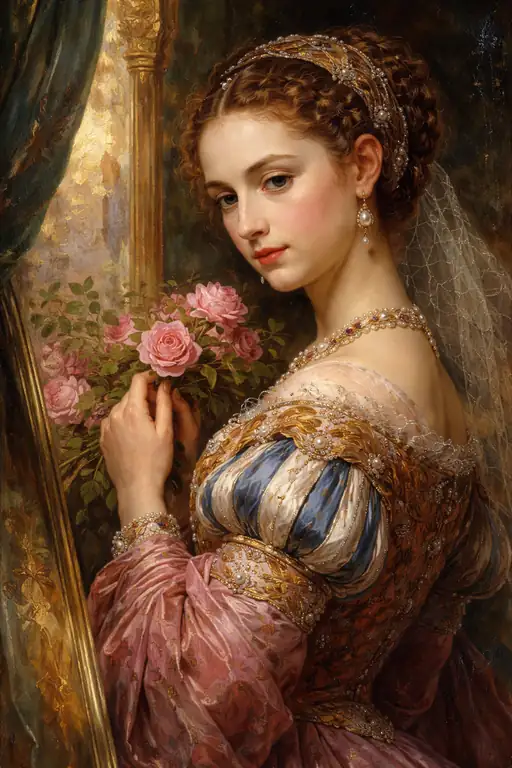 Elegance Blooming in the Quiet Shadows
 Twilight Grace in the Gilded Garden
 Whispers of the Gilded Rose