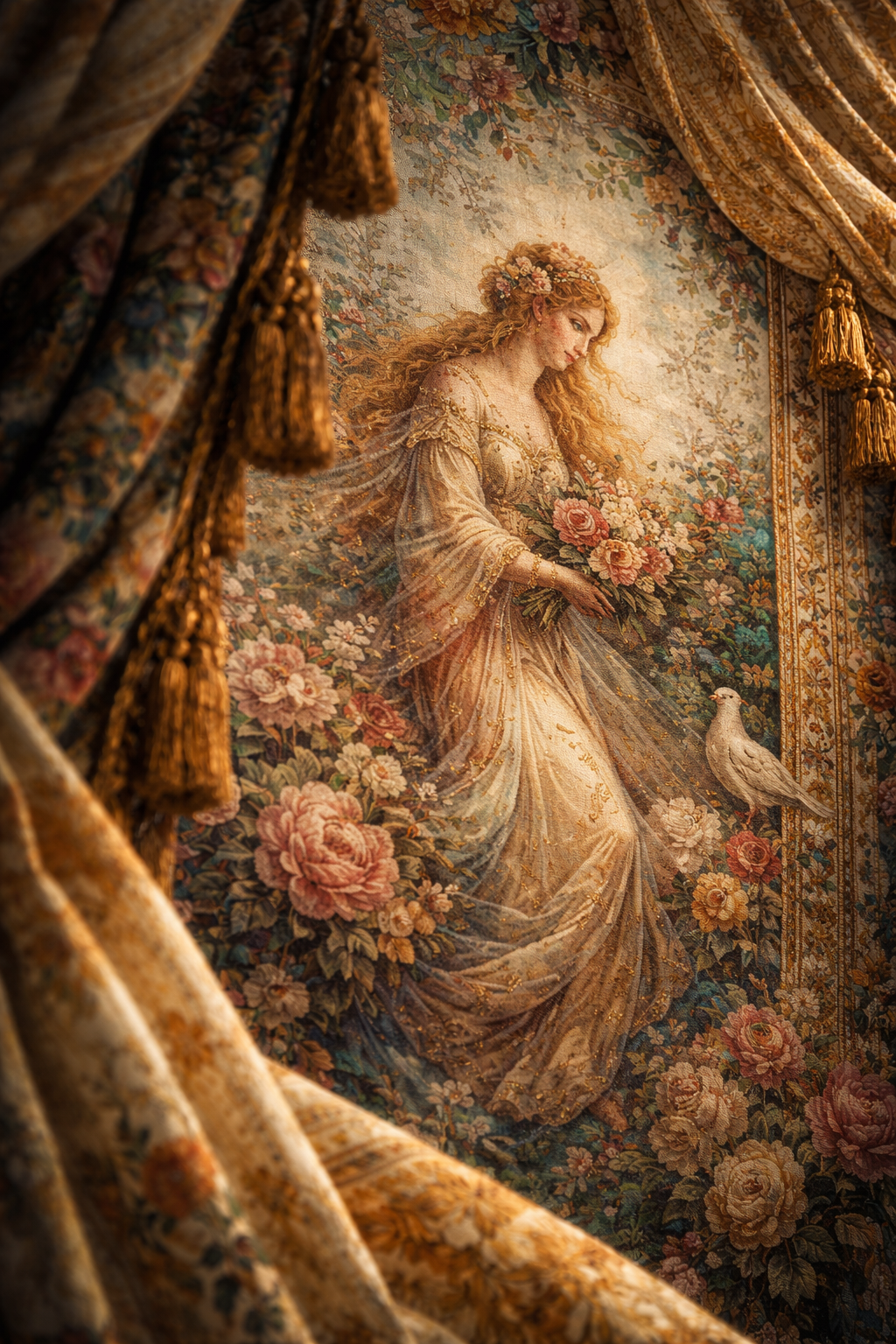
Goddess of the Roses
Critique
1. Introduction This classical oil painting depicts an allegorical scene featuring a central female figure amidst a lush floral landscape. Framed by heavy, ornate curtains, the work evokes the grandeur of theatrical performance and the romanticism of European classical traditions. The artist achieves a harmonious balance between detailed naturalism and stylized decoration, resulting in a composition that feels both timeless and deeply symbolic. 2. Description The center of the composition features a woman with flowing reddish-blonde hair, adorned with floral ornaments, holding a large bouquet of roses. She wears a semi-translucent, white and gold gown that drapes elegantly around her form. To her right, a small white dove is perched among the dense growth of pink and cream-colored roses that fill the background. The entire scene is viewed through parted, golden-patterned curtains embellished with large, detailed tassels that cast soft shadows in the foreground. 3. Analysis Technically, the painting is characterized by its rich, warm color palette and an extraordinary level of ornamental detail. The lighting is focused on the central figure, creating a subtle luminescence that suggests a divine or supernatural presence. The use of heavy curtains as a framing device adds a sense of depth and artifice, suggesting that the viewer is peeking into a sacred or private realm. The rhythmic repetition of floral patterns in the background creates a complex tapestry-like texture that unifies the various elements of the scene. 4. Interpretation and Evaluation The work can be interpreted as an ode to spring, fertility, or the idealized beauty of nature. The presence of the dove and the abundance of roses traditionally symbolize peace, love, and purity, aligning the piece with Renaissance and Pre-Raphaelite motifs. The artist's technical skill is evident in the rendering of diverse textures, from the softness of the flower petals and the gossamer quality of the gown to the heavy weight of the velvet curtains. This mastery of material representation elevates the subject from a simple portrait to a profound study of beauty and grace. 5. Conclusion Ultimately, the painting serves as a sophisticated tribute to the enduring power of classical aesthetics. The initial impression of overwhelming opulence is supported by a solid underlying structure and a thoughtful approach to symbolism. This piece succeeds in creating a vivid, immersive world that celebrates the intersection of human elegance and the natural world.
Same Subcategory
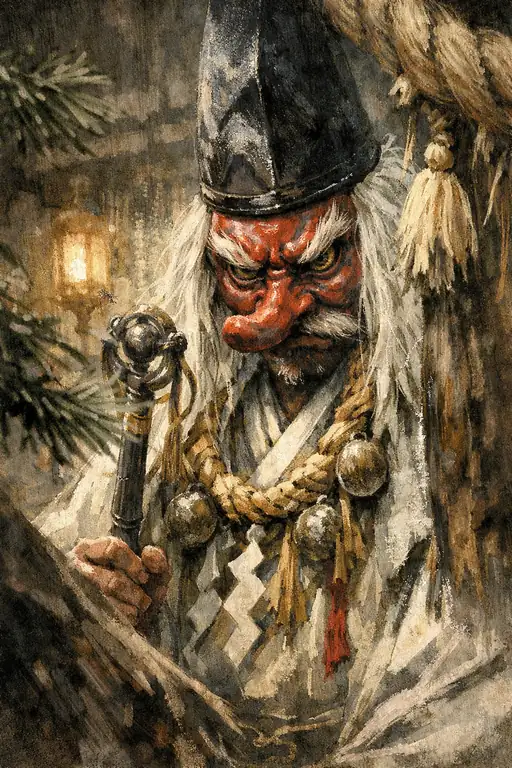 The Lantern Bearer's Enigma
Similar Artworks
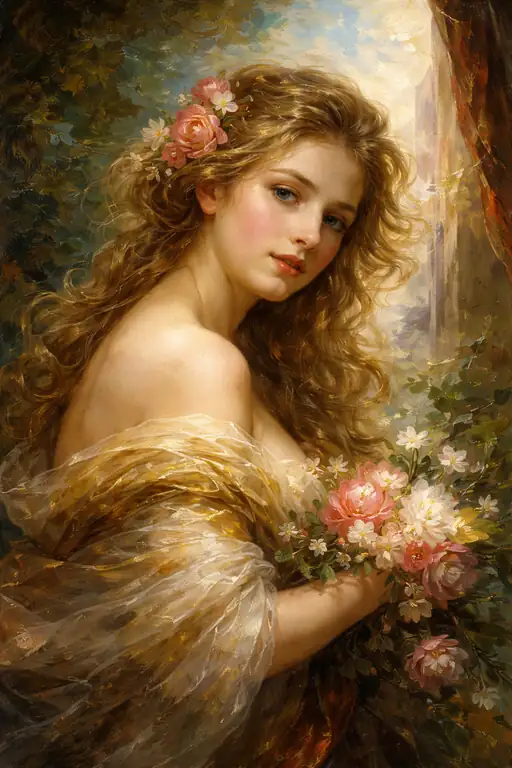 The Muse Awakens in Spring
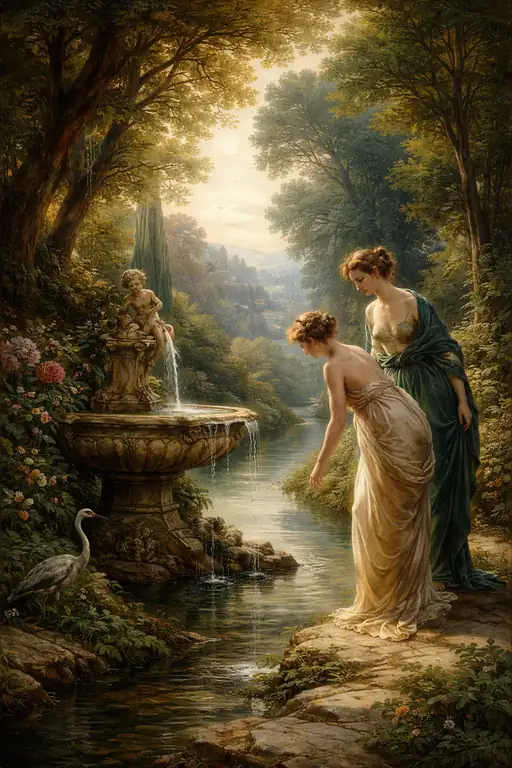 Two Young Women by a Classical Fountain in a Forest
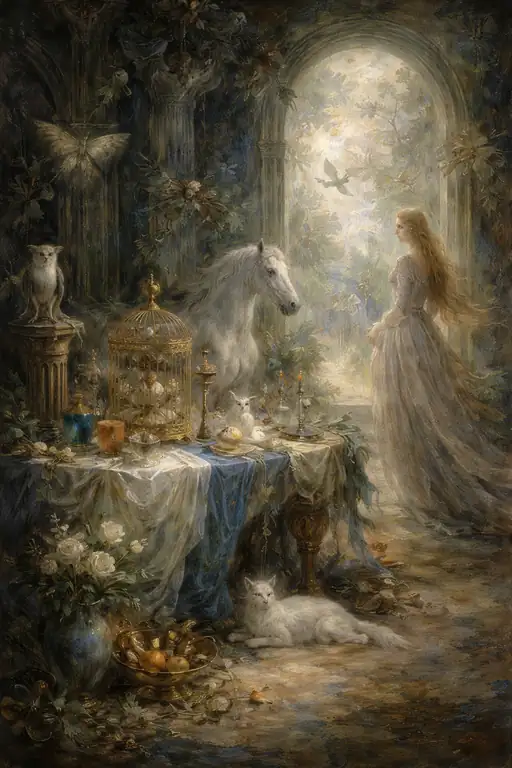 Whispers of the White Guardian
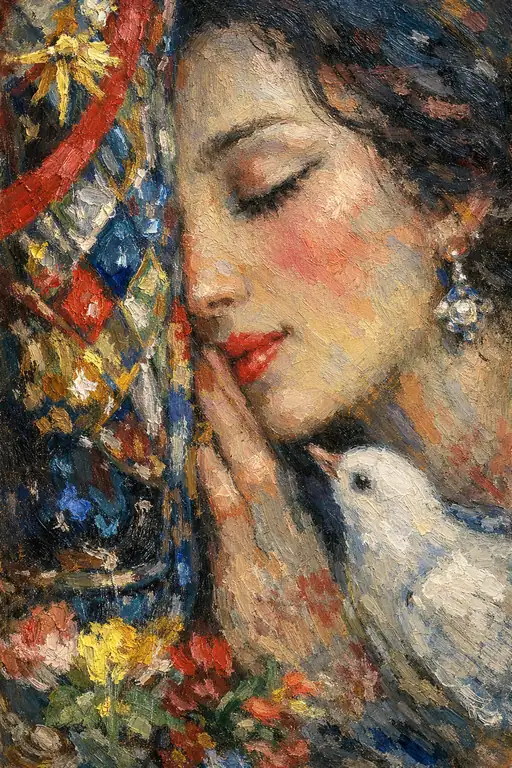 The Slumbering Dove's Dream
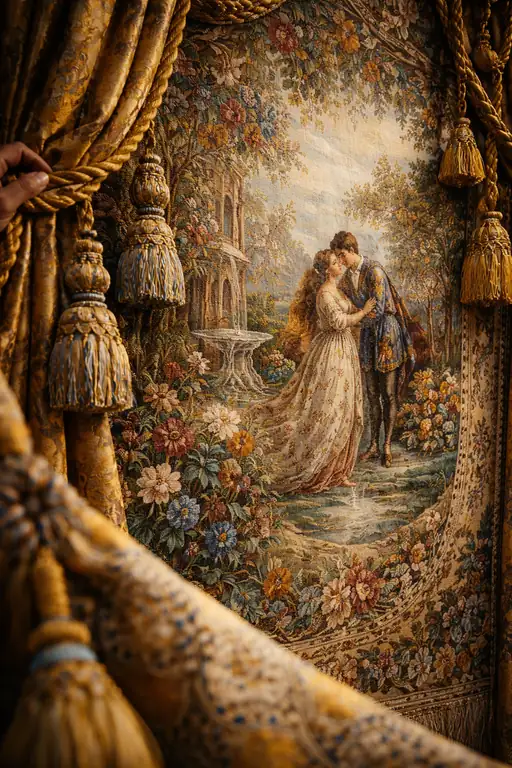 Radiant Mediterranean Dream
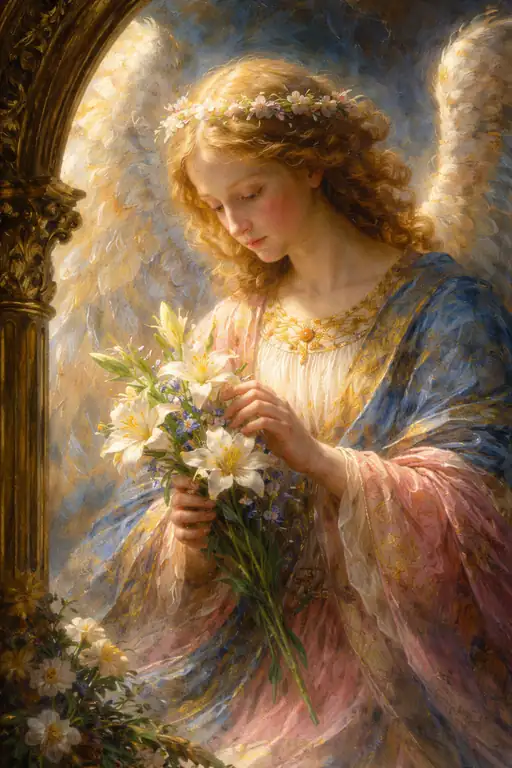 Ethereal Grace Descending
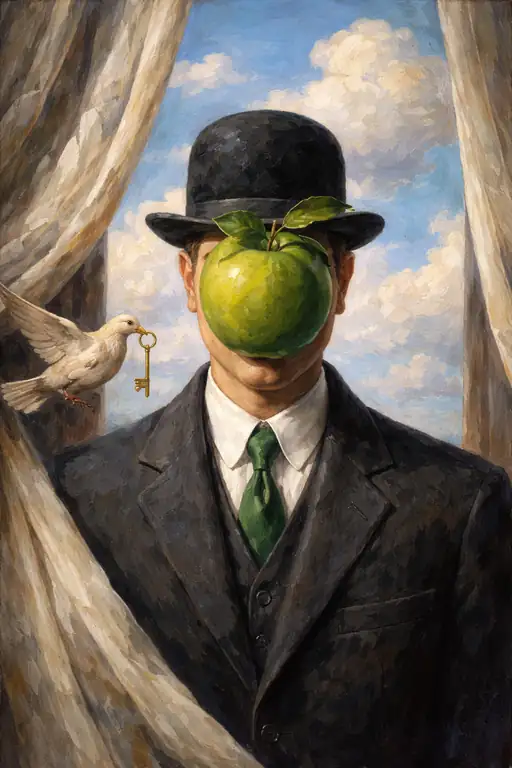 The Magritte Paradox: Behind the Apple
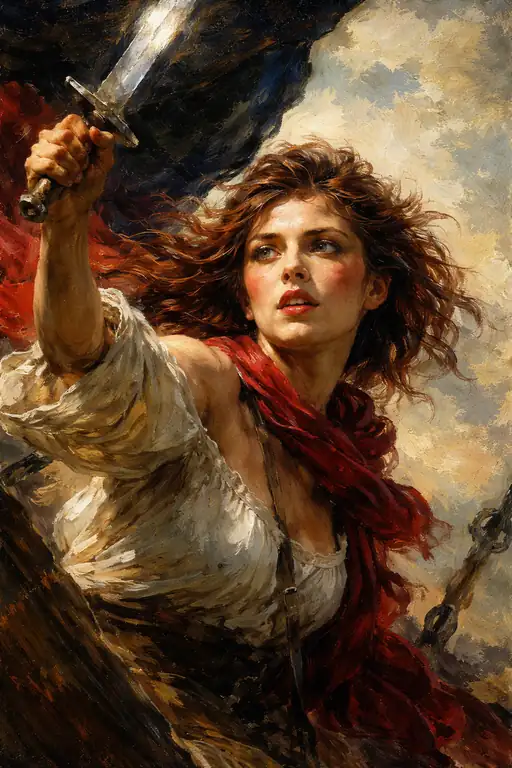 A Revolutionary's Defiance in the Wind
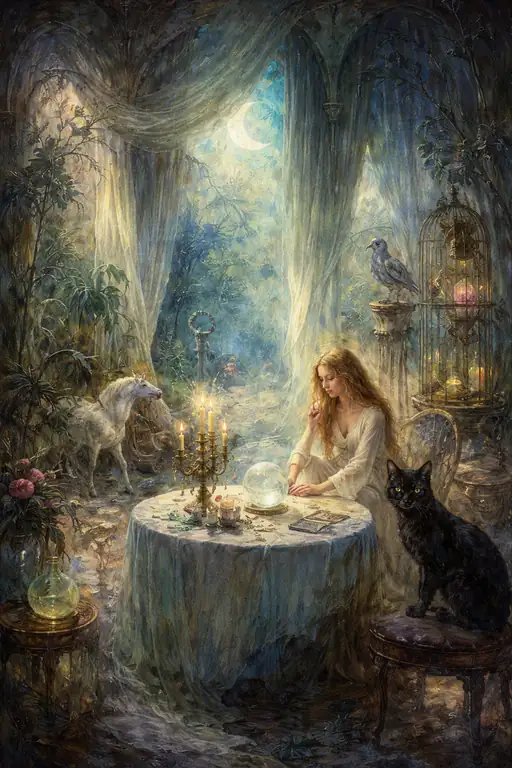 Whispers of the Crescent Oracle
 Guardian of the Golden Ember