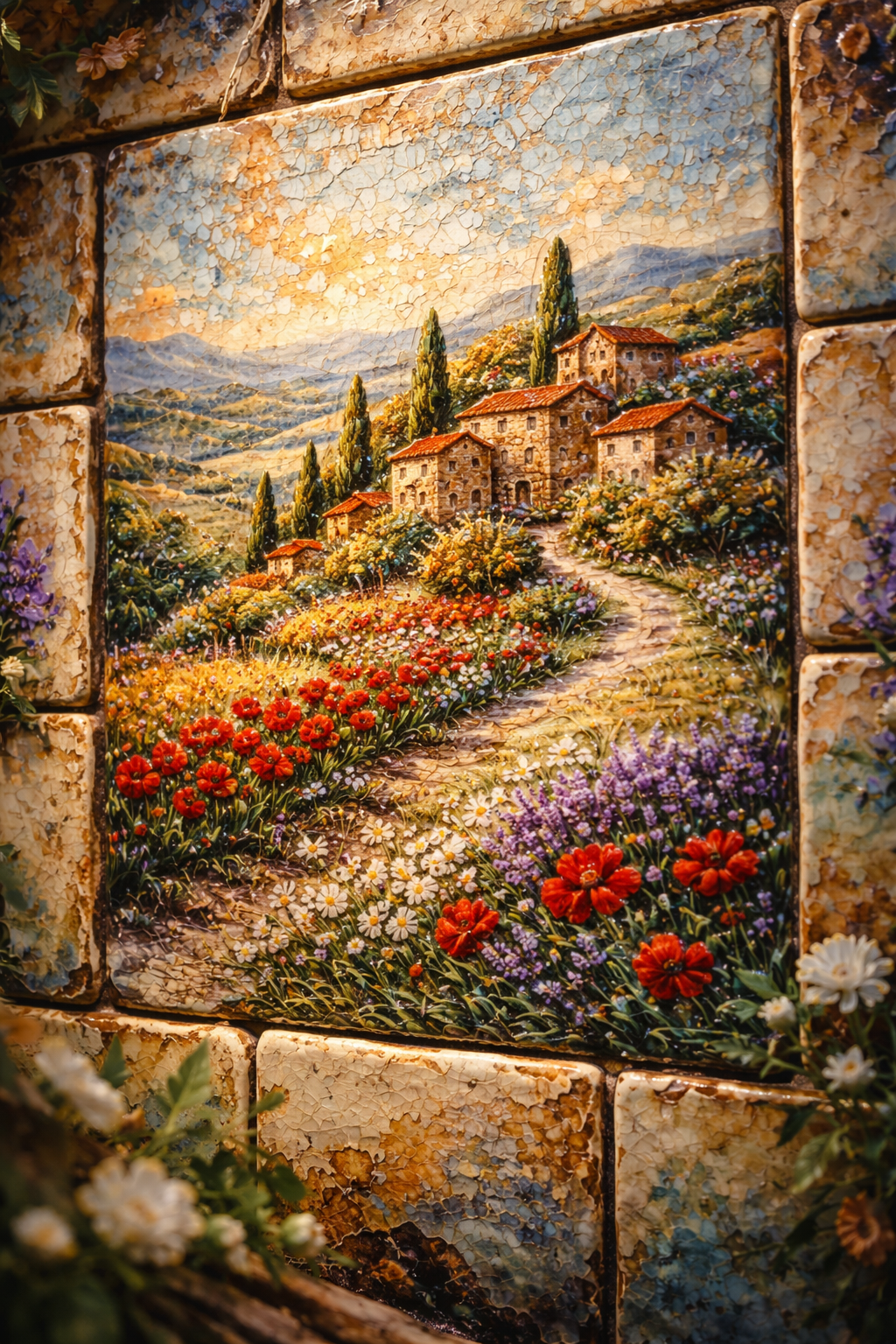
Tuscan Village in Bloom
Critique
1. Introduction This work presents a sun-drenched Mediterranean landscape rendered in an impressionistic style across a series of ceramic tiles. The choice of medium imbues the scene with a rustic, architectural quality, grounding the idyllic scenery in the physical textures of traditional craftsmanship. By blending representational painting with the weathered surface of glazed earthenware, the piece offers a multifaceted exploration of regional identity and the passage of time. 2. Description The central composition depicts a picturesque hillside village characterized by stone dwellings with terracotta-tiled roofs, surrounded by slender cypress trees. A winding earthen path leads the viewer's eye from a foreground overflowing with vibrant wildflowers—including red poppies, white daisies, and purple lavender—up toward the cluster of buildings. The entire image is divided into rectangular sections corresponding to individual tiles, each featuring a distinct "crazing" or crackle pattern in the glaze. Realistically rendered white blossoms appear in the immediate foreground, further blurring the line between the painted world and physical reality. 3. Analysis Technically, the artist utilizes a pointillist-inspired brushwork that effectively captures the shimmering quality of intense sunlight. The gold and ochre tones in the sky and hills are balanced by the saturated hues of the floral meadow, creating a lively visual rhythm. The structural grid of the tiles provides a sense of permanence and solidity that contrasts with the fleeting, delicate nature of the painted flora. Furthermore, the deliberate use of the crackle glaze adds a layer of artificial aging, lending the work an antique, historical resonance despite its vibrant color palette. 4. Interpretation and Evaluation The work can be interpreted as a nostalgic reflection on the enduring beauty of the rural Mediterranean. The contrast between the fragmented, cracked surface of the tiles and the exuberant, blooming life of the garden suggests a dialogue between the fragility of human structures and the resilience of nature. The artist's ability to maintain a coherent perspective across multiple tile segments is commendable, as it requires meticulous planning and execution. The composition successfully evokes a sensory experience, nearly allowing the viewer to feel the warmth of the sun and the texture of the stone. 5. Conclusion Ultimately, the piece stands as a successful integration of fine art and decorative craft. The initial impression of a simple landscape gradually reveals a deeper engagement with materiality and architectural form. By transforming a functional object like a ceramic tile into a window onto a vibrant world, the artist creates a bridge between domestic environments and the expansive beauty of the outdoors.
Same Subcategory
 Fortress Among the Alpine Flora
Similar Artworks
 Sunlit Echoes on the Mediterranean Stone
 Sunlit Harmony in the Hidden Cottage
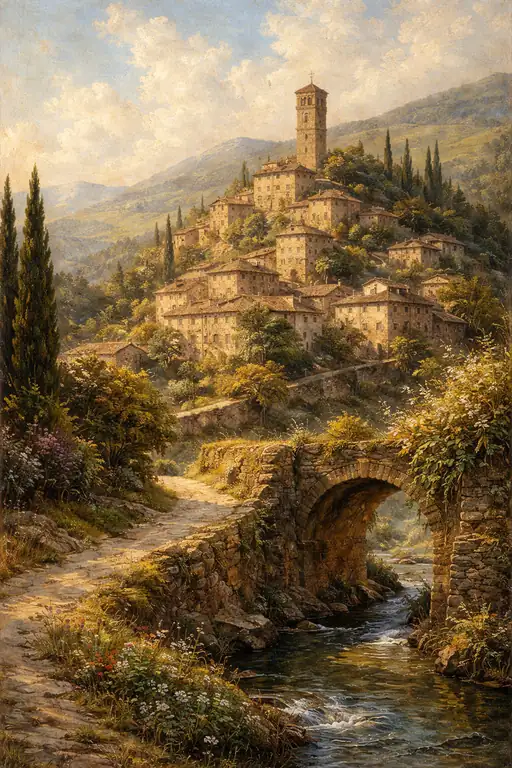 A Tuscan Lullaby in Stone and Sky
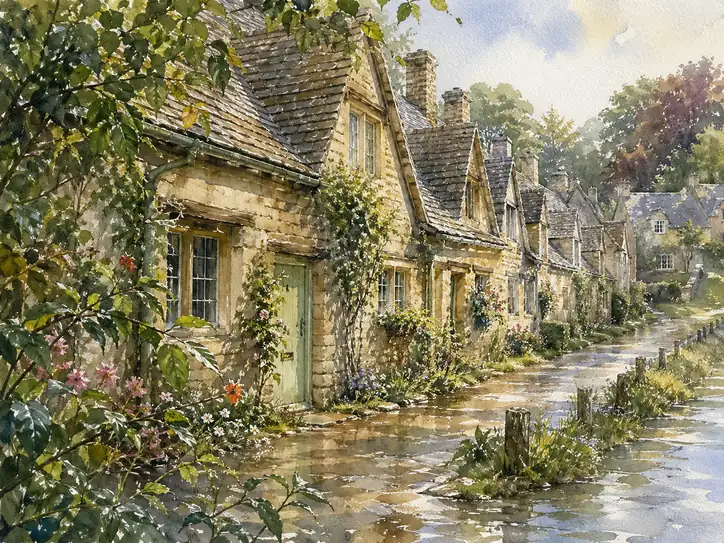 After the Rain: A Quiet Nostalgia
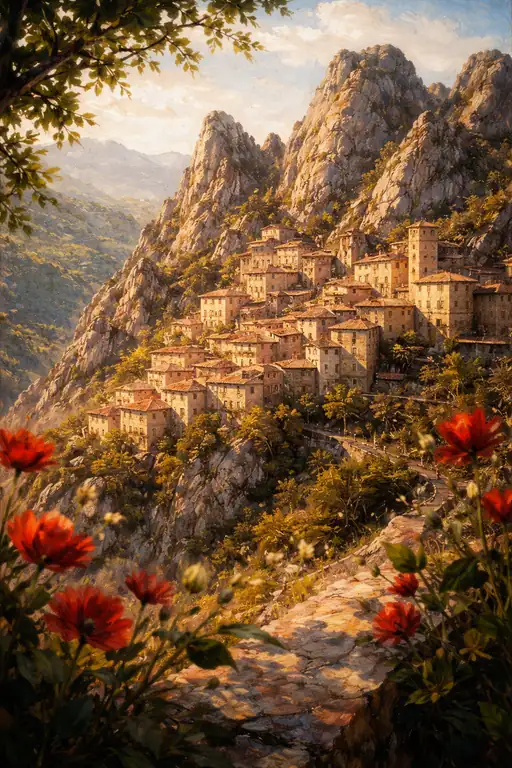 Crimson Ascent
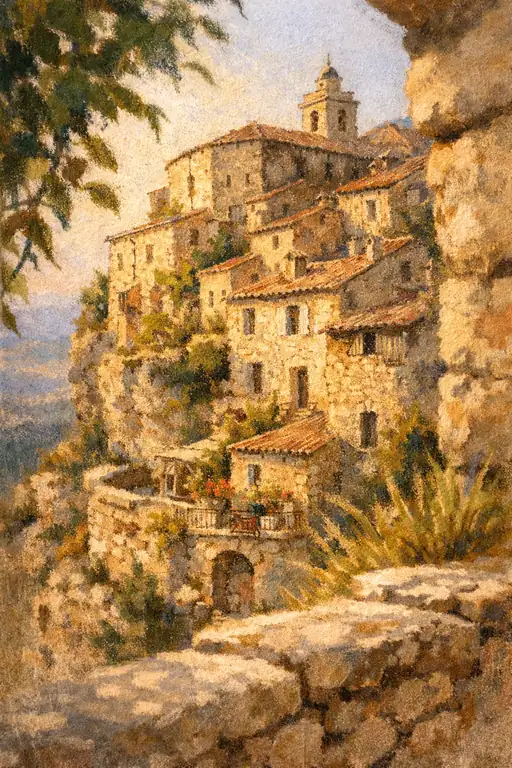 Golden Ascent to the Medieval Bell
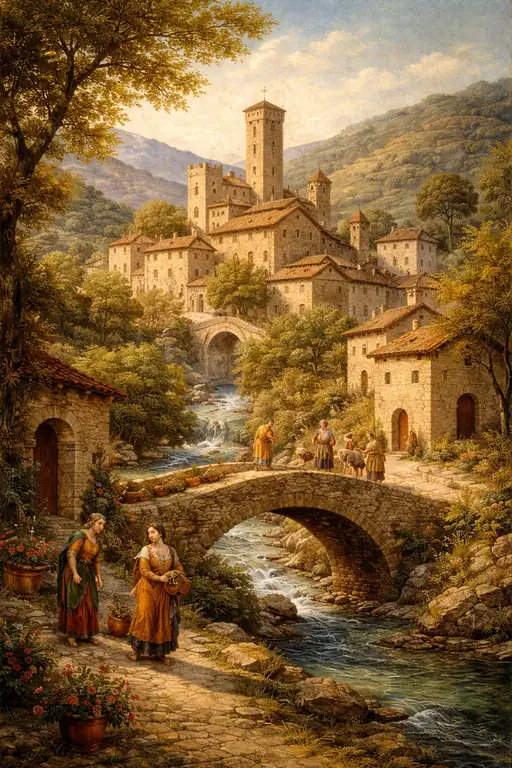 The Eternal Embrace of the Stone Arch
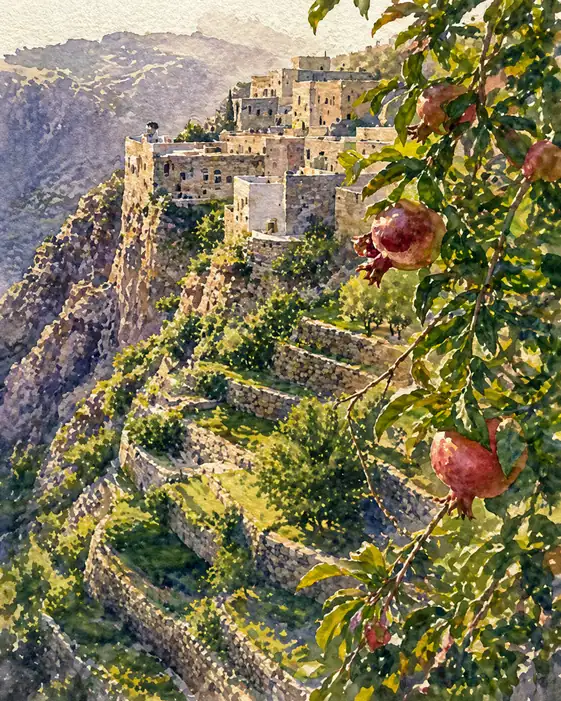 Harvest on the Terraced Slopes
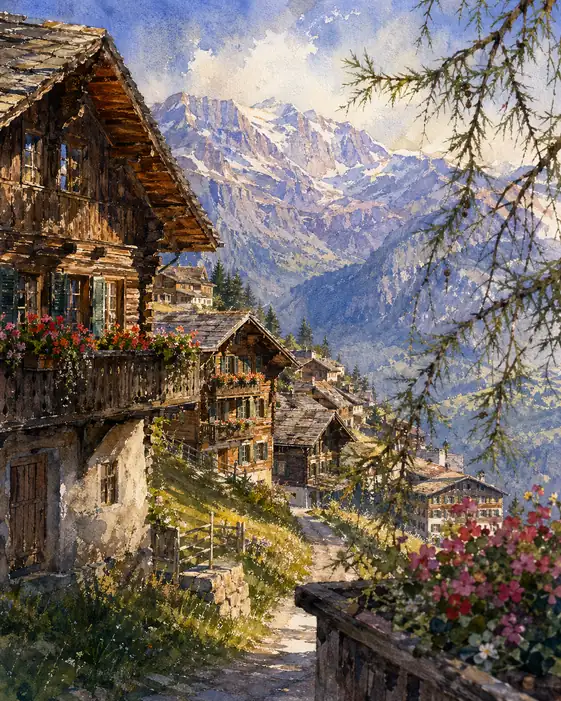 Luminous Alpine View with a Chalet Balcony
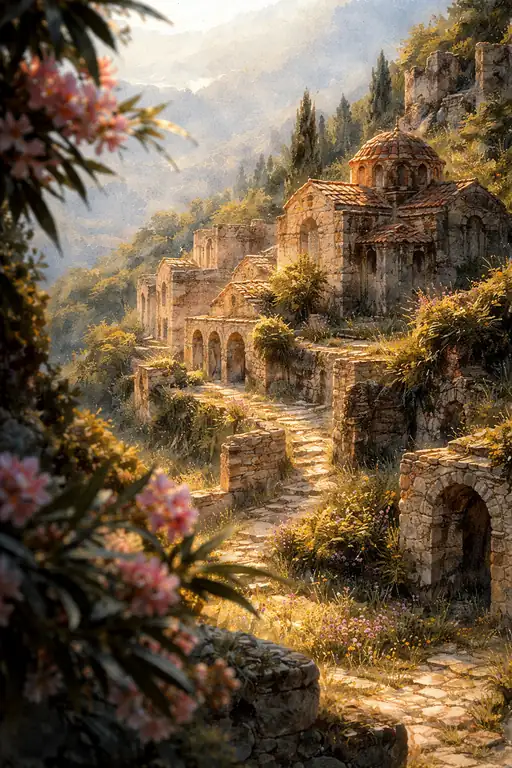 Whispers of the Mount: A Byzantine Reverie