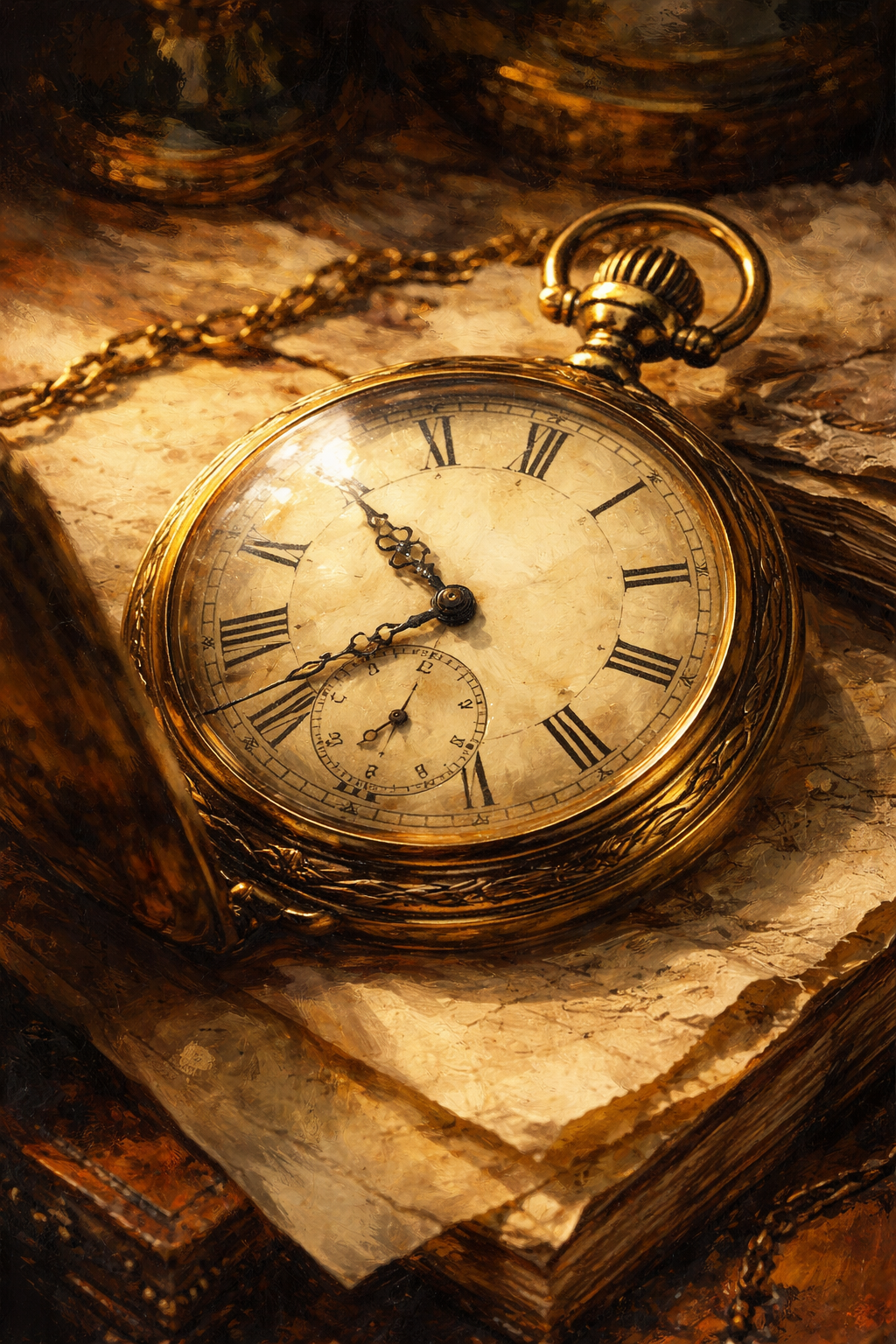
The Weight of the Hours
Critique
1. Introduction This evocative still life painting centers on a vintage gold pocket watch resting atop a stack of brittle, yellowed parchment. The work draws inspiration from the classical tradition of vanitas painting, which utilizes everyday objects to contemplate the passage of time and the transience of life. By focusing on a highly crafted instrument of temporal measurement, the artist creates a poignant visual metaphor for the weight of history and the inevitability of change. 2. Description The focal point is an ornate gold-cased pocket watch, its face featuring faded Roman numerals and delicate, filigreed hands. It lies haphazardly on several sheets of irregularly torn paper, whose edges are darkened by age and exposure. A fine gold chain extends from the watch’s crown, winding elegantly across the upper portion of the frame. The background is dark and indistinct, allowing a concentrated, warm light source to emphasize the gleaming surfaces of the metal and the rough texture of the paper. 3. Analysis The composition is tightly cropped, forcing the viewer into an intimate encounter with the subject. The artist employs a warm, monochromatic color palette dominated by ambers, ochres, and siennas, which unify the disparate materials. A masterful application of light highlights the convex glass of the watch and the intricate engravings on its case, creating a sharp contrast with the deep, velvety shadows. The visible but refined brushwork adds a tactile quality that enhances the realism of the weathered parchment. 4. Interpretation and Evaluation The work can be interpreted as a silent meditation on the fragility of human memory and the clinical precision of time. The watch, representing structural order and technical skill, sits atop documents that suggest fading records or forgotten communications, highlighting the tension between permanence and decay. Technically, the rendering of reflections on the polished gold and the subtle transparency of the glass is exceptional, demonstrating a sophisticated understanding of light and material properties. 5. Conclusion While the viewer is initially captivated by the opulent luster of the gold, the painting ultimately encourages a more somber reflection on the relentless nature of time. This transition from admiring a decorative antique to acknowledging the gravity of its function is the core of the work's emotional impact. The artist has successfully captured a moment of profound stillness that speaks to the enduring search for meaning within the fleeting moments of our existence.
Same Subcategory
 Heartbeat of Eternity
Similar Artworks
 A Nostalgic Meditation on Time's Elegance
 The Golden Hour of Decay
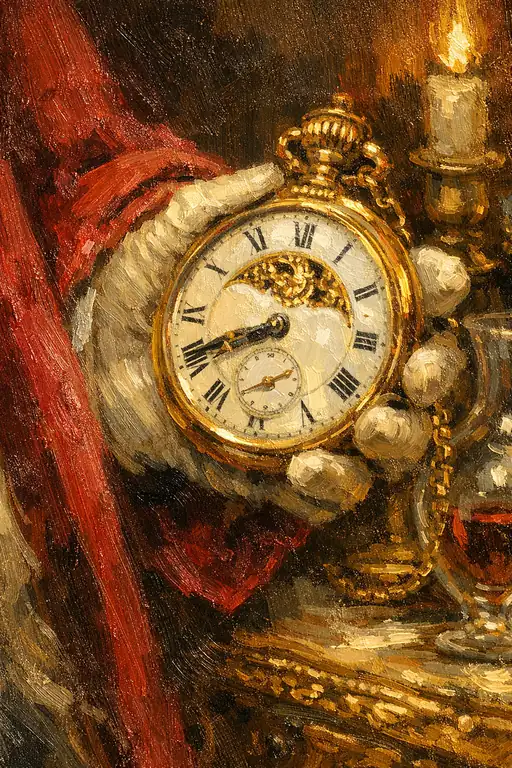 The Elegant Weight of Time
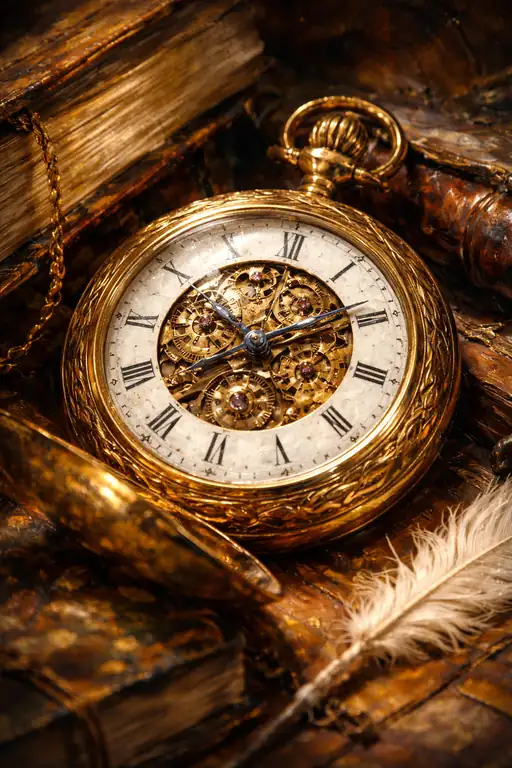 The Golden Echoes of a Forgotten Epoch
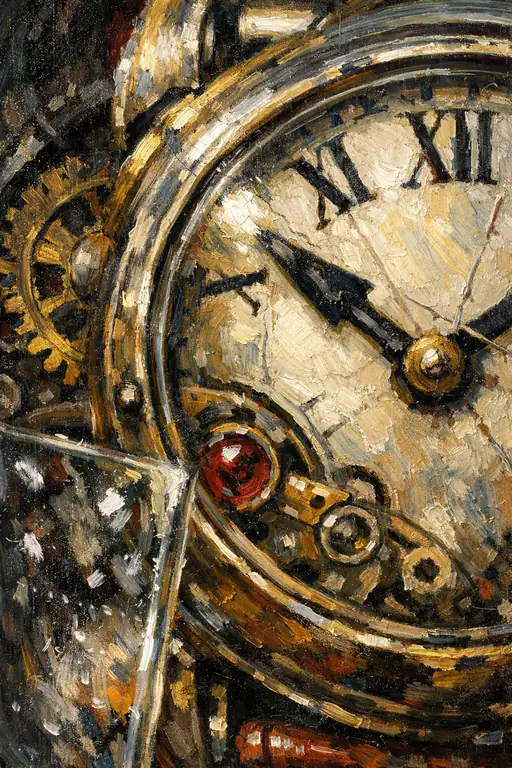 The Relentless Gears of Time
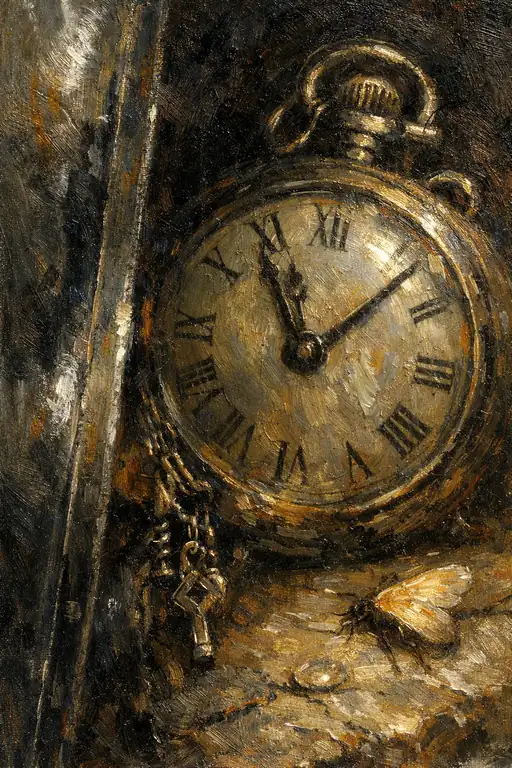 Whispers of a Timeless Moment
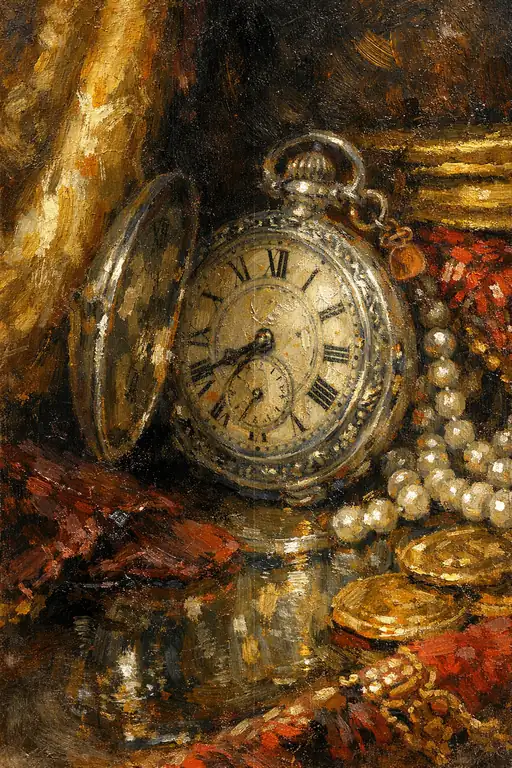 Echoes of Forgotten Time
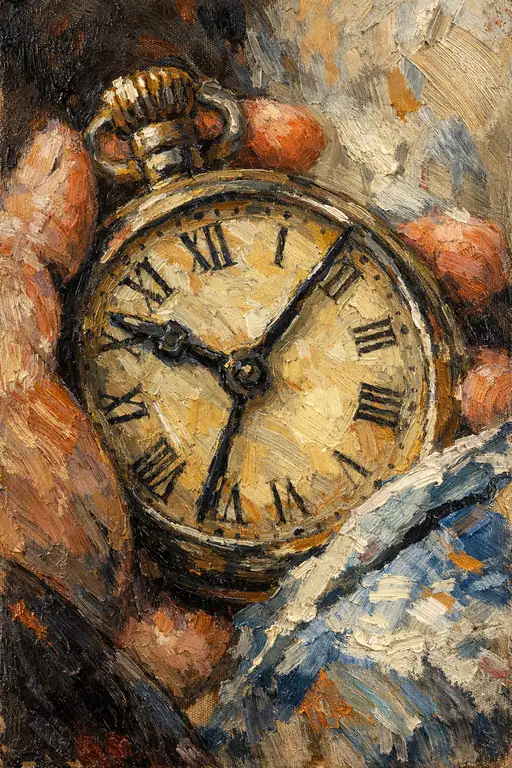 Holding the Weight of Painted Time
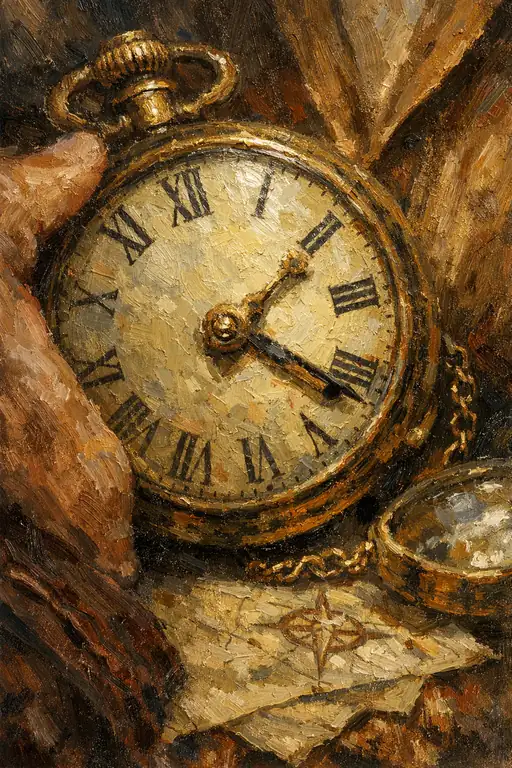 A Journey Guided by the Compass of Memories
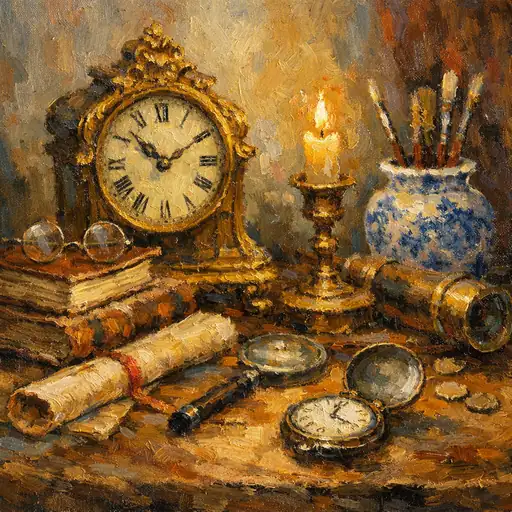 Whispers of the Golden Hour