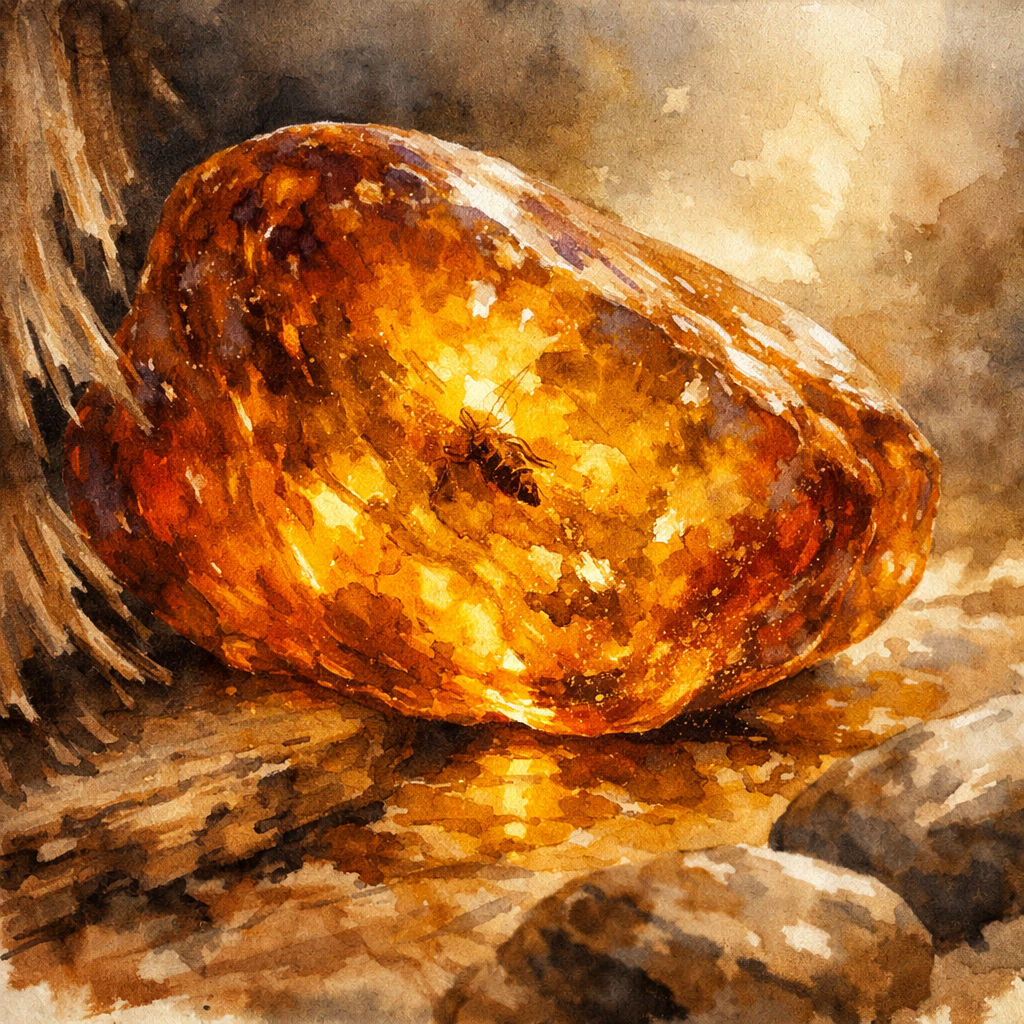
The Golden Tomb of the Lost Wings
Critique
1. Introduction This watercolor painting depicts a preserved specimen of amber, within which an ancient insect remains frozen in time. The artwork explores the intersection of geological history and biological life through a delicate medium, focusing on the luminescent quality of resin. It presents a captivating focus on the fragility of life captured within a durable natural capsule. 2. Description A large, translucent orange stone occupies the center of the frame, resting upon a rough, rocky surface. Inside the glowing amber, a small winged insect is clearly visible, its delicate appendages suspended in the solidified fluid. The background consists of muted earth tones and deep shadows that emphasize the central subject's radiance, creating a sharp contrast. 3. Analysis The artist utilizes the unique properties of watercolor to mimic the internal depths and light-refracting qualities of amber. Soft washes of golden yellow and burnt sienna create a sense of internal volume, while sharper strokes delineate the fossilized creature. The diagonal placement of the stone creates a dynamic yet balanced configuration, drawing the eye toward the preserved life forms. 4. Interpretation and Evaluation The piece serves as a meditation on the concept of preservation and the passage of eternal time. The contrast between the organic, fragile insect and the hard, protective resin highlights a poetic irony of nature's processes. The technical execution is exceptional, particularly in the handling of light and the subtle textures of the surrounding rocky terrain. 5. Conclusion This work transforms a scientific curiosity into a luminous artistic statement that resonates with a deep sense of wonder. The masterful control of the watercolor medium effectively captures the translucency of the stone, inviting the viewer to contemplate hidden histories. Ultimately, the painting bridges the gap between biological observation and spiritual reflection on the past.
Same Subcategory
Similar Artworks
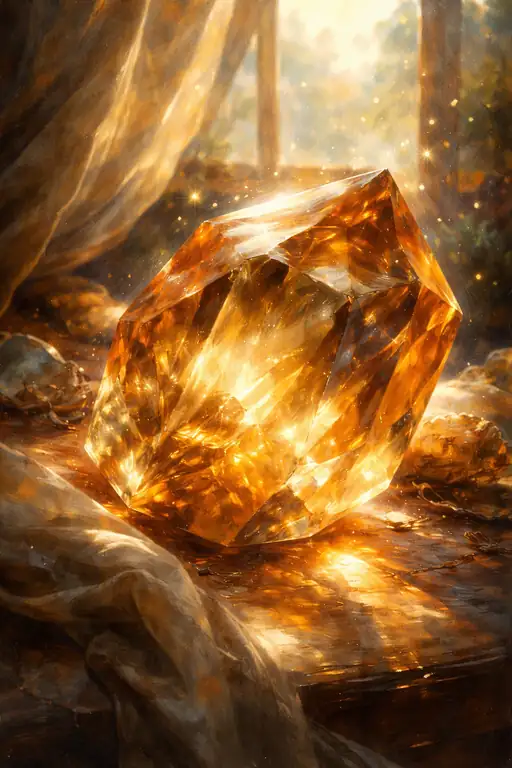 The Sapphire and Emerald Glow
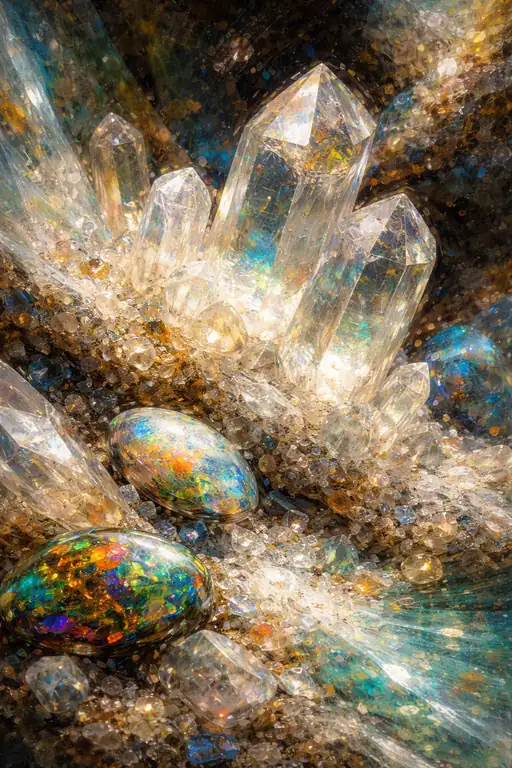 Echoes of the Earth's Hidden Magic
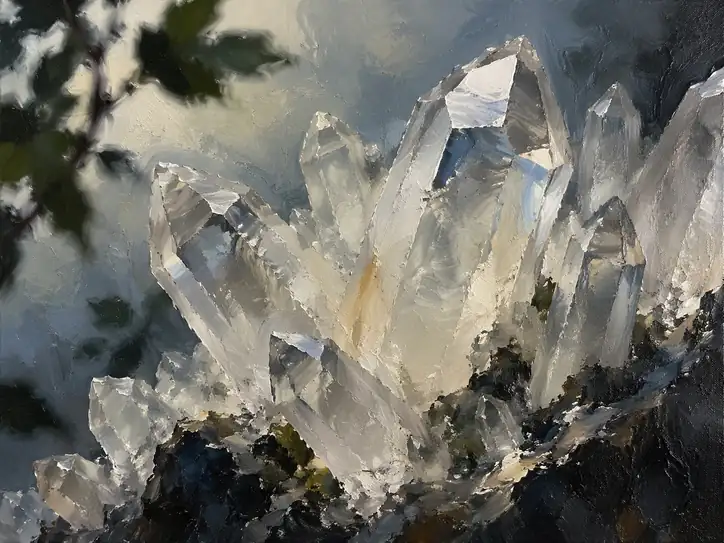 Crystalline Quietude
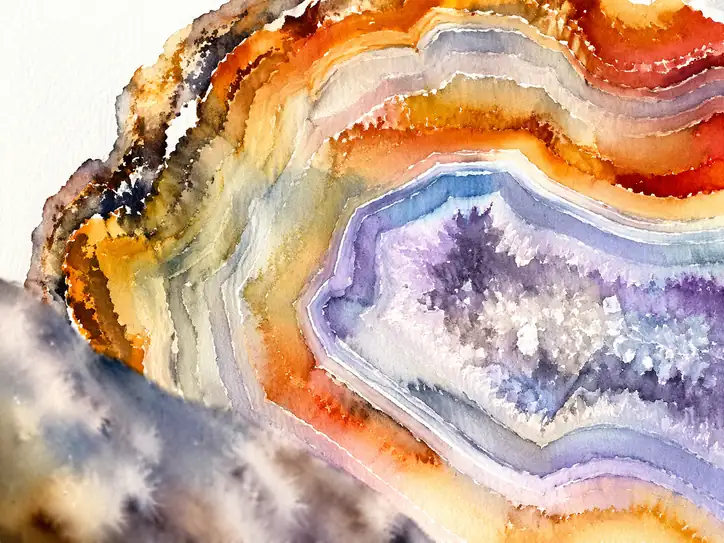 Geological Rhythms
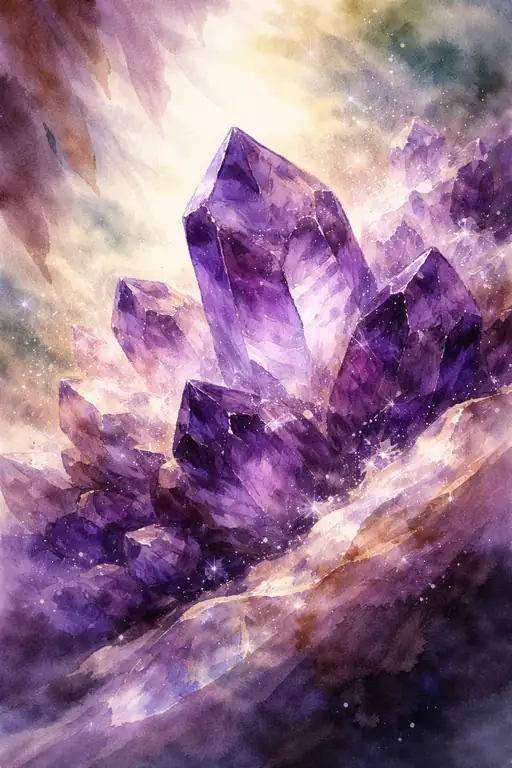 Luminous Wonders of Violet
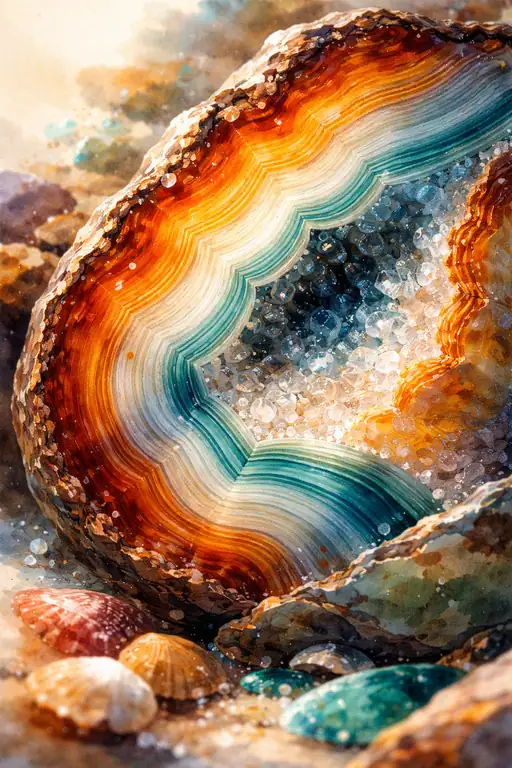 The Earth's Hidden Rainbow
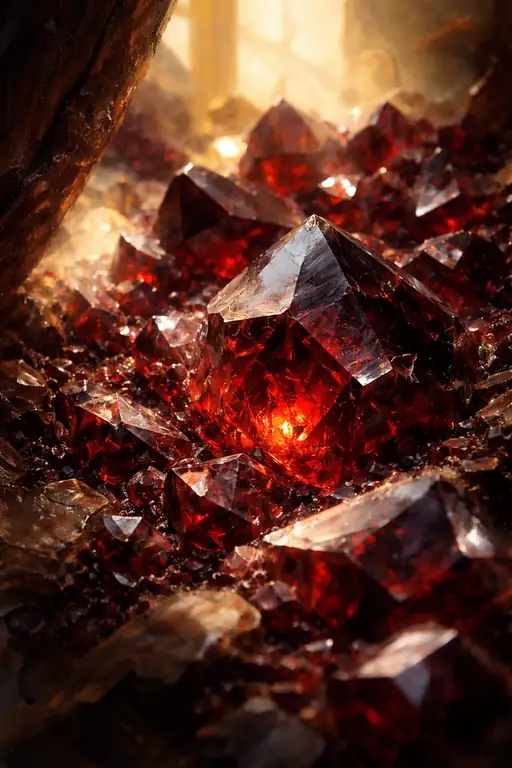 The Heart of the Cavern
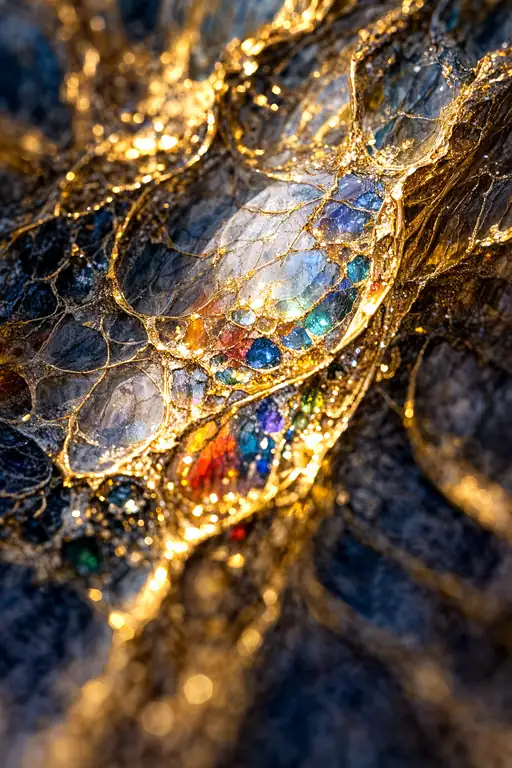 A Shimmering Matrix Woven from Threads of Starlight and Gold
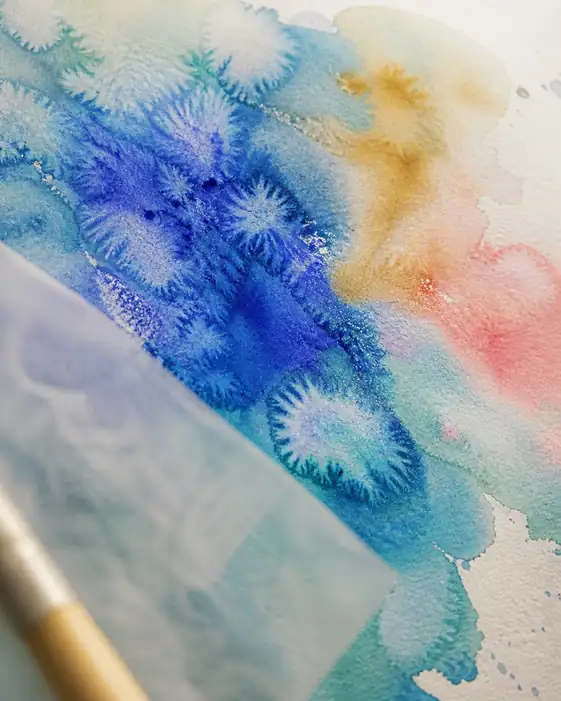 Crystallization of the Invisible
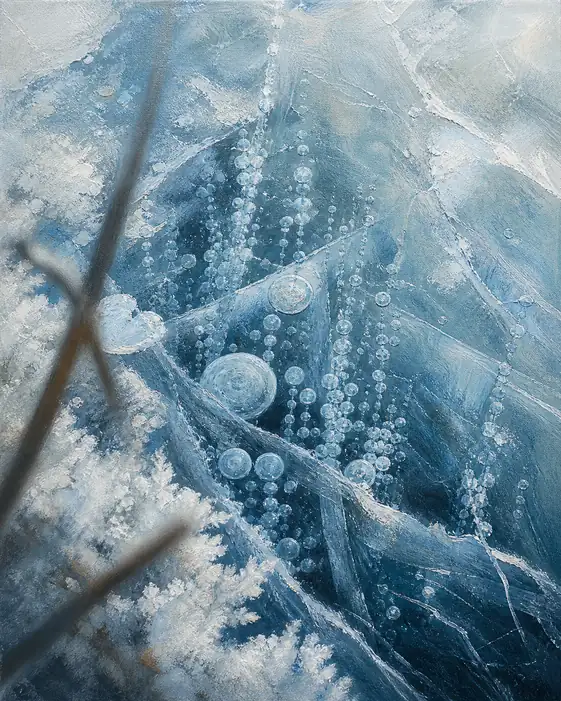 Breath Held in Blue Silence