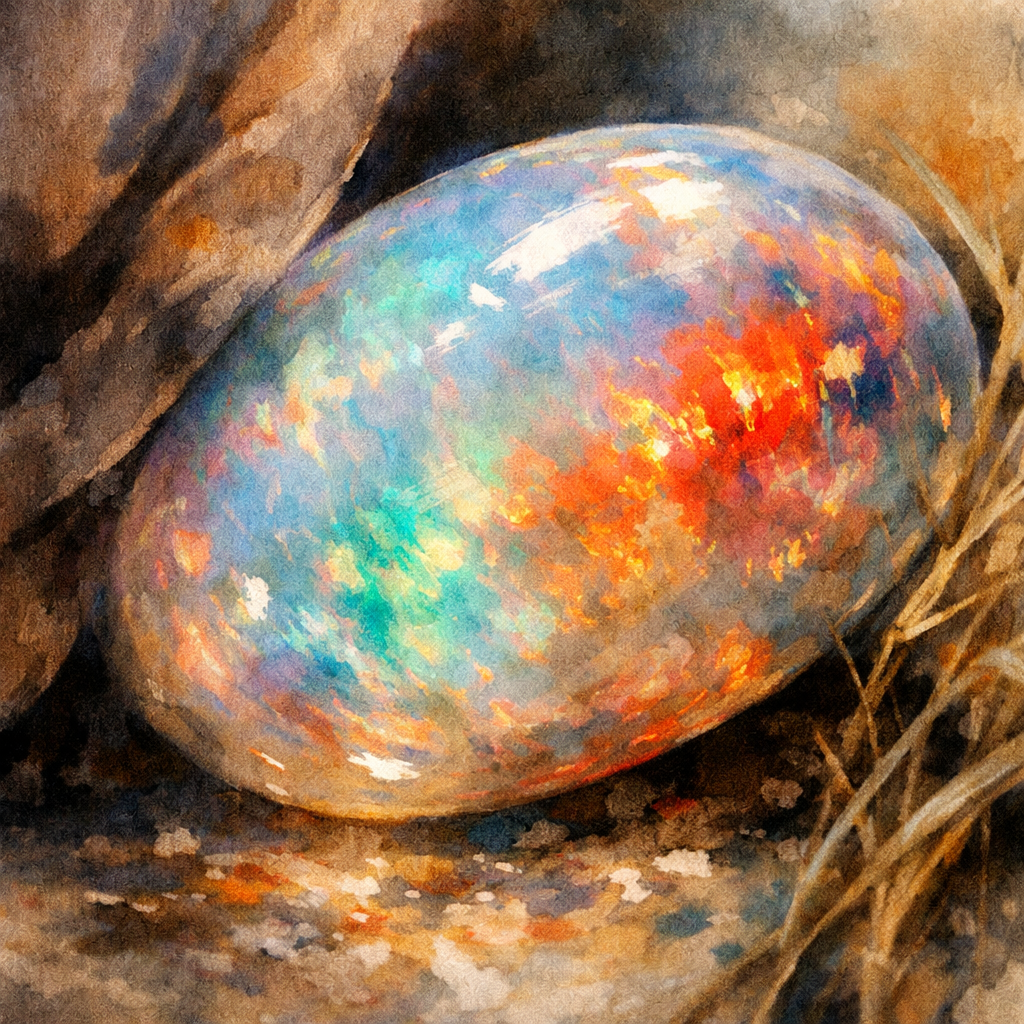
Heart of the Earth
Critique
1. Introduction This watercolor painting depicts a polished opal nestled in a quiet natural corner. The work captures a celestial dance of vivid hues trapped within its smooth surface. By contrasting iridescent brilliance with muted tones, the artist emphasizes the magic found in nature. It is a powerful still life exploring energy hidden within an inorganic object. 2. Description The focal point is an opal filled with fiery oranges and emerald greens. Resting on damp soil, it is flanked by a weathered rock and withered grass. A sharp white highlight reflects onto the ground, scattering droplets of colored light. The somber background allows the gemstone’s luminosity to command absolute attention. 3. Analysis The composition relies on tension between the stone’s interior and its coarse surroundings. Using the paper's grain, the artist employs various techniques to simulate complex optical properties. The rock and grass frame the stone, creating a monumental presence. High-intensity light flashes contrast sharply with the desaturated, earthy environment. 4. Interpretation and Evaluation The work meditates on light captured within geological time. Placed on the soil, the opal symbolizes the earth’s subterranean energy. Technically, the painting organizes a chaotic array of colors into a harmonious whole. It conveys the material's spirit, elevating a simple stone into a vessel of profound wonder and aesthetic value. 5. Conclusion The viewer eventually discovers a dialogue regarding the preservation of beauty in harsh environments. The gemstone functions as a beacon of hope, illuminating shadows with its internal glow. This synthesis of skill and vision successfully captures the luminous essence of one of nature’s most enigmatic creations.
Same Subcategory
Similar Artworks
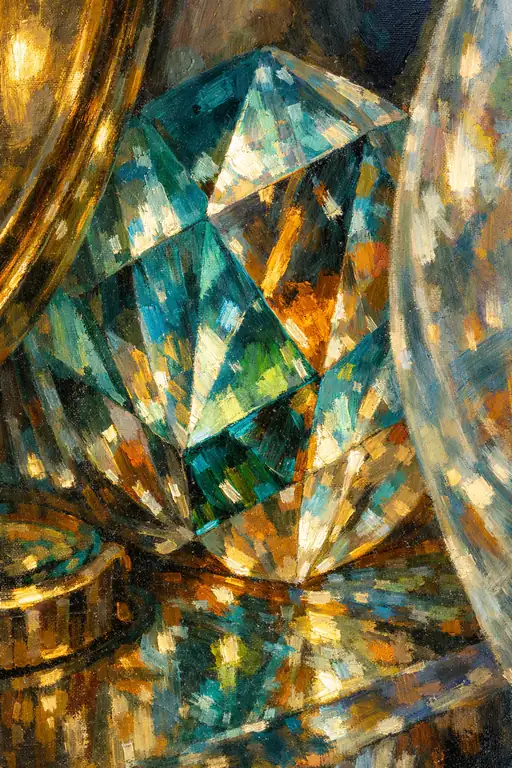 Fractured Dreams in Sapphire and Gold
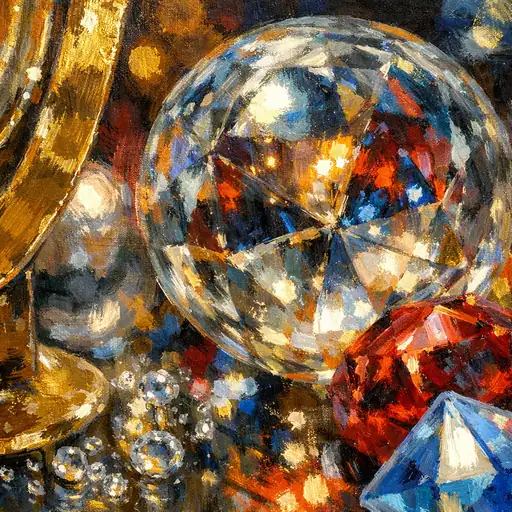 The Crystal Heart's Resonance
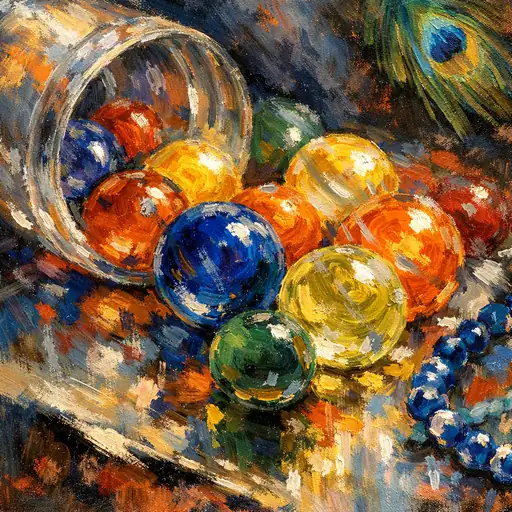 Chromatic Cascade: A Celebration of Light
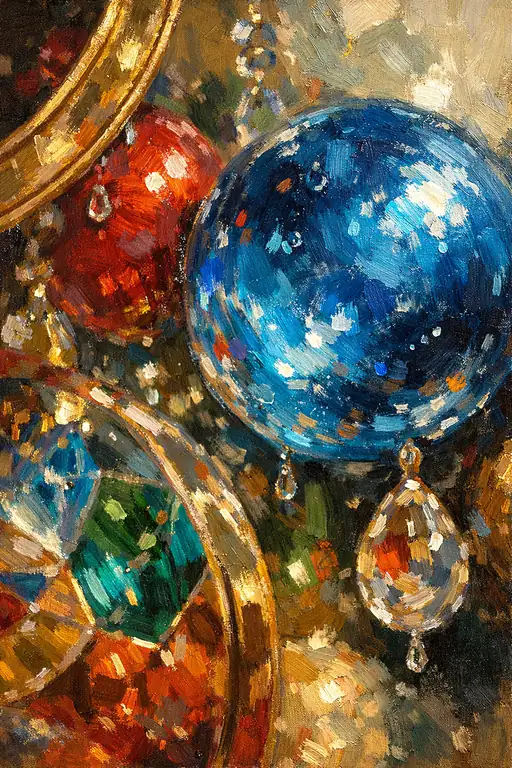 The Soul's Luminous Rhythm
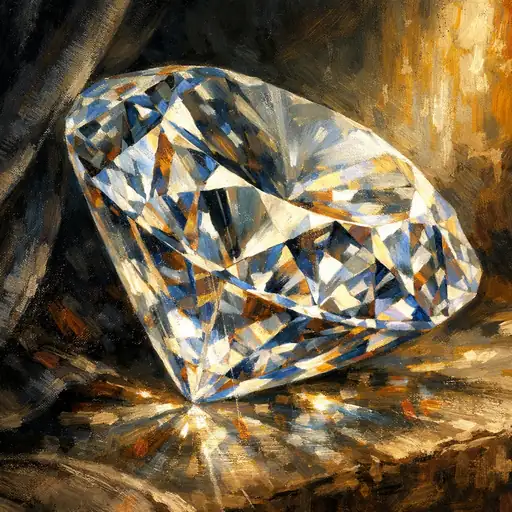 The Fire Within the Crystalline Heart
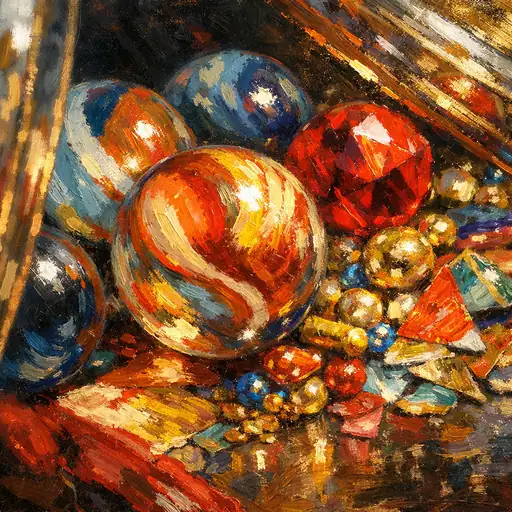 Constellations of Glass and Fire
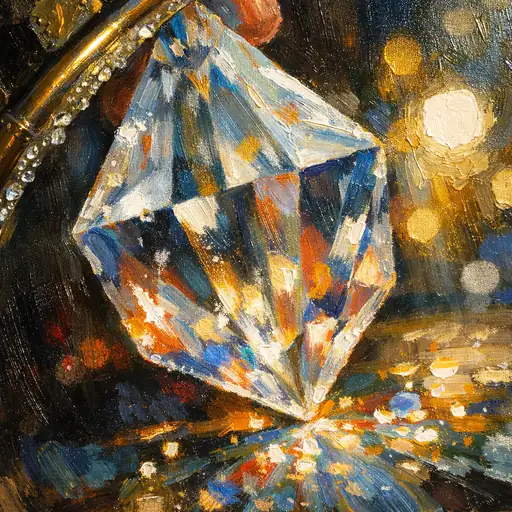 A Radiant Crystal Encasing Eternity
 A Symphony of Facets
 Heart of the Earth
 The Spiral of Glass and Light