Rhythm of the Tides
Critique
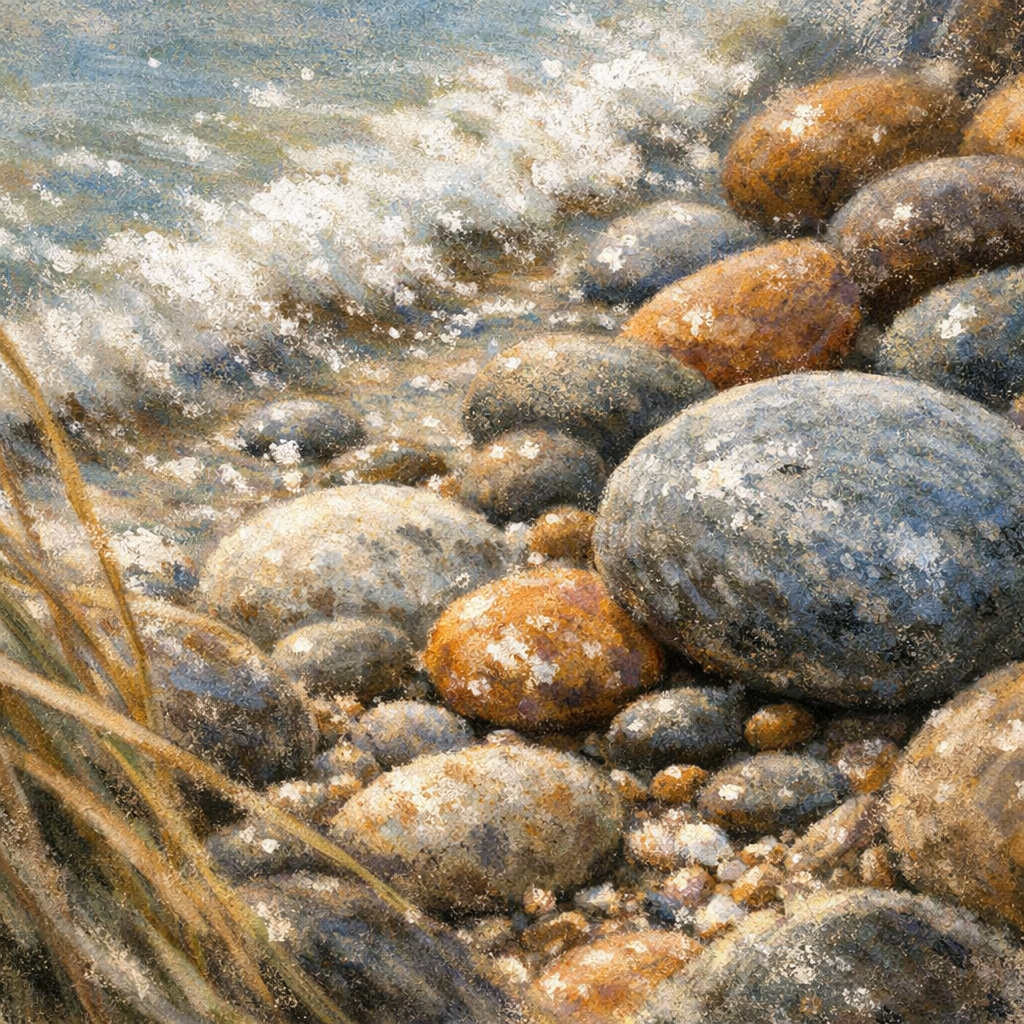
1. Introduction This square painting presents a compelling close-up study of smooth pebbles and stones situated along a shoreline. The composition invites the viewer to appreciate the intimate details of a natural environment often overlooked beneath our feet. By focusing on the interplay of water and ancient geological forms, the artwork elevates simple stones into a subject of profound beauty and quiet contemplation. 2. Description The main subject consists of a dense cluster of rounded stones in various sizes and earthy tones, ranging from cool grays to warm ochres and deep browns. In the upper left quadrant, a gentle spray of white water foam washes over the rocks, providing a contrast in texture and movement. A few withered, yellowish blades of grass are visible in the bottom left corner, their thin lines cutting across the solid forms of the pebbles. The lighting is soft and even, highlighting the speckled and weathered surfaces of the geological objects. 3. Analysis The artist employs a textured, almost pointillist technique with fine speckles of paint to recreate the granular surface of the stone and the airy foam of the water. The composition is dynamic, with the stones arranged in a supportive pile that recedes toward the right edge of the frame. The color palette is harmoniously grounded in natural tones, effectively using cooler shades in the shadows to provide a sense of weight and volume to each individual stone. The contrast between the rigid, heavy stones and the ephemeral, light water spray is the central visual tension of the piece. 4. Interpretation and Evaluation The work successfully transforms a mundane subject into a meditative study of the natural world. The attention to the specific textures and color variations within each stone indicates a deep level of observation and technical skill. It achieves a balance between realism and expressive texture, managing to convey the tactile quality of the riverbed or beach. The piece is highly effective in its ability to evoke the sensory experience of being near water—the sound of the spray and the cool, damp feel of the pebbles. 5. Conclusion Through its refined focus on geological and liquid textures, the painting offers a celebration of the minute complexities of nature. The interaction between the enduring stone and the fleeting water reflects a fundamental balance found in the environment. Initial impressions of a simple rocky shore evolve into an appreciation for the infinite variety and quiet dignity contained within these small, weathered fragments of the Earth.
Same Subcategory
 A Serene Farewell in Sunset's Embrace
Similar Artworks
 Golden Hours Along the Shore
 The Crystal Veins of the Mountain
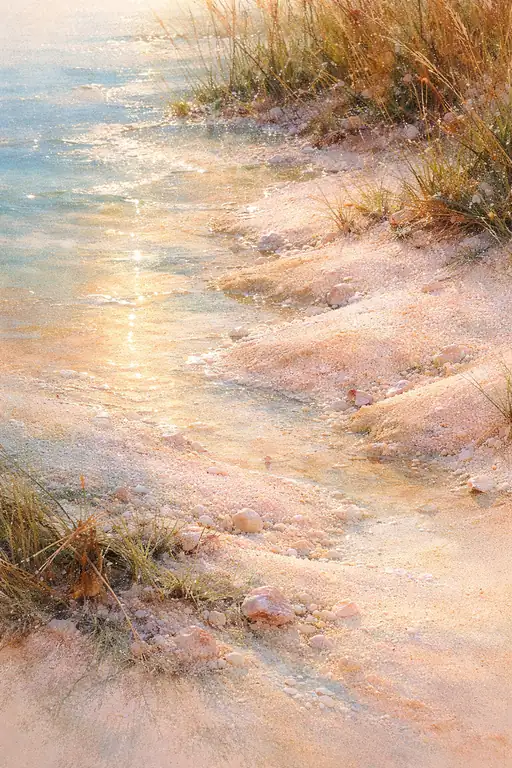 Sun-Kissed Ripples on Golden Sands
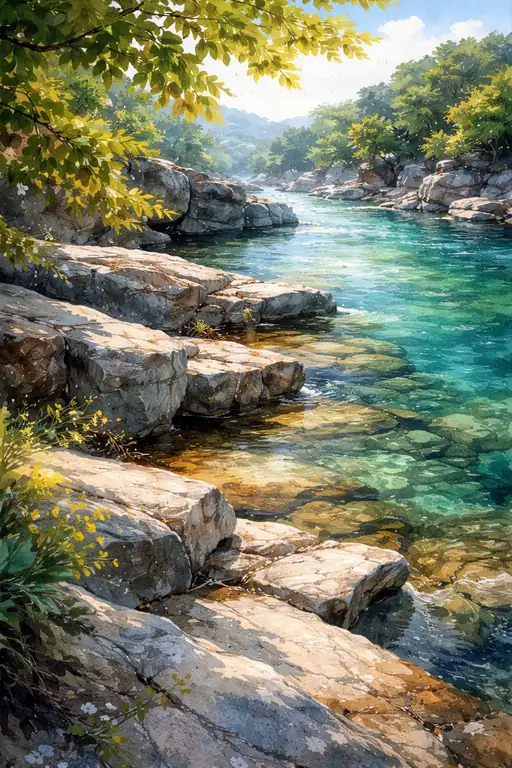 Whispers of the Crystal Current
 Sunset's Warm Embrace on the Winter Stream
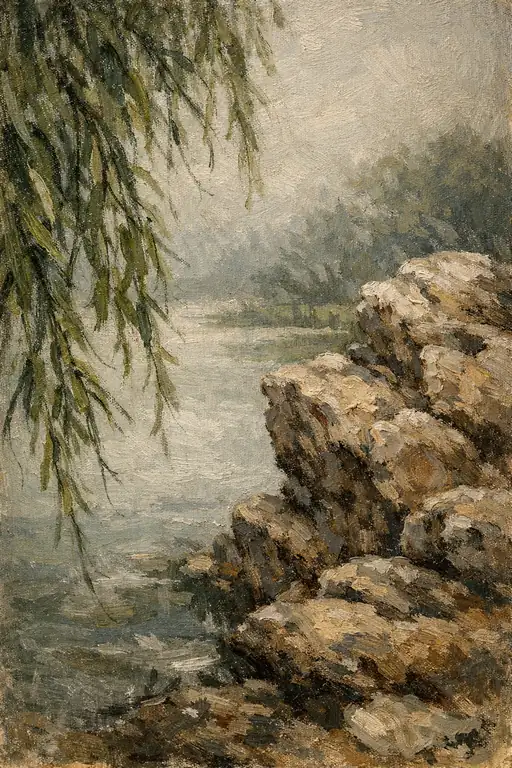 Whispers of the Weeping Willow in the Mist
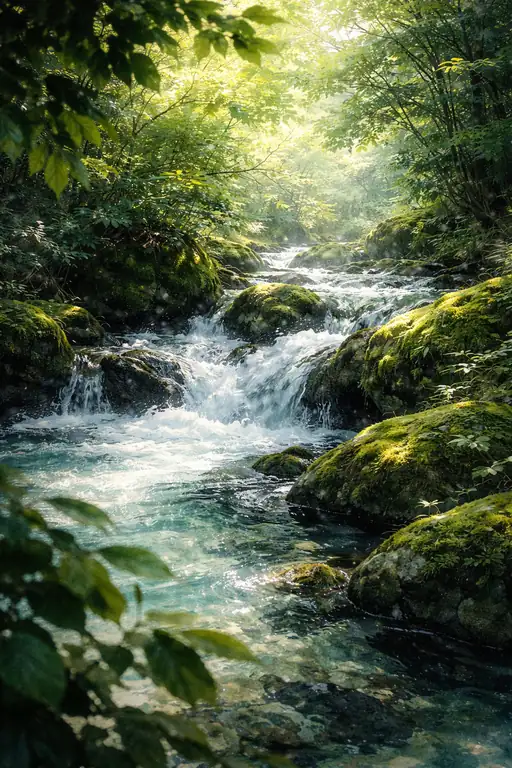 Sanctuary of the Emerald Stream
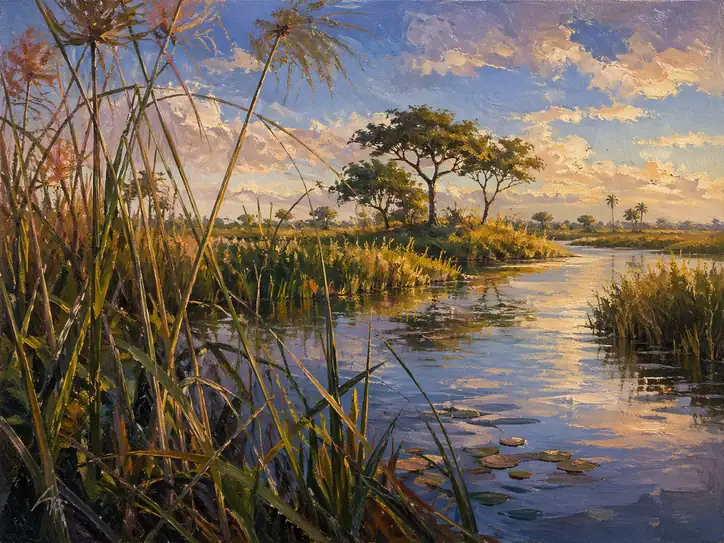 Golden Reverie in the Reeds
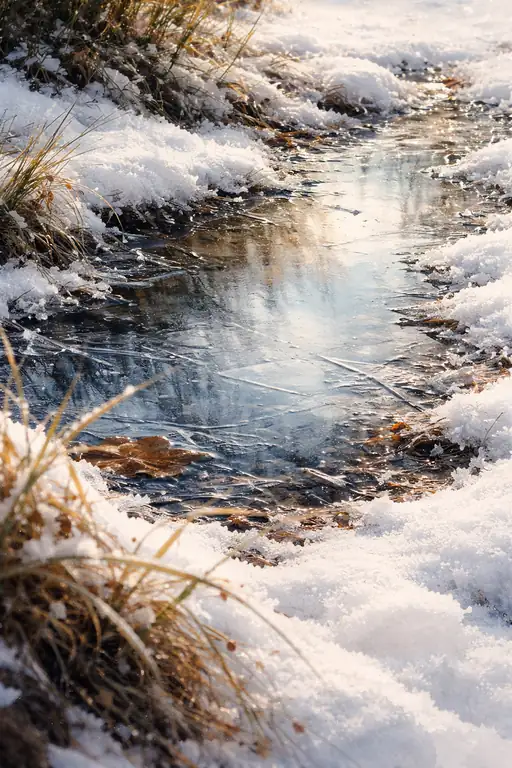 Slumbering Vitality Beneath the Frost
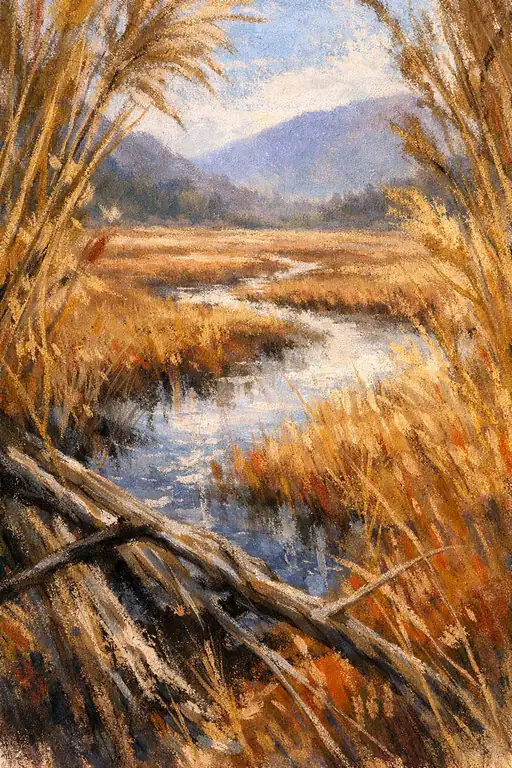 Whispers of the Golden Reeds