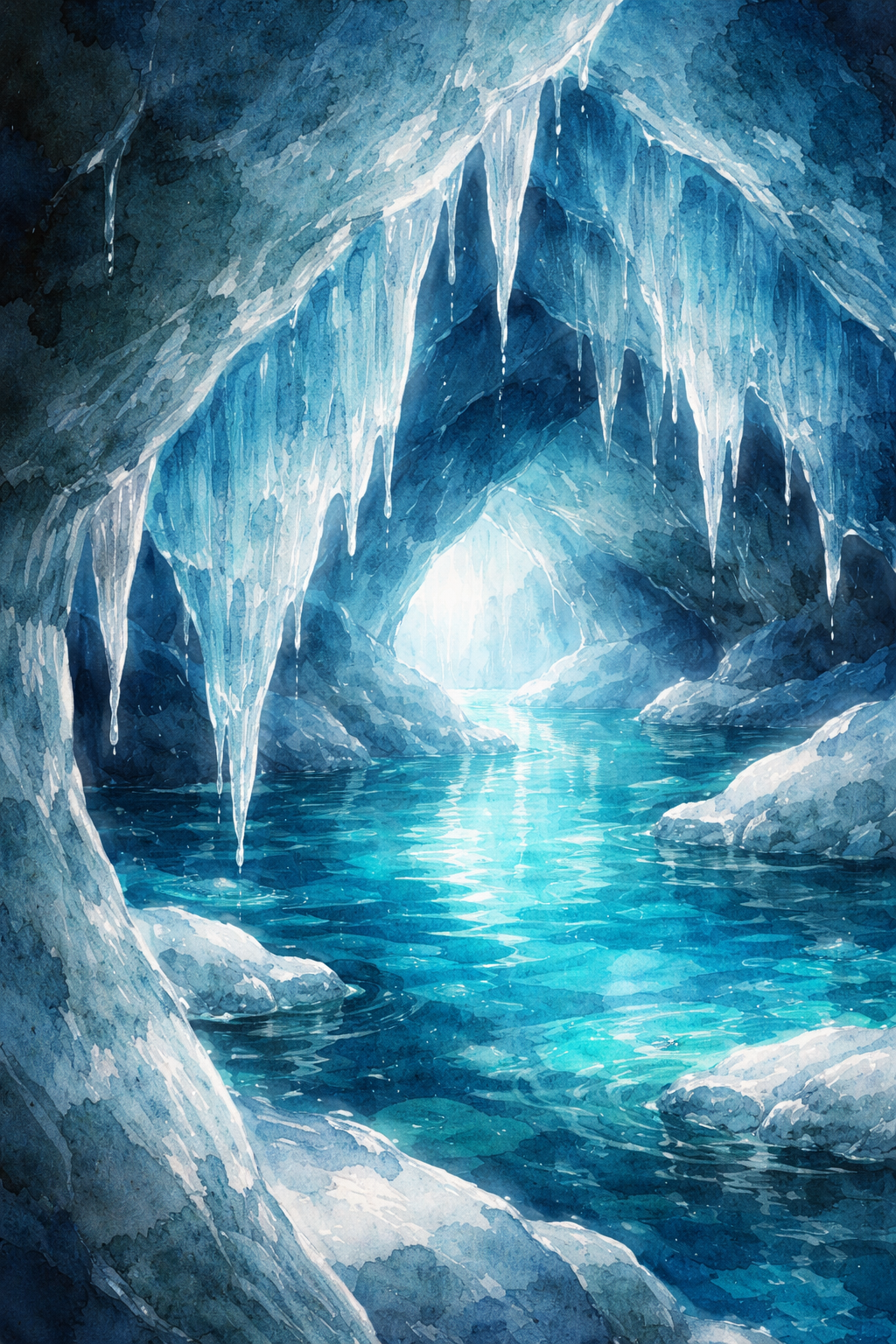
Silent Glacial Pools
Critique
1. Introduction This painting presents a serene and atmospheric depiction of an ice cave, utilizing delicate textural effects to explore the translucent qualities of a frozen landscape and still water. The composition draws the viewer into a secluded, subterranean world composed entirely of ice and luminous subterranean pools. By focusing on the interplay of cool light and crystalline structures, the artwork creates a compelling scene of remote, frigid beauty. This piece functions as a quiet, meditative study of a pristine and untouched natural environment. 2. Description The cavern is formed by smooth, rounded banks of ice in the foreground and rugged, arched walls that frame the central view. From the ceiling, numerous sharp, elongated icicles hang downward, some appearing to drip water into the basin below. The floor of the cave is completely submerged in a pool of vibrant, clear water painted in striking shades of turquoise and deep teal. In the distant background, a brilliant white light emanates from a deeper passage or opening, intensely illuminating the surrounding ice and casting a bright, shimmering reflection across the water's surface. 3. Analysis The artist effectively employs a cool, almost monochromatic color palette restricted to a sliding scale of blues, teals, and glowing whites. This limited range is vital in establishing the freezing temperature and ethereal atmosphere of the scene. The watercolor-like technique, characterized by transparent washes and soft, blooming edges, perfectly captures the glassy, semi-translucent nature of the ice formations. The composition uses the overarching cave walls and the hanging icicles to create a natural tunnel, funneling the viewer's gaze directly toward the intense, luminous light source in the background. 4. Interpretation and Evaluation The artwork evokes a profound mood of isolated tranquility and ancient stillness. The complete absence of life or land, replaced entirely by frozen elements and water, suggests a remote glacial environment far removed from human experience. The bright light in the distance offers a sense of hope or spiritual purity within the cold, desolate surroundings. The painting is highly successful in translating the physical sensations of coldness and crystalline fragility into a deeply engaging visual format. 5. Conclusion Ultimately, the painting is a masterful exploration of light, color, and texture within a frozen, subterranean space. The delicate rendering of the ice cave offers a captivating glimpse into an otherworldly sanctuary, leaving a lasting impression of majestic, unbroken silence.
Same Subcategory
 The Glowing Pier: A Golden Contemplation
Similar Artworks
 Hidden Tears of the Earth
 Breath of the Frozen Dawn
 Echoes of the Alpine Spring: A Pristine Mirror
 Whispers of the Luminous Subterranean Tide
 Whispers from a Forgotten Epoch
 Dawn's Serenity: A Misty Forest Pond
 Whispers of the Still Waters
 The Solitude of Frozen Wonders
 Silent Companions
 Mystical Glow of Melissani Cave