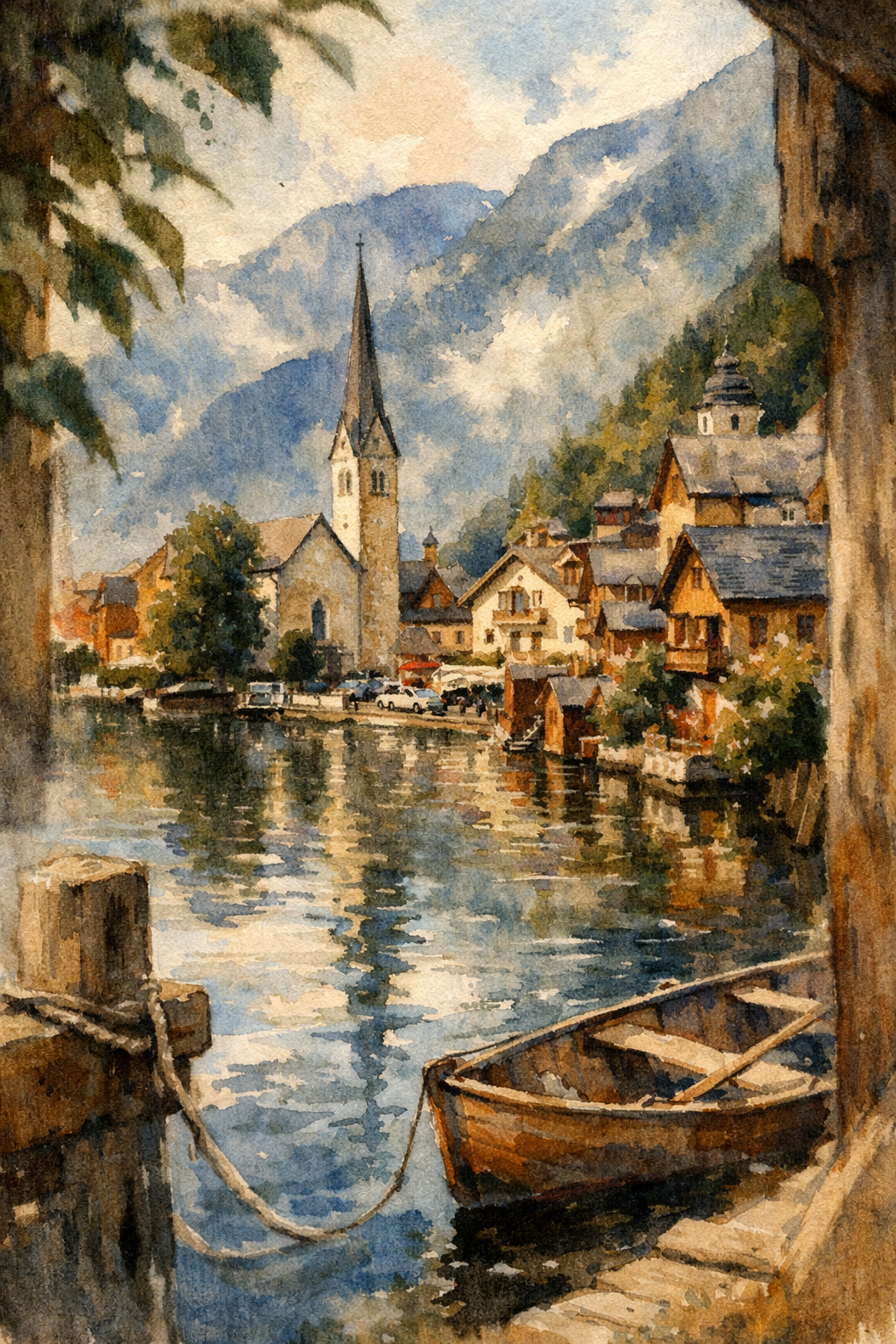
The Silent Vigil: An Alpine Village at Twilight
Critique
Introduction This watercolor painting depicts a picturesque lakeside village nestled at the foot of misty mountains, rendered with a profound sense of nostalgic charm. The artwork captures the serene atmosphere of a historic European settlement, likely inspired by Alpine architecture, during a quiet time of day. Through its delicate washes and precise detailing, the piece invites the viewer into a tranquil, timeless world where nature and human habitation coexist in perfect harmony. Description The composition is framed by rustic wooden pillars in the immediate foreground, where a small wooden boat is moored to a weathered post. Beyond the clear, reflective water of the lake, a cluster of traditional houses and a prominent church with a slender spire line the shore. In the far distance, towering blue-toned mountains rise into a soft, cloud-filled sky, their peaks partially obscured by an ethereal mist that adds a layer of mystery to the landscape. Analysis The artist employs a sophisticated "frame within a frame" technique, using the foreground structures to lead the viewer’s eye toward the central village. A significant feature of the work is the masterfully executed reflection in the water, which mirrors the architecture and the sky with organic fluidity. The use of atmospheric perspective is evident in the softening of details and the shift toward cooler tones in the distant mountains, creating a convincing sense of spatial depth. Interpretation and Evaluation The painting successfully evokes a feeling of peace and longing, celebrating the enduring beauty of traditional rural life. The technical skill displayed in the rendering of textures—from the grain of the wooden boat to the stone surfaces of the church—is exemplary. Furthermore, the balanced composition and the harmonious interplay between the warm earthy tones of the village and the cool blues of the environment demonstrate a high level of artistic maturity. Conclusion Ultimately, the artwork serves as a lyrical tribute to the beauty of the natural and built environment. While the initial impression is one of simple scenic beauty, closer inspection reveals a complex layering of color and a deep sensitivity to light and reflection. It leaves the viewer with a lasting sense of calm, echoing the quiet dignity of a place untouched by the rapid passage of modern time.
Same Subcategory
Similar Artworks
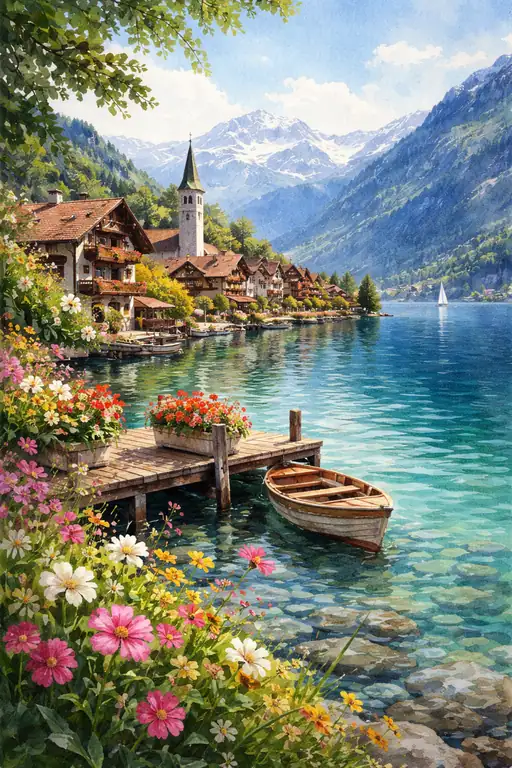 Crystal Serenity of the Lakeside Hamlet
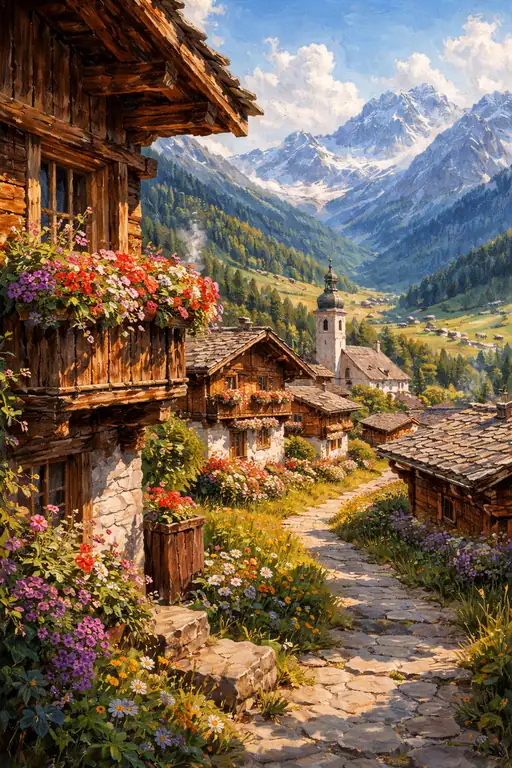
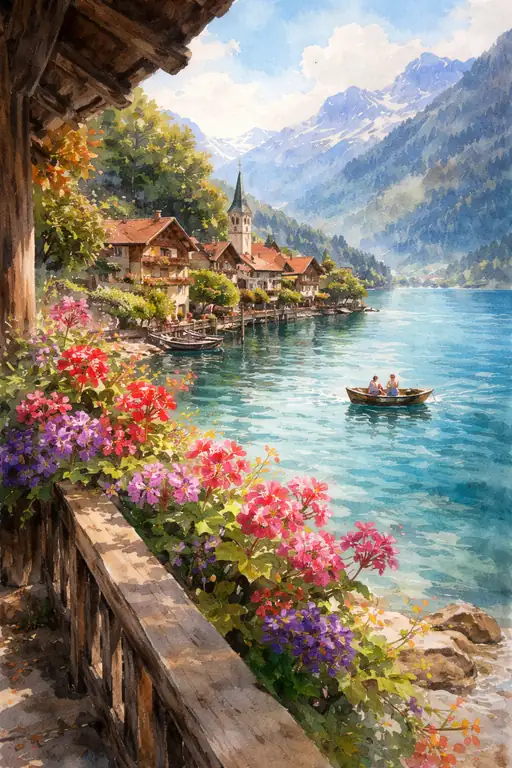 The Floral Chalet in the Sun: A Vibrant Alpine Sanctuary
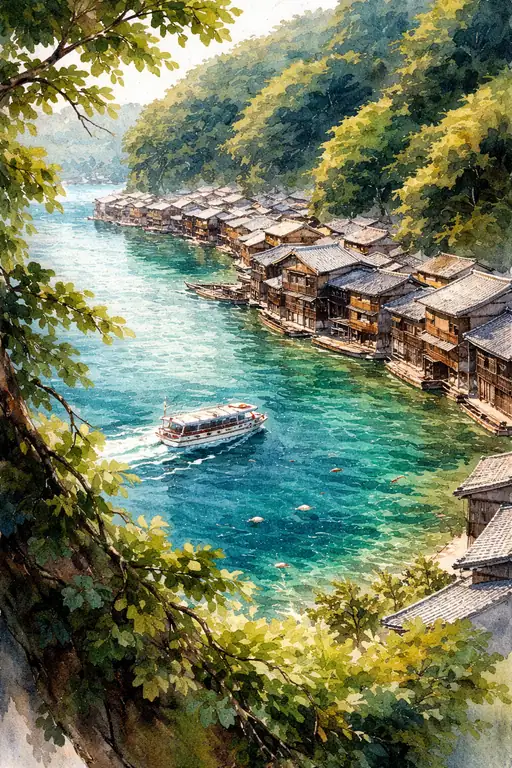 Emerald Embrace of the Coastal Haven
 Peaceful Passage Through the Historic Water Town
 Journey Through the Misty Emerald
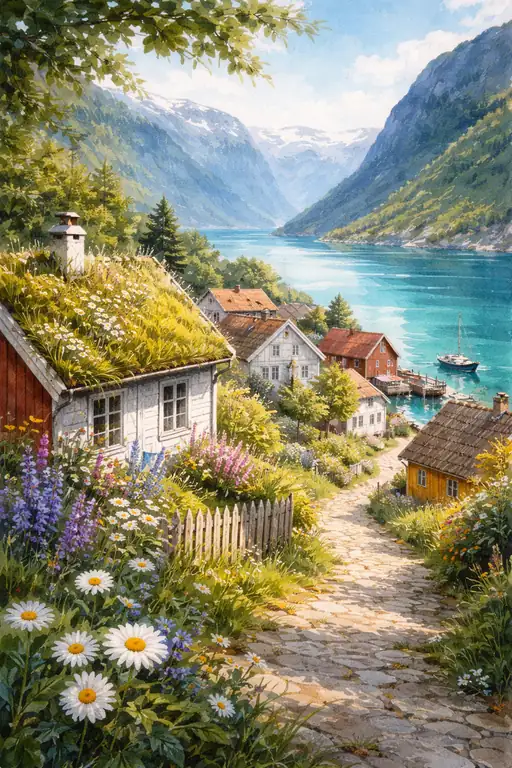 Where the Wind Whispers of Old Fables
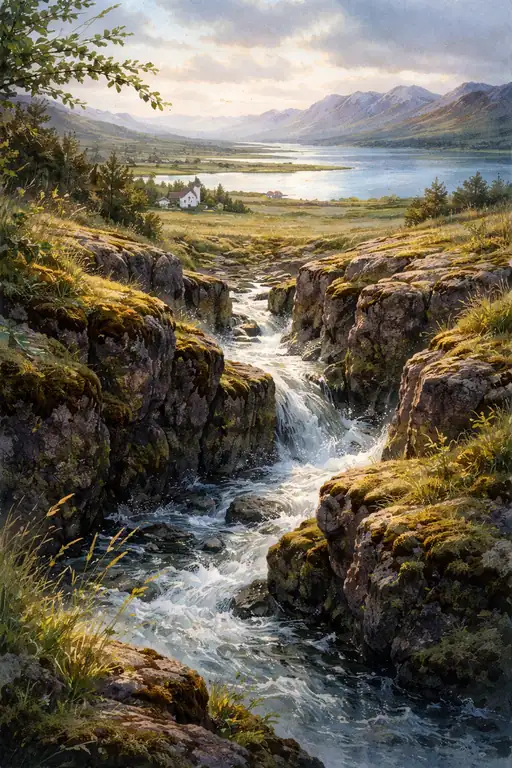 Whispers of the Emerald Valley
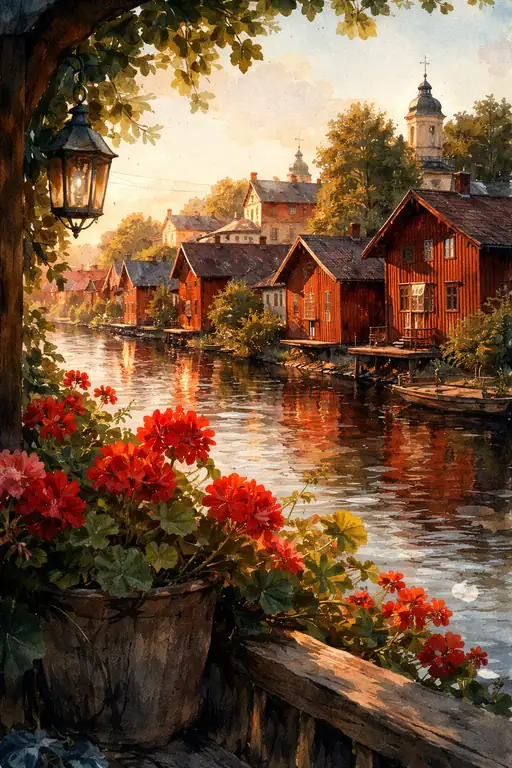 Porvoo Riverside: A Golden Afternoon
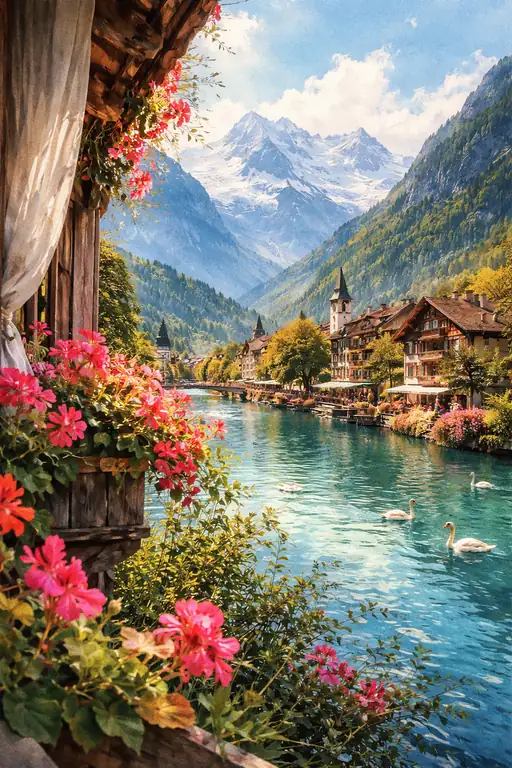 A Balcony in the Alpine Village
 Awakening in Pink and White: The Majestic Peak Above the Clouds