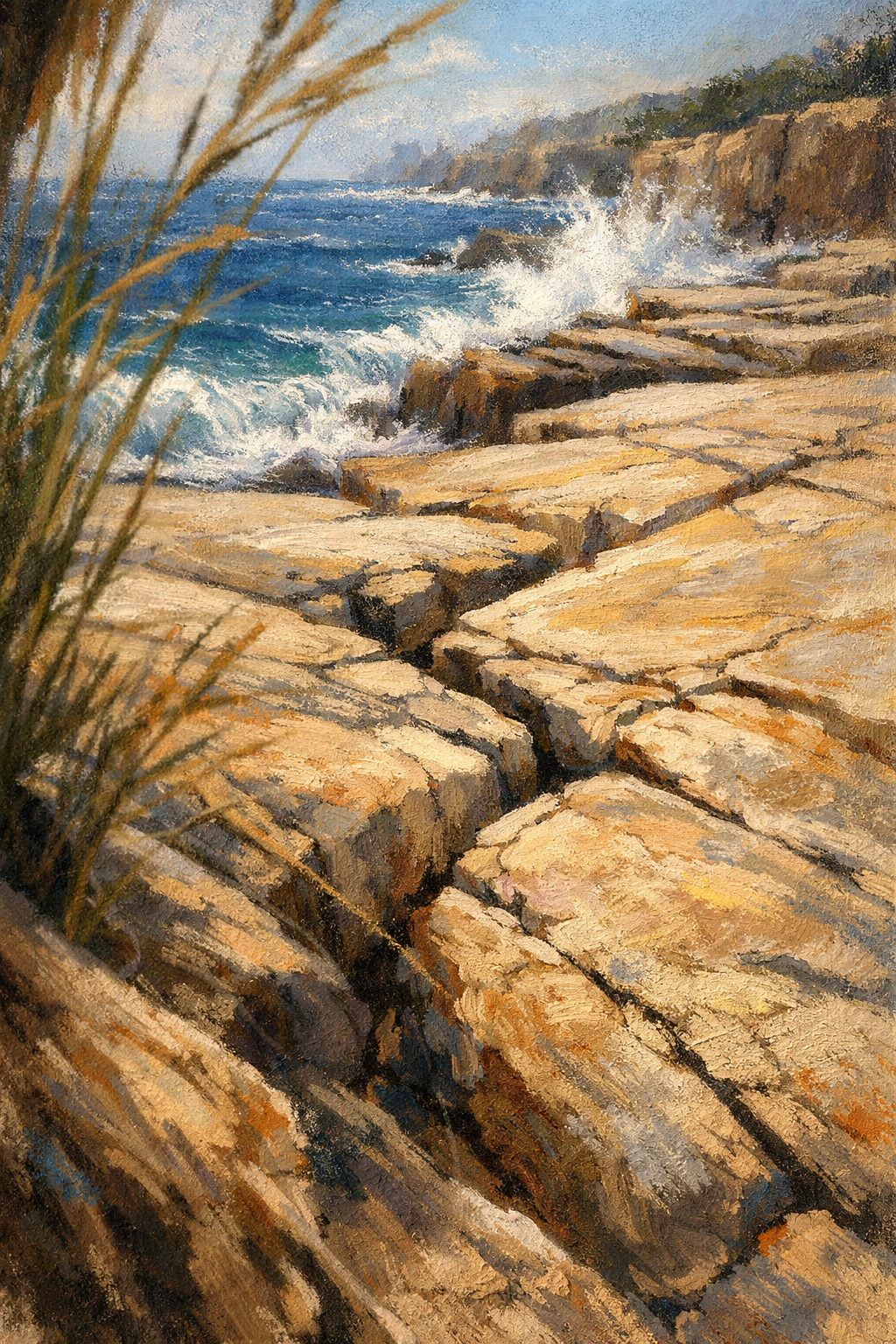
The Eternal Song of the Crashing Surf
Critique
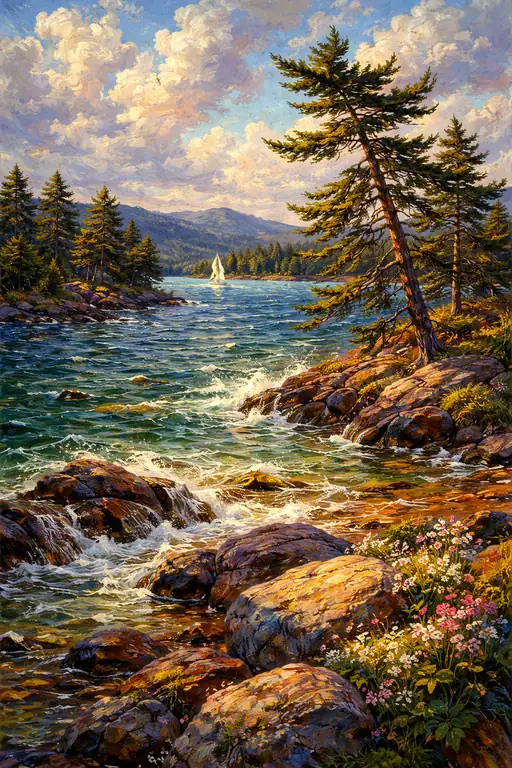
1. Introduction This vertical landscape painting captures a rugged coastal scene, dominated by weathered rock formations meeting a dynamic sea. The work focuses on the physical textures of the natural world, using a low perspective to emphasize the solidity of the shoreline. The artist employs an impressionistic approach to light and motion, creating a scene that feels both timeless and fleeting. This critique will explore the technical execution and emotional resonance of this coastal study. 2. Description The foreground is occupied by fractured, sandy-colored rocks with deep crevices that lead the viewer's eye toward the water. To the far left, tall grasses or reeds sway in the wind, partially obscuring the view and adding a sense of immediacy. In the mid-ground, vibrant blue ocean waves crash against the rocky shelf, producing white, frothy spray. The background reveals a receding coastline under a hazy, pale blue sky, with dark green vegetation clinging to distant cliffs. 3. Analysis Structurally, the painting relies on a strong diagonal composition formed by the cracks in the rocks and the line of the coast. This arrangement creates a sense of depth and pulls the viewer into the crashing waves. The color palette is built on the contrast between warm ochres and cool ultramarines, effectively capturing the sunlight hitting the stone. The application of paint is thick and textural, particularly in the rock faces and the foam of the waves, which enhances the tactile quality of the scene. 4. Interpretation and Evaluation This piece successfully conveys the raw power of the coastal environment through its energetic brushwork and thoughtful composition. The contrast between the ancient, static rocks and the transient, moving water serves as a meditation on the different scales of time found in nature. The artist’s ability to render the spray of the waves without losing the structural integrity of the rocks shows a high level of technical skill. The painting feels atmospheric and evocative, capturing the salty air and the sound of the surf. 5. Conclusion In conclusion, the artwork is a masterful depiction of the meeting point between land and sea. It balances the heavy permanence of the geological forms with the light, airy motion of the water and wind-blown grass. My initial view of a simple seascape deepened into an appreciation for the intricate play of light and shadow across the stone. This work remains a powerful example of how landscape painting can capture the sensory experience of a specific place and moment.
Same Subcategory
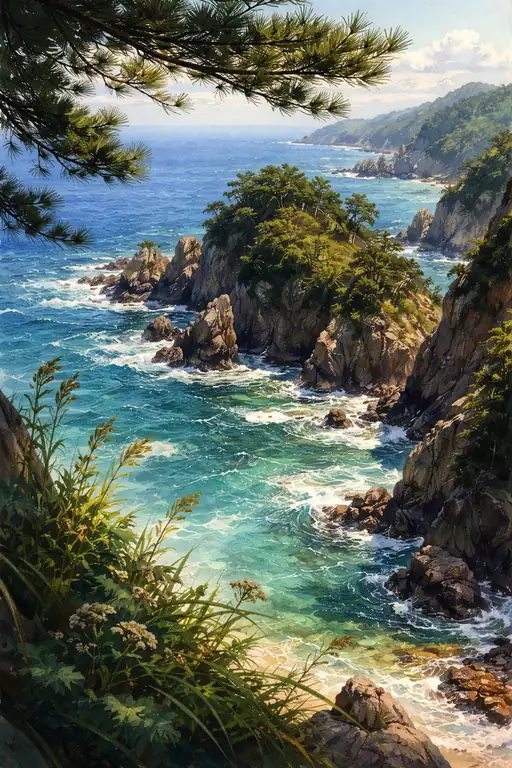 Coastal Grandeur
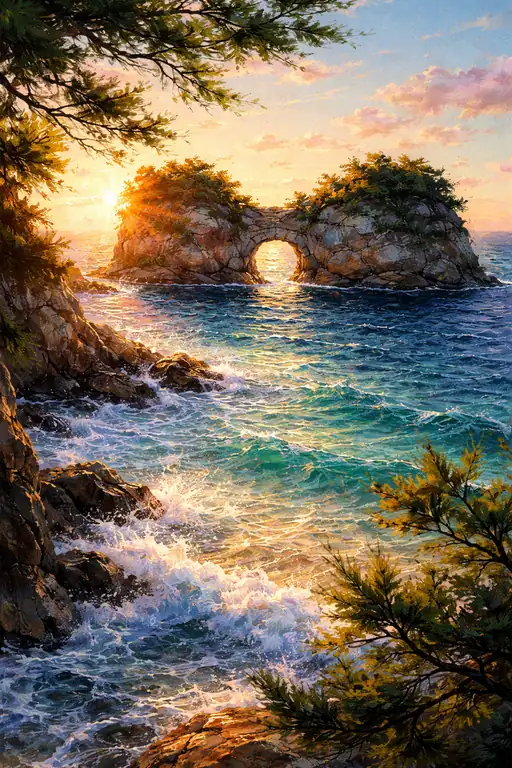 The Golden Embrace of the Arch
Similar Artworks
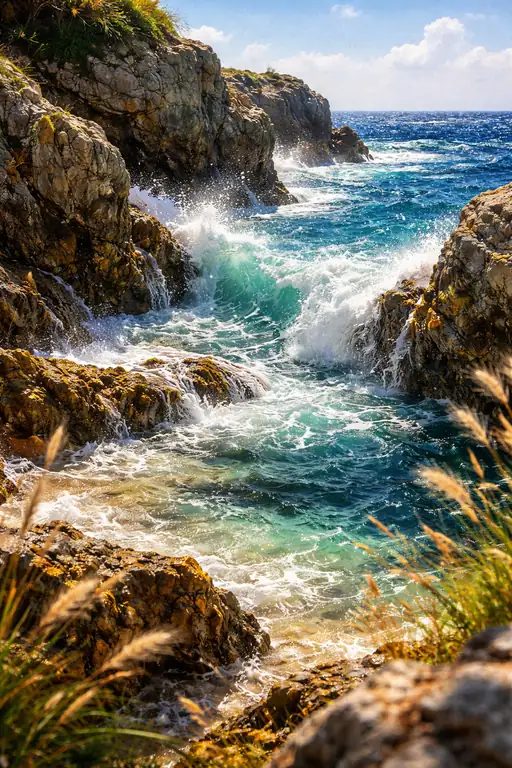 Crashing Waves on Rugged Cliffs
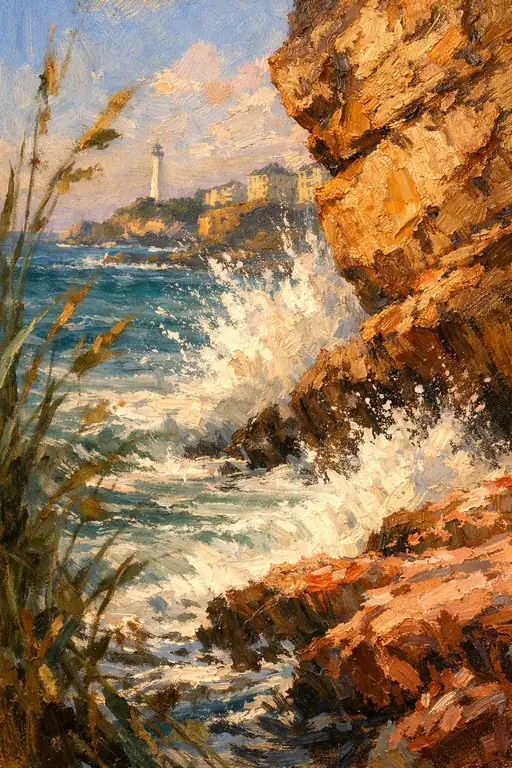 A Beacon of Hope in the Storm
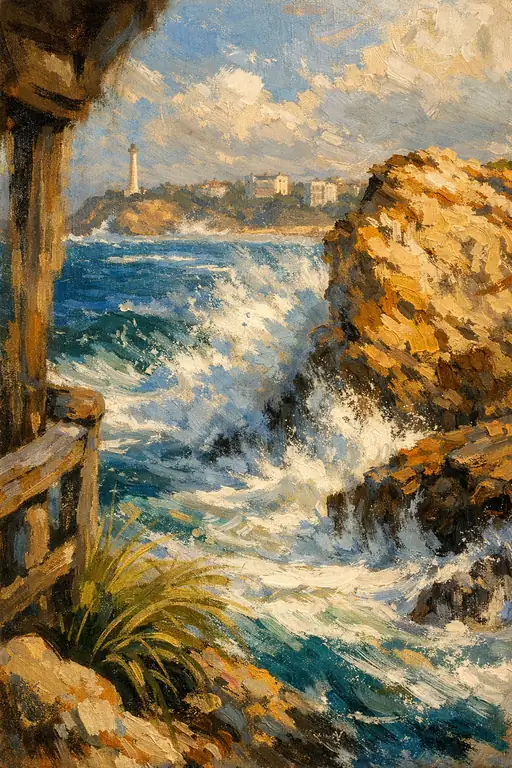 The Unrelenting Tide
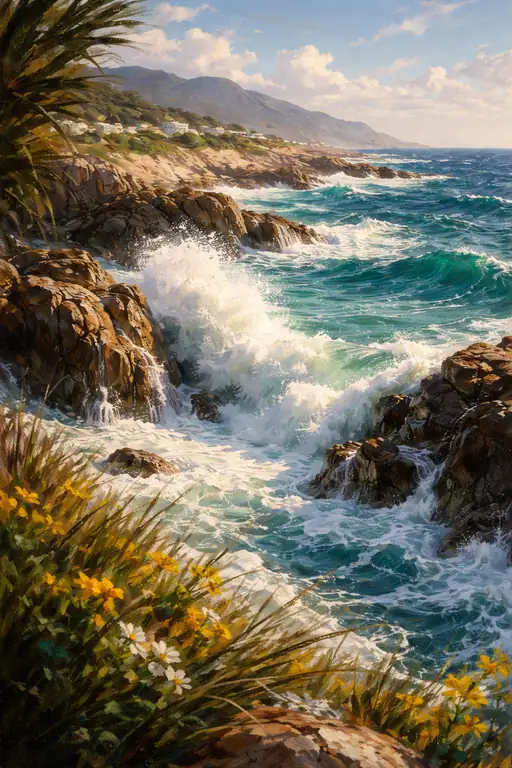 The Roaring Sea Beyond the Daisies
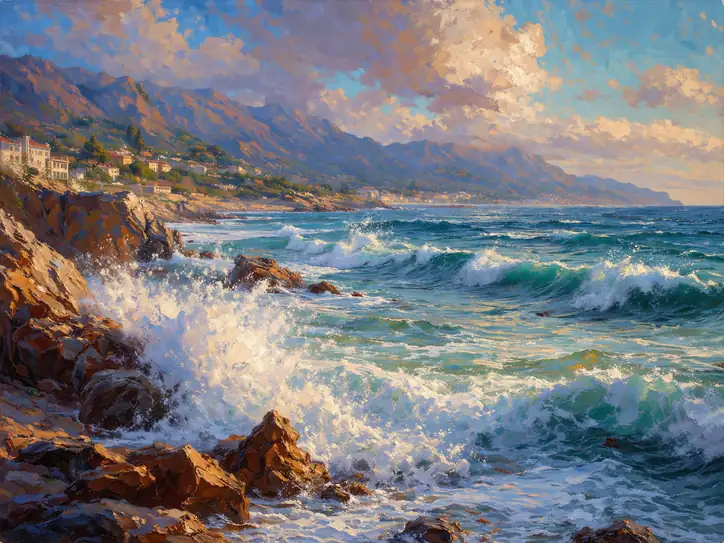 The Majestic Dance of the Golden Shore
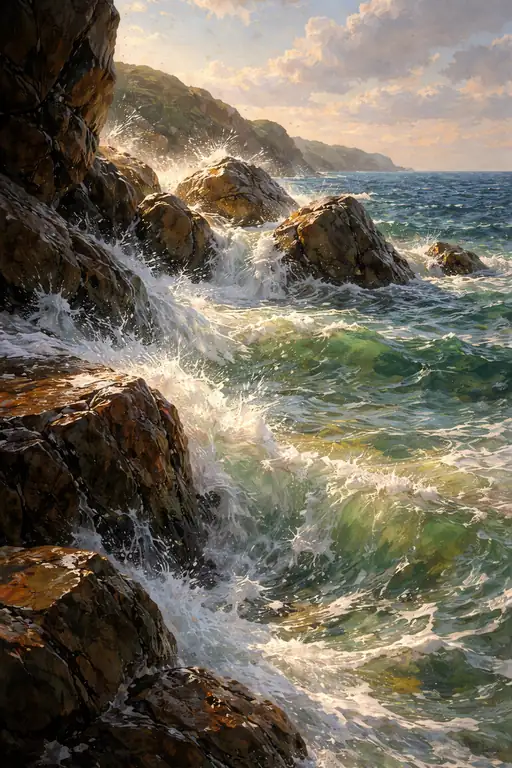 Whispers of the Eternal Tide
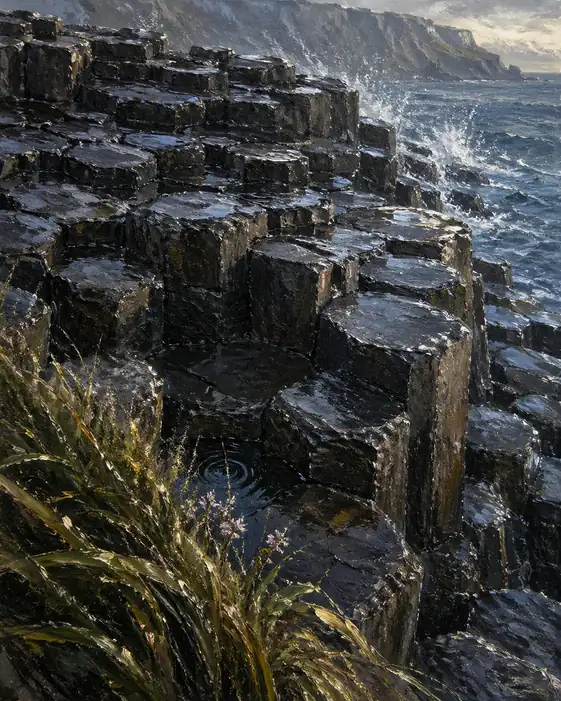 Symphony of the Basalt
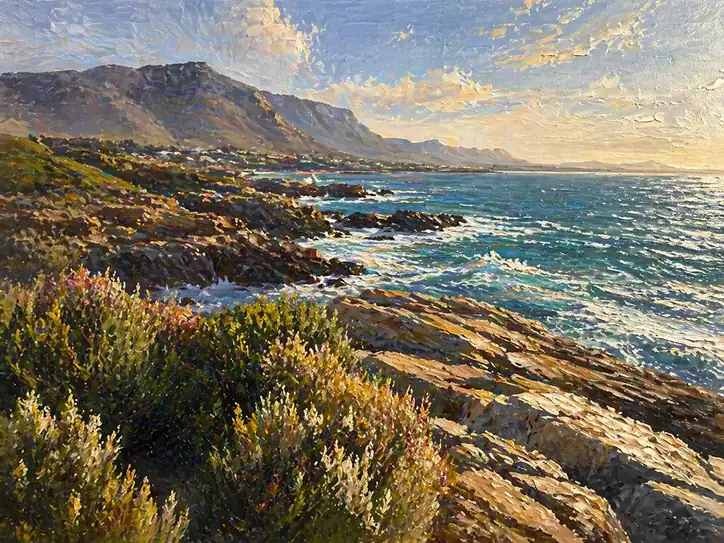 Where the Silence of the Peak Meets the Song of the Sea
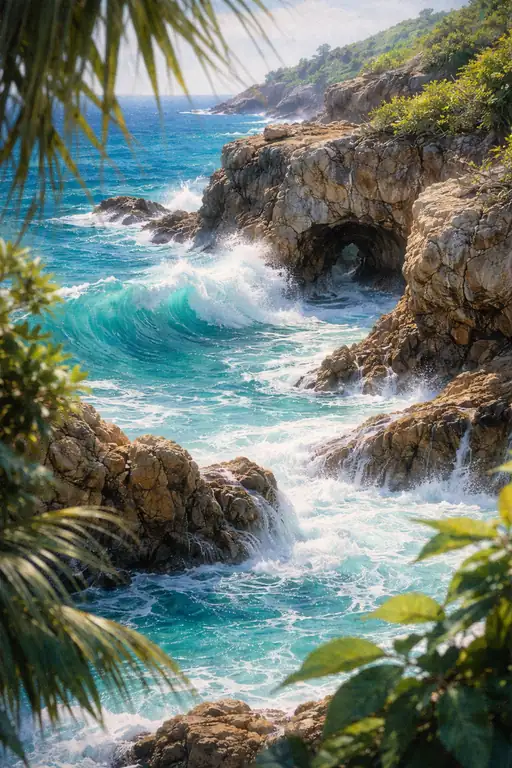 Roar of the Azure Abyss
 Whispers of the Windswept Shore