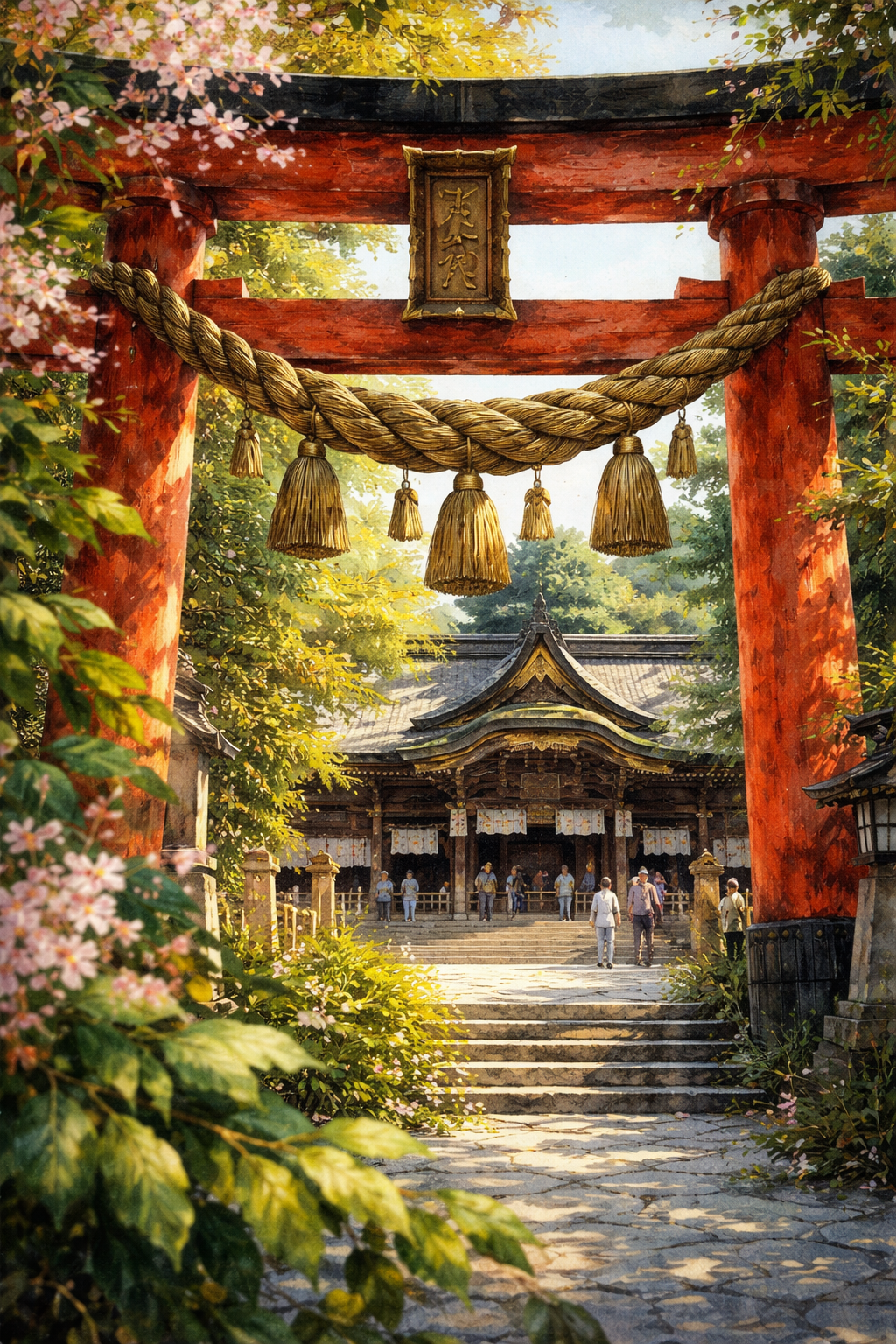
Sanctuary in the Forest
Critique
1. Introduction This painting depicts the tranquil grounds of a traditional Japanese shrine enveloped by a lush forest. A massive vermilion torii gate commands the foreground, gracefully guiding the viewer's gaze toward the majestic wooden sanctuary. Soft, dappled sunlight brilliantly conveys the serene, divine atmosphere while small figures of worshippers add human warmth. 2. Description The striking torii gate features a thick sacred rope and golden tassels. On the left, delicate pink blossoms and green foliage create a vibrant natural frame. Below, the stone pathway is beautifully patterned with dappled shadows. In the background, tiny scattered figures quietly gather before the imposing, traditional wooden architecture of the main shrine building. 3. Analysis The dramatic juxtaposition between the massive foreground gate and the distant sanctuary effectively deepens the spatial perspective. The complementary color contrast between the bright vermilion and rich surrounding greens powerfully emphasizes the site's symbolic importance. Furthermore, meticulous brushwork capturing scattered sunlight on the stone pavement masterfully provides textural realism and a gentle perception of time passing. 4. Interpretation and Evaluation The visual transition through the torii gate effectively conceptualizes the boundary separating secular realms from the sacred. Harmonious integration of vibrant architecture with nature successfully illustrates a deep cultural reverence for the environment. The modest presence of ordinary visitors beautifully anchors this holy space in daily life. This work excels in fusing bold compositional framing with sensitive observation of light. 5. Conclusion This remarkable artwork captures a breathtakingly peaceful shrine landscape through exceptional compositional skills and a profound sensitivity to illumination. Initially captivated by the brilliant architectural contrasts, viewers soon discover a subtle, calming symphony of shifting light and quiet human devotion, affirming the aesthetic triumph of the entire piece.
Same Subcategory
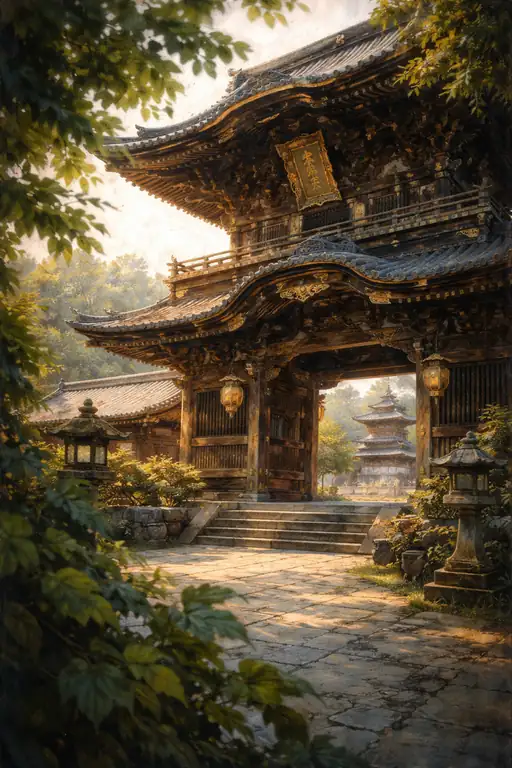 Golden Threshold: The Sacred Gate in Sunlight
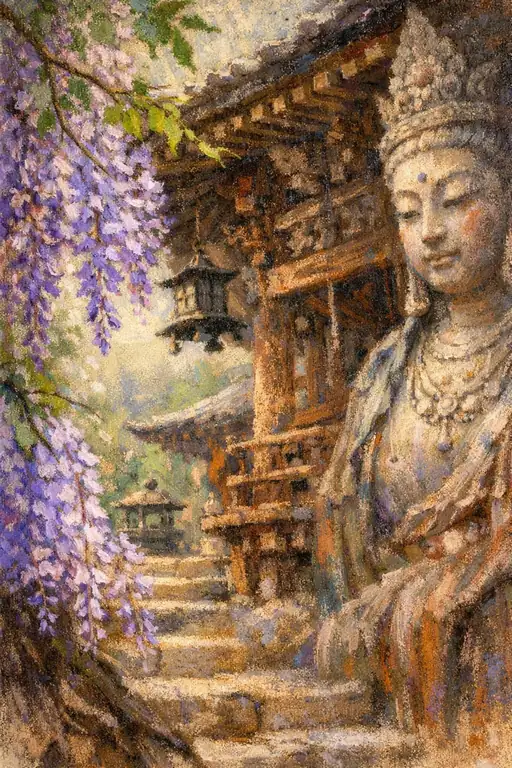 Reverence Under the Wisteria Veil
Similar Artworks
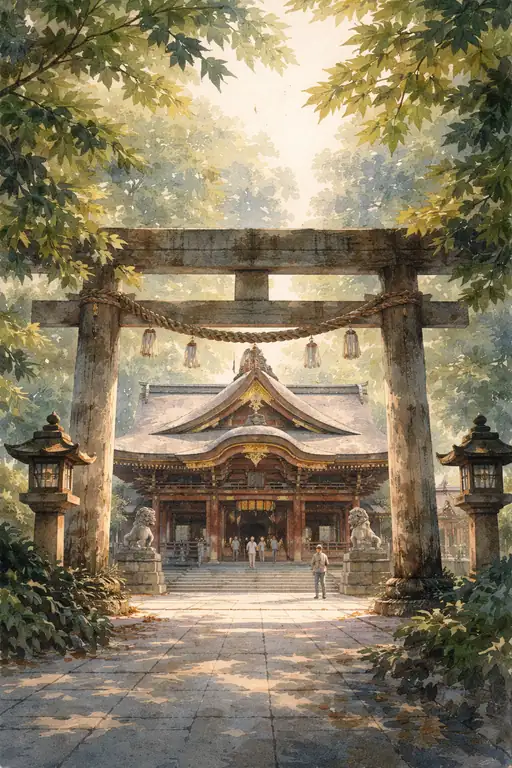 Tropical Reverence: Vermilion Gateway by the Shore
 The Golden Ascent Through Autumn's Embrace
 Vermillion Steps to the Spring Heavens
 Sacred Steps to the Sunlit Shrine
 Sunset Harmony in the Temple Garden
 Fuji from the Wisteria Garden
 The Luminous Path to the Sacred
 Sacred Light Through the Canopy
 The Silent Wait of the Majestic Temple Bell
 Hydrangea Steps to Tranquility