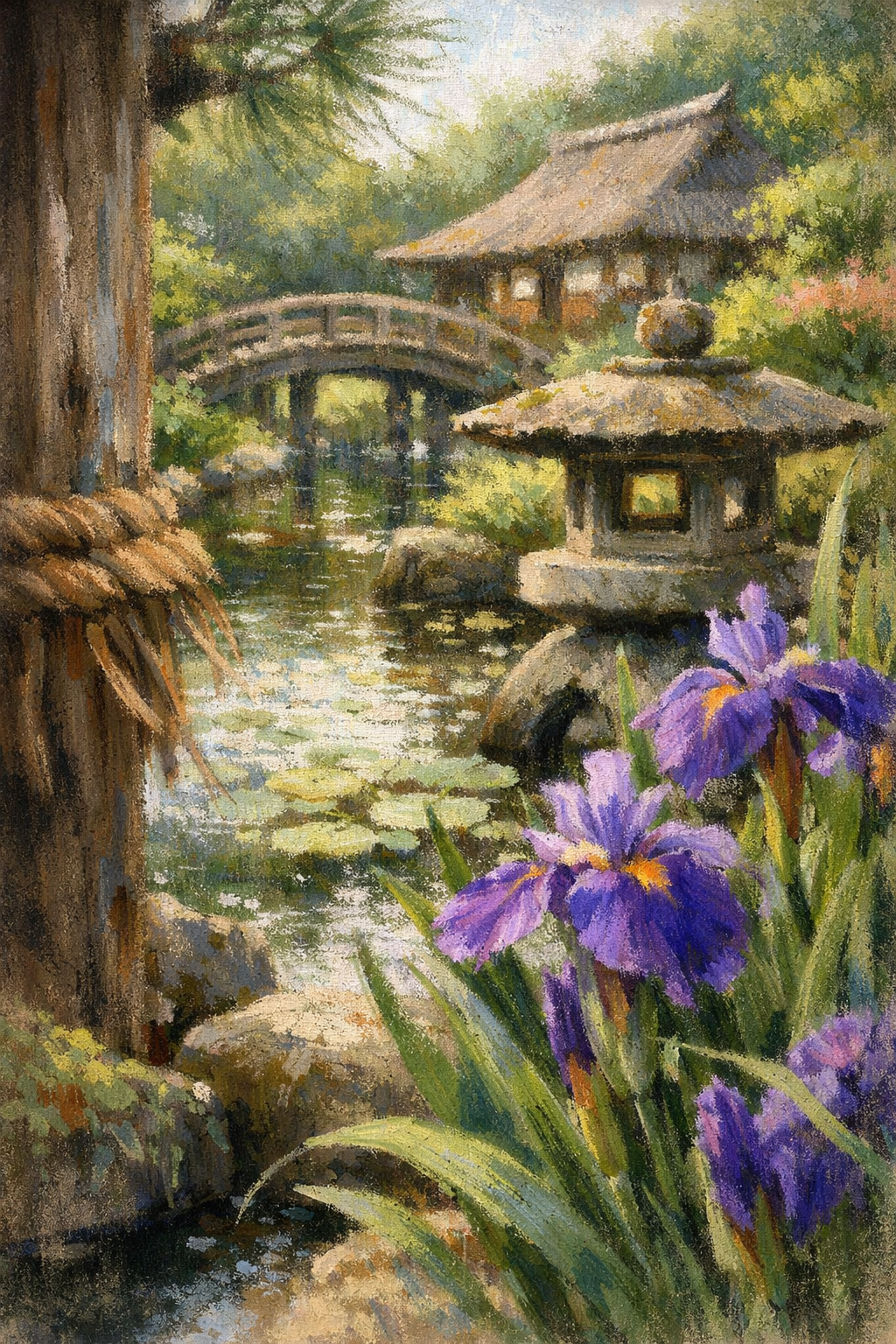
Whispers of the Purple Iris
Critique
1. Introduction This painting is a landscape demonstrating an early summer scene in a traditional Japanese strolling garden, rendered through heavy, textured oil painting techniques. The composition skillfully guides the viewer's eye from the vivid purple irises in the foreground to the water surface, stone lantern, arched bridge, and finally to the thatched-roof building in the background. A major characteristic is the harmonious fusion of Western impressionistic light interpretation with an Eastern perception of nature. Complex, layered brushstrokes successfully visualize the tranquil passage of time and abundant vitality flowing through the garden. 2. Description In the immediate lower right foreground, fully bloomed purple irises are painted in detail alongside their fresh green leaves. On the left side, a thick tree trunk wrapped with a sacred straw rope (shimenawa) is positioned, behind which a sturdy stone lantern stands on the edge of the pond. The pond's surface, dotted with floating lily pads, sparkles as it reflects the surrounding filtered sunlight. In the distance, a gently arching bridge and a rustic Japanese house enclosed by lush greenery are arranged, constructing a deep sense of spatial depth. 3. Analysis The composition generates stability and three-dimensionality through the intersection of the strong vertical lines of the foreground flora and tree with the horizontal lines of the water and bridge in the background. Regarding color, the purple irises serve as a striking accent against the complementary greens and yellow-greens of the surrounding foliage, injecting vitality into the entire canvas. The soft shimmering light reflecting off the water is expressed with bright white and pale yellow rough touches, which effectively softens the weighty texture. The brushwork adapts flexibly to the material properties of each motif, especially lending a tangible realism to the stone elements. 4. Interpretation and Evaluation This work can be highly evaluated as a masterful translation of the uniquely Japanese appreciation for changing seasons into Western painting methodology. The sacred tree adorned with a rope and the tranquility of the secluded garden impart a sense of religious solace and purification to the observer. The artist keenly perceives and robustly expresses the dynamic pulse of life inherent in nature itself, even within the manicured beauty of an artificial landscape garden. The solid technique in controlling light and color significantly deepens the poetic sentiment of the scene. 5. Conclusion While initially captivated by the brilliant hues of the irises in the foreground, the viewer's gaze is gradually drawn inward, evoking an immersive feeling of actually strolling through the serene garden. The meticulous balance woven by light and shadow, natural and artificial elements, demonstrates a felicitous encounter between Eastern spirituality and continuous Western material pictorial expression. It stands as an highly accomplished artwork that successfully fixes even the characteristic humid atmosphere of Japanese landscapes onto the canvas.
Same Subcategory
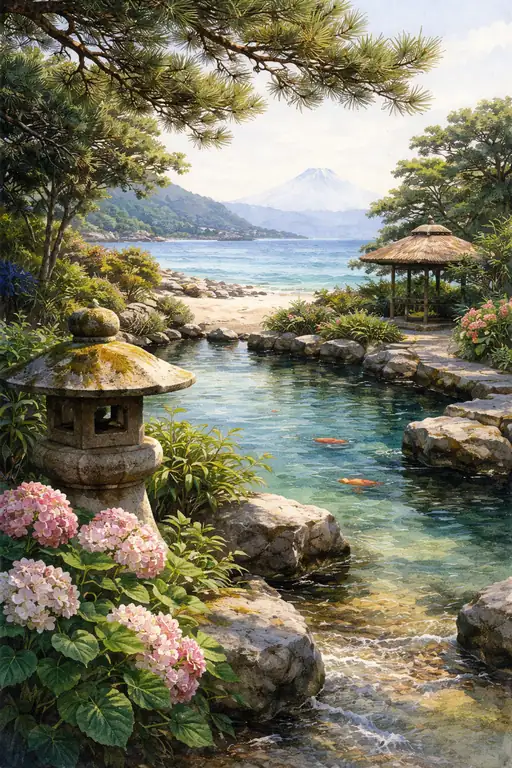 Harmony of Garden and Sea
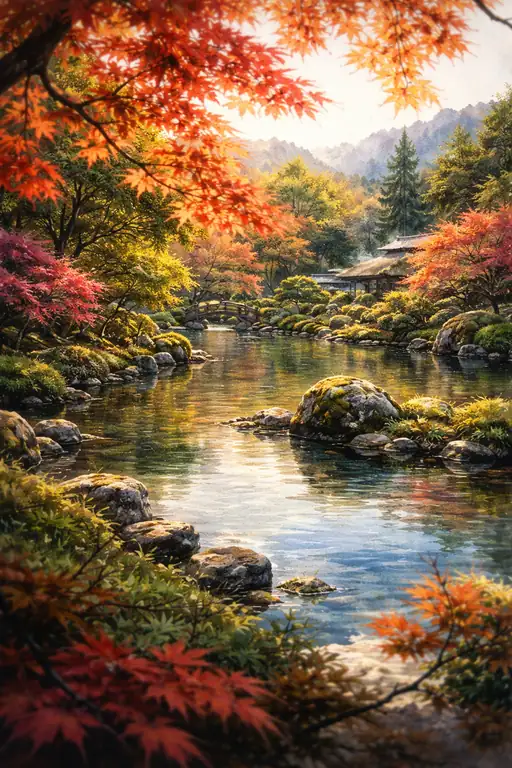 Autumn's Embrace at the Still Water
Similar Artworks
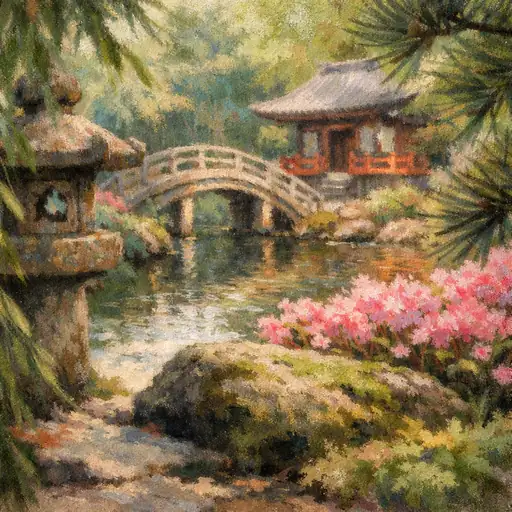 Quiet Bridge
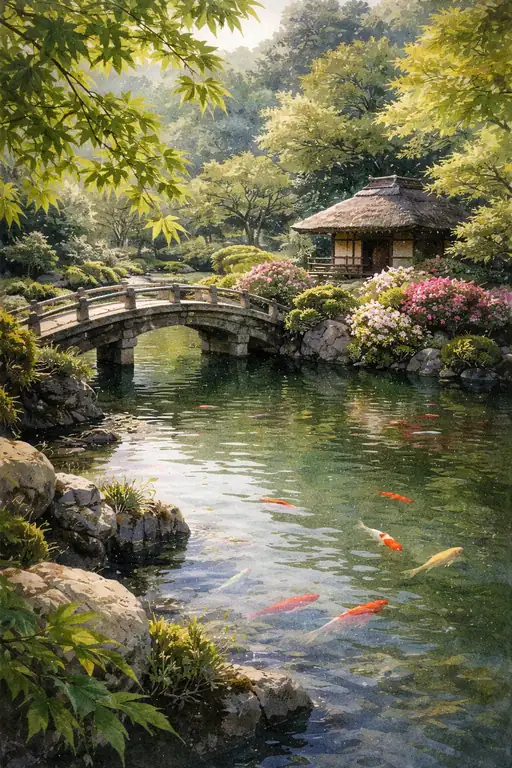 Harmony in the Sunlit Ripples
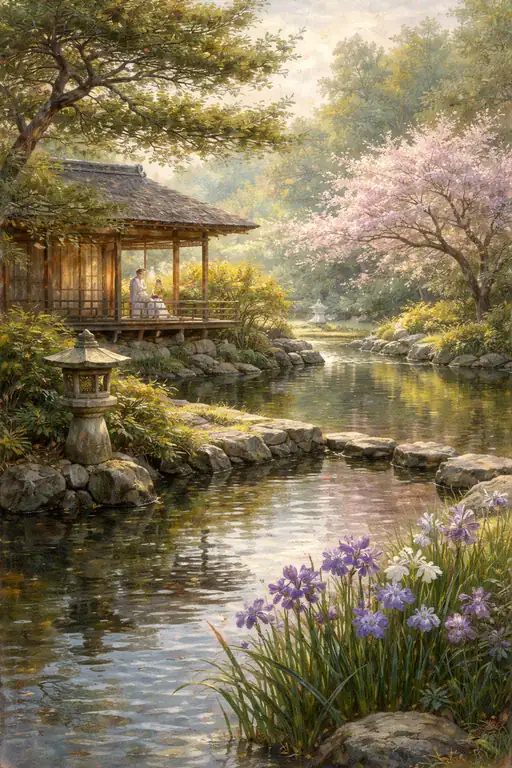 Sighs of the Sunlit Moss
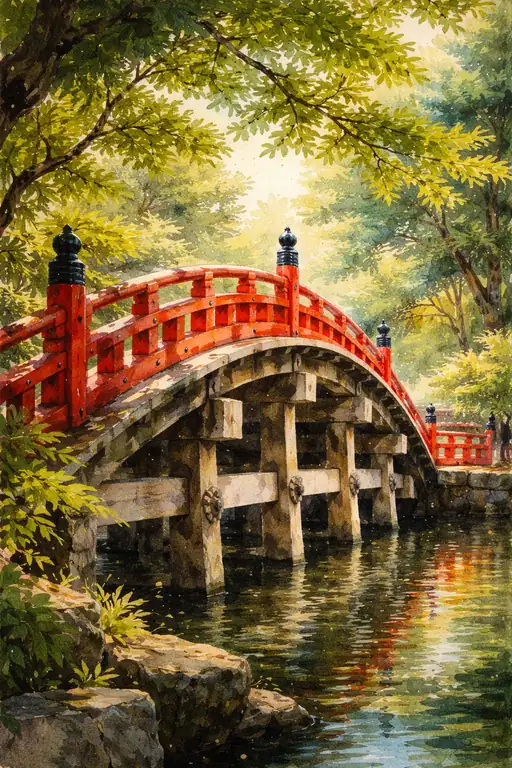 Crimson Arch Through the Sunlit Verdure
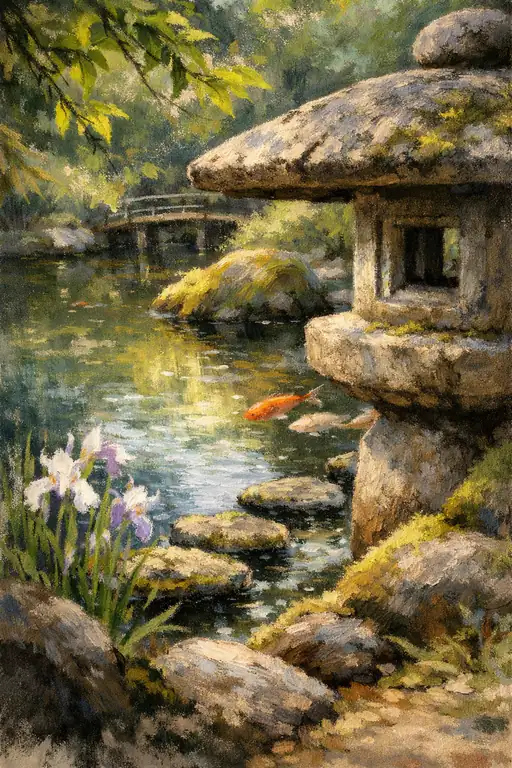 Golden Koi Beneath the Silent Lantern
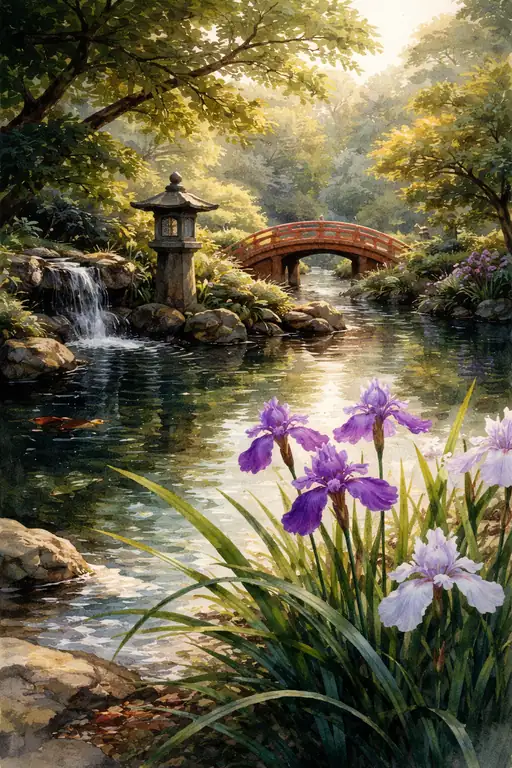 Sunlit Melody of the Arch and Lantern
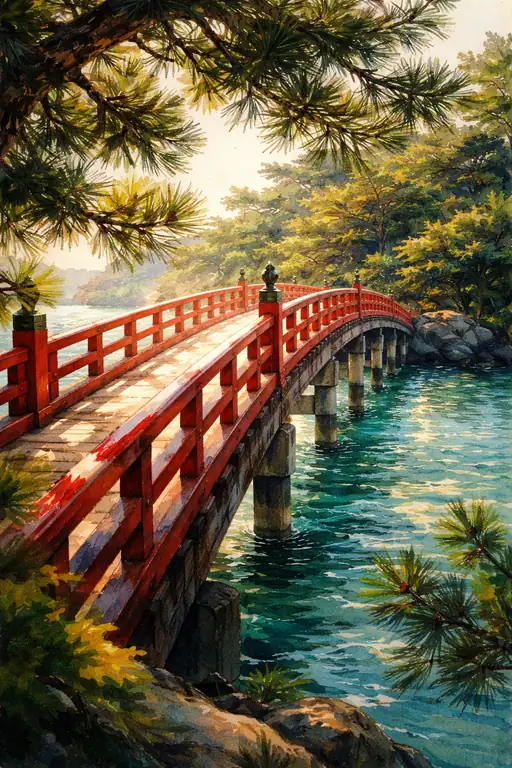 Reflections in the Emerald Sanctuary
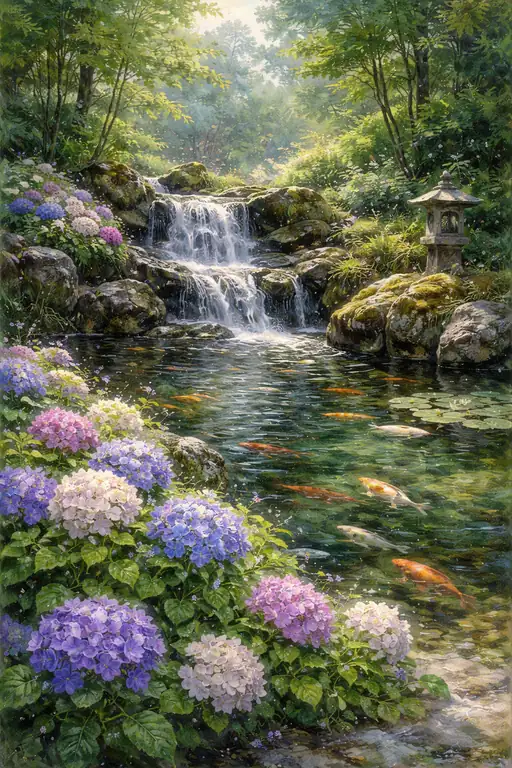 Summer’s Dream in the Koi Pond
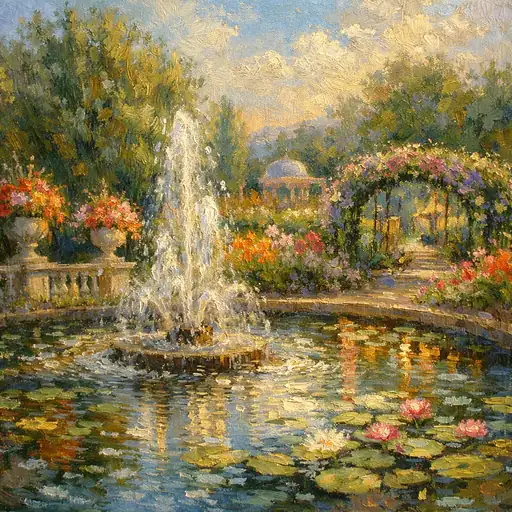 Whispers of Sunlight in the Eternal Garden
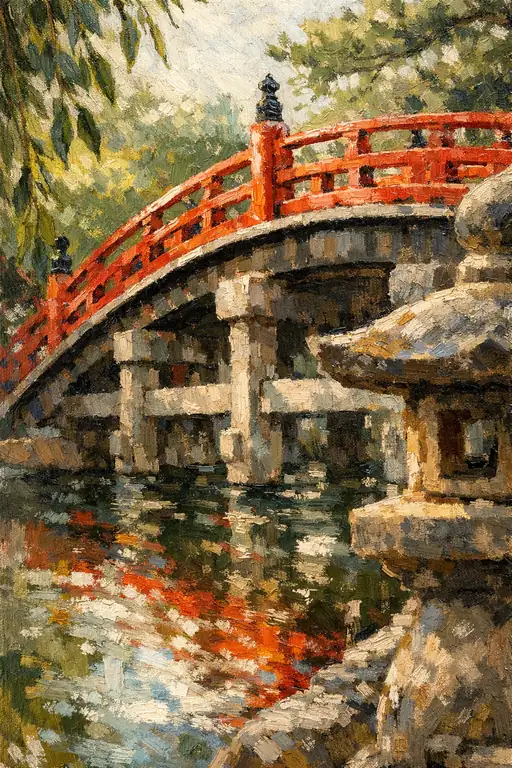 Passionate Reflections of the Vermilion Bridge