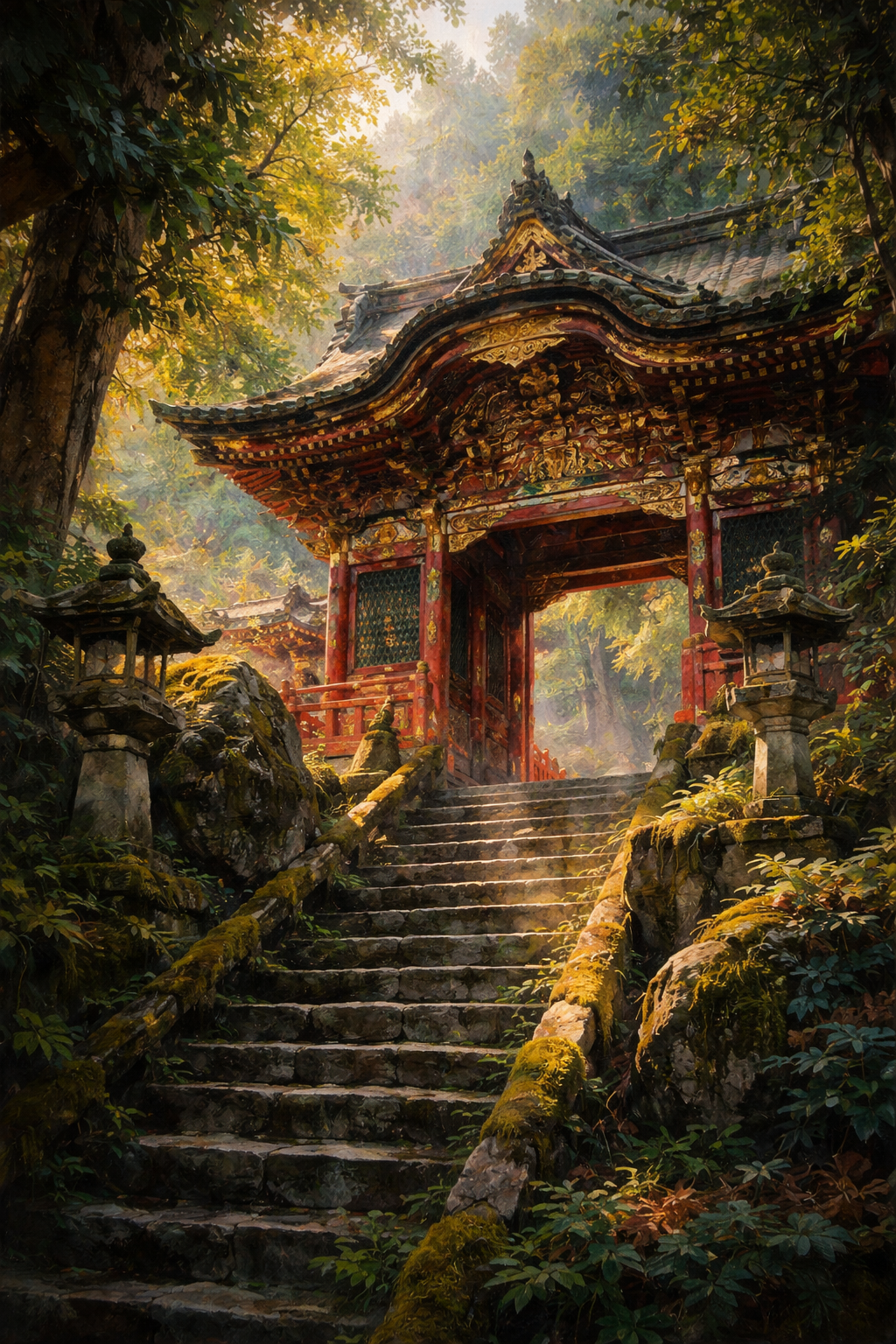
Passage to the Forgotten Sanctuary
Critique
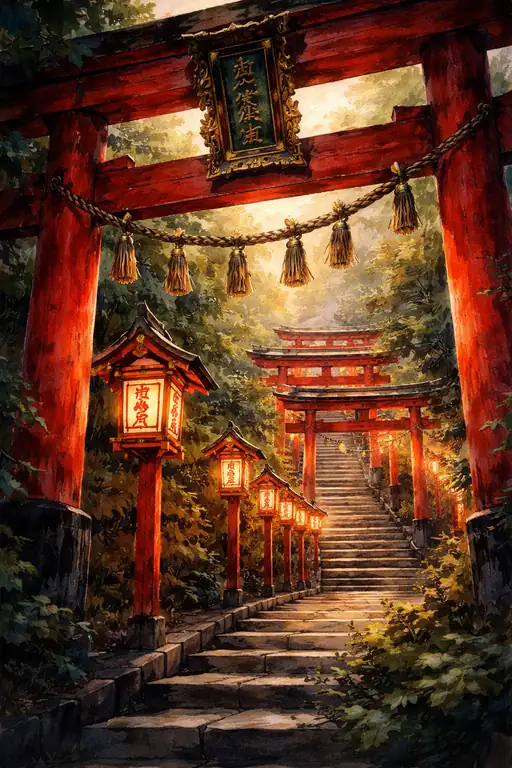
1. Introduction This oil painting depicts a magnificent traditional structure within a deep forest, enveloped in mystical light. Sunlight streaming through the foliage illuminates a stone stairway and a lavish vermilion gate at its summit. The contrast between the meticulously rendered decorative architecture and the lush nature creates a solemn atmosphere. It operates as a grand landscape painting conveying a distinct spirituality. 2. Description In the center stands a gorgeous vermilion gate, crowned with an intricately structured roof featuring golden decorations. An old, moss-covered stone stairway leads upward, with soft light falling on the steps. Stone lanterns stand guard at the top, adding religious dignity to the space. Abundant green trees cover the scene, while another roof is partially visible through the central gateway. 3. Analysis Color and light are the primary factors constructing this mystical space. The vivid vermilion and radiant gold form a strong complementary contrast with the surrounding greens, accentuating the architectural presence. Diagonal light rays from the upper left create a dramatic chiaroscuro effect. Detailed brushstrokes on the stairs masterfully differentiate the softness of the moss from the hard texture of the stone. 4. Interpretation and Evaluation The grand architecture seemingly symbolizes the boundary between the sacred and the secular. The mossy stairs imply the immense passage of time, functioning as an intersection between human endeavors and nature's eternal scale. The harmonious integration of the ornate gate into the natural setting is achieved through superb light control, demonstrating highly commendable descriptive narrative skill. 5. Conclusion Throughout the work, dramatic lighting and meticulous details splendidly portray oriental mysticism and tranquility. The golden light transcends mere physical description, possessing a spiritual depth that invites viewers into a sacred realm. The initial amazement at the architecture gradually shifts to profound reverence for the surrounding natural world.
Same Subcategory
Similar Artworks
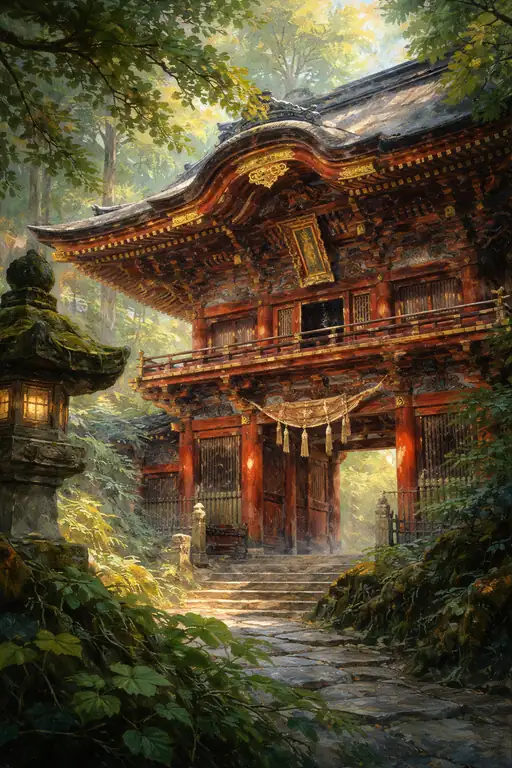 Sunlight on the Sacred Gateway
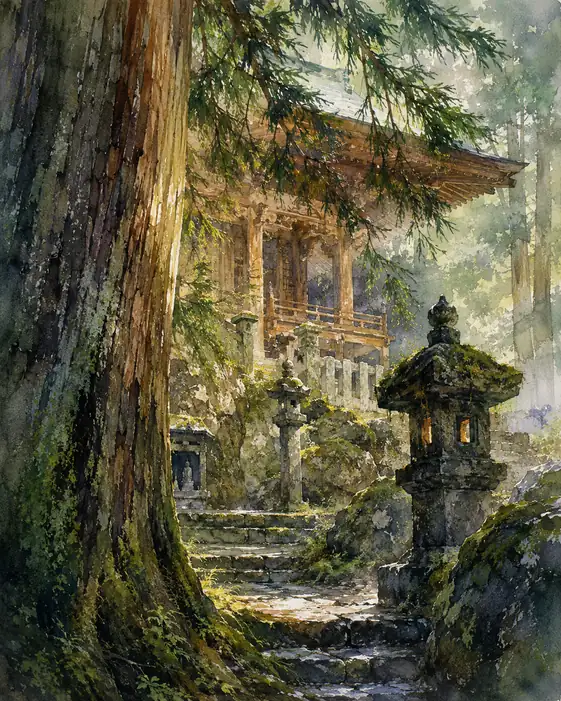 Sanctuary of the Ancient Cedars
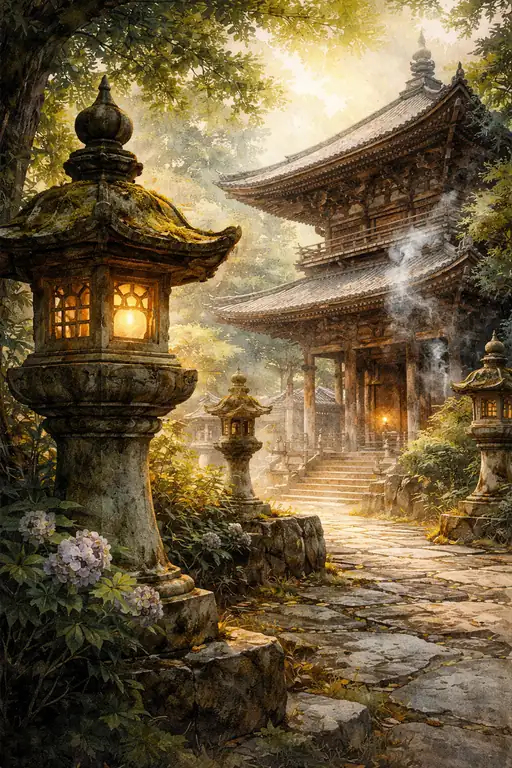 Sacred Light Through the Misty Grove
 Stairway Between the Worlds
 Prayer Among a Thousand Moss Stars
 The Stairway between Two Silences
 Fuji from the Wisteria Garden
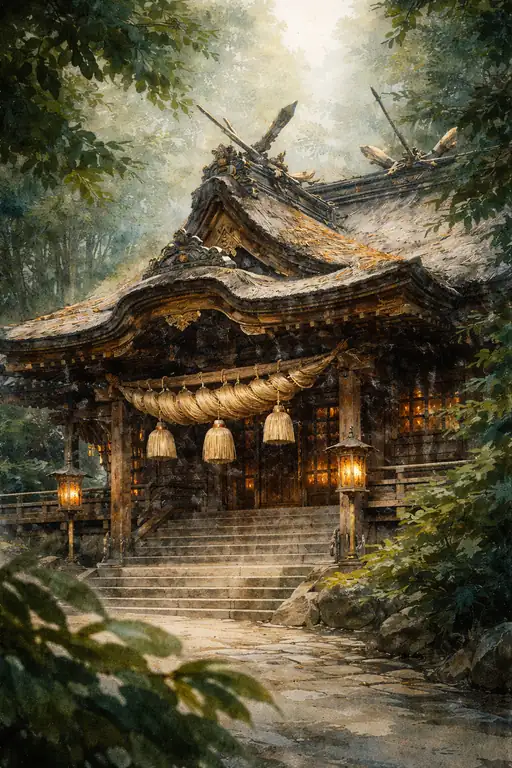 The Sacred Silence of the Moss-Covered Hall
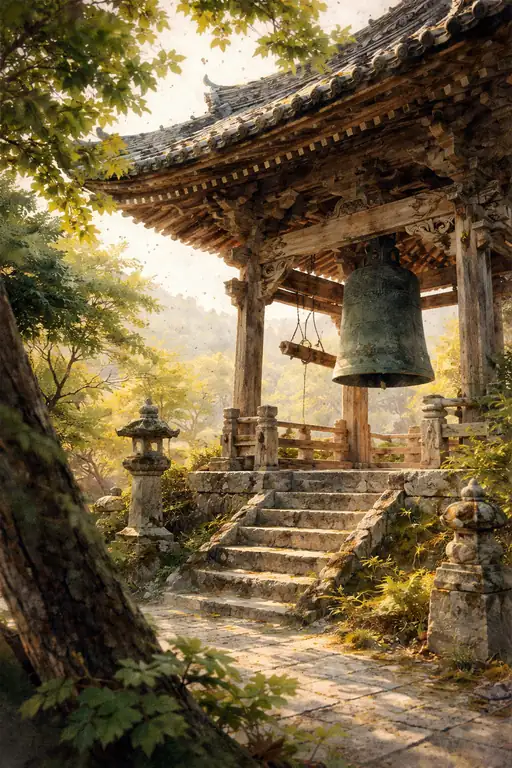 The Silent Wait of the Majestic Temple Bell
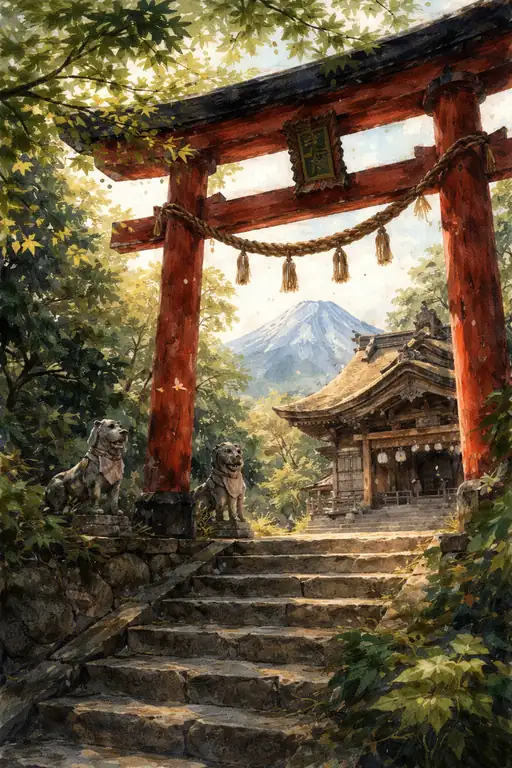 Sacred Portal to the Divine Peak