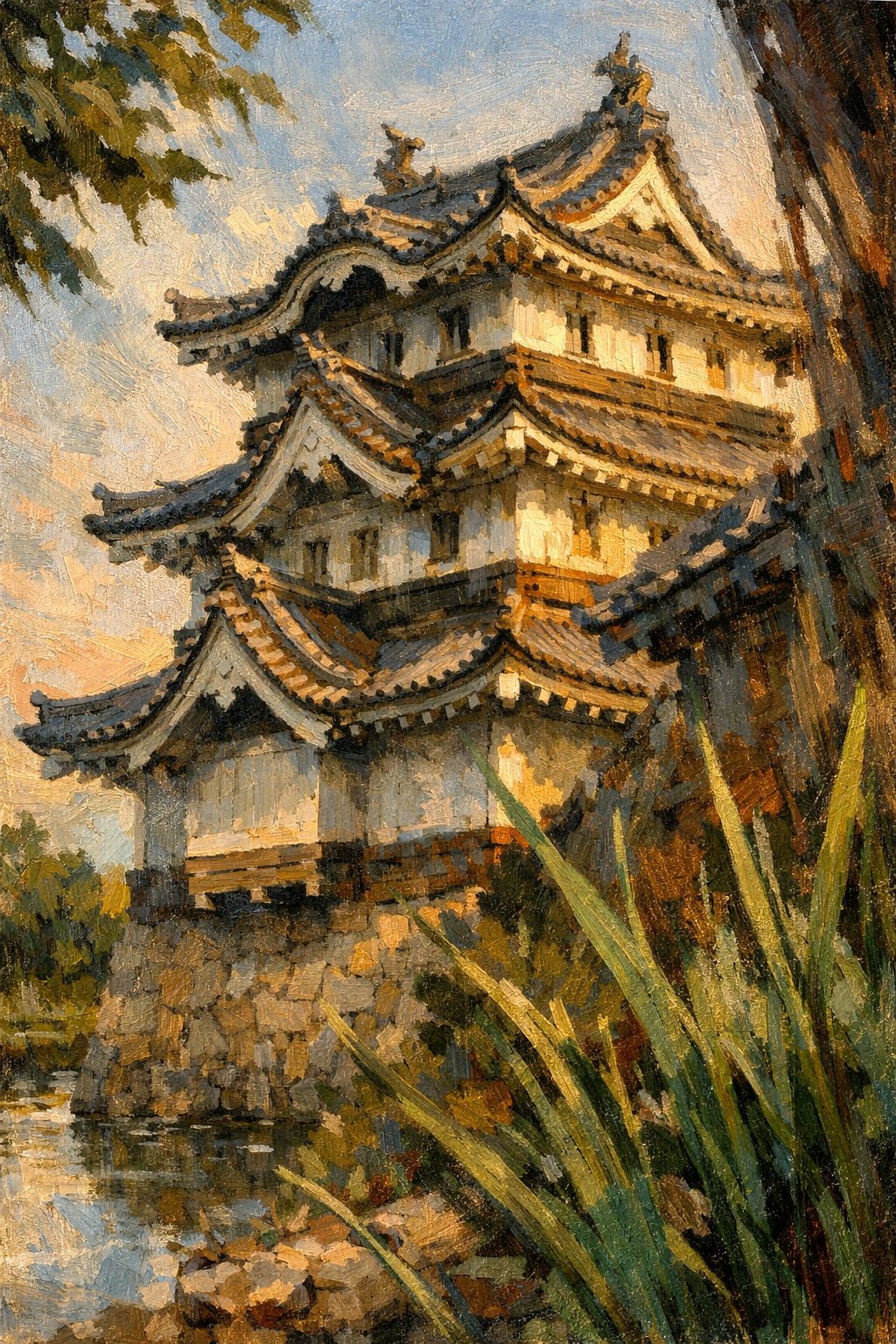
Golden Sentinel of a Fading Era
Critique
1. Introduction This painting presents a powerful and evocative depiction of a traditional Japanese castle tower, standing as a stoic monument against the fading light of a late afternoon sky. The composition masterfully utilizes a dramatic, low-angle perspective to emphasize the imposing stature of the fortification. It successfully captures the intersection of historical architectural grandeur and the fleeting, transformative power of natural illumination. 2. Description The primary subject is a multi-tiered castle structure, its white-plastered walls and dark, elegantly curved gables catching the intense golden radiance of the setting sun. The building rests upon a massive, weathered stone foundation that rises from the edge of a calm moat. In the immediate foreground, sharp, sword-like green foliage emerges from the bottom right, creating a sense of layered depth and providing an organic contrast to the rigid geometry of the fortress. 3. Analysis The artist employs a bold, impasto-style technique, with visible and energetic brushstrokes that lend a palpable physical texture to the canvas. High-contrast lighting is the defining analytical element, as the direct sunlight illuminates the right surfaces of the tower while casting deep, expressive shadows across the intricate woodwork and eaves. This interplay of light and shadow accentuates the three-dimensional complexity of the rooflines and the rugged irregularity of the stone masonry. 4. Interpretation and Evaluation The work can be interpreted as a meditation on permanence and the enduring legacy of cultural heritage. Technically, the artist demonstrates exceptional skill in manipulating heavy paint to convey subtle shifts in atmospheric temperature and surface detail. The decision to frame the solid, man-made architecture with aggressive, unrefined vegetation creates a dynamic tension that keeps the viewer’s eye moving across the entire surface. 5. Conclusion Through its confident execution and dramatic use of contrast, the painting achieves a sense of timeless dignity that resonates with the viewer’s historical imagination. The initial impression of a solid, immovable object is softened by the vibrant, almost tactile energy of the brushwork and the warmth of the evening glow. This piece stands as a sophisticated example of architectural portraiture, masterfully balancing structural accuracy with expressive painterly freedom.
Same Subcategory
 Steps to the Clouds' Embrace
 Journey's Respite
Similar Artworks
 Citadel of the Golden Hour
 Golden Embers of the Wild Valley
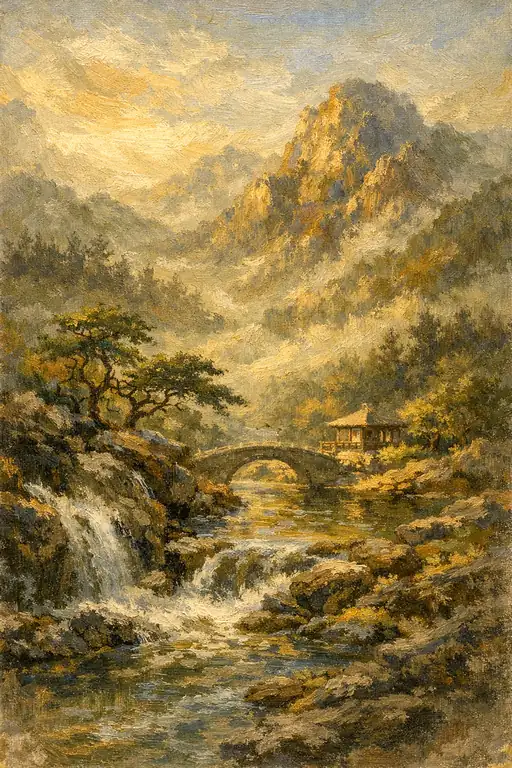 Golden Hour Cascade in the Majestic Valley
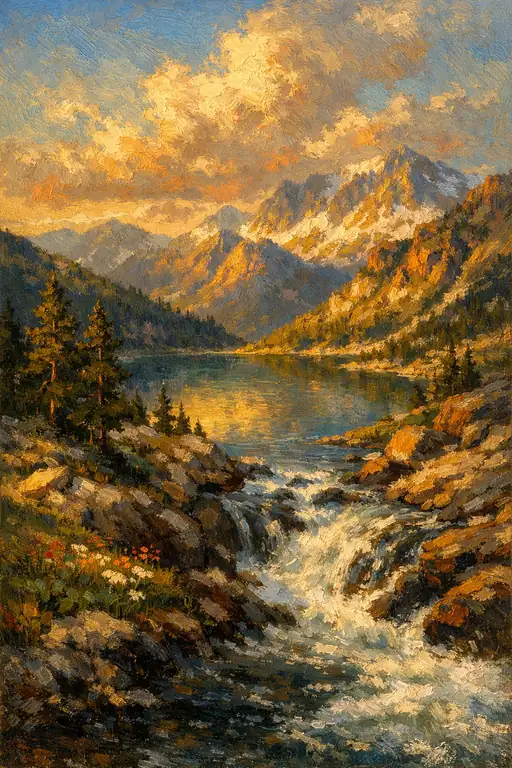 Ablaze with the Alpine Twilight
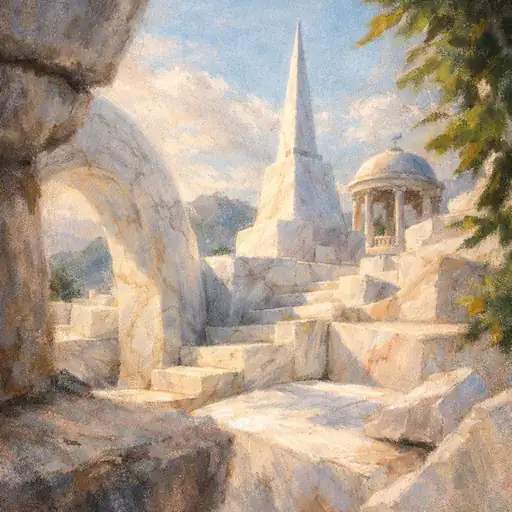 Embracing the Frozen Stillness
 The Earth's Quiet Pulse in the Heart of the Jungle
 The Peak's Final Soliloquy in Gold
 Whispers of the Golden Cascade
 Dawn's Fiery Crown
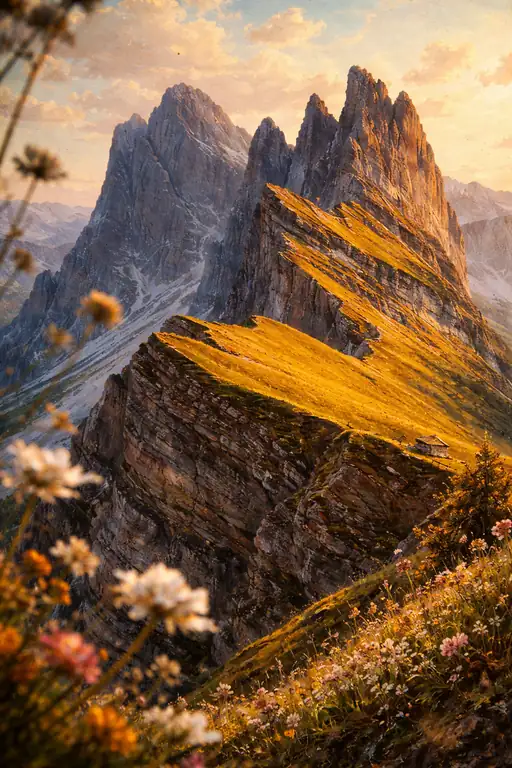 The Golden Ridge: A Solitary Hearth Among Giants