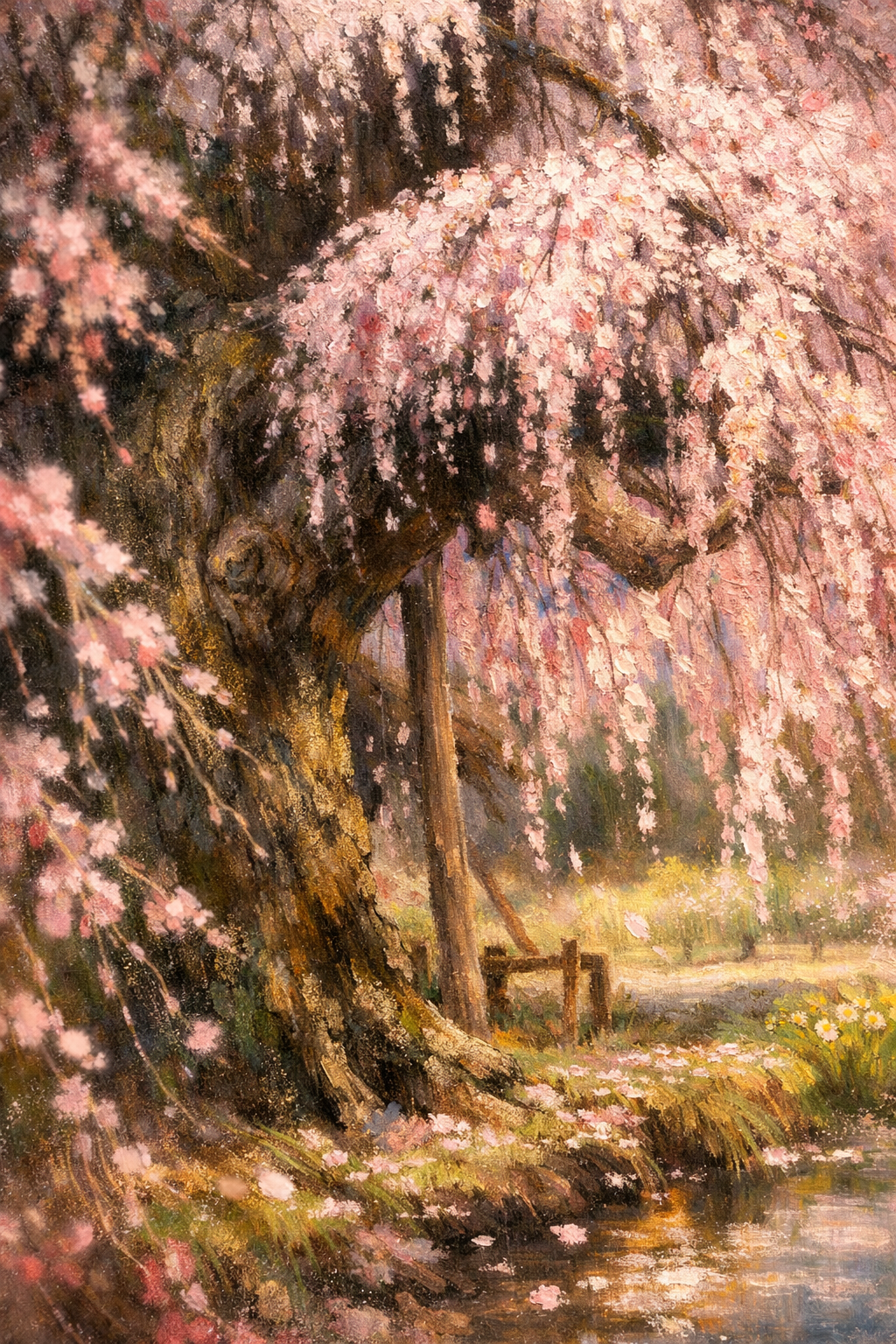
Grace of the Weeping Spring
Critique
1. Introduction This intimate oil painting focuses on the majestic form of an ancient weeping cherry tree (shidare-zakura) in full bloom. Situated by a quiet riverside, the composition captures the overwhelming beauty of spring through a focus on natural texture and soft lighting. The work utilizes a rich, painterly style to celebrate the enduring life of the tree and the ephemeral grace of its seasonal blossoms. 2. Description A massive, gnarled tree trunk with deeply textured bark dominates the left side of the frame, providing a solid foundation for the scene. Long, slender branches laden with pale pink and white flowers cascade downwards, with some petals depicted mid-fall toward the reflective water below. In the mid-ground, simple wooden fences and a sun-drenched meadow lead the eye toward a soft, forested background. 3. Analysis The artist employs expressive brushwork that emphasizes the physical reality of the tree, from the rough, mossy surface of the bark to the airy mass of the flowers. The play of light is particularly effective, as it filters through the dense canopy to create dappled patterns on the grass and shimmering highlights on the river. The vertical movement of the weeping branches provides a graceful counterpoint to the heavy, horizontal expansion of the trunk. 4. Interpretation and Evaluation This work beautifully explores the classic theme of "mono no aware," reflecting on the transient beauty of life through the falling cherry petals. The juxtaposition of the ancient, stable trunk with the delicate, fleeting blossoms creates a powerful sense of historical depth and seasonal change. The meticulous rendering of light and the vibrant, organic palette demonstrate a sophisticated understanding of atmospheric perspective within a close-up study. 5. Conclusion In summary, the painting is a masterful celebration of a iconic Japanese floral motif, rendered with great technical skill and emotional sensitivity. The initial impression of overwhelming pink is grounded by the realistic portrayal of the aged wood and the peaceful rural setting. It stands as a refined representation of natural harmony, successfully inviting the viewer to appreciate the quiet majesty of a spring day.
Same Subcategory
 Vermillion Steps to the Spring Heavens
 Majestic Fortress Guarded by Spring Sakura
Similar Artworks
 Spring's Gentle Melody by the Stream
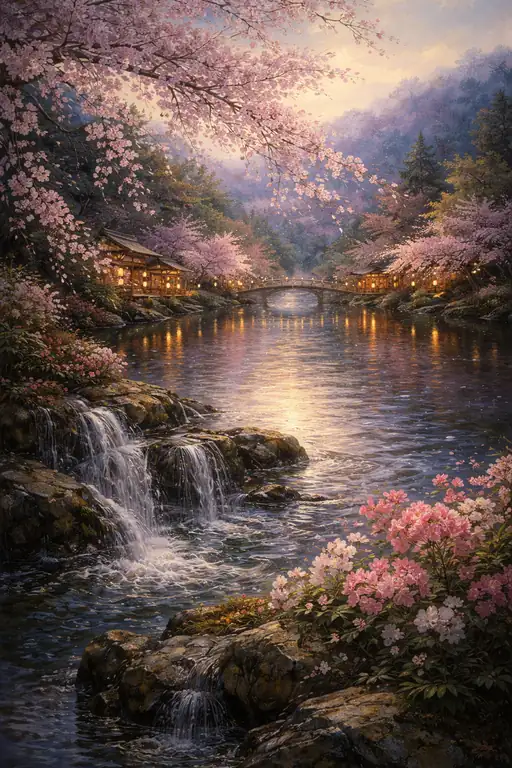 Whispers of the Sakura Moon
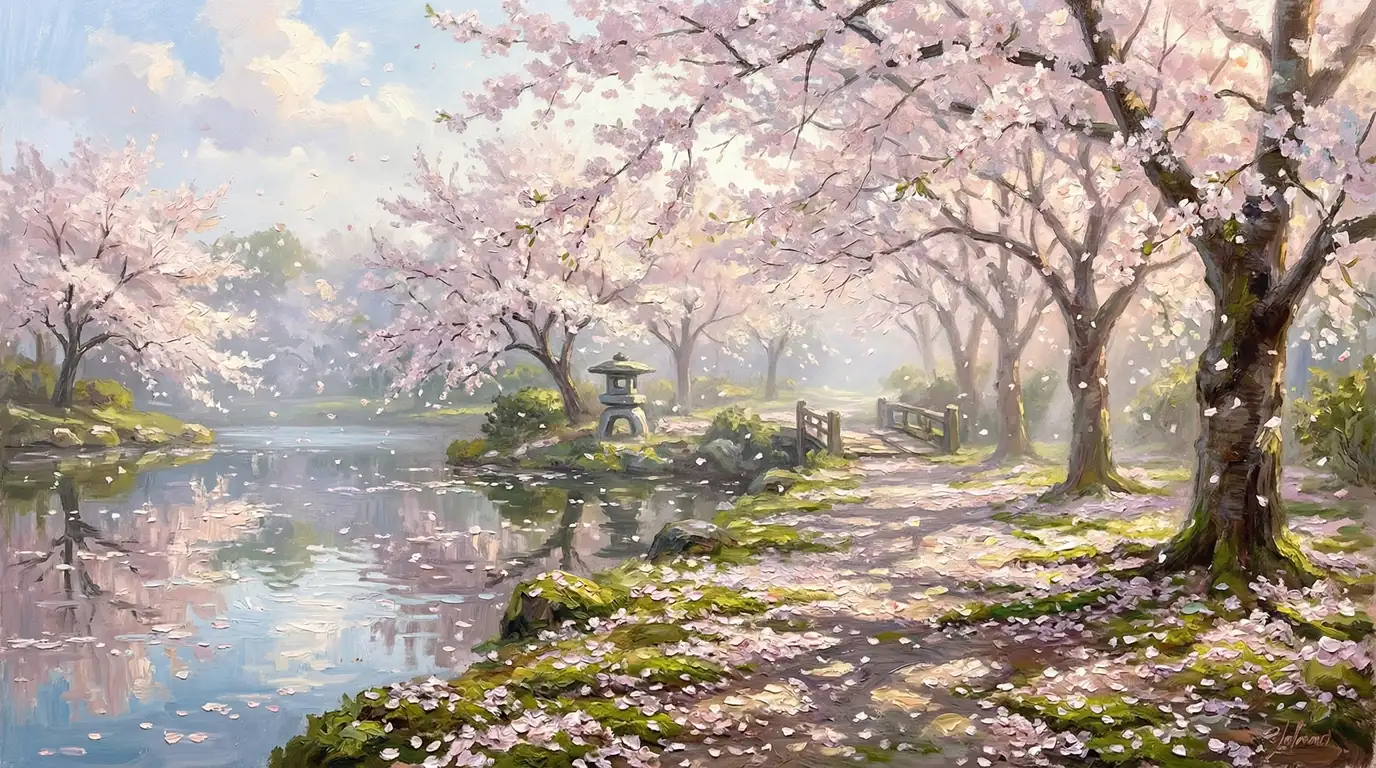 Reflections of a Petal's Sigh
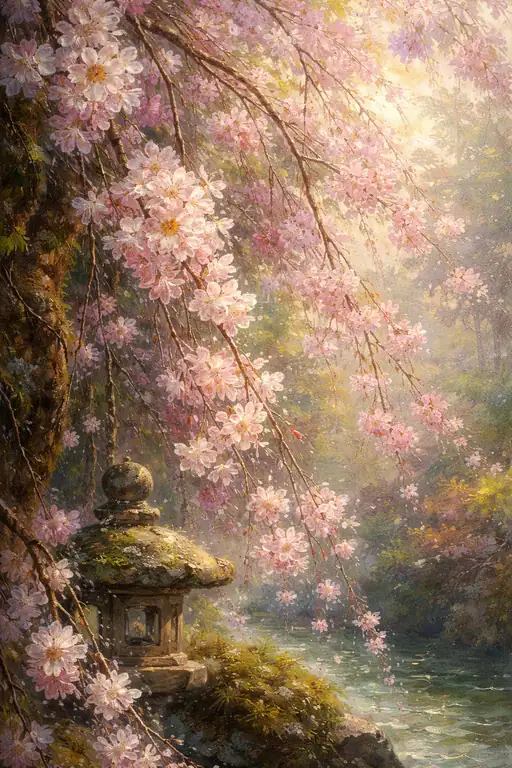 The Weeping Cherry's Golden Reverie
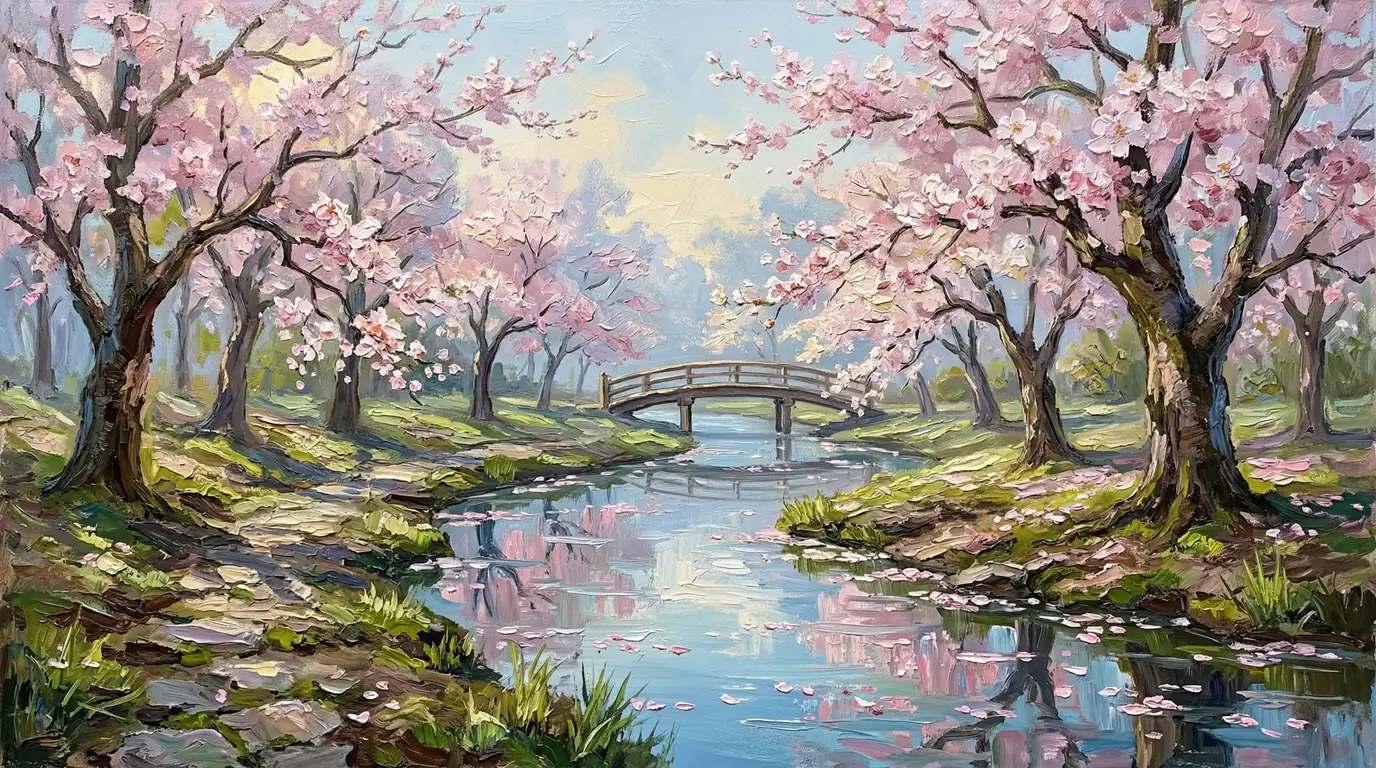 Spring's Embrace Along the Blossom River
 Spring's Eternal Float
 Whispers of the Weeping Spring
 Petals Adrift on the Gentle Flow
 Spring's Gilded Reflection
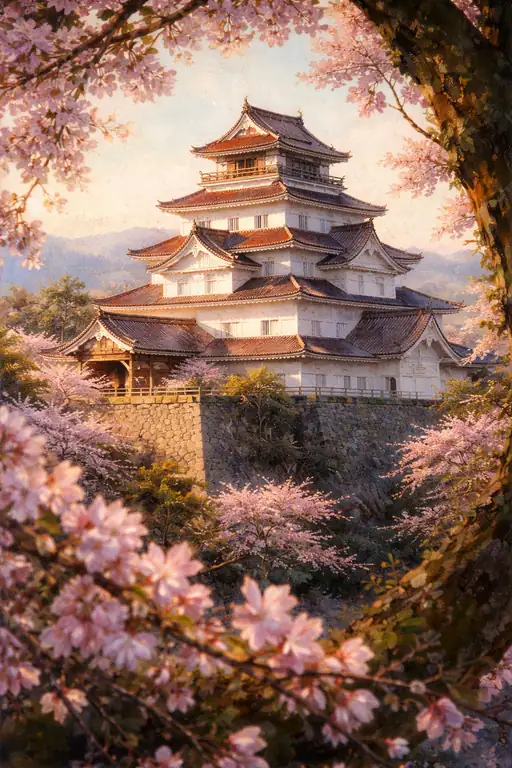 Spring's Embrace of the Ancient Citadel