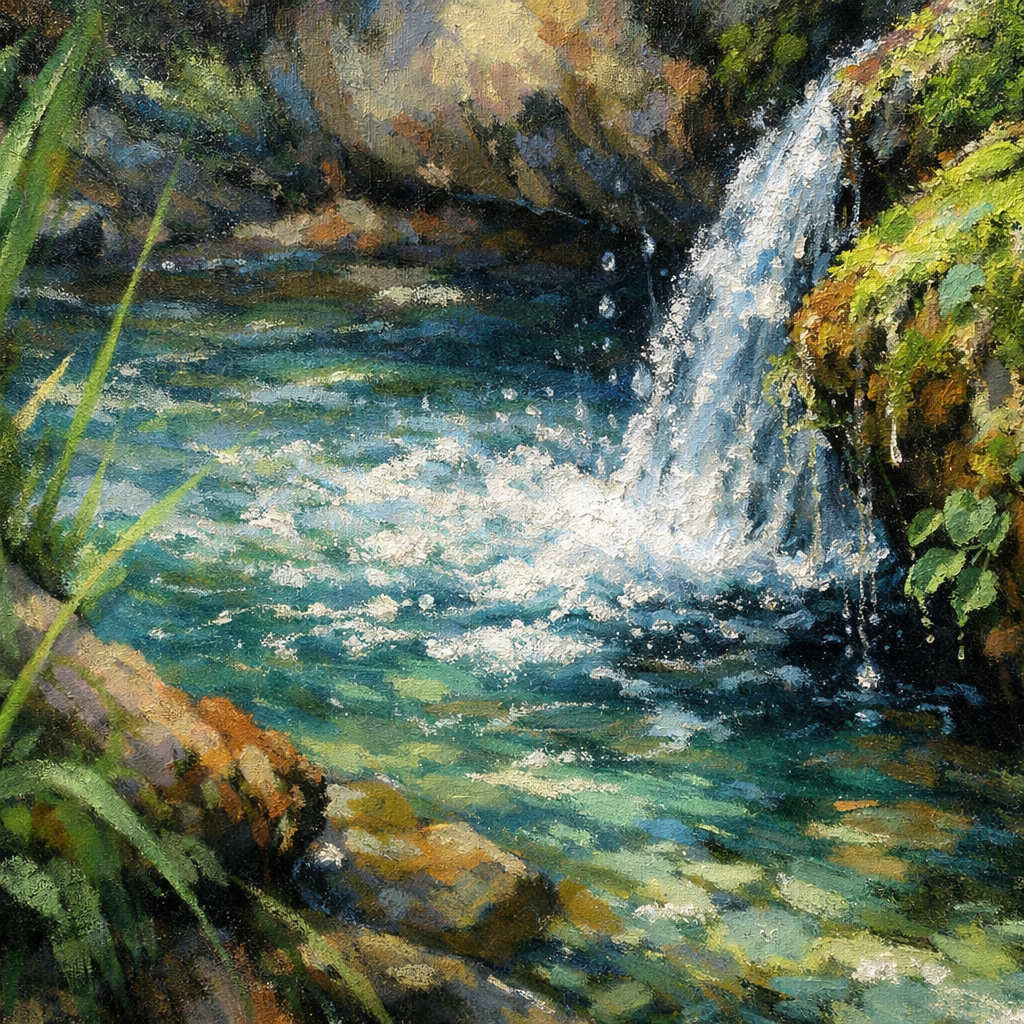
Silence of the Cascading Light
Critique
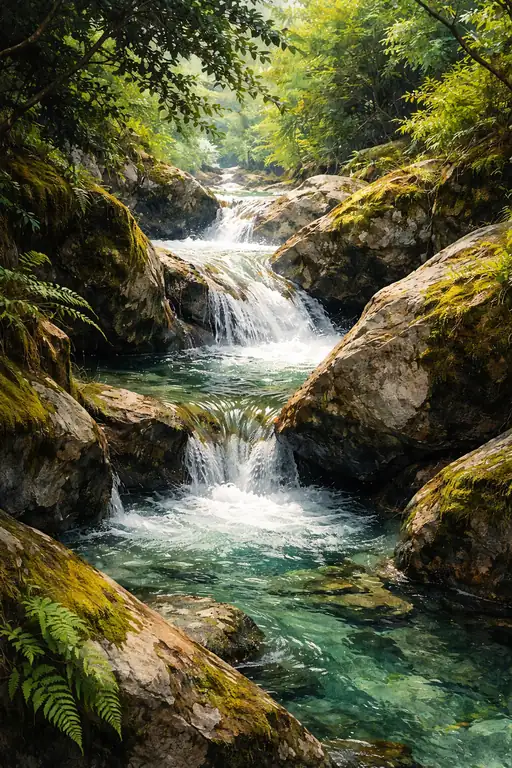
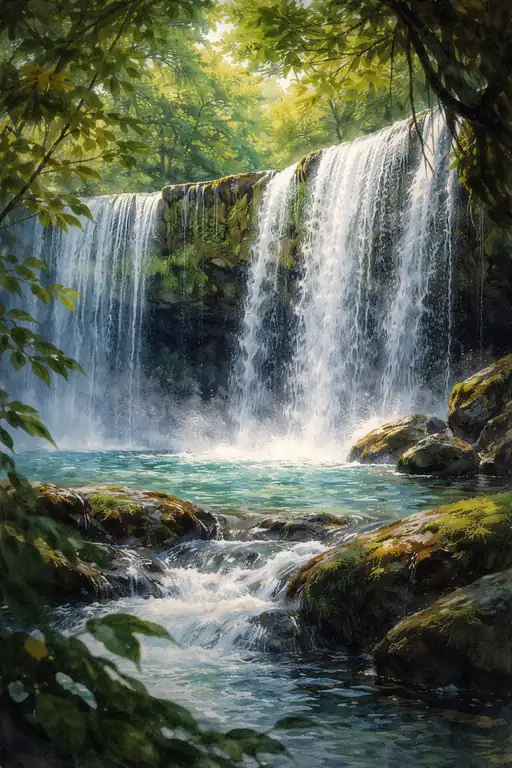
1. Introduction This landscape oil painting depicts a serene woodland scene featuring a small waterfall cascading into a crystal-clear pool. The contrast between the frothy white water falling from the right and the luminous emerald surface of the pond emphasizes the refreshing stillness of nature. By skillfully capturing the dappled sunlight reflecting off the water, the artist invites the viewer into a contemplative and meditative natural sanctuary. 2. Description In the upper right corner, a gentle waterfall flows over a rocky ledge, with thick applications of white paint creating the illusion of splashing foam. The water below is remarkably transparent, rendered with a gradient that reveals the submerged rocks and sand on the pool’s floor. The foreground on the lower left features moss-covered rocks and sharp blades of grass, providing a sense of depth. Dark blues and purples characterize the shadowed areas of the cliff face, heightening the brilliance of the sunlit sections. 3. Analysis The artist employs a variety of brushstrokes, ranging from staccato-like dabs for the spray to smooth, blended strokes for the deeper water. High-key white highlights are strategically placed to represent the dynamic interaction between light and the fluid surface. The color palette is a harmonious blend of greens, blues, and yellows, anchored by the earthy browns of the underwater stones. The vertical lines of the waterfall contrast effectively with the horizontal expanse of the water, creating a balanced composition. 4. Interpretation and Evaluation This work excels in conveying both the physical transparency of the water and the ethereal atmosphere created by scattered light. By prioritizing texture and luminosity over meticulous realism, the painting achieves a sensory resonance that speaks to the viewer’s intuition. The composition suggests an untouched sanctuary, symbolizing a purity and spiritual peace found only in nature. The technical mastery of the brushwork breathes life into the static medium, capturing the essence of a living environment. 5. Conclusion Ultimately, the painting provides a structured visual order to the elusive and ever-changing subject of flowing water. The depiction of light transcends mere visual recording, evoking a sense of sacred time within the silence of the forest. What begins as an appreciation of a cooling landscape evolves into a deeper admiration for the sophisticated spatial representation achieved through careful layering of color.
Same Subcategory
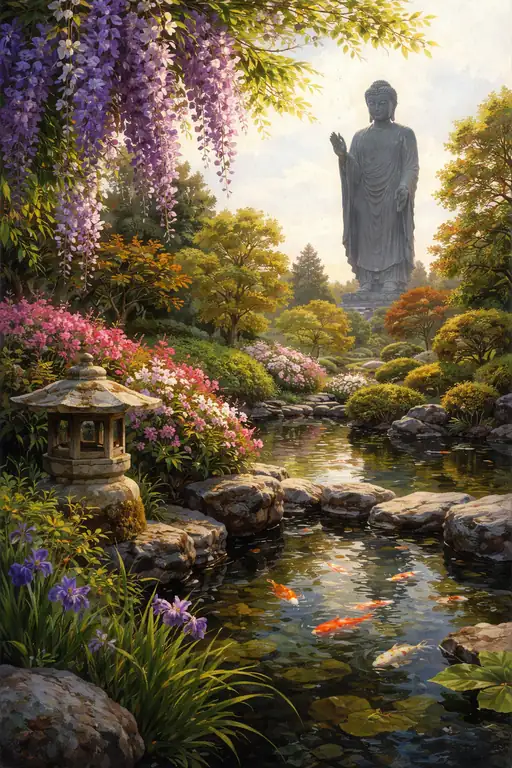 Autumn's Golden Cascade
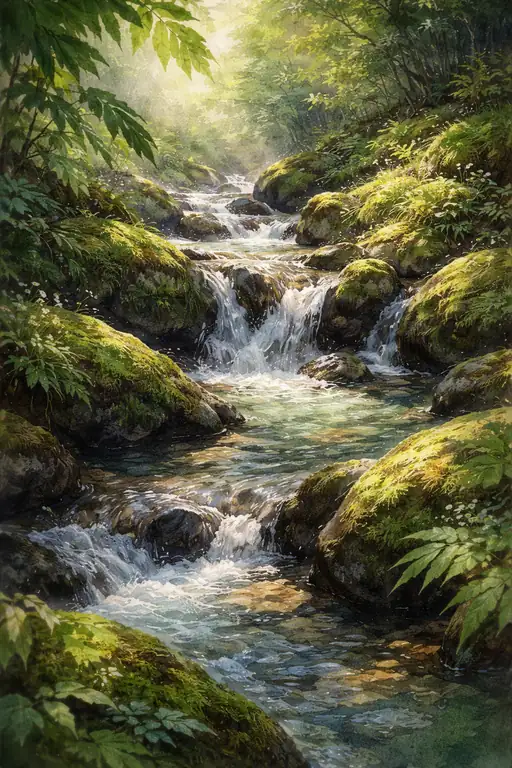 Vitality of the Woodland Stream
Similar Artworks
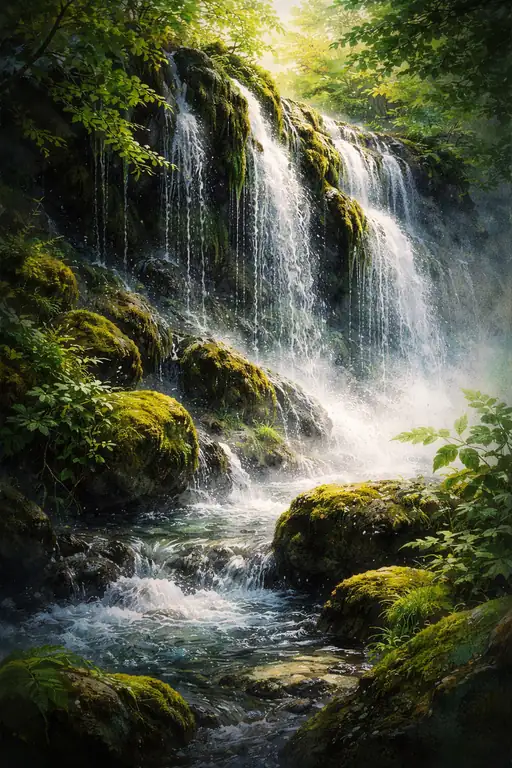 The Emerald Cascade of the Hidden Sanctuary
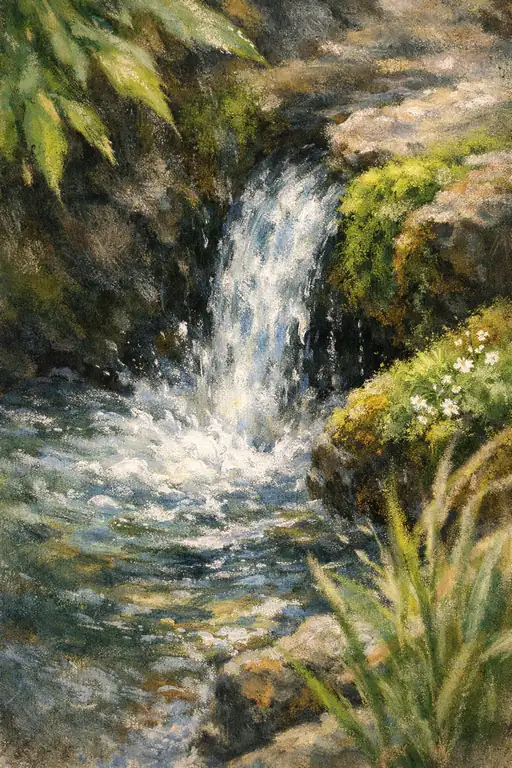 Vital Pulse of the Hidden Spring
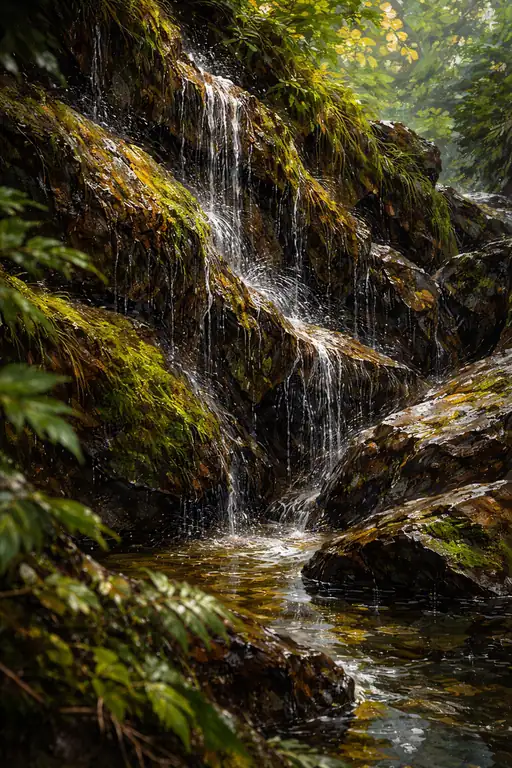 Whispers of the Mossy Stream
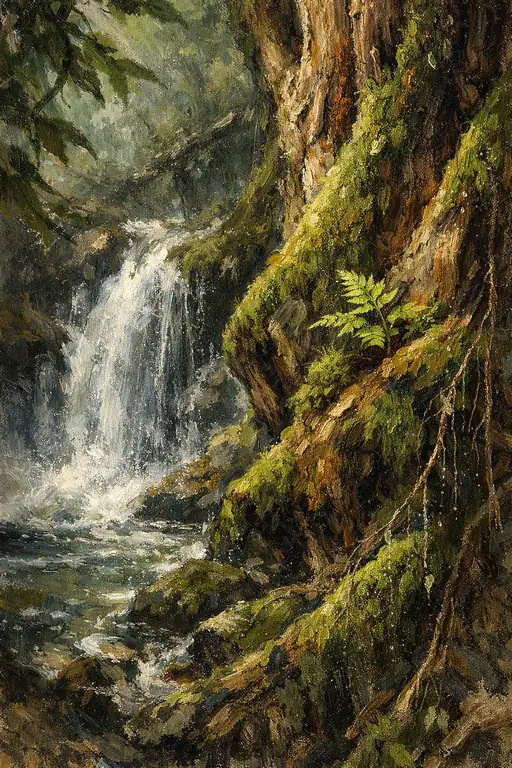 Cascade in the Ancient Forest
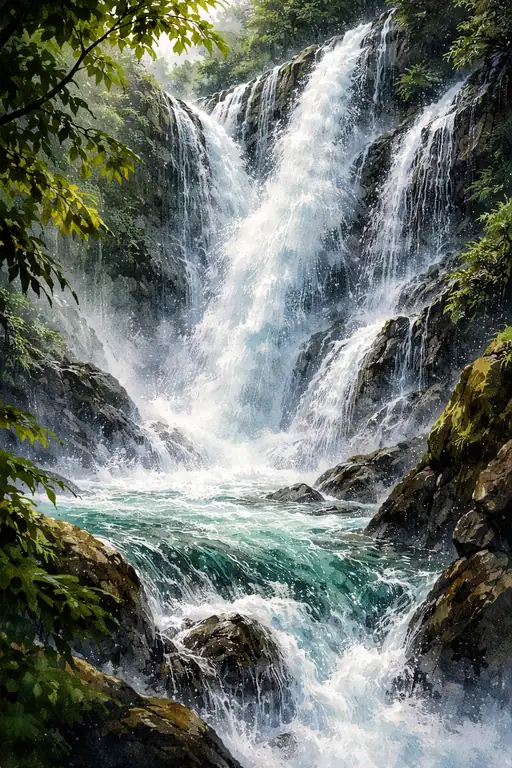 Pulse of Life in the Emerald Forest
 Pulse of the Autumn Forest Stream
 The Emerald Pulse of the Forest
 Sacred Whisper of the Forest Stream
 A Moment of Grace and Thought
 The Forest’s Crystal Veil