Solitary Descent into the Glowing Mist
Critique
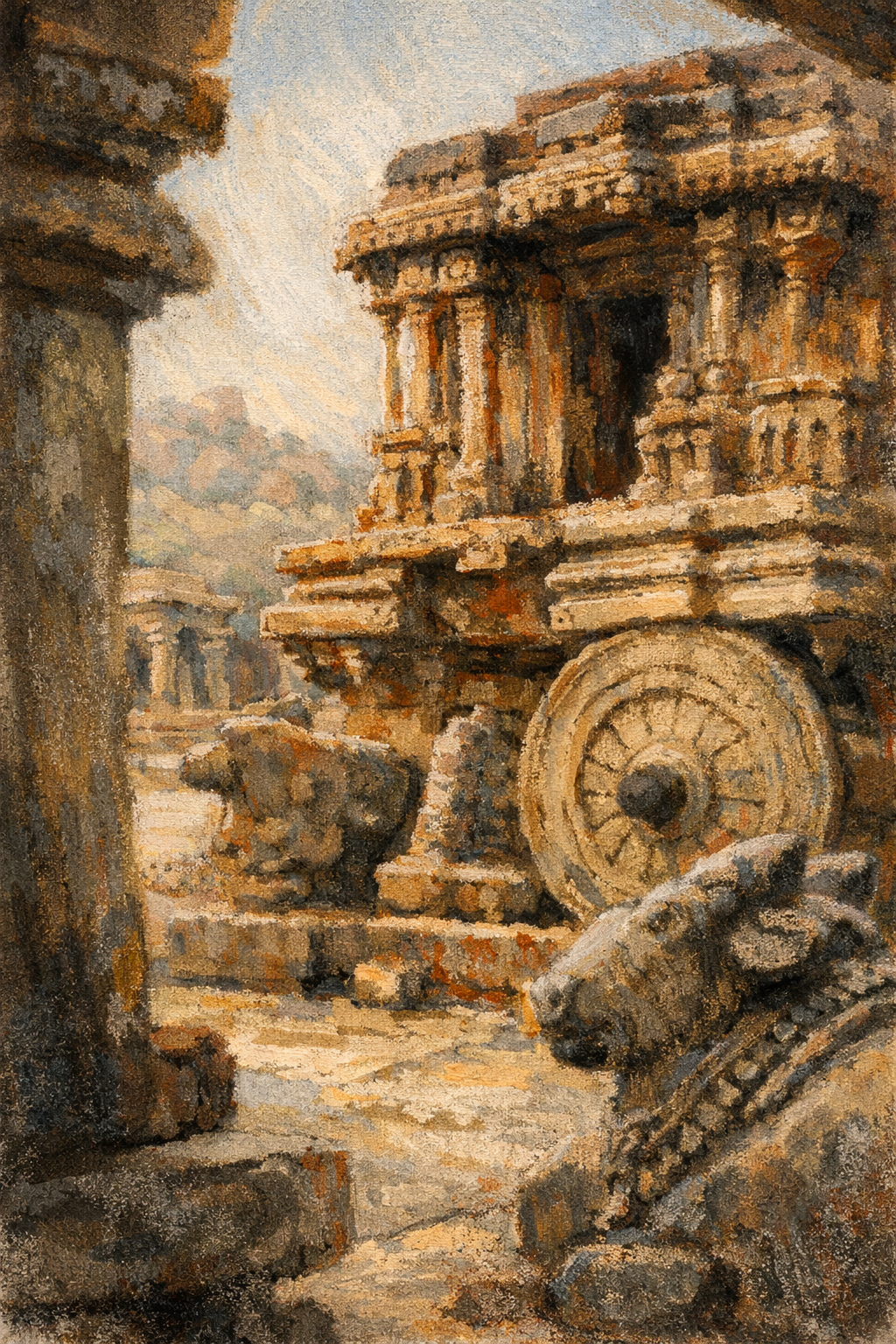
1. Introduction This detailed oil painting depicts the iconic Stone Chariot, a masterpiece of Dravidian architecture located within the Vitthala Temple complex in Hampi. The work emphasizes the enduring strength and intricate craftsmanship of the ancient structure, presented through a palette of warm, earthy tones. It serves as a respectful architectural study that captures the majesty of historical ruins under a bright, clear sky. 2. Description The composition features a close-up, slightly low-angle view of the chariot’s massive stone wheels and its richly carved base. In the immediate foreground, a weathered stone animal sculpture—likely an elephant or ox—stands in soft focus, providing a sense of scale and depth. The background reveals a glimpse of the surrounding temple ruins and distant hills, all bathed in a natural, direct light that highlights the rugged textures of the masonry. 3. Analysis The artist uses a strong diagonal composition, with the chariot’s structure receding into the midground to create a dynamic sense of space. A limited, harmonious color scheme of ochre, sienna, and muted browns establishes a cohesive and historically evocative atmosphere. The brushwork is particularly effective in its use of short, rhythmic strokes (impasto) to replicate the granular and weathered surfaces of the ancient granite. 4. Interpretation and Evaluation The painting successfully interprets the Stone Chariot not merely as a relic, but as a silent witness to a glorious past. The choice to frame the scene with a heavy stone pillar on the left suggests a viewpoint from within the temple’s sacred corridors, inviting the viewer into a personal discovery of the site. Technically, the work demonstrates a profound understanding of volume and mass, using subtle shadows to define the complex geometric reliefs of the carvings. 5. Conclusion While the viewer is initially struck by the formidable presence of the stone wheels, the intricate details of the animal sculptures and the distant landscape eventually reveal the work’s layered complexity. The balance between the broad, sweeping forms of the architecture and the delicate textures ensures a monumental impact. Ultimately, the work stands as a timeless tribute to the architectural genius of the Vijayanagara Empire and the haunting beauty of its ruins.
Same Subcategory
Similar Artworks
 Rose-Red Revelation
 Echoes of the Ancients
 Colossal Majesty Bathed in Golden Hues
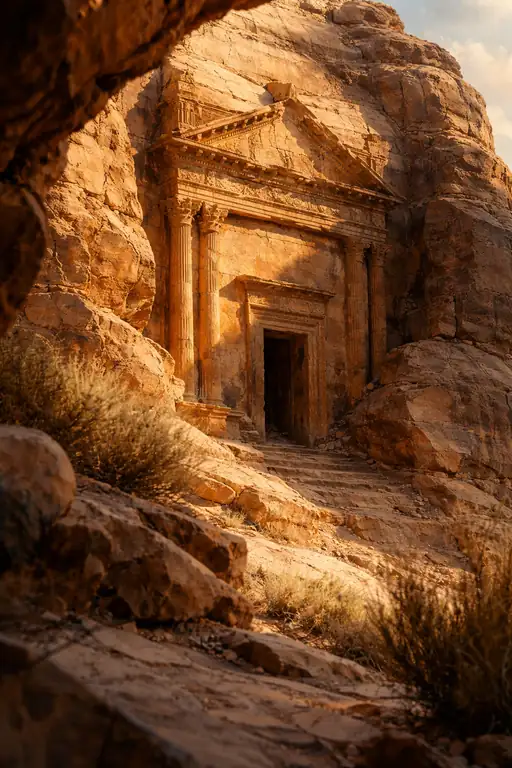 Golden Glory of the Forgotten
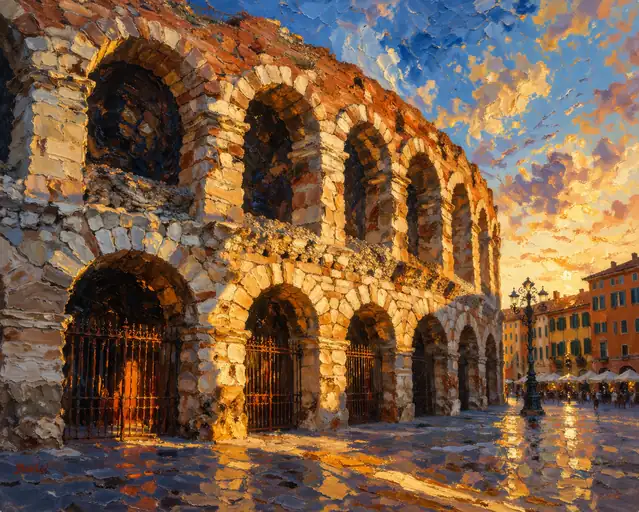 Verona's Arena in Flames
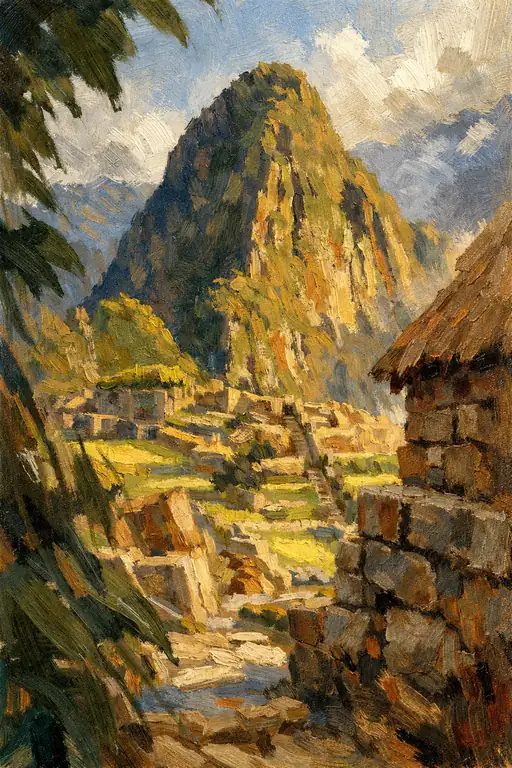 Echoes in the Stones of the Sky
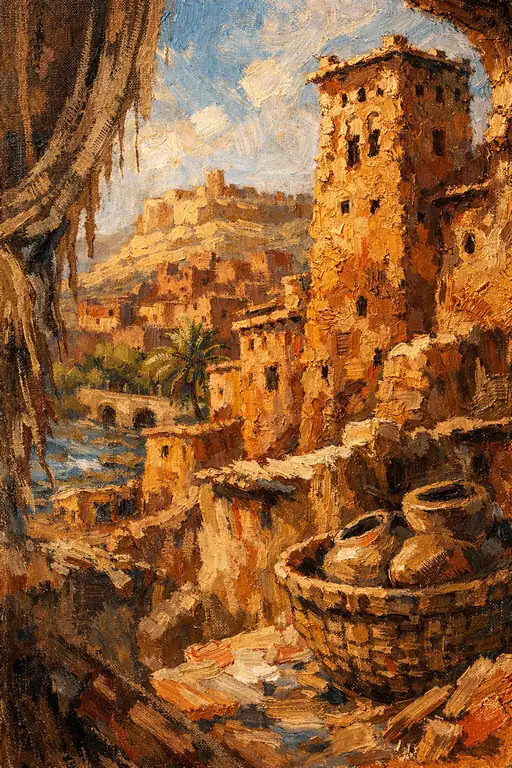 Timeless Sands, Silent Stone
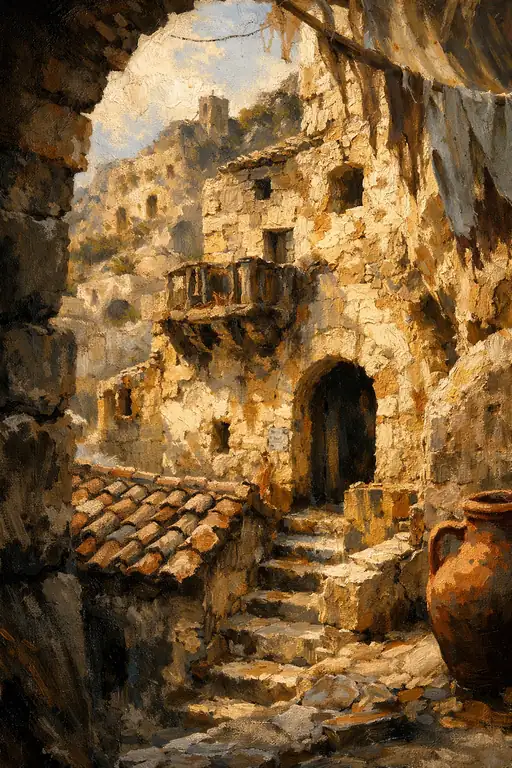 Silent Stones of Matera: A Deep Longing Carved in Time
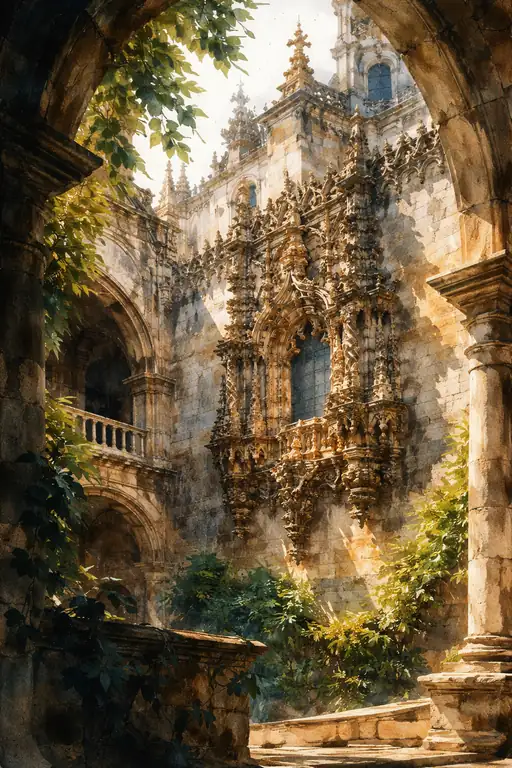 Lace of Stone Kissed by the Sun
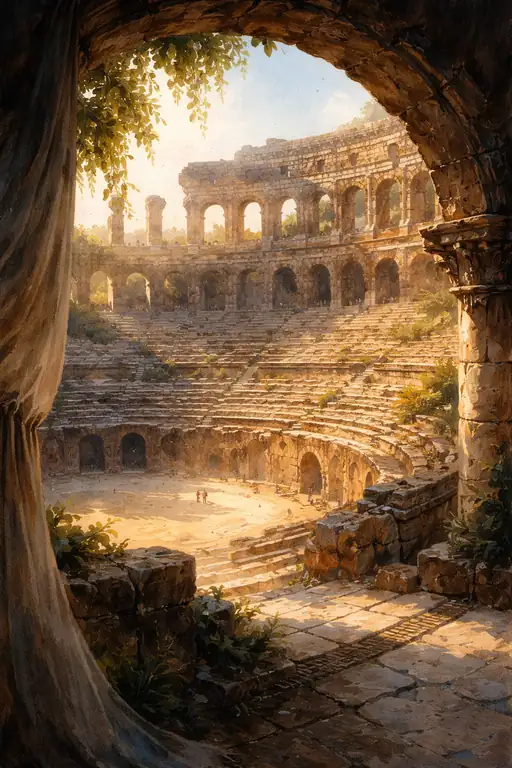 A Glimpse of Past Glories