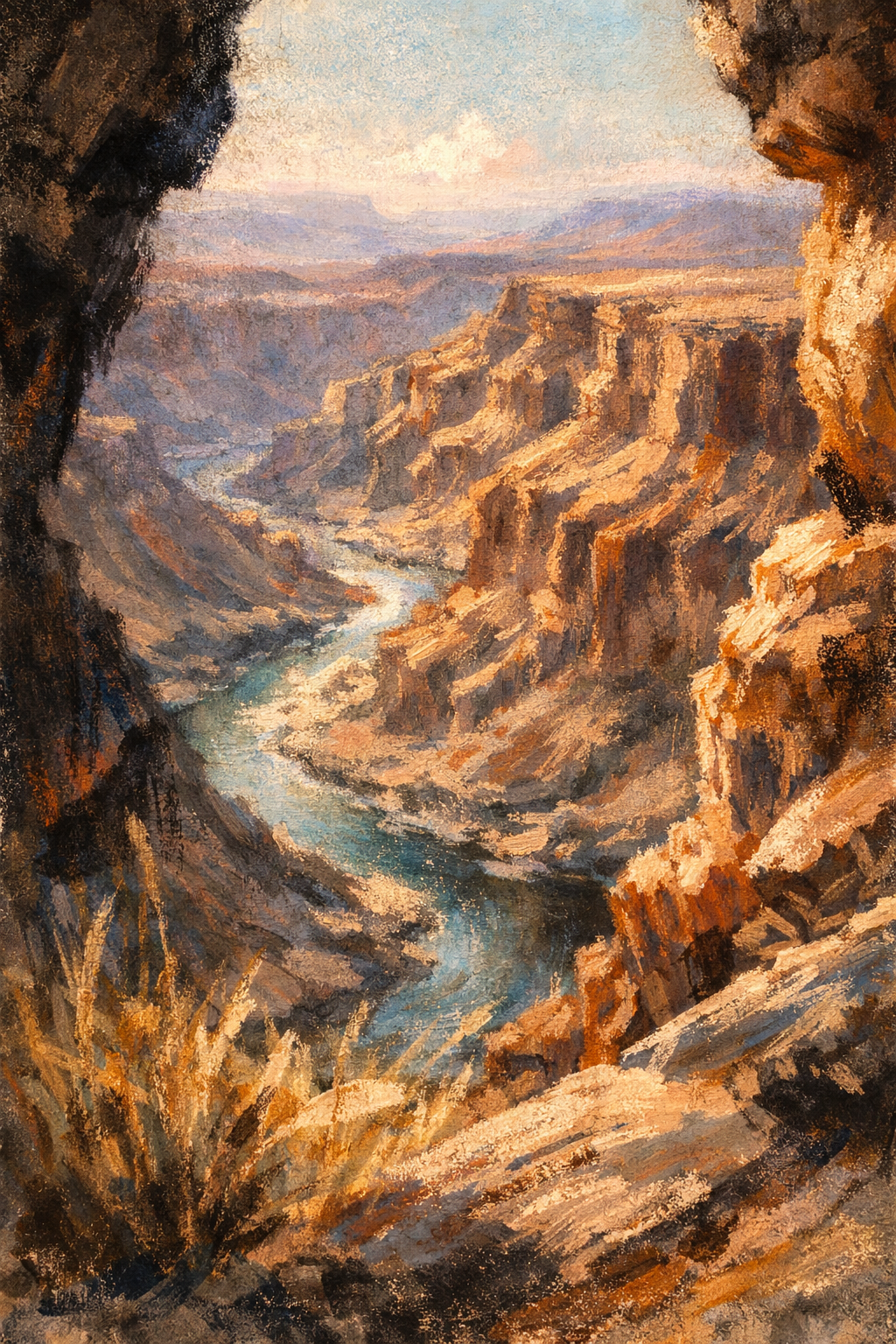
Arid Majesty Carved in Time
Critique
1. Introduction This painting presents a grand and powerful depiction of a deep canyon, capturing the immense scale and raw geological energy of the natural landscape. The composition is focused on a serene turquoise river that winds its way through the rugged heart of the canyon towards the horizon. The work utilizes a vigorous impressionistic technique, characterized by bold brushwork and a sophisticated interplay of light and shadow. This piece exemplifies a dynamic approach to landscape art, emphasizing the timeless and sublime character of the earth's formations. 2. Description In the foreground, the scene is framed by the dark, textured edges of rock walls that anchor the viewer's perspective. The middle ground reveals the massive, multi-layered cliffs of the canyon, where the sunlight highlights intense shades of orange and ochre on the vertical surfaces. A slender, curved river of brilliant turquoise flows through the deep valley, reflecting the light from above. The background features several receding mountain ridges in shades of atmospheric blue, all set beneath a pale and slightly hazy sky. 3. Analysis The vertical composition is masterfully structured using dark foreground elements to create a dramatic sense of depth and scale. The artist employs energetic, almost swirling brushstrokes to define the complex geological layers and the rugged texture of the canyon walls. There is a high contrast between the brightly sun-drenched peaks and the deep, cool shadows that define the canyon's chasms. The color harmony is effectively balanced between the warm, earthy tones of the rock and the cool, refreshing blues of the water and distance. 4. Interpretation and Evaluation The work evokes a profound sense of geological time and the persistent power of nature over millennia. The river serves as a central narrative element, illustrating the slow and steady erosion that has shaped this grand landscape. Technically, the artist demonstrates exceptional skill in capturing the varied textures of the stone and the effects of atmospheric perspective. The composition is successfully balanced, integrating the intimate foreground details with the vast, expansive views of the canyon interior, resulting in a cohesive and immersive experience. 5. Conclusion This painting successfully captures the awe-inspiring essence of a grand canyon through its masterful handling of light and texture. The interaction between the rugged geological forms and the delicate curve of the river creates a compelling visual dialogue throughout the work. Ultimately, the piece transitions from a simple landscape study into a powerful exploration of the sublime and timeless beauty of the natural world. This work remains a significant example of modern landscape painting that celebrates the enduring character of the land.
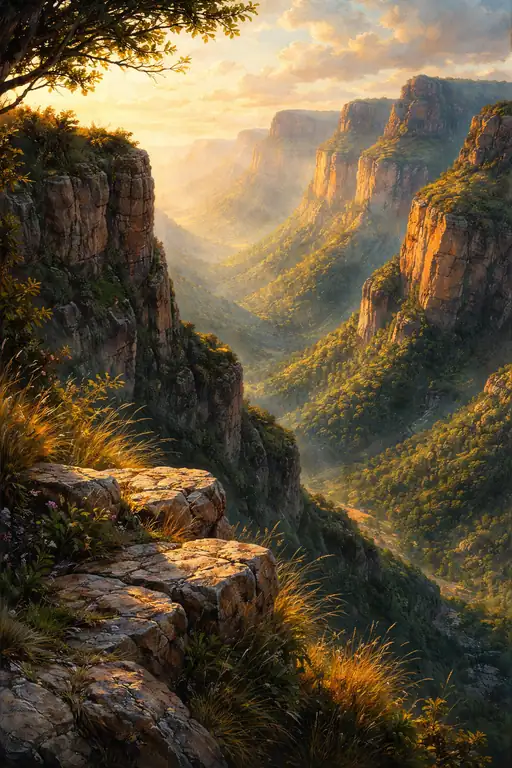 The Ethereal Glow of the Great Canyon
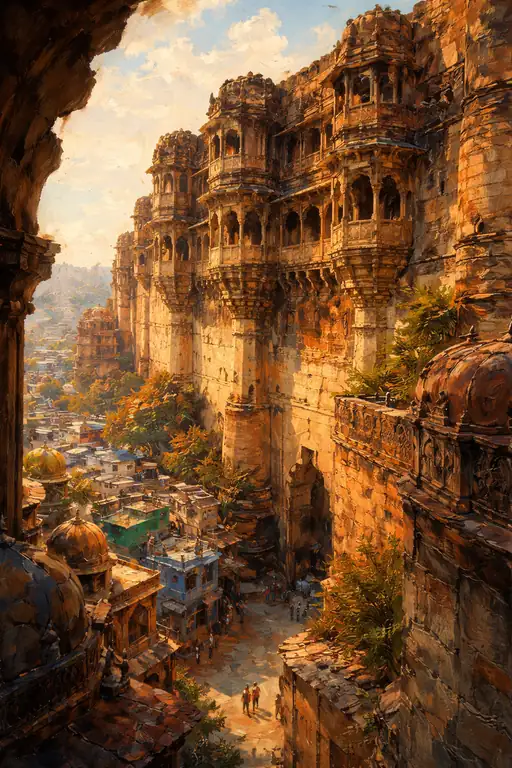 Echoes of Empire: The Sunlit Metropolis
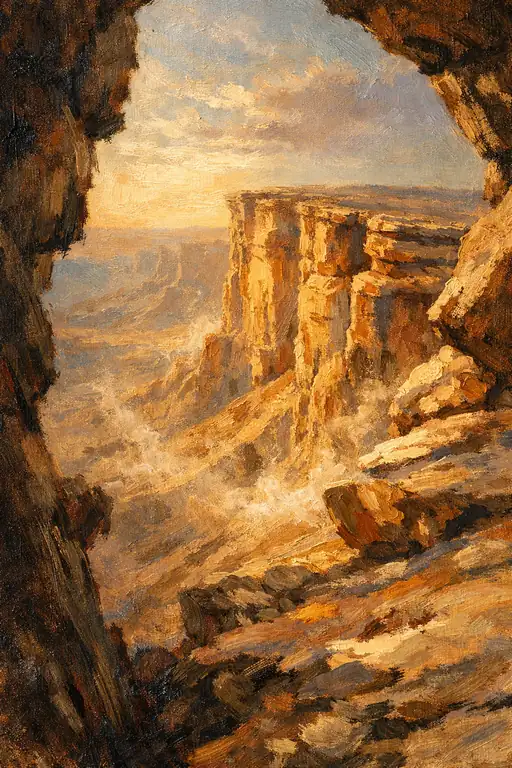 A Glimpse of Grandeur
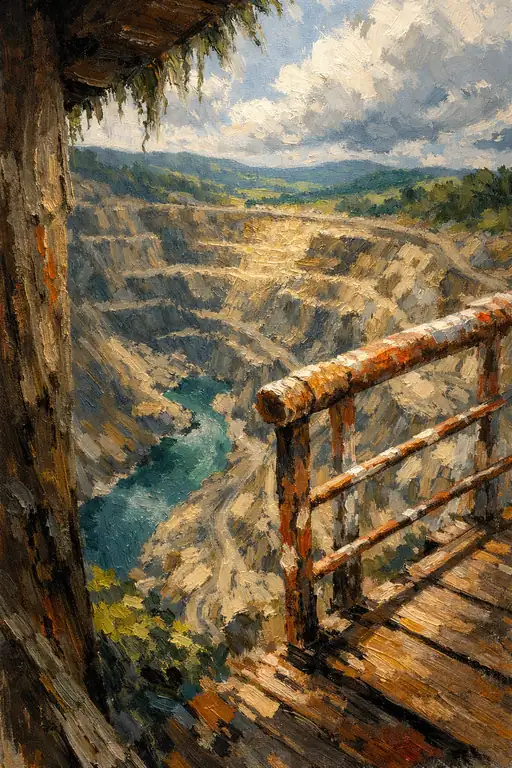 Echoes of the Carved Earth
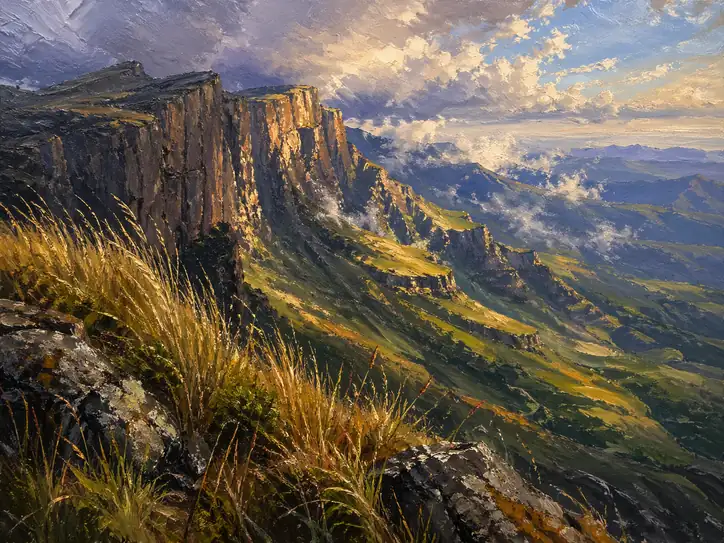 Eternal Guard of the Golden Heights
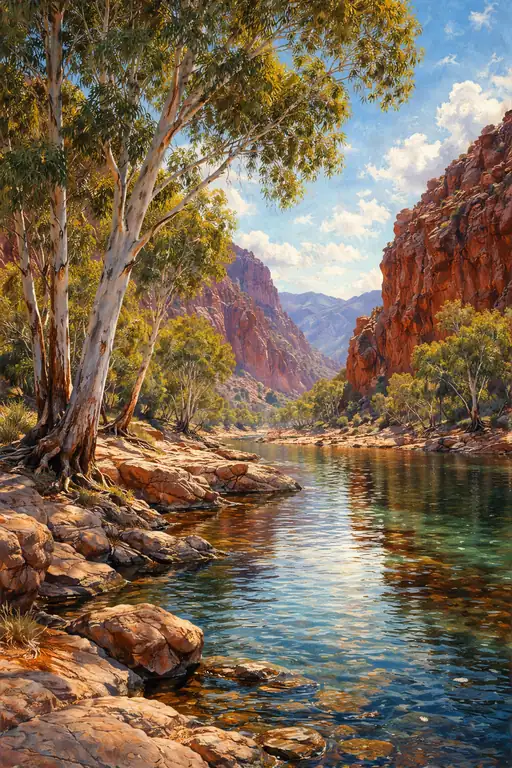 The Golden Canyon's Gentle Kiss
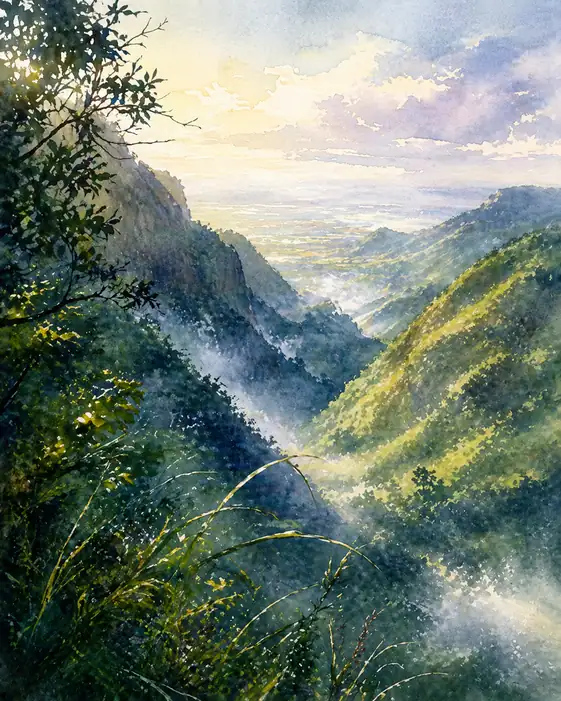 Where the Morning Breathes
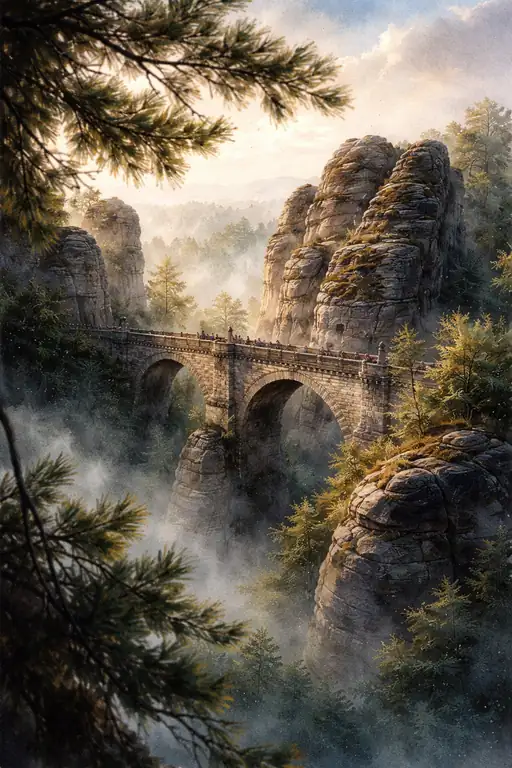 Bridge Through the Veil
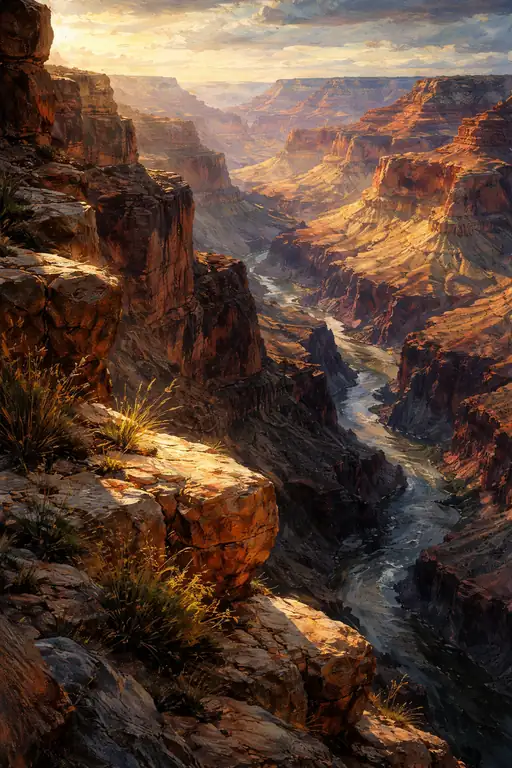 Whispers of the Sunlit Abyss
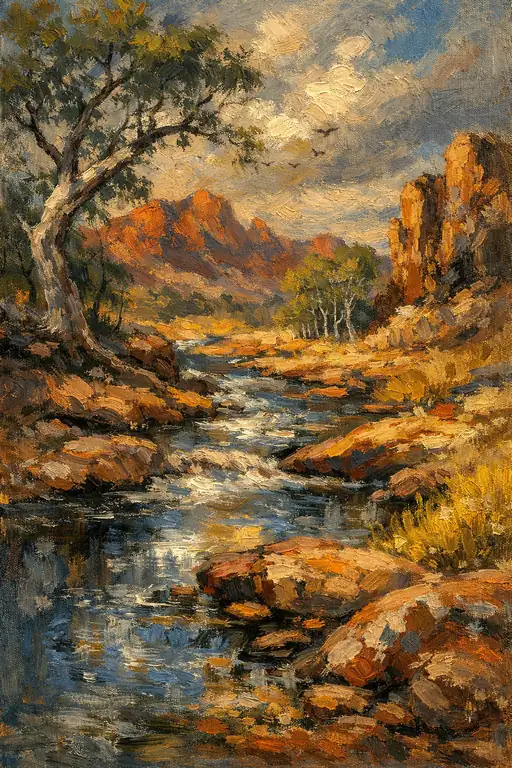 Reflections in the Quiet Flow
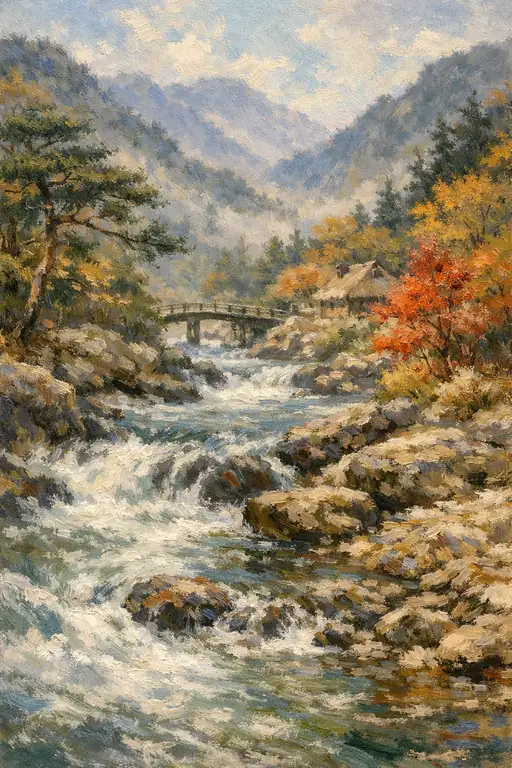 Roar of the Crimson Valley
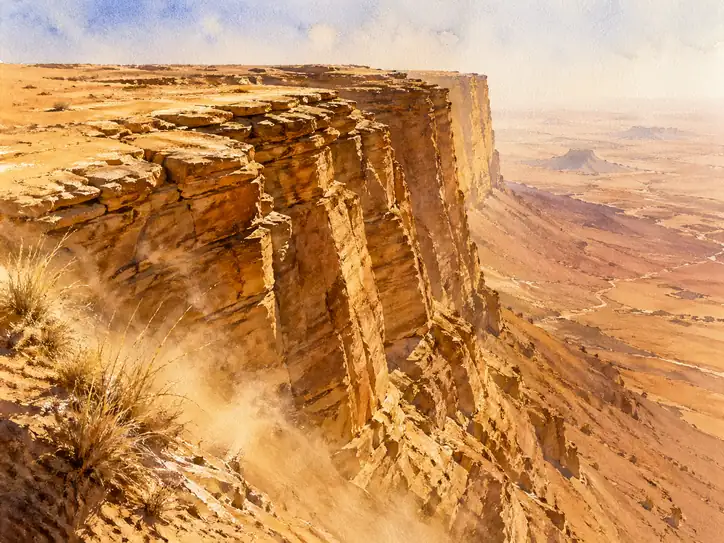 The Wind's Whisper: Dust over the Expanse