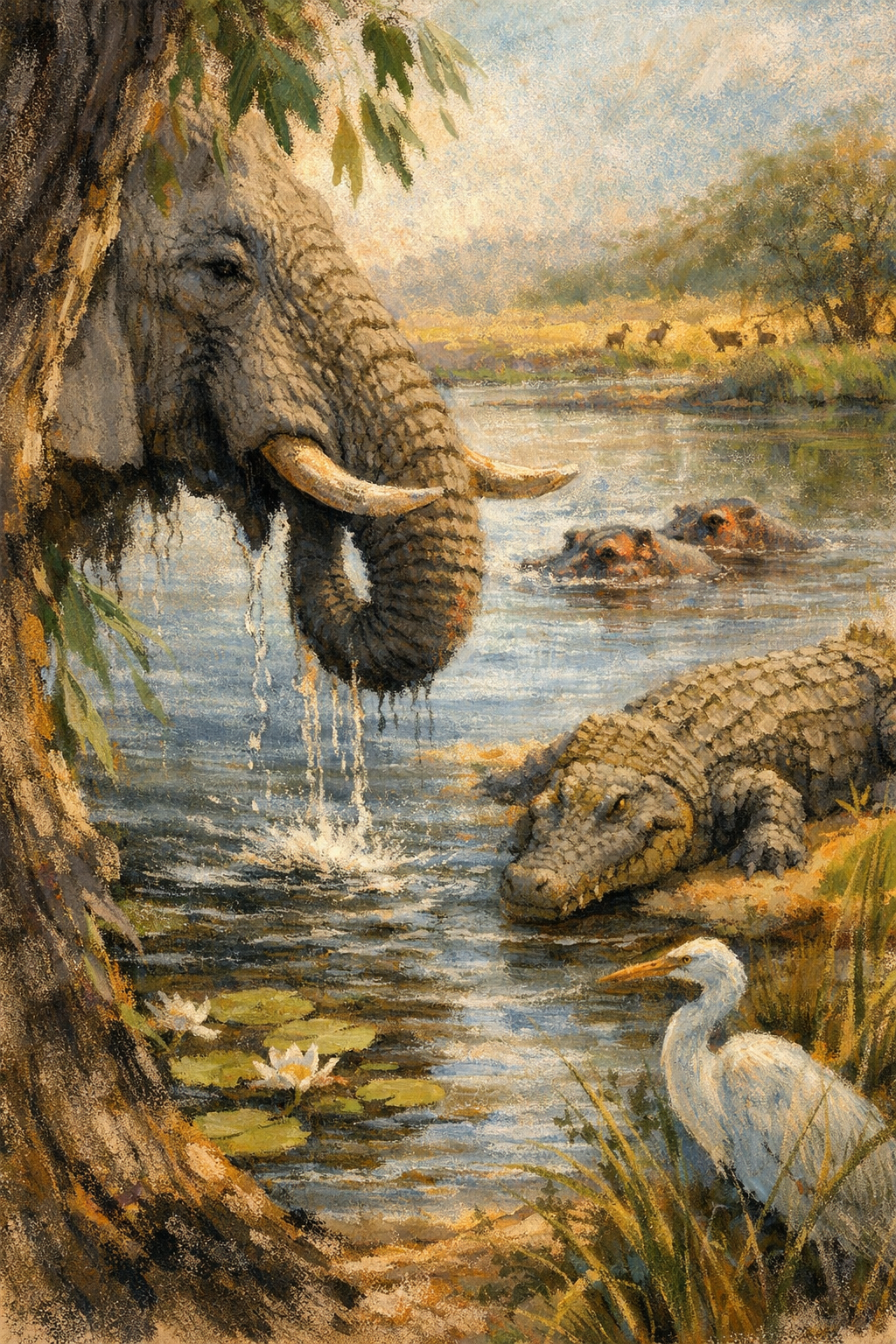
The Thirsty River's Edge
Critique
1. Introduction This painting presents a dense and lively wildlife scene at a riverbank, capturing the vibrant diversity of an African ecosystem. The composition is packed with various animal species that gather at the water source, creating a complex and engaging narrative of life. The work utilizes a rich impressionistic technique, emphasizing the varied textures of skin, scales, and feathers through deliberate and textural brushwork. This piece exemplifies a biological approach to nature, celebrating the intricate relationships and co-existence found within a single environment. 2. Description In the foreground on the left, a large elephant head is seen in profile as it drinks, with water cascading from its trunk into the rippling surface below. On the right bank, a massive crocodile lies in wait, its scaly hide meticulously rendered with deep shadows. A white egret stands gracefully in the bottom right corner, looking toward the center. Further into the water, two hippos submerge themselves, while the background reveals a sun-drenched plain where several antelopes graze beneath distant trees. Water lilies dot the water's edge in the foreground. 3. Analysis The vertical composition is anchored by the rhythmic placement of animals around the central river, which serves as the connective tissue of the scene. The artist employs a variety of textural strokes, using cross-hatching to define the elephant's wrinkled skin and the crocodile's armor. The color palette is dominated by earthy ochres, deep greys, and lush greens, which are balanced by the bright, reflective blue of the water and the white of the egret. This diversity of color effectively highlights the individual focal points without losing the overall cohesion. 4. Interpretation and Evaluation The work evokes a powerful sense of the interconnectedness of all living things and the vital importance of the water source. The gathering of predator and prey in a single frame illustrates both the tension and the necessity of co-existence in the wild. Technically, the artist demonstrates a high degree of skill in capturing the specific biological characteristics of each species while maintaining an atmospheric quality. The composition is successfully balanced, integrating multiple species into a single, unified view of the natural world, resulting in a rich aesthetic experience. 5. Conclusion This painting successfully captures the multifaceted essence of a riverbank ecosystem through its masterful handling of light, texture, and animal forms. The interaction between the various creatures and their shared environment creates a compelling visual dialogue throughout the work. Ultimately, the piece transitions from a simple collection of animal portraits into a powerful exploration of the harmony and struggle inherent in the wild. This work remains a significant example of wildlife art that celebrates the complex and enduring beauty of the African landscape.
Same Subcategory
 Frozen Vigil: The Tiger's Silent Rest in the Snow
Similar Artworks
 Gentle Spirits of the Riverbank
 Echoes of the Golden Plains
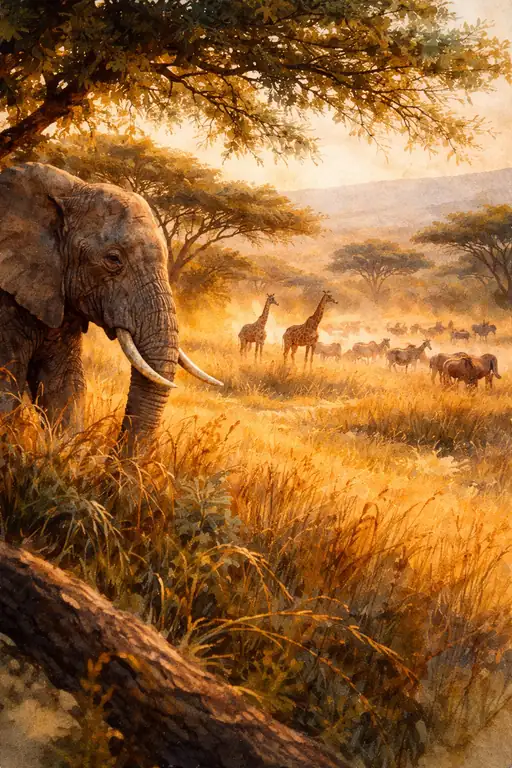 Golden Gaze
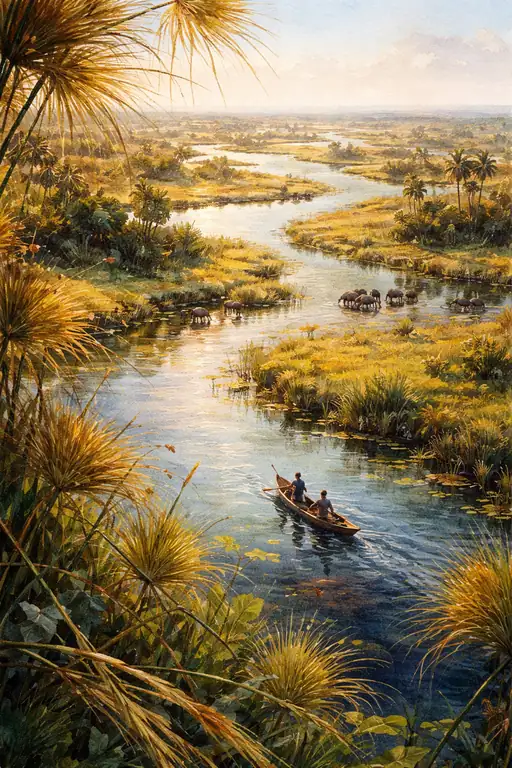 Timeless Voyage Through the Reeds
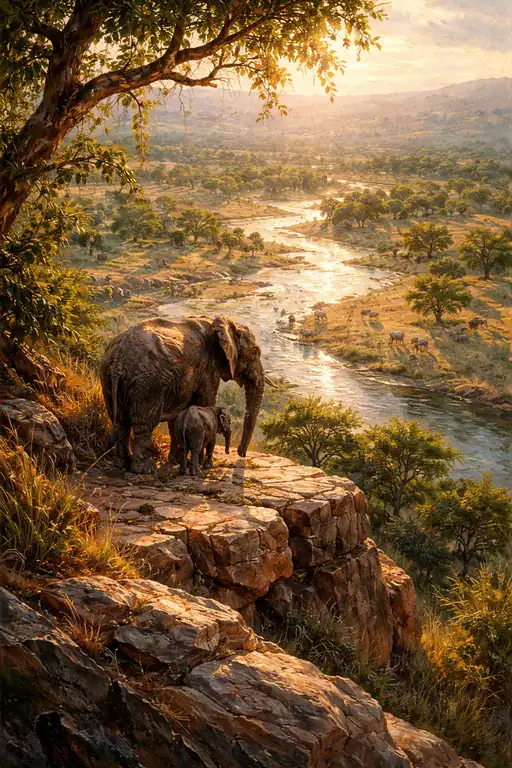 The Golden Savanna: A Mother Elephant's Gaze
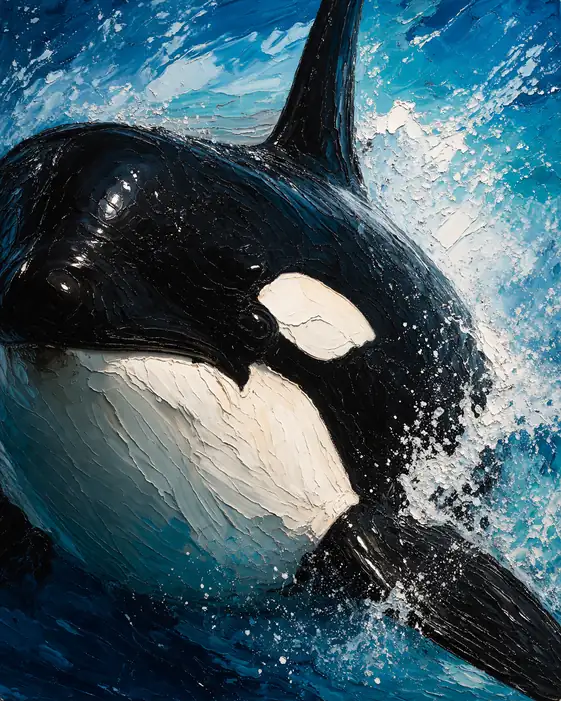 Breaching the Surface: The Raw Power of the Orca
 The Untamed Majesty of the Deep
 Galactic Wonders: A Planet and Glowing Nebula
 Mystic Shadows of the Silver Forest
 A Fleeting Glint in the Maelstrom