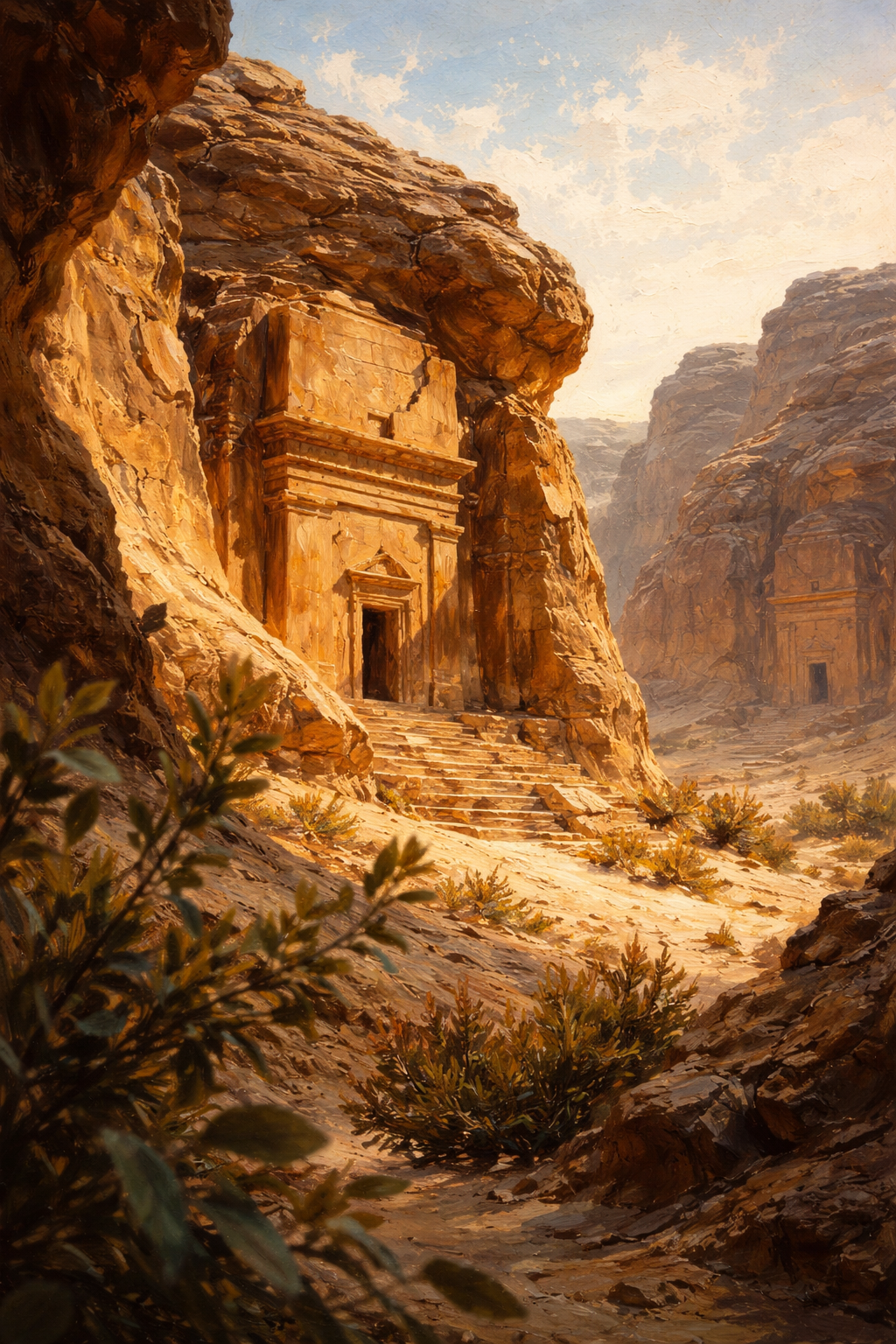
Silent Witnesses of Time
Critique
1. Introduction This oil painting presents a serene and evocative scene of ancient rock-carved tombs or temples situated within a deep desert canyon. The work masterfully conveys the arid atmosphere and the harsh, brilliant sunlight characteristic of this remote region, employing a blend of realistic detail and expressive brushwork. By framing the ruins with lush desert vegetation in the foreground, the artist highlights a silent coexistence between natural life and the enduring monuments of human history. 2. Description On the left, a prominent rectangular structure emerges directly from the cliff face, featuring a symmetrical entrance and a sequence of meticulously carved stone steps. In the distance to the right, a secondary monument stands partially obscured by the soft haze of the canyon, suggesting the historical existence of a larger, sprawling network of structures. The foreground is anchored by green, leafy shrubs that provide a vibrant counterpoint to the reddish-brown rocks and the sandy path. 3. Analysis The color palette is dominated by warm ochre and terracotta tones, which are balanced by the cool cerulean of the sky and the dark greens of the flora. Sharp highlights on the sun-facing surfaces create a strong chiaroscuro effect, emphasizing the verticality of the canyon walls and the geometric precision of the carved architecture. Atmospheric perspective is utilized effectively to push the distant formations back, enhancing the overall sense of scale and immense spatial depth. 4. Interpretation and Evaluation This work serves as a moving contemplation on the passage of time and the legacy of vanished civilizations. By placing resilient plant life in the foreground, the artist juxtaposes the cycle of biological growth against the slow erosion of stone monuments, touching upon themes of permanence. The technical execution is exceptional, as the textured application of paint captures both the granularity of the sand and the monolithic weight of the surrounding cliffs. 5. Conclusion While the scene initially appears as a static image of desert ruins, a deeper analysis reveals a poetic narrative about the survival of beauty across centuries. The luminous presence of these ancient structures acts as a visual anchor for the imagination, leaving the viewer with a profound sense of awe for the historical depth and enduring spirit of the natural world.
Same Subcategory
Similar Artworks
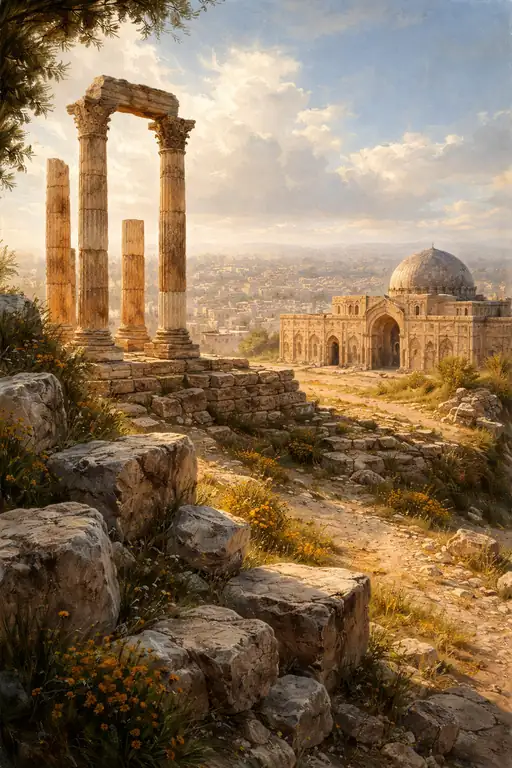 Golden Hour Over Majestic Ancient Ruins
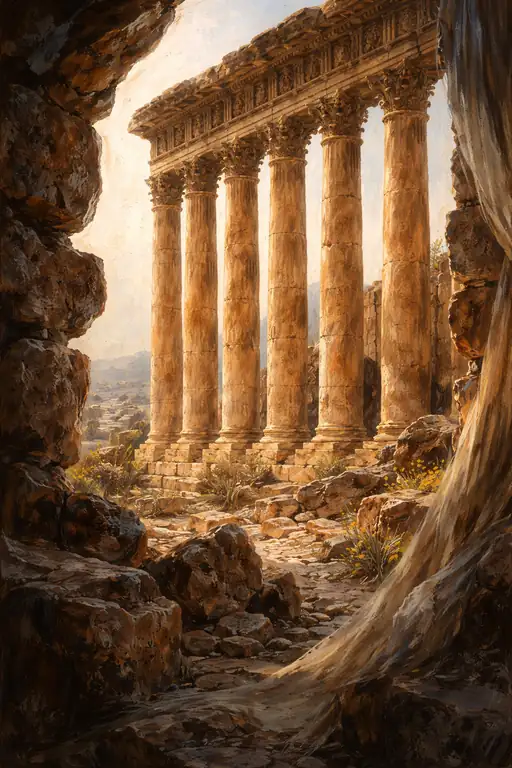 A Framed Glimpse of Classical Antiquity
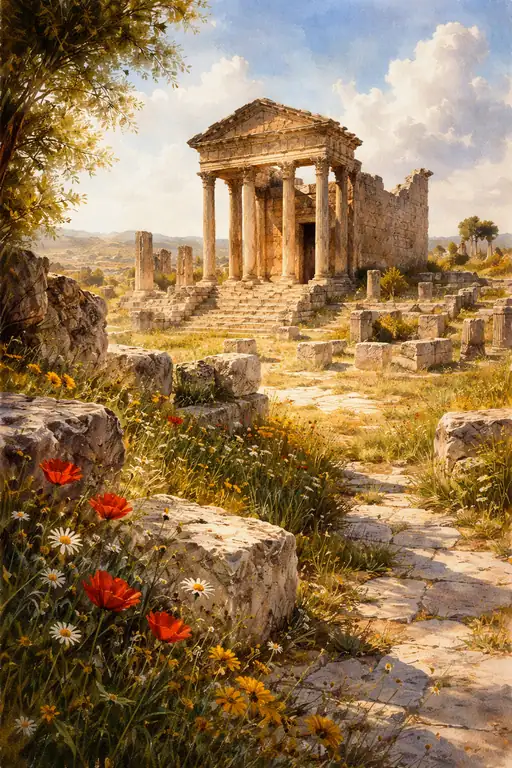 Where Time Sleeps Among the Ruins
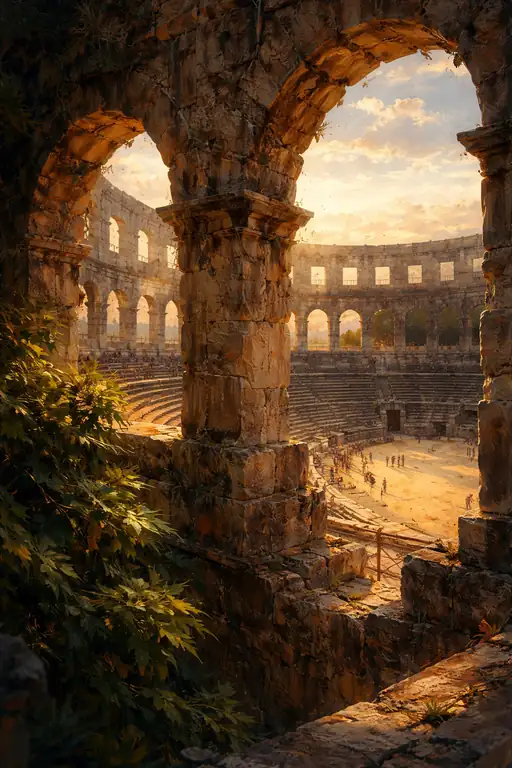 Twilight at the Colosseum
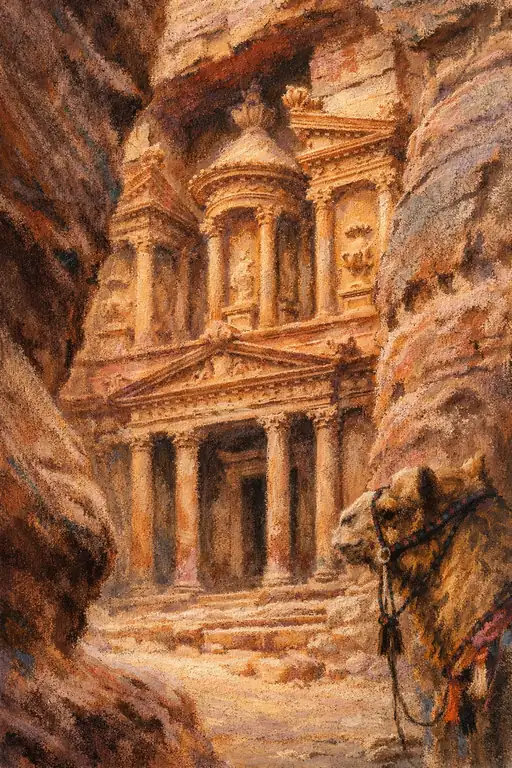 Rose-Red Revelation
 Echoes of Eternity in the Golden Horizon
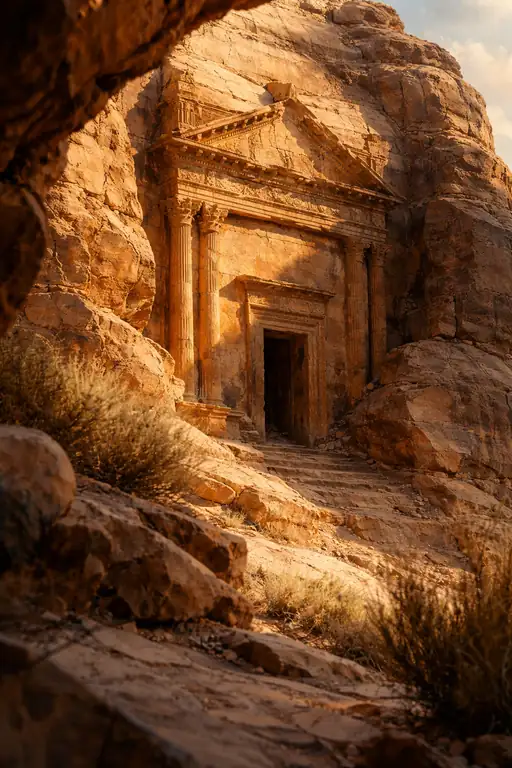 Golden Glory of the Forgotten
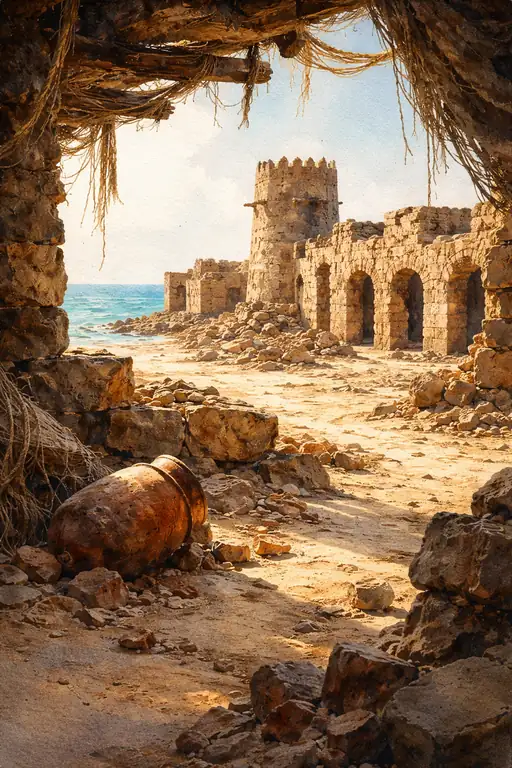 Lifeblood of the Sunlit Sands
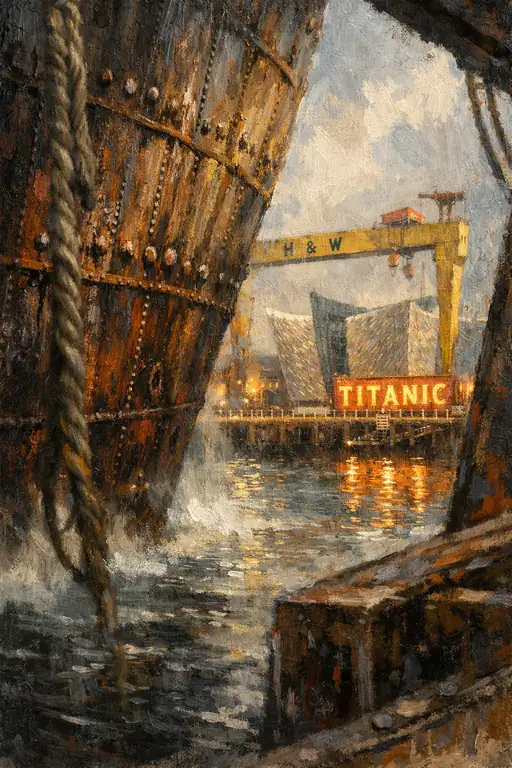 Night's Embrace on the Iron Giant
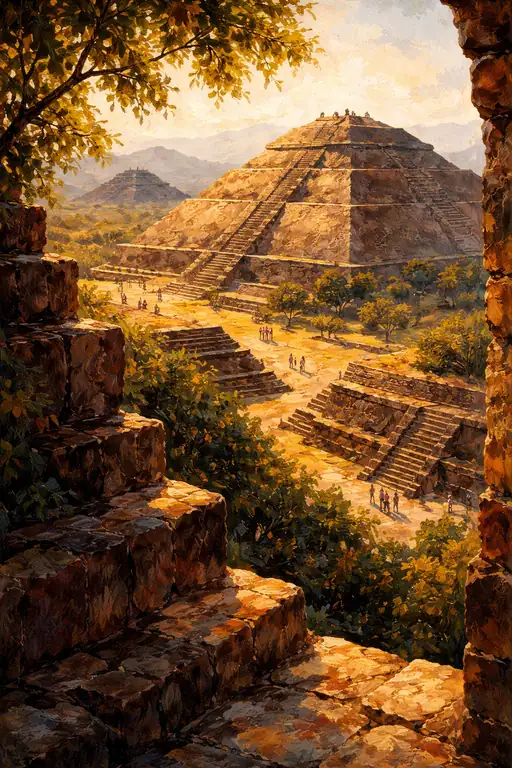 Echoes of the Sun: Steps of the Ancients