
Twilight's Glow over the Sloping Town
Critique
1. Introduction This evocative oil painting depicts a charming coastal town during the golden hour, captured through a rich impressionistic lens. The composition leads the viewer from a quiet, sun-drenched street in the foreground down toward a bustling harbor filled with sailboats under a warm twilight sky. The artist masterfully utilizes light and texture to evoke the peaceful yet vibrant atmosphere of a historic seaside settlement. 2. Description In the immediate foreground, a weathered stone wall is draped with vibrant pink blossoms and features a glowing lantern and a prominent red flag. A traditional wooden balcony projects from the upper right, its intricate details highlighted by the setting sun. Below, two small figures are seated at a shaded table, observing the harbor where numerous vessels are moored in the shimmering azure water. The scene is framed on the left by a soft, white translucent curtain, suggesting a view from an interior space. 3. Analysis The artwork is characterized by bold, expressive brushwork and a sophisticated use of impasto to define the rocky textures and architectural elements. The color palette is dominated by warm autumnal tones—golds, oranges, and deep browns—contrasted against the cool blues and whites of the water and sky. Light is the primary structural element, cascading from the upper right to create long shadows and brilliant highlights on the cobblestone path. This directional lighting enhances the three-dimensional quality of the town’s sloping terrain. 4. Interpretation and Evaluation The painting serves as a nostalgic tribute to Mediterranean heritage and the timeless beauty of coastal life. The inclusion of the red flag adds a specific cultural context, grounding the romanticized aesthetic in a sense of place. Technically, the artist succeeds in balancing intricate details, such as the lantern’s glow, with broader strokes that capture the essence of the harbor. The play of light and shadow creates a rhythmic movement that invites the viewer to linger on each architectural and natural detail. 5. Conclusion Ultimately, the piece is a successful exploration of how light can transform a familiar scene into an extraordinary visual experience. While the initial impression is one of idyllic tranquility, the technical complexity of the layered paint reveals a deeper appreciation for the physicality of the environment. The result is a work that captures not just a location, but the lingering warmth and spirit of a specific moment in time.
Same Subcategory
Similar Artworks
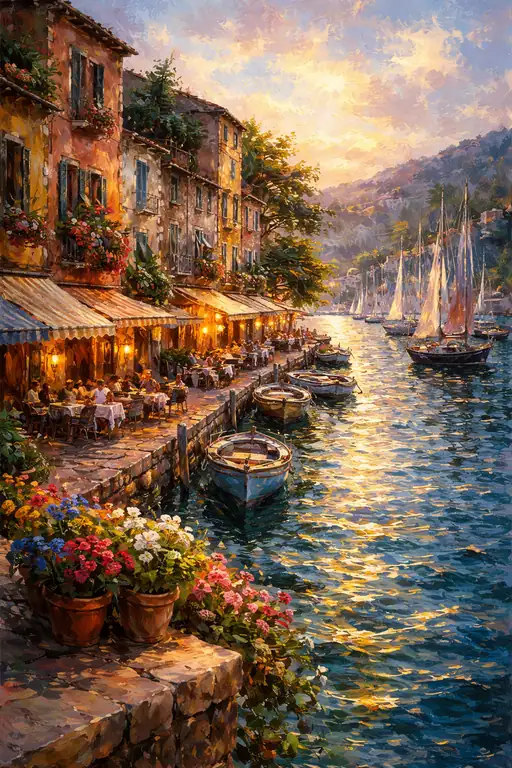 The Golden Hour's Embrace
 Unwavering Hope Amidst the Raging Seas
 Golden Harbor of Tropical Reverie
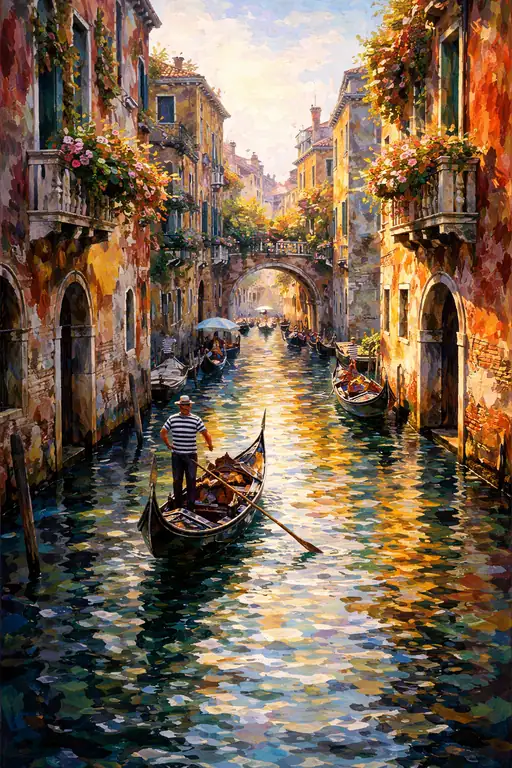 Serenade on the Floating City
 Golden Bastion Above the Adriatic
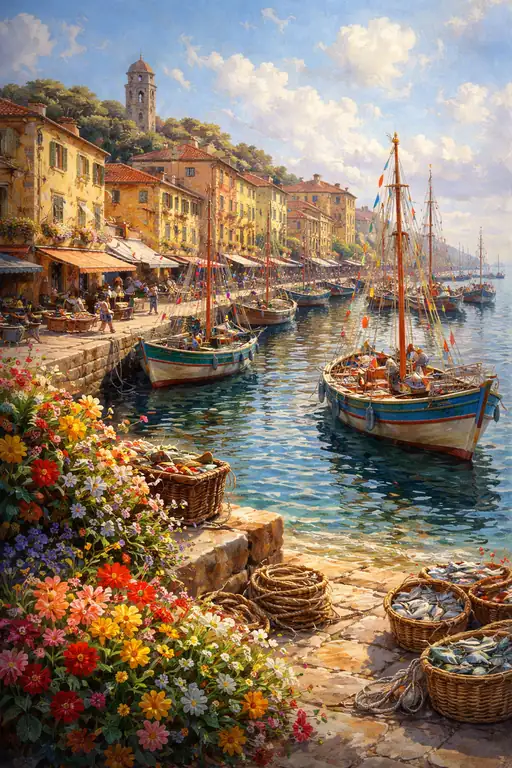 Sunlit Whispers of the Mediterranean Sea
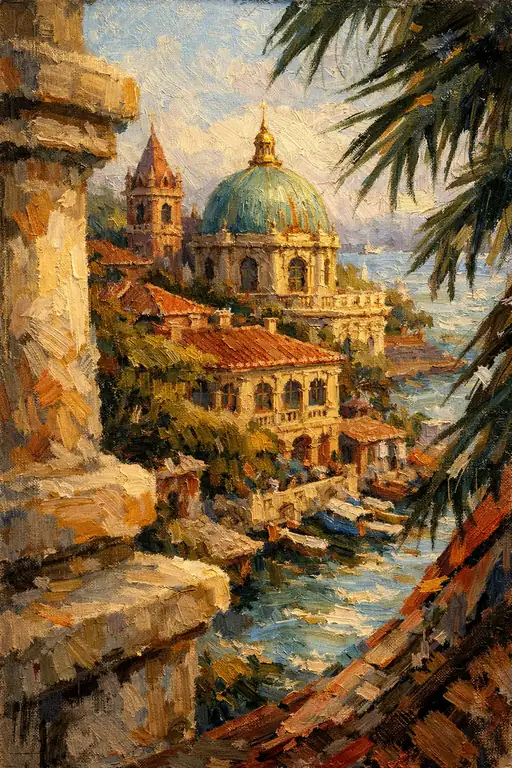 Symphony of Sunlit Terracotta
 Summer Echoes by the Bridge
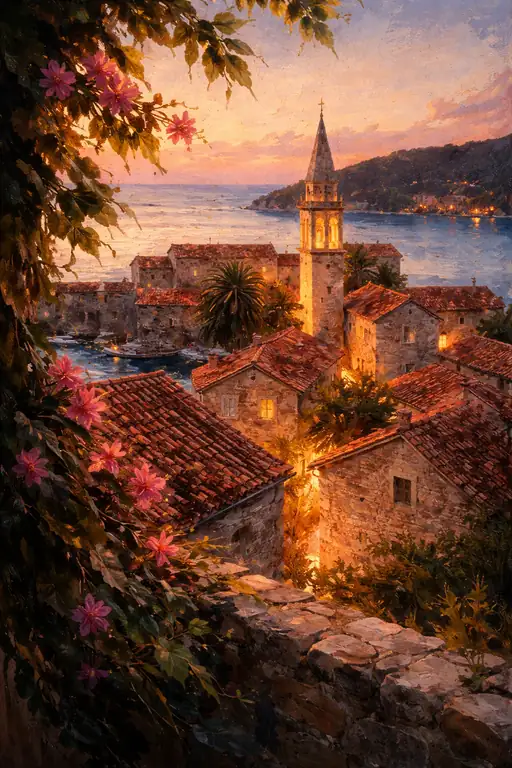 Twilight's Embrace Upon the Bay
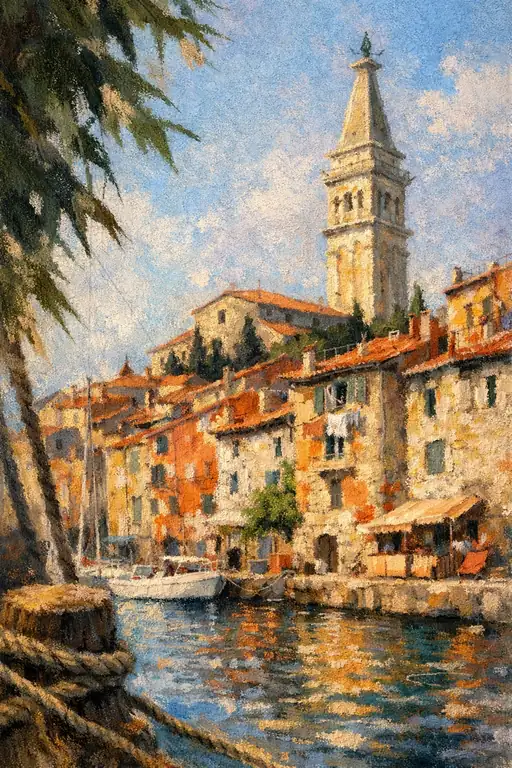 Moored Sailboat by Seaside Town