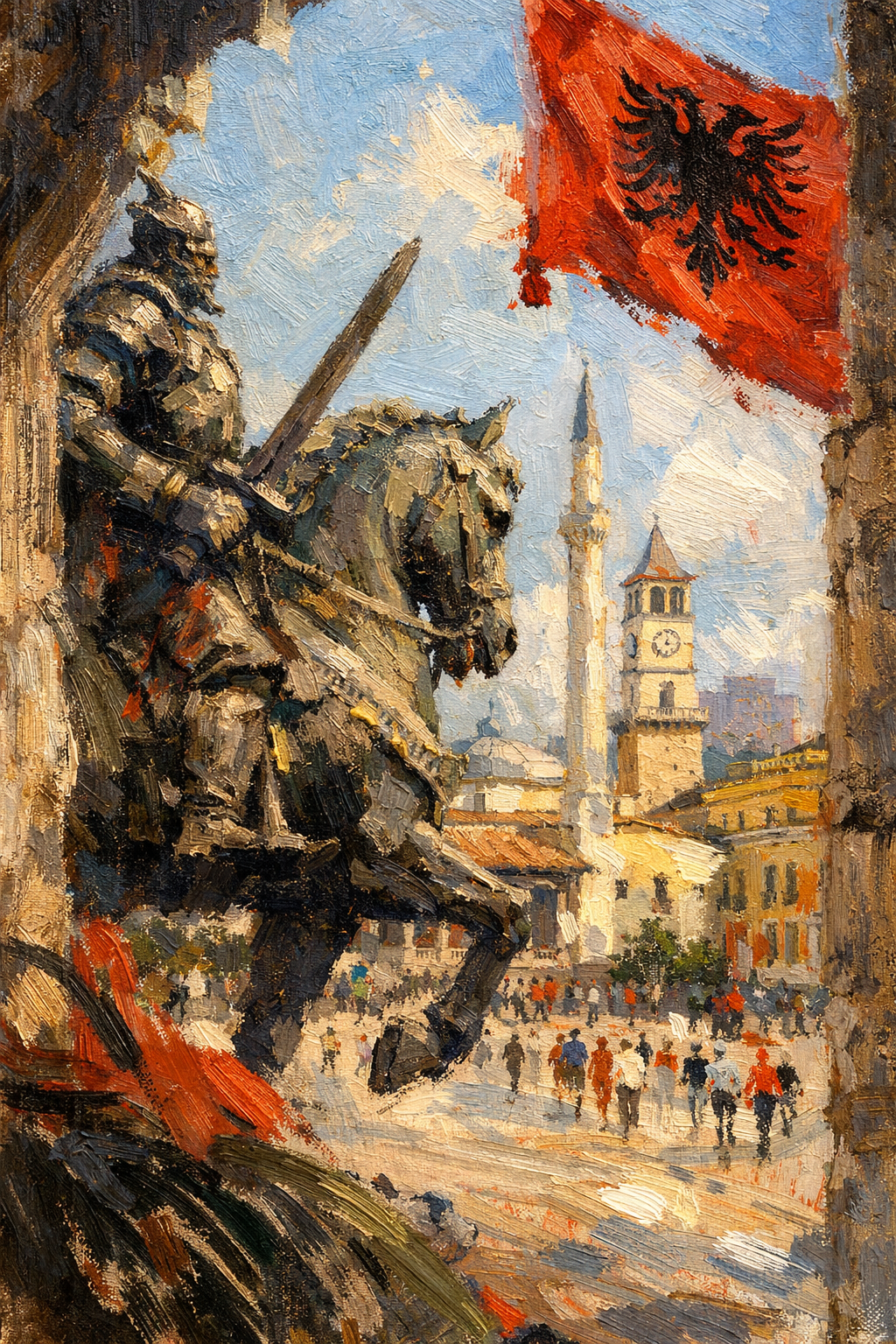
The Bronze Heart of the Square
Critique
1. Introduction This vibrant painting presents an impressionistic view of a bustling city square dominated by a grand equestrian statue. The work captures a sense of civic pride and historical continuity, framed by iconic architectural landmarks and a fluttering national flag. The artist uses a bold, expressive style that prioritizes atmospheric energy and texture over precise photographic realism, inviting the viewer into the heart of the urban environment. 2. Description On the left, a massive bronze statue of a knight on a rearing horse is depicted with thick, tactile brushstrokes. A bright red flag featuring a black double-headed eagle waves forcefully in the upper right corner, contrasting with the pale blue and white of the sky. In the background, a slender minaret and a classical clock tower rise above a crowd of small, colorful figures populating the sunlit plaza. 3. Analysis The application of heavy impasto creates a dynamic surface that catches the light, giving the static monument a feeling of kinetic life. The artist skillfully balances the warm, earthy tones of the bronze and masonry with the primary red of the flag and the cool highlights of the sky. The perspective is slightly low, emphasizing the heroic scale of the monument against the open space of the square. 4. Interpretation and Evaluation This piece serves as a powerful meditation on national identity and the way history is woven into the fabric of modern life. By rendering the scene with such raw, painterly vigor, the artist elevates a standard city view into a spirited celebration of place and heritage. The technical mastery of the palette knife or heavy brushwork adds a layer of emotional intensity that resonates with the importance of the subject. 5. Conclusion The painting successfully conveys the lively character and monumental gravity of the city’s central landmark. Through its rich textures and dramatic use of color, it creates a lasting impression of a society that honors its past while moving forward. Ultimately, the work is a distinguished example of contemporary impressionism that finds beauty in the intersection of public art, history, and the pulse of the city.
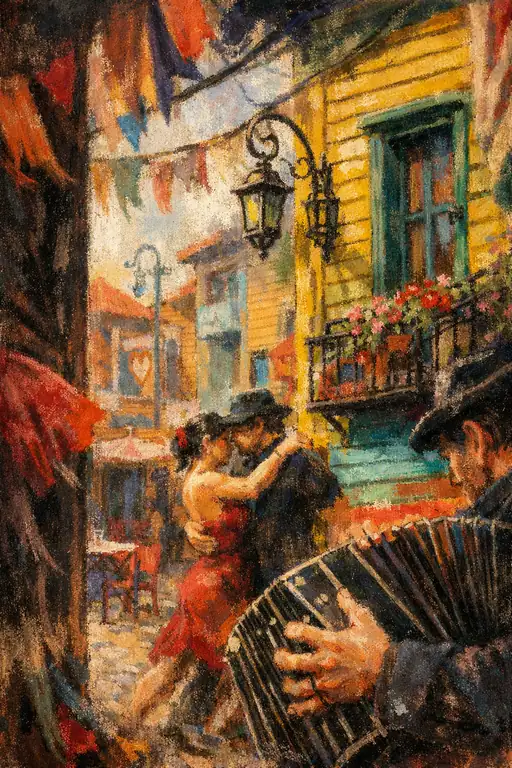 La Boca's Passionate Embrace: The Rhythm of Tango on Caminito
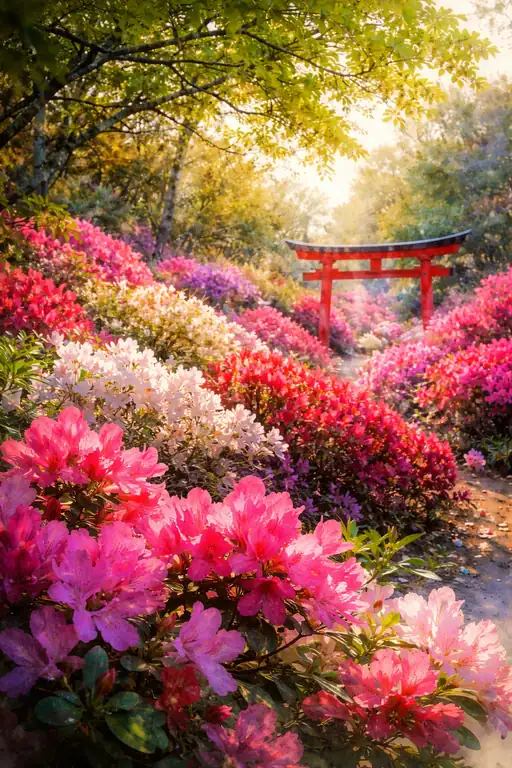 Luminous Arteries of the Night
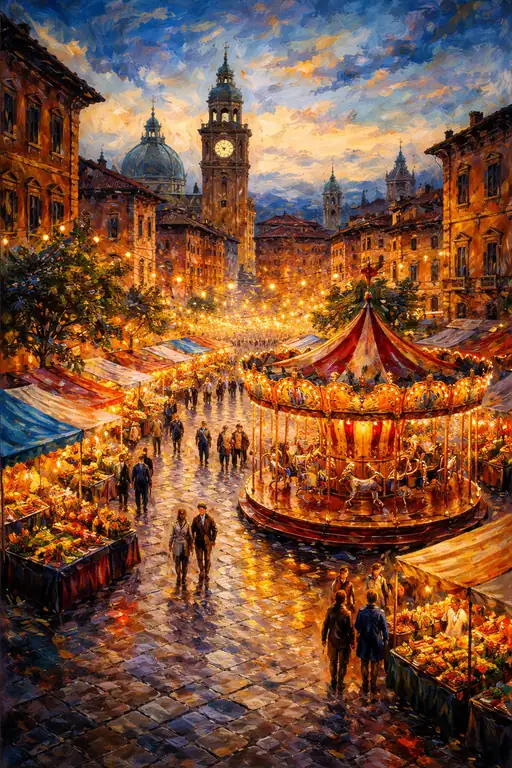 The Night of Joy, Spinning Golden Memories
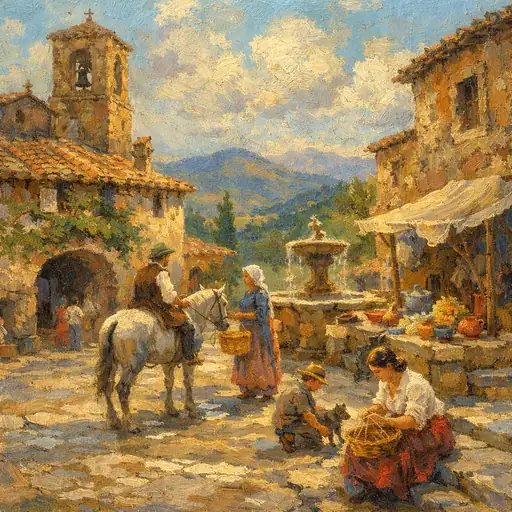 Village Square Gathering
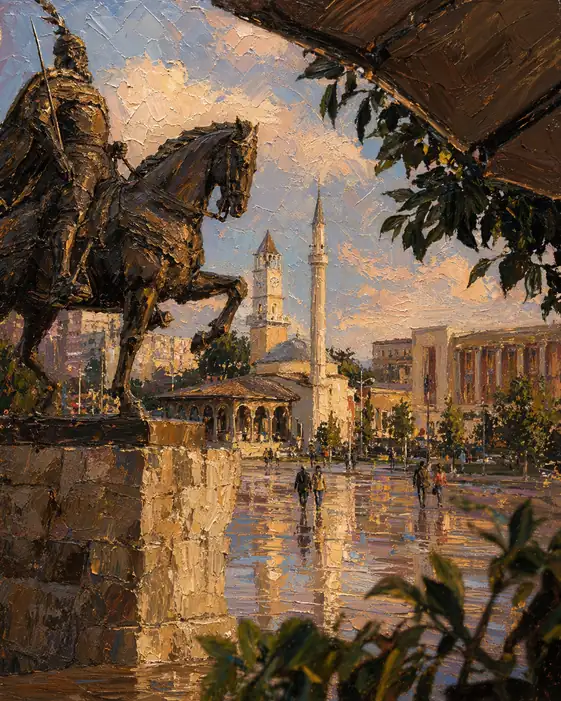 Golden Hour at Skanderbeg Square
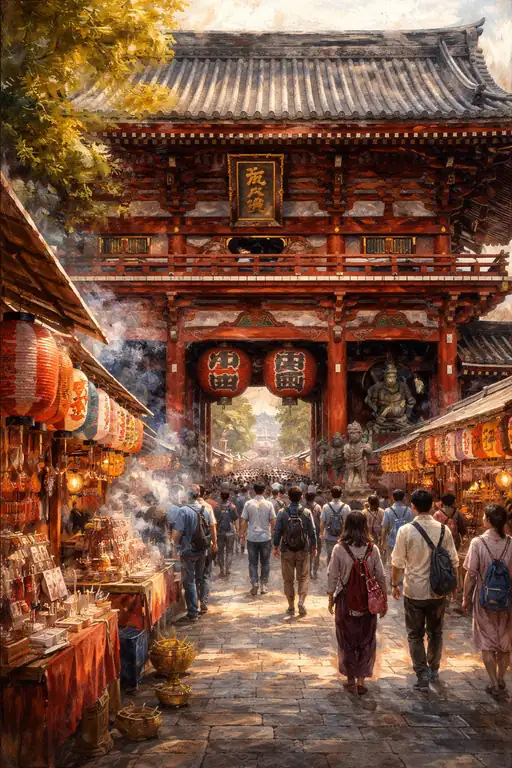 Rhythm of the Temple Approach
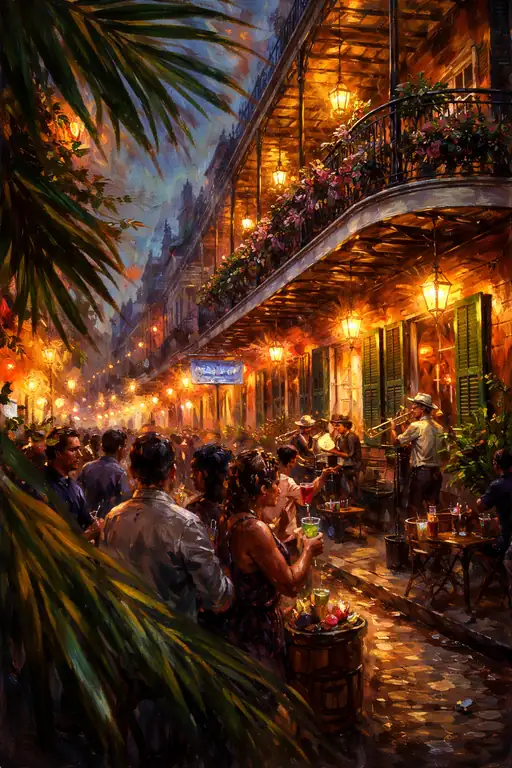 Rhythm of the Glowing Night
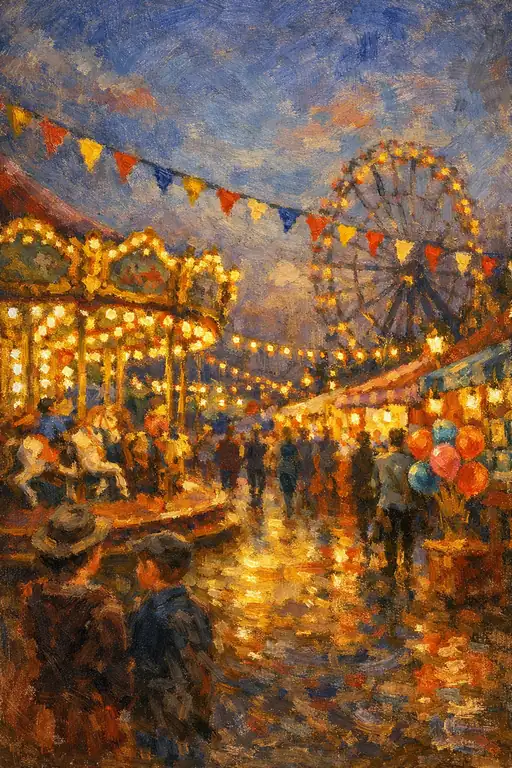 Nostalgic Echoes in the Neon Rain
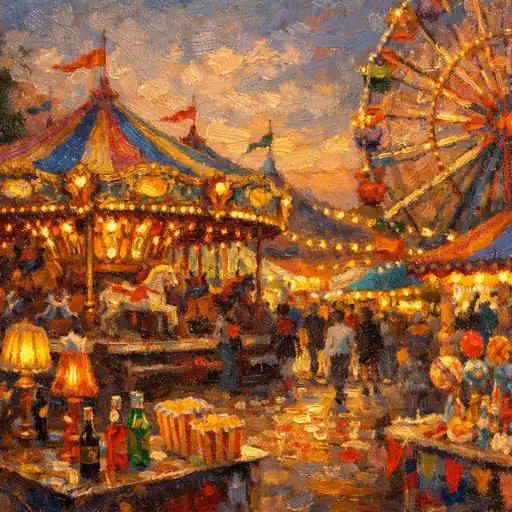 Nightfall at the Carnival
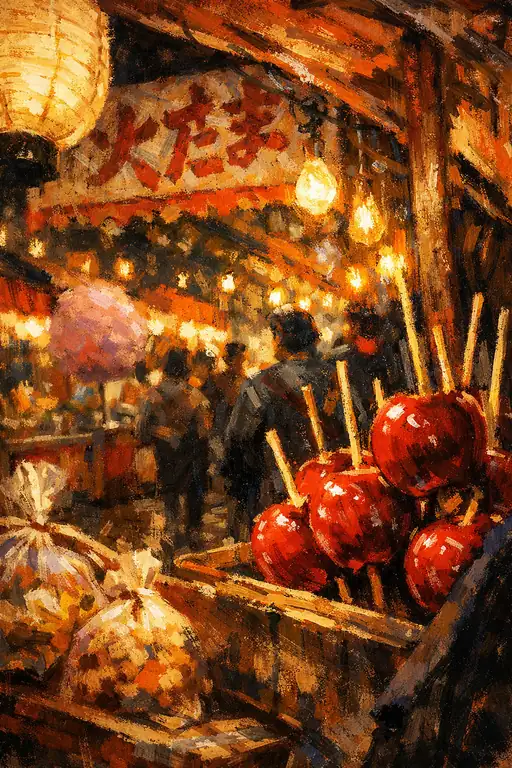 The Sweet Glow of the Night
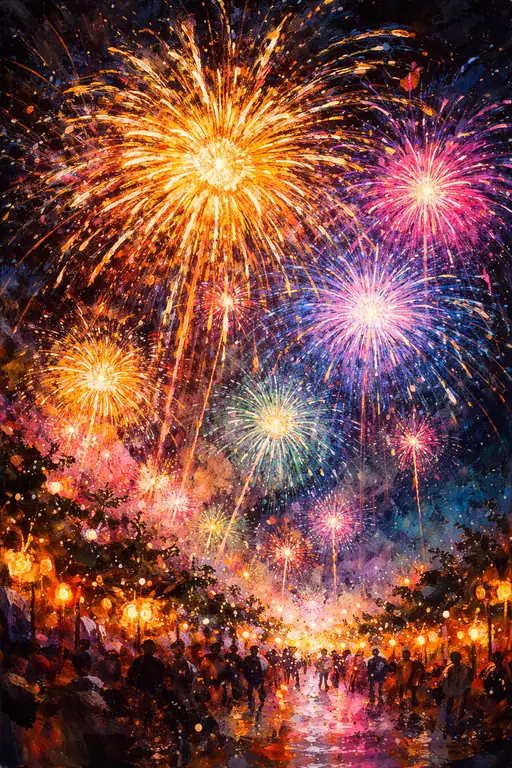 Night Sky Grand Display
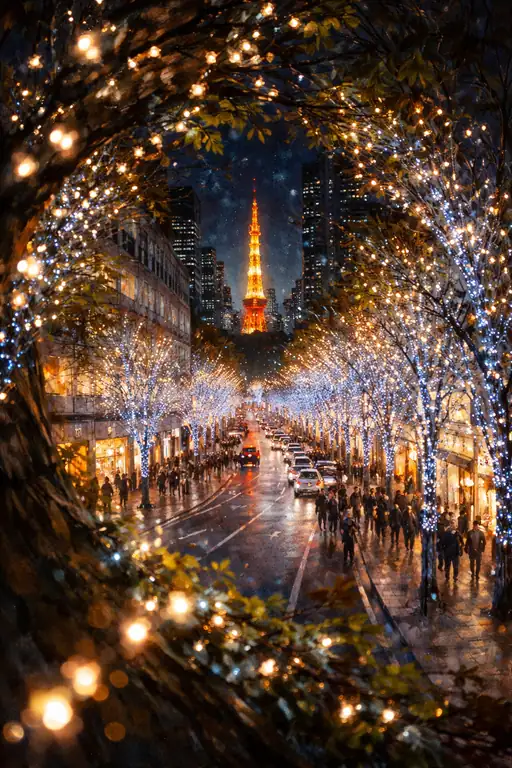 Sparks in the Ephemeral Dark