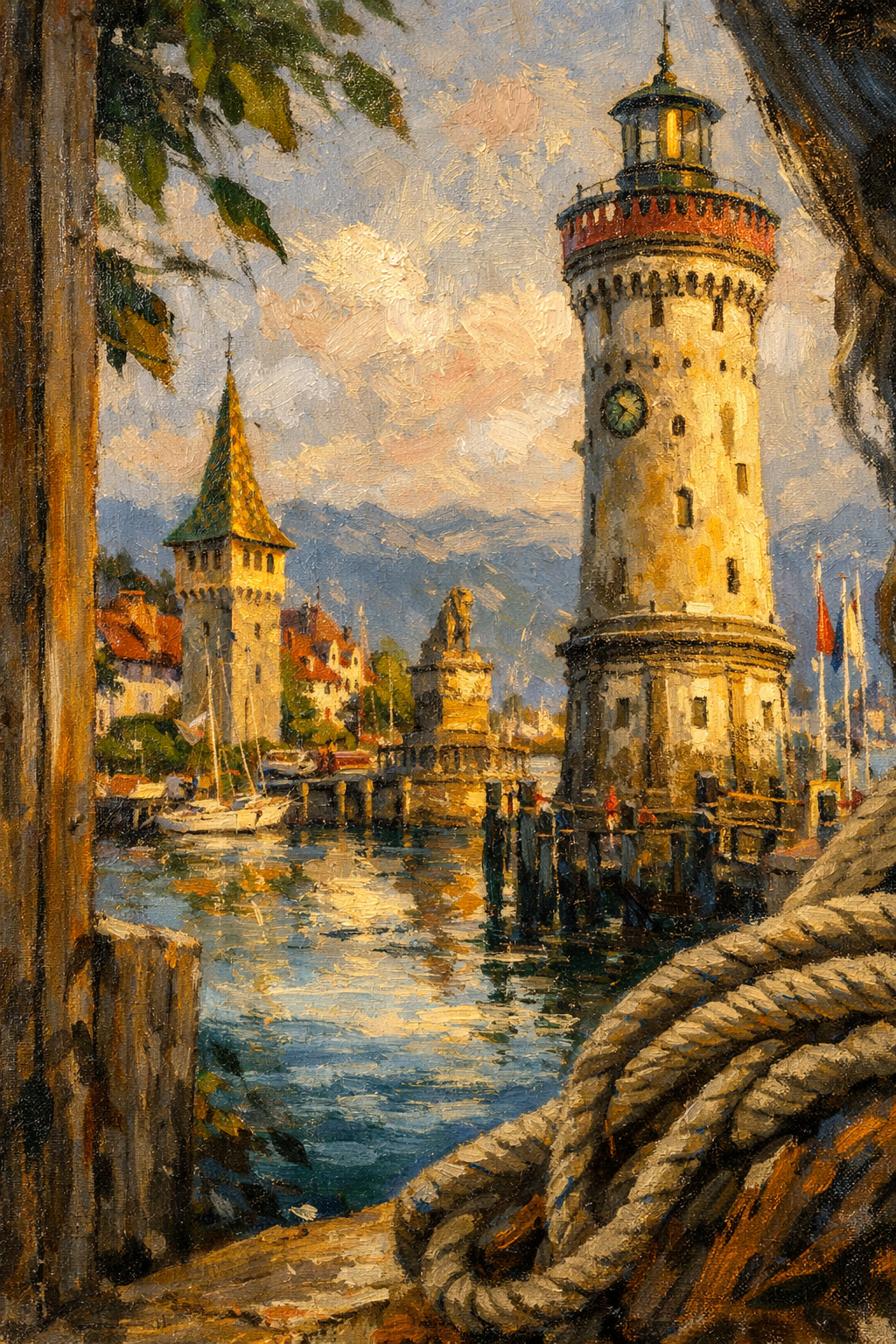
Golden Hour at Lindau Harbor: Time Stood Still
Critique
1. Introduction This vertical oil painting depicts the iconic harbor of Lindau on Lake Constance, presented with a vibrant, impressionistic flair. The composition focuses on the architectural landmarks of the port, including the historic lighthouse and the neighboring medieval tower. Through the use of heavy impasto and a rich, golden-hued palette, the artist captures the atmospheric quality of a sunny day at the water's edge. This piece effectively balances rigid architectural forms with the fluid, reflective nature of the lake's surface and the soft texture of coastal clouds. 2. Description In the immediate foreground, coiled nautical ropes and a weathered wooden post provide a tactile sense of place, framing the right and left sides. The harbor opens up to reveal a majestic white lighthouse on the right, adorned with a clock and a red-trimmed gallery under a weathered dome. To the left, the medieval Mangturm features a colorful, diamond-patterned tiled roof. Between these structures, the stone Bavarian Lion statue stands vigil at the harbor entrance. Sailboats are moored nearby, their white hulls reflecting in the shimmering blue and gold water against a backdrop of distant, hazy mountains. 3. Analysis The artwork is structured using a framing device in the foreground that pushes the viewer's eye toward the central harbor activity. A strong interplay of light and shadow is achieved through thick, rhythmic brushstrokes that emphasize the passage of time on the stone surfaces. The color scheme is dominated by warm ochre, cream, and orange, which are cooled by the deep blues and greens of the water and sky. Perspective is established through the diminishing size of the buildings and the softening of details in the distant mountains, while the heavy texture in the foreground provides immediate physical presence. 4. Interpretation and Evaluation This painting is a masterful exploration of the intersection between historic architecture and maritime life, characterized by a romanticized view of traditional European ports. Technical execution is particularly noteworthy in the artist's ability to render the reflective quality of the water using fragmented strokes of alternating color. The framing with the ropes adds a narrative layer, suggesting the perspective of a sailor or a worker on the docks. This work succeeds in conveying both the stability of the lighthouse and the transient beauty of the light reflecting off the ripples of the lake. 5. Conclusion Through its sophisticated use of texture and light, the painting transforms a well-known geographical location into a profound sensory experience. It invites viewers to consider the enduring nautical heritage of the region while appreciating the purely aesthetic qualities of the sunlight on water and stone. The initial focus on the distinct architectural elements eventually gives way to a deeper engagement with the overall atmospheric harmony of the port. Ultimately, it remains a refined example of how impressionist techniques can bring a renewed vitality to classical harbor scenes.
Same Subcategory
Similar Artworks
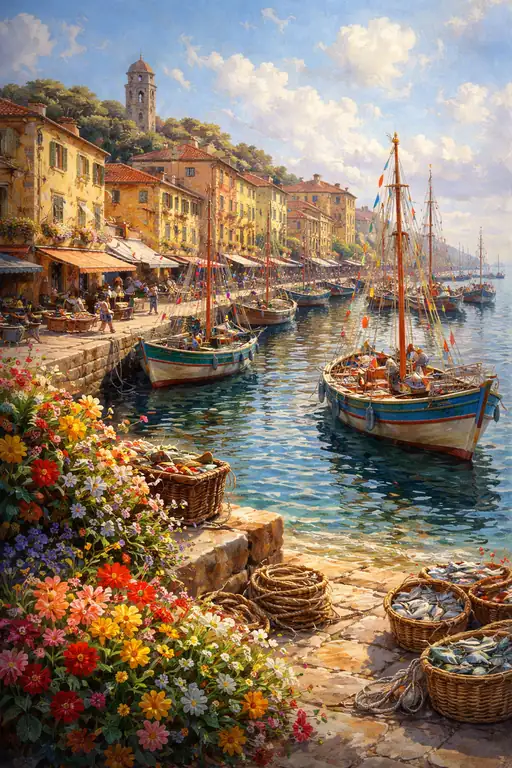 Sunlit Whispers of the Mediterranean Sea
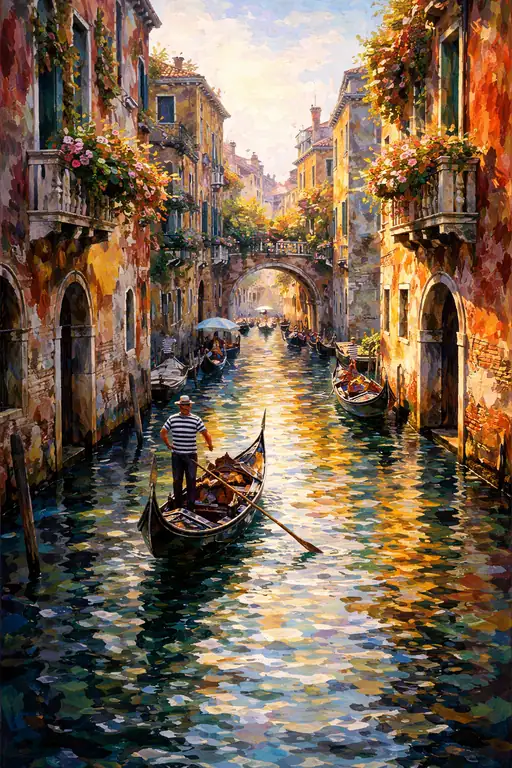 Serenade on the Floating City
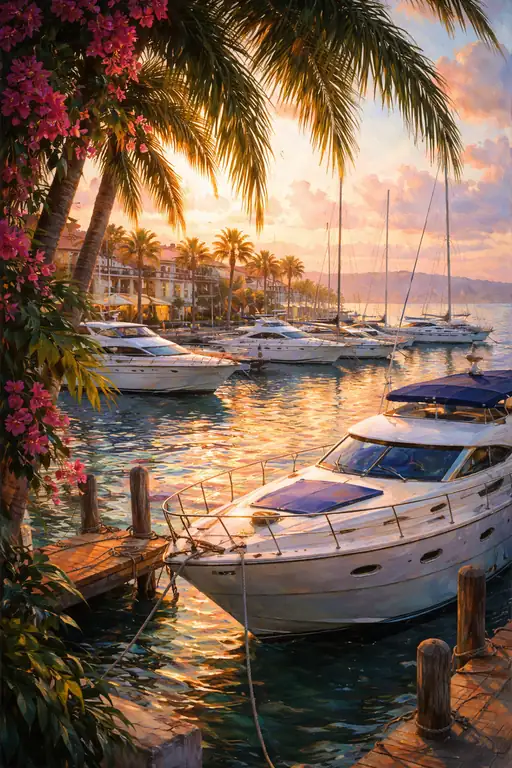 Golden Harbor of Tropical Reverie
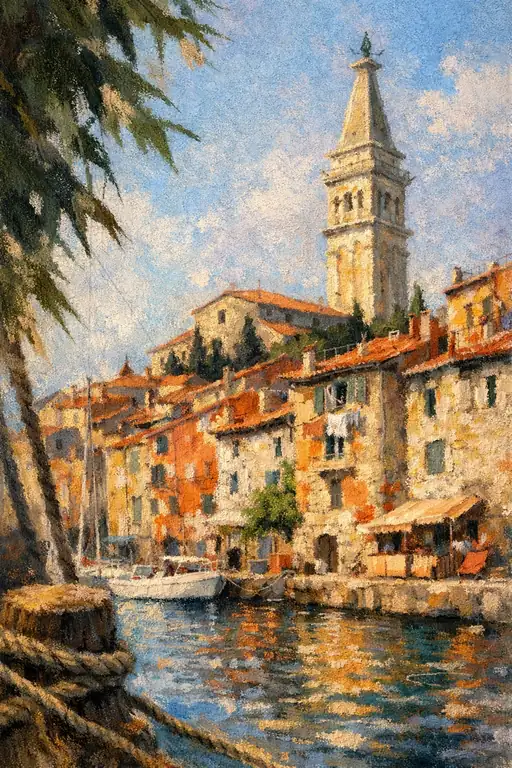 Moored Sailboat by Seaside Town
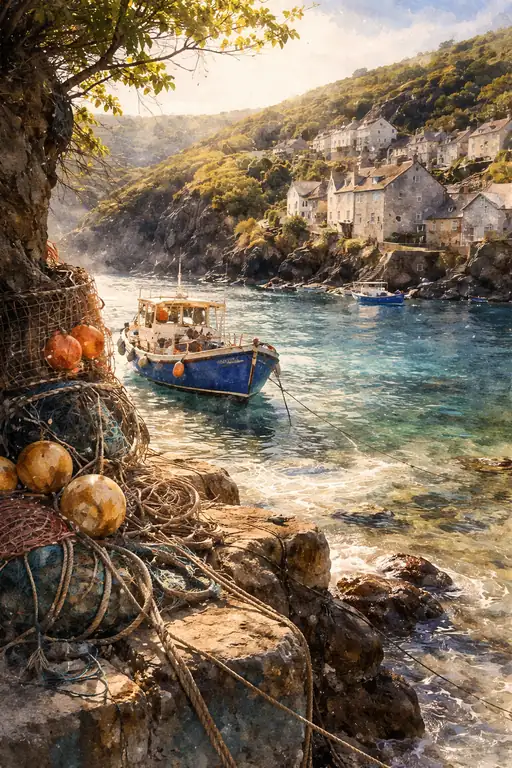 Haven of the Sapphire Sea
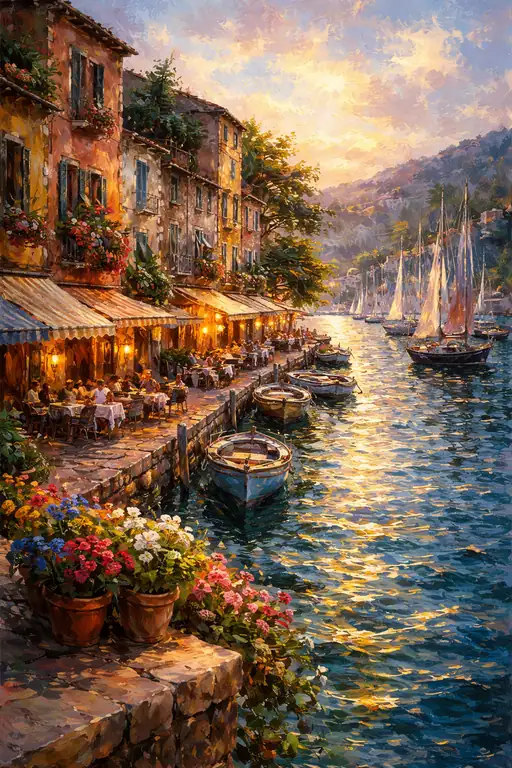 The Golden Hour's Embrace
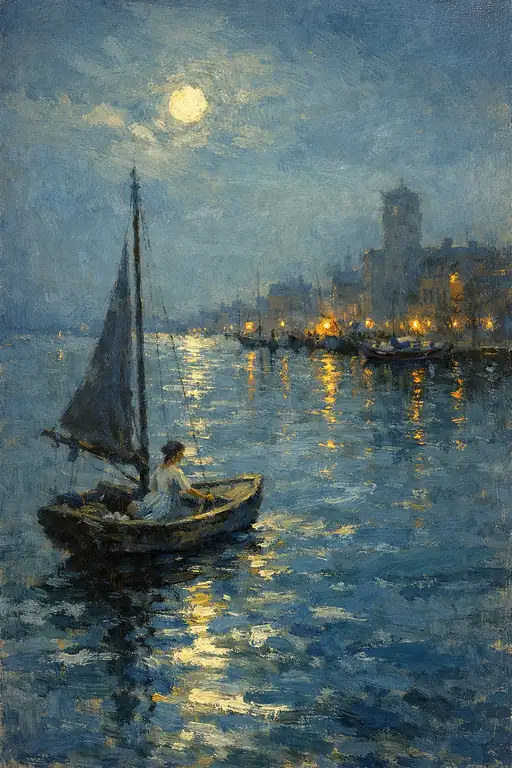 Moonlit Drifting Through the Indigo Night
 Whispers of the Working Harbor
 Symphony of Sunlit Terracotta
 Tangled Ropes and Vibrant Memories