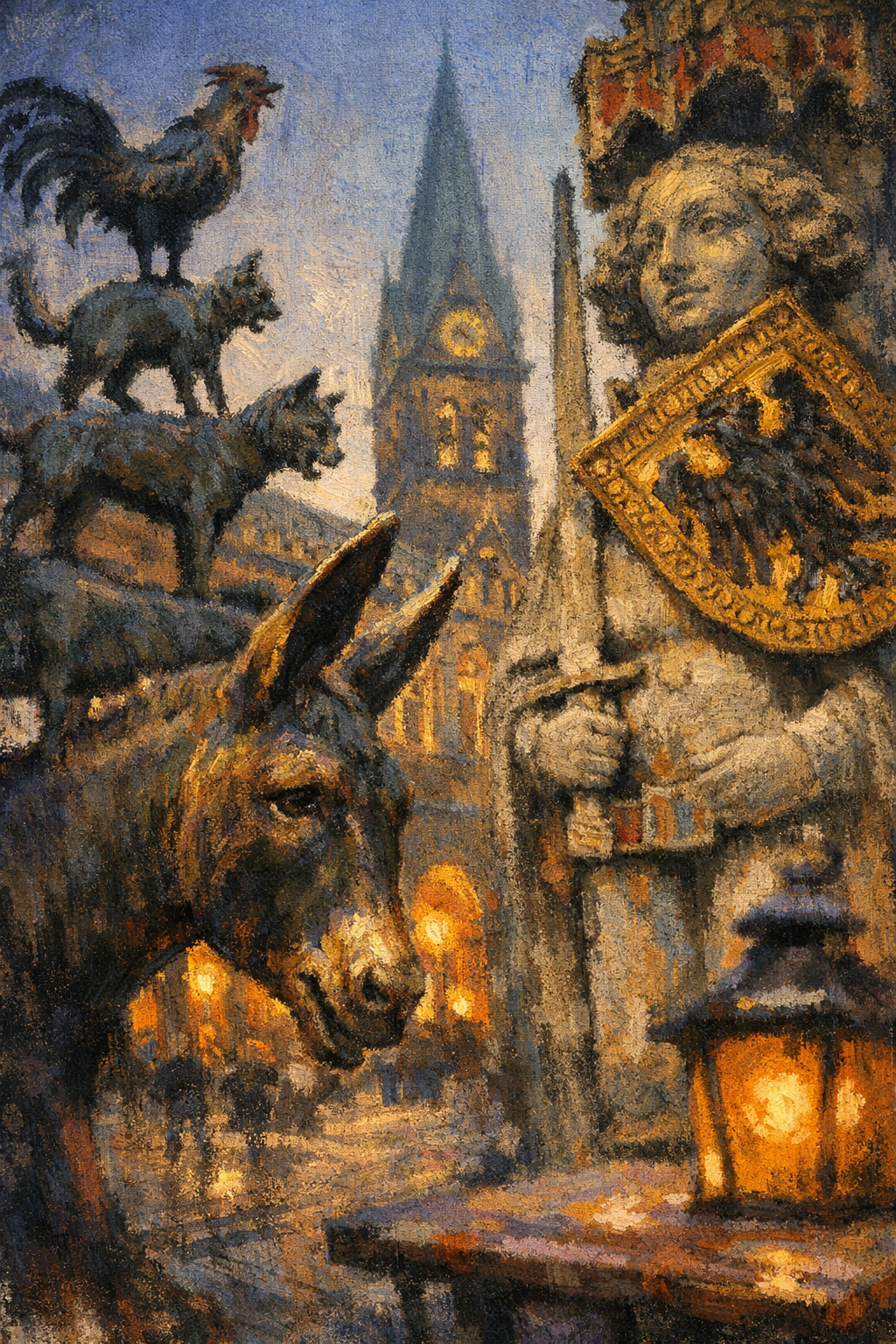
Midnight Tales of Bremen
Critique
1. Introduction This vertical oil painting presents a evocative night-time scene from Bremen, featuring the city's most famous legendary landmarks. The composition juxtaposes the bronze statue of the Town Musicians with the stone figure of the Roland, set against a backdrop of historic Gothic architecture. Heavy, expressive brushstrokes and a highly textured surface create a sense of ancient history and fairytale atmosphere. The work utilizes a dramatic contrast between cool shadows and warm, glowing light to bring these national symbols to life within a singular, unified visual space. 2. Description On the left, the stacked figures of the Bremen Town Musicians—a rooster, cat, and dog atop a donkey—are depicted in dark, solid silhouette against a late evening sky. To the right, the monumental Bremen Roland statue, clutching a sword and a shield with an imperial eagle, stands prominently in a pale, weathered tan. In the immediate foreground, a traditional street lantern casts a bright, golden-orange glow. The background features the towering silhouette of the City Hall's clock tower, punctuated by illuminated windows that cast warm reflections onto the cobblestone square below. 3. Analysis The artwork is structured with a strong vertical orientation that emphasizes the height of the statues and the distant architecture. A restricted color palette consisting primarily of deep blues, charcoal, and ochre creates a somber yet warm nighttime ambiance. Texture is a primary element, with thick impasto applied to represent the rough stone and bronze surfaces and the diffusion of light through the misty air. The placement of the warm lantern in the lower right provides a balanced counter-weight to the darker figures on the left, grounding the composition and guiding the viewer's eye across the different symbolic layers. 4. Interpretation and Evaluation This piece successfully translates the cultural spirit and legendary narratives of Bremen into a sophisticated architectural and sculptural study. Technical merit is particularly visible in the management of light, where the warm interior glows and the lantern-light create a sense of three-dimensional volume against the cool night sky. By grouping the Roland and the Musicians together, the artist creates a concentrated celebration of civic identity and folklore. The heavy texture serves to universalize and mythologize the setting, elevating it from a specific geographic location to a timeless scene of municipal heritage and artistic tradition. 5. Conclusion Through its masterful use of lighting and sculptural focus, the painting offers a profound invitation into the historic and narrative heart of a medieval city. It encourages a deeper engagement with the symbolic figures that define local identity while celebrating the aesthetic qualities of a nighttime urban environment. The initial impression of a crowded square eventually gives way to a deeper appreciation for the harmonious interplay of bronze, stone, and artificial light. Ultimately, this work remains a evocative example of how texture and color can transform municipal icons into a singular, poetic vision of enduring cultural history.
Same Subcategory
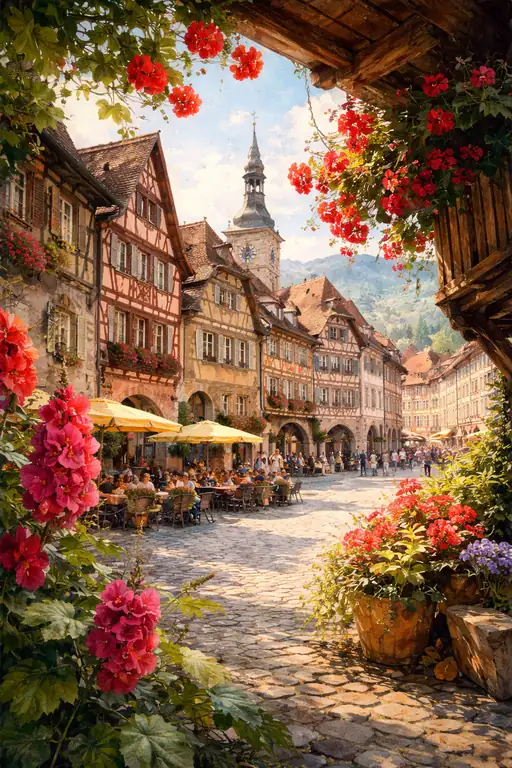 Summer Afternoon in the Square: Flowers and Timbers
Similar Artworks
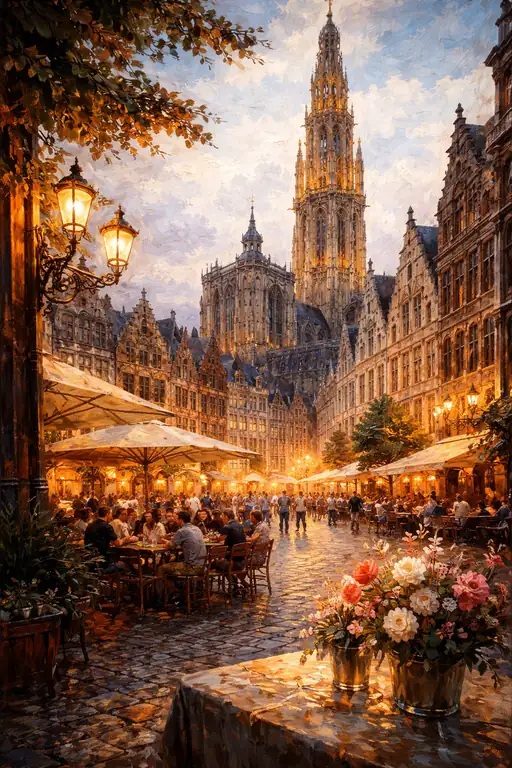 Golden Hour at the Antwerp Square
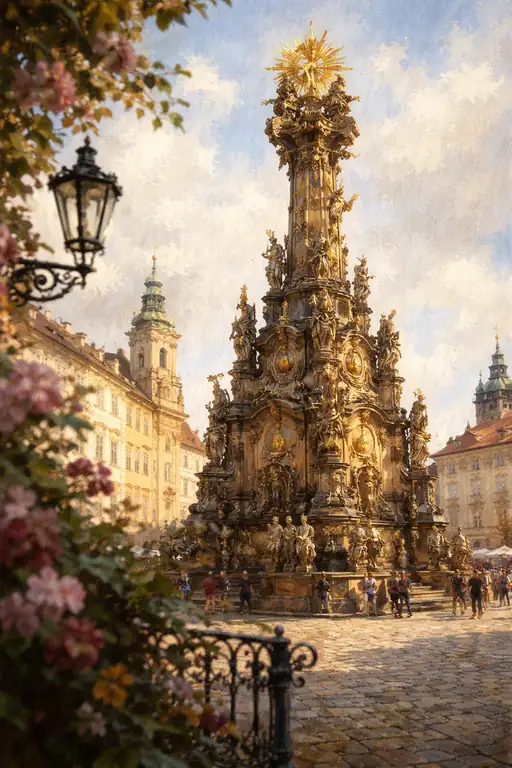 Baroque Whispers in the Sunlit Square
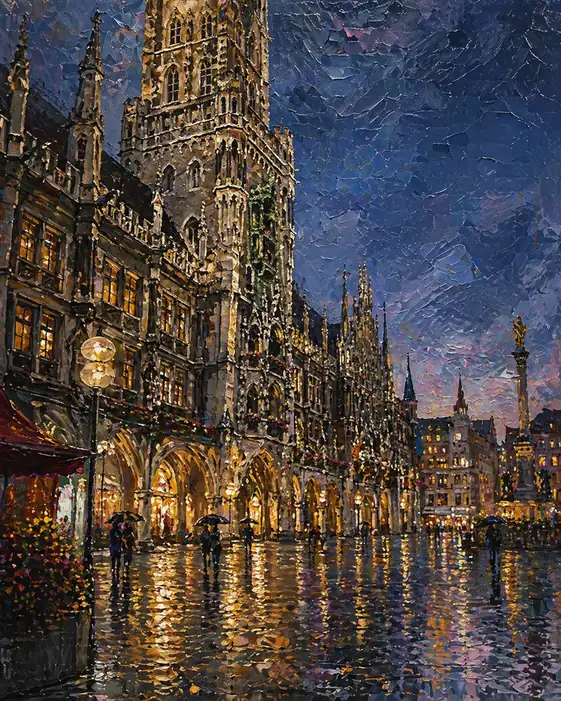 Whispers of the Bavarian Night
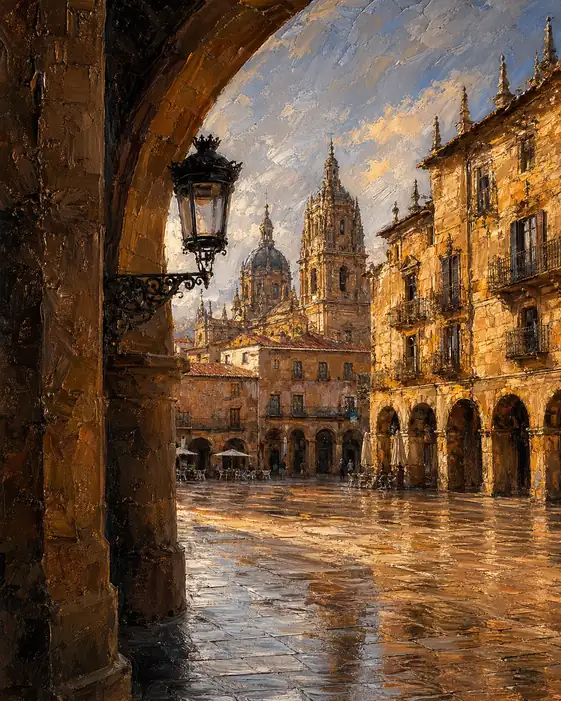 Gateway to the Gilded Square
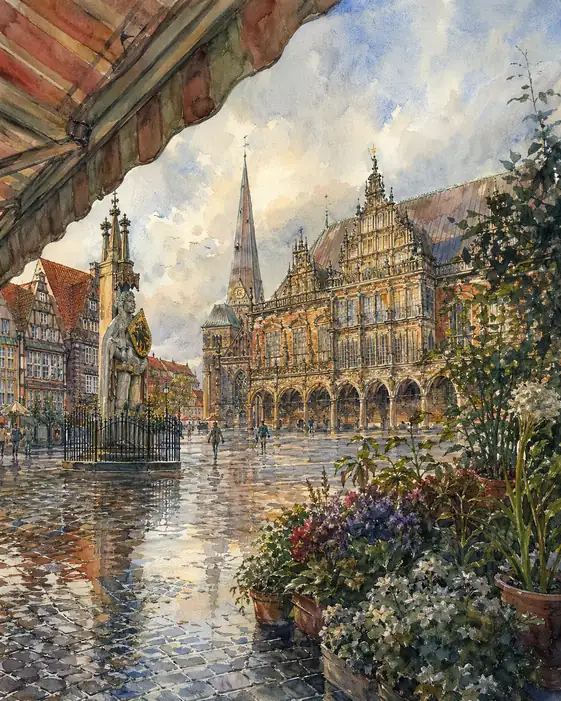 Reflections of the Gothic Square
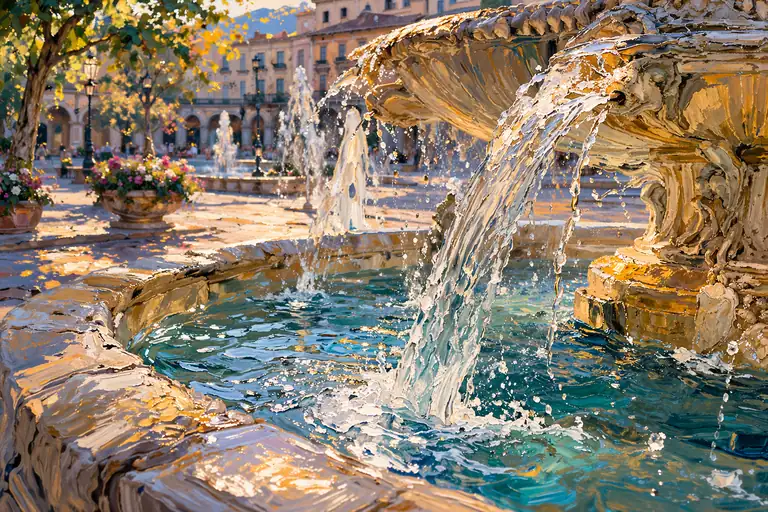 The Urban Cascade
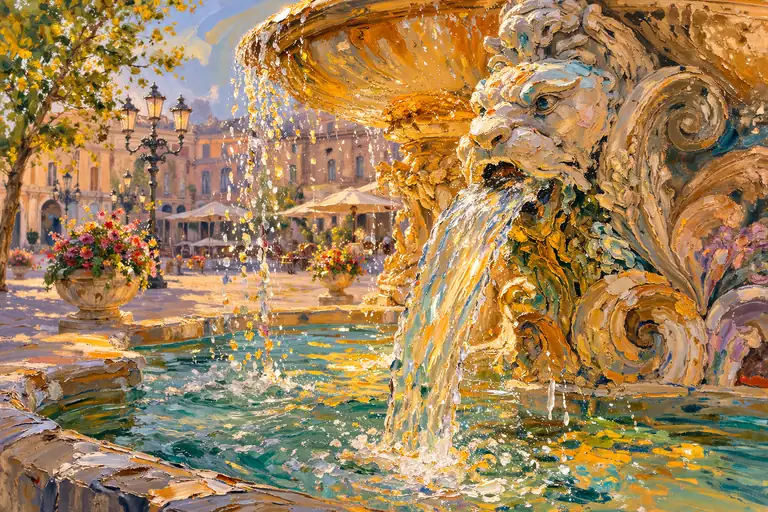 Summer Splash at the Lion's Mouth
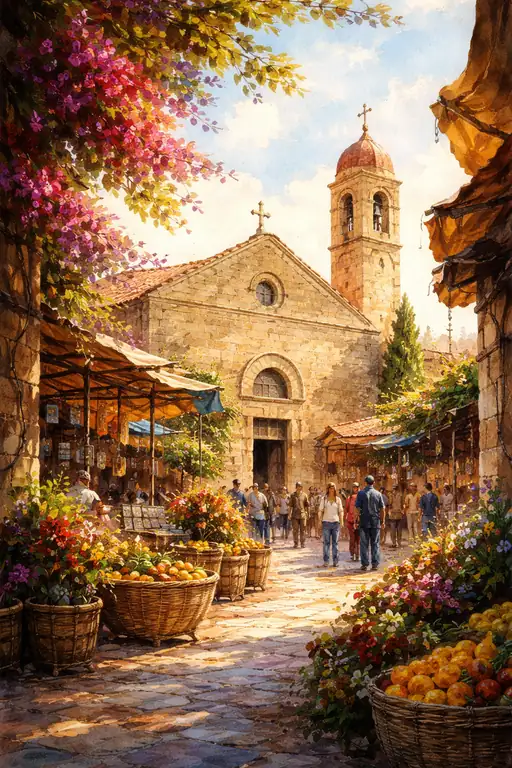 Bustling Marketplace Beside an Old Stone Church
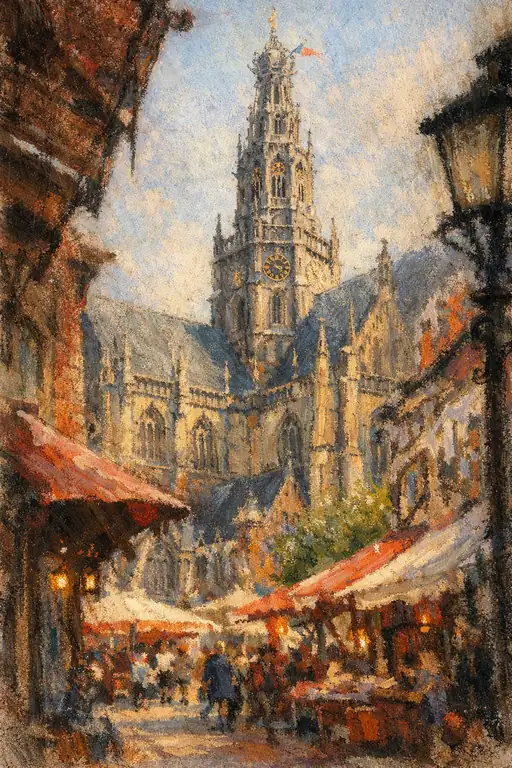 The Golden Pulse of the Square
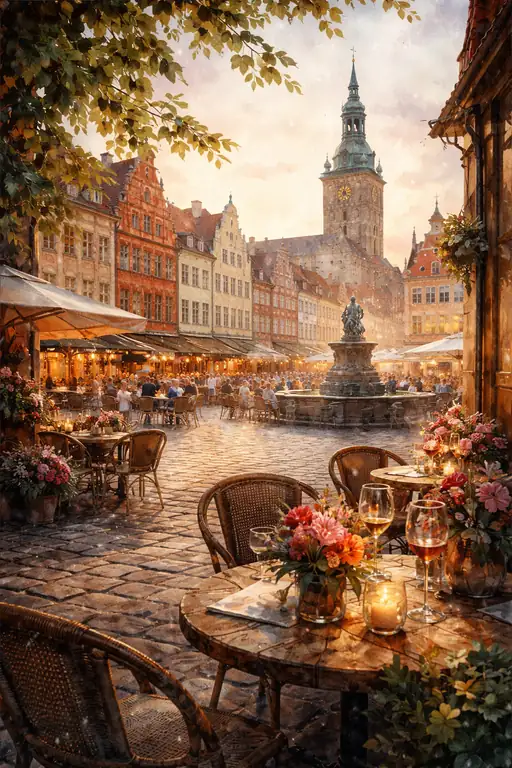 Twilight Reverie at the Plaza