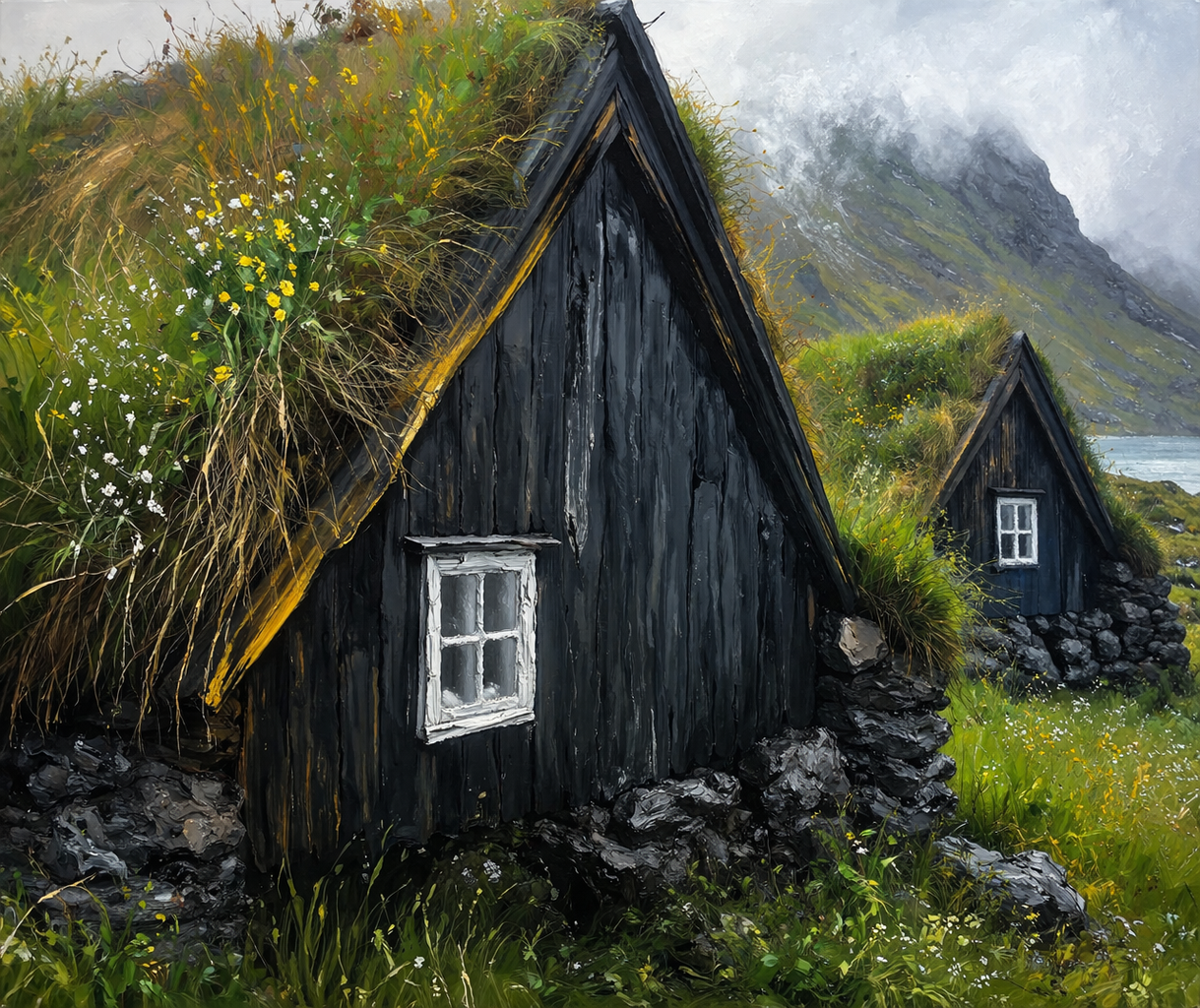
Shelter in the Silent Mist
Critique
1. Introduction This striking landscape painting highlights small, wooden structures built to withstand a harsh natural environment, captured through a dynamic composition and robust textures. The angled perspective of the huts creates a powerful sense of movement, immediately drawing the viewer's attention to the unique architectural forms and the lush, sod-covered roofs. While depicting a serene northern scene, the expressive technique infuses the canvas with a palpable tension and a remarkable sense of vitality. 2. Description In the foreground, a prominent black-timbered hut displays a rich, vertical texture on its walls, crowned by a thick layer of grass interspersed with tiny yellow and white wildflowers. The foundation consists of heavy, dark stones rendered with a thick impasto technique that emphasizes their physical weight and permanence. In the background, misty mountains loom through swirling clouds, effectively communicating the coolness and high humidity of the regional climate. 3. Analysis The primary visual appeal of the artwork lies in the stark contrast between the rigid verticality of the man-made structures and the organic, chaotic textures of the vegetation and stonework. The heavy application of paint on the roofs catches the light, providing a complex rhythmic surface that anchors the visual focus on the primary subject. The color palette is masterfully balanced, using the neutral tones of the wood and stone to enhance the vivid greens and yellows of the flowering sod. 4. Interpretation and Evaluation The artistic execution symbolizes the fundamental resilience and quiet dignity of life within a formidable natural landscape. The painter's ability to render both the tactile details of the surfaces and the broader atmospheric conditions demonstrates exceptional draftsmanship and observational depth. This original interpretation of vernacular architecture elevates simple dwellings into subjects of high aesthetic value, reflecting a sophisticated modern sensitivity within a traditional landscape framework. 5. Conclusion A close examination reveals that what first seems to be a straightforward study of rustic huts is actually a complex orchestration of light, shadow, and materiality. The fusion of solid technique and expressive power marks this as a significant work within the collection. Ultimately, the tactile quality of the paint and the atmospheric chill leave a lasting impression of the silent dialogue between humanity and nature, fulfilling the highest aspirations of landscape art.
Same Subcategory
Similar Artworks
 Elegy of the Cliffside Haven
 Embrace of the Slumbering Mountains
 Sanctuary of the Amber Glow
 Where the River Meets the Thatch
 Glowing Solitude in the Misty Pines
 Embers in the Alpine Air
 Valley of Quiet Time
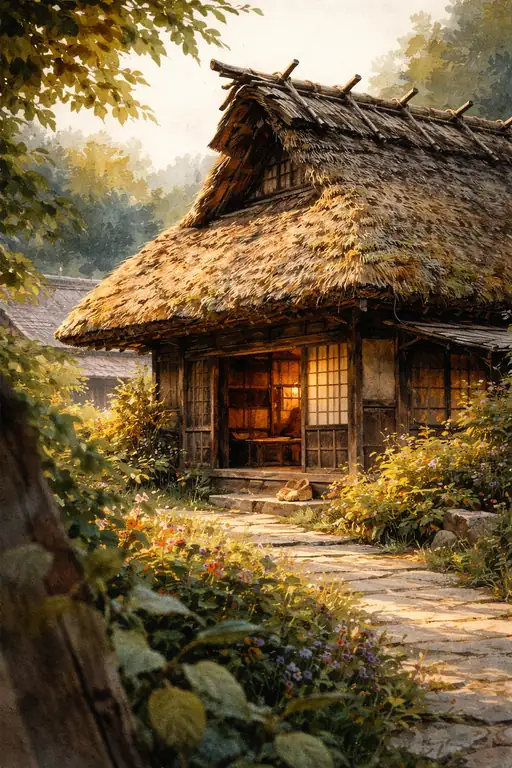 Whispers of the Evening Sun on the Stone Path
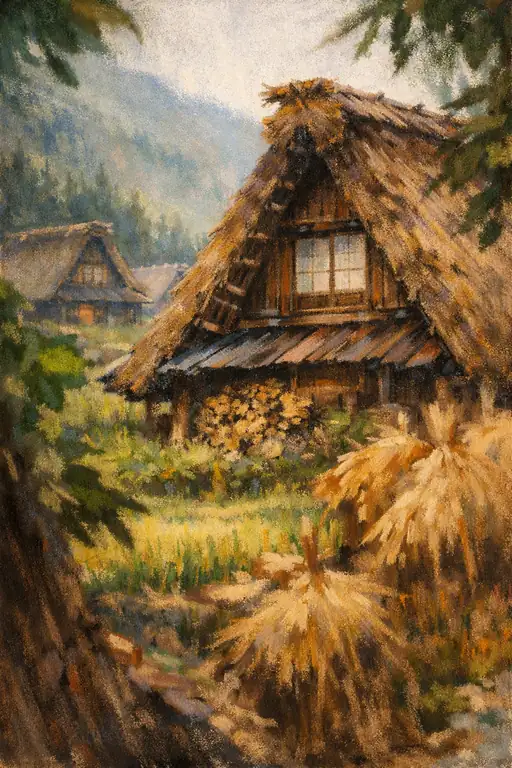 Rustic Harvest Harmony
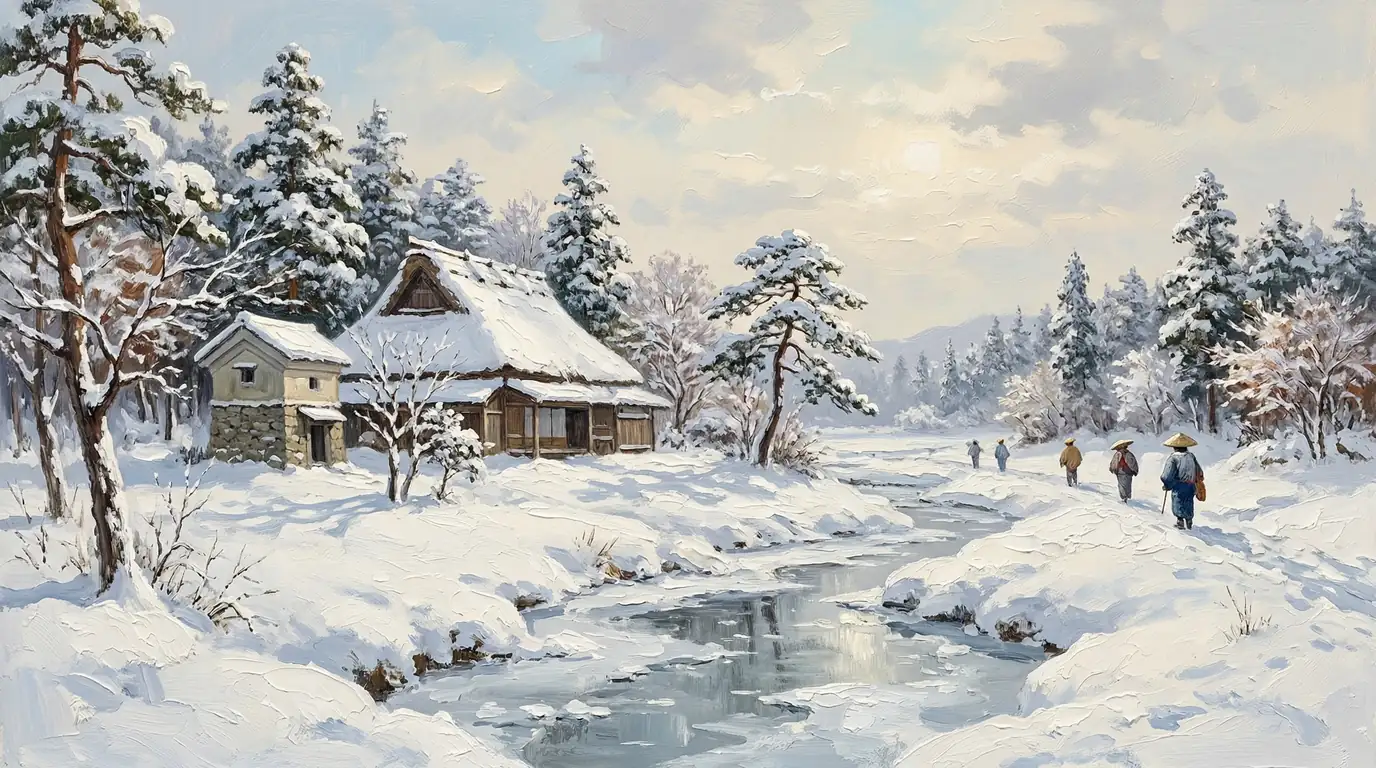 Slumber Beneath the Snowfall