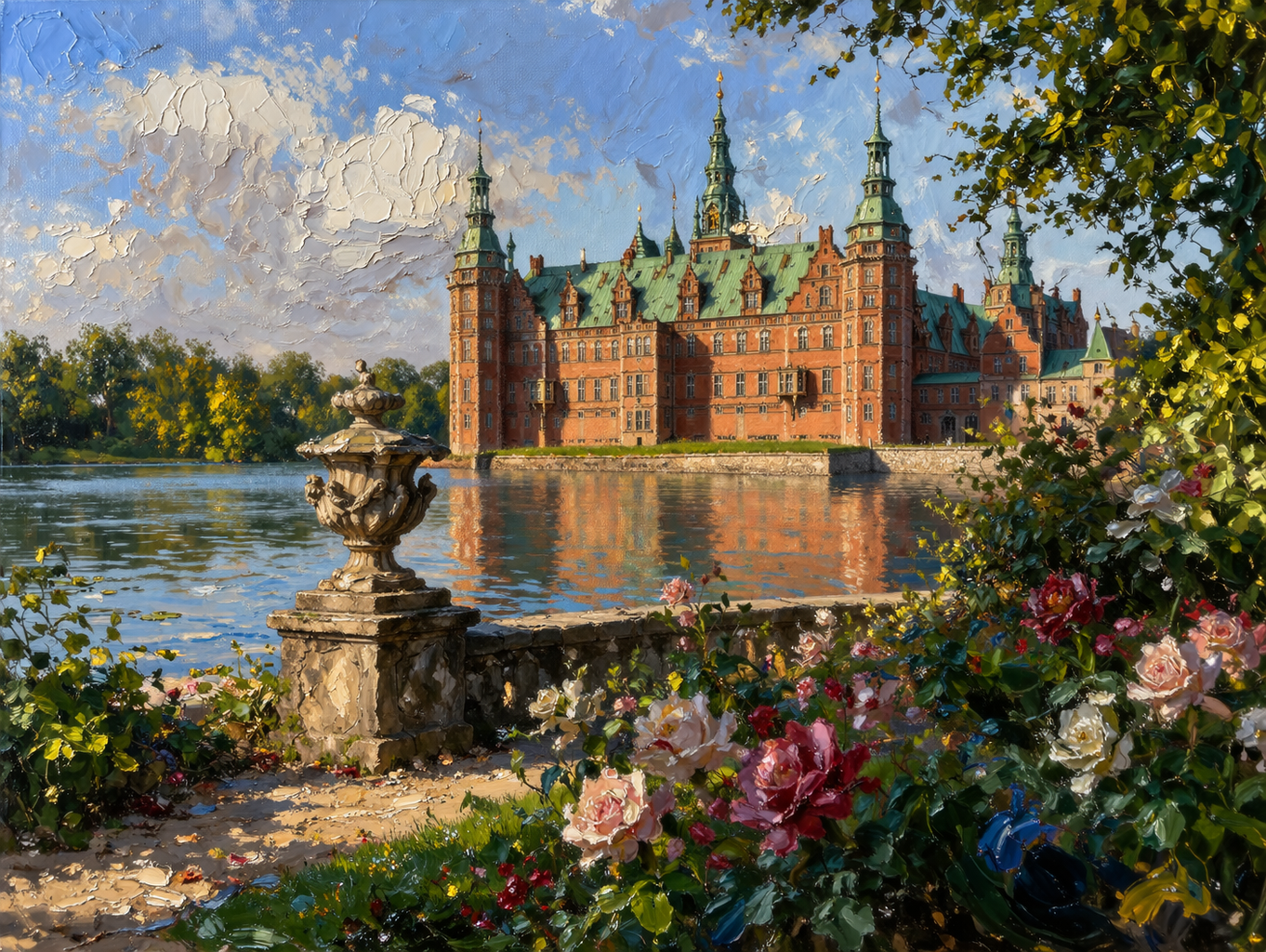
Reflections of a Timeless Majesty
Critique
1. Introduction This painting presents a grand and luminous view of a Renaissance-style castle situated along a serene body of water. The artist employs an impressionistic technique characterized by vigorous brushwork and rich texture to celebrate the harmony between historical architecture and vibrant nature. Through its balanced composition, the work captures the stately elegance of an era preserved in light. 2. Description In the foreground, an ornate stone urn sits atop a weathered masonry wall, surrounded by a profusion of roses in shades of pink, red, and white. The right edge is framed by lush, leafy branches that arch over the scene. Beyond the calm, reflective lake, a massive red-brick castle with green-patinated copper roofs and slender spires stands under a brilliant blue sky filled with scumbled white clouds. 3. Analysis Technical analysis reveals a significant use of impasto, which adds a tactile quality to the foreground flowers and the structural details of the castle walls. The color palette centers on the warm, earthy reds of the brickwork and the cool, contrasting greens of the roofs and surrounding vegetation. The shimmering reflections in the water effectively unify the architectural monument with the surrounding natural elements, creating a cohesive visual field. 4. Interpretation and Evaluation The artwork successfully conveys a sense of timelessness and architectural majesty through its focused lighting and rhythmic application of paint. The bright sunlight, hitting the castle facade and the rose petals, creates a series of sparkling highlights that enhance the overall sense of depth. The artist demonstrates a high degree of skill in managing complex textures, from the delicate translucency of the flora to the solid, enduring presence of the stone and brick. 5. Conclusion In conclusion, the piece stands as a vibrant and majestic tribute to both human craftsmanship and the natural environment. The initial impression of the castle's imposing scale eventually gives way to an appreciation for the intricate beauty of the foreground garden. This composition masterfully illustrates the enduring dialogue between monumental history and the ephemeral beauty of a summer garden.
Same Subcategory
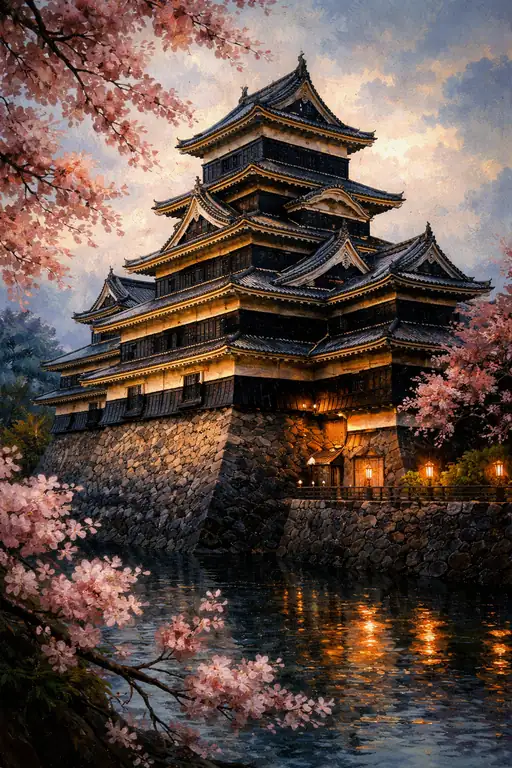 Twilight Majesty: The Castle's Resilience
Similar Artworks
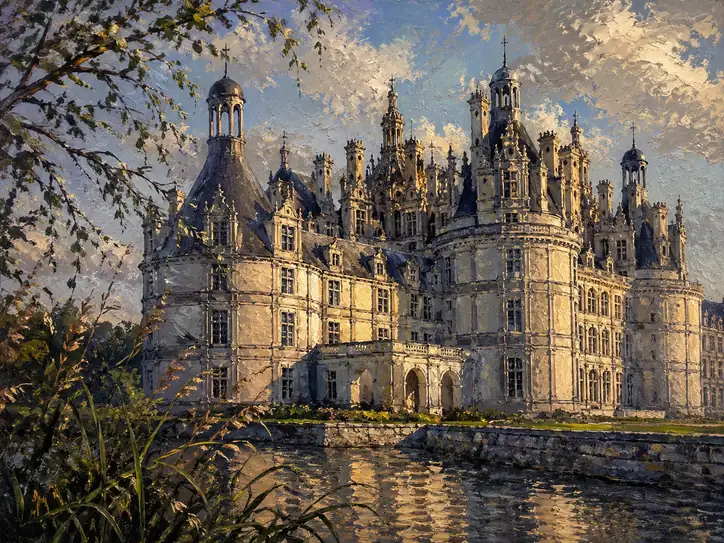 Mirror of a Vanished Romance
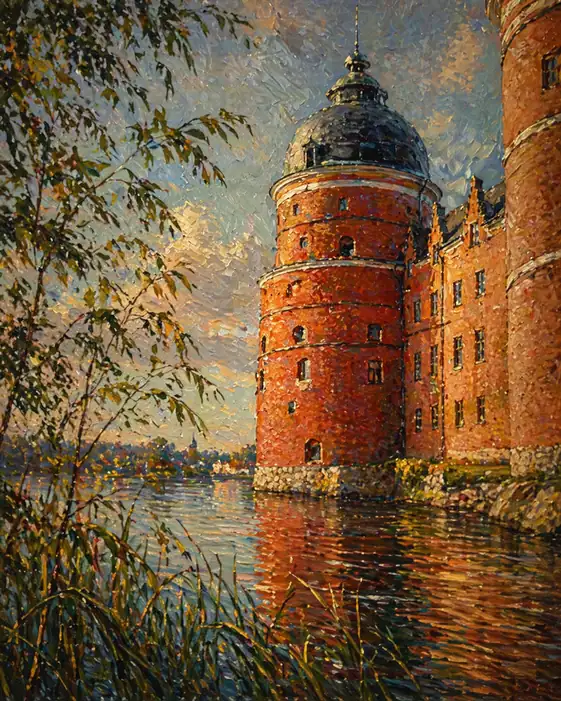 Serenity of the Spire
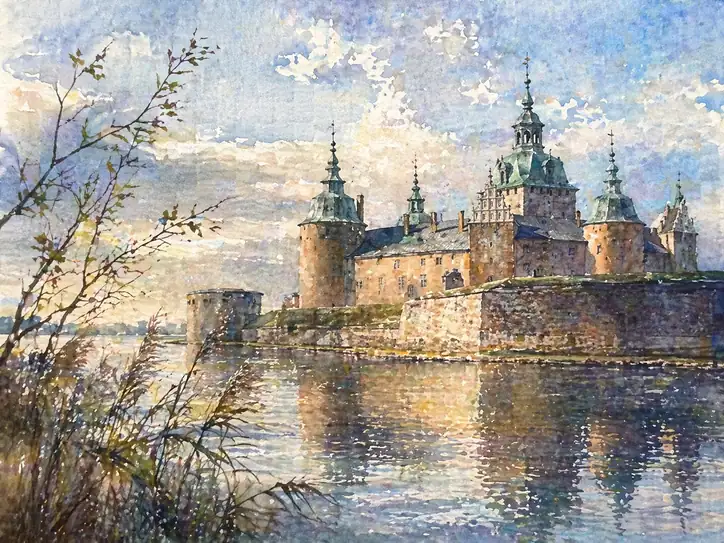 Archway to the Glimmering Horizon
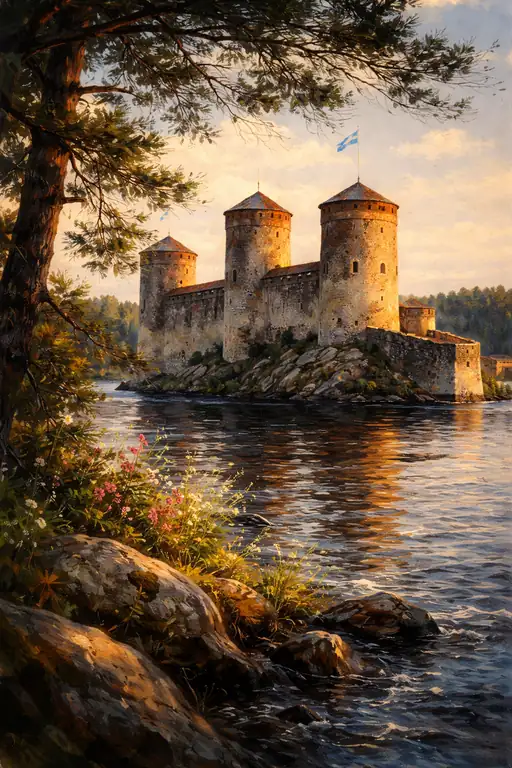 A Serene Vigil Over the Water
 A Castle's Dream Upon the River
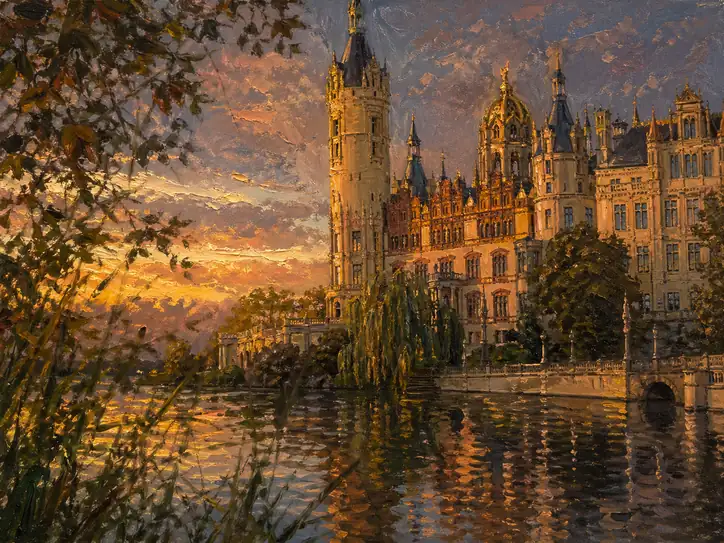 Echoes of a Golden Era
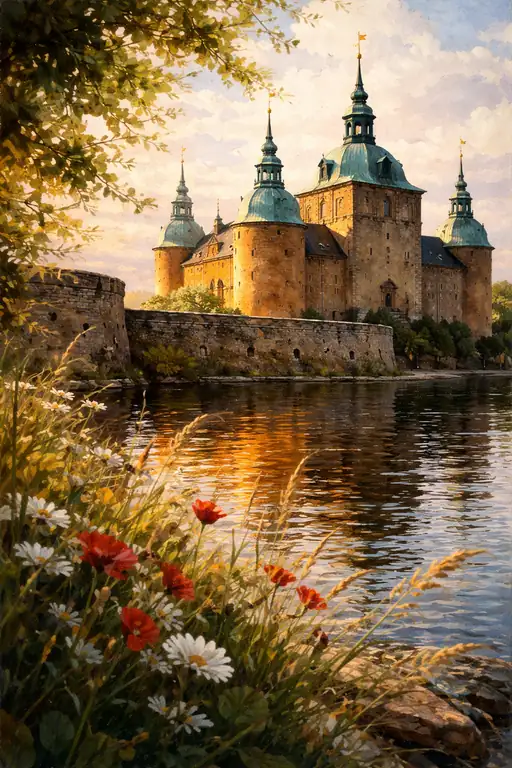 The Enduring Bastion Amidst the Ephemeral Blooms
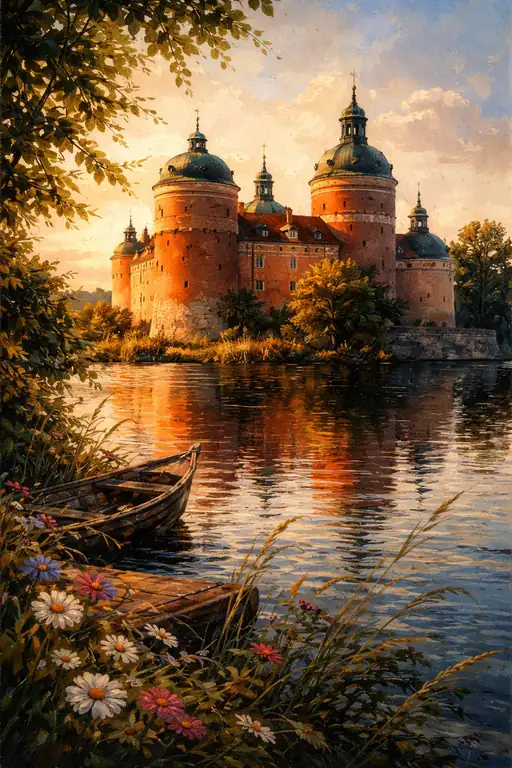 A Nostalgic Reflection in the Evening Calm
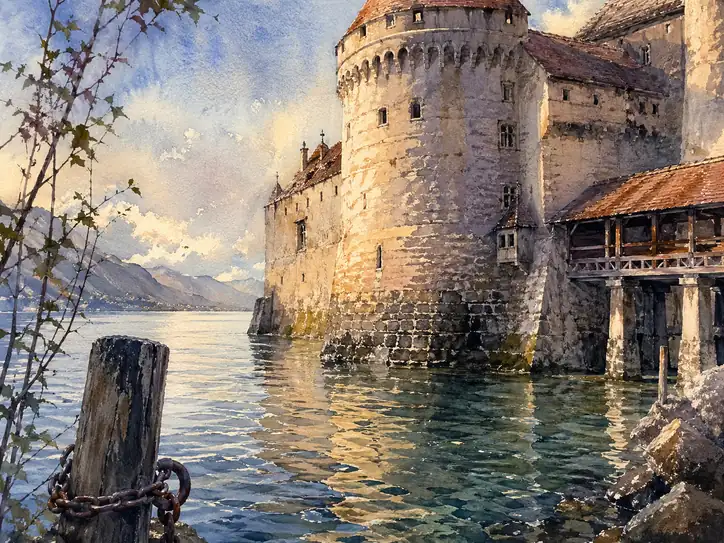 Guardians of the Golden Shore
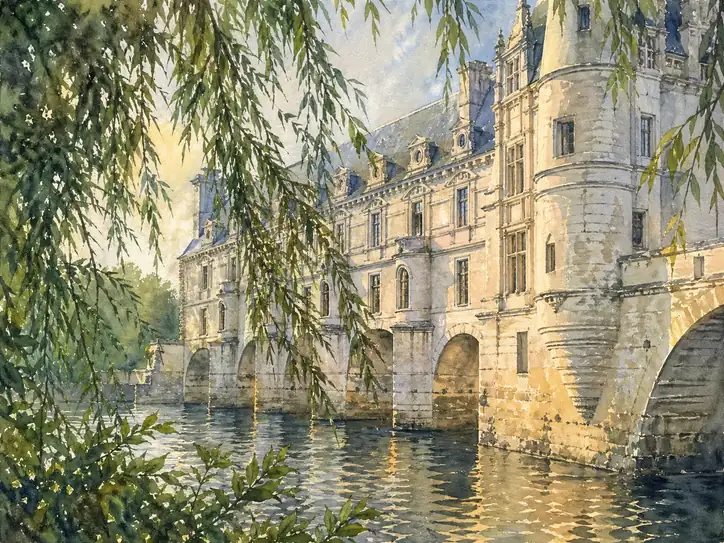 Morning Grace at the Water's Edge