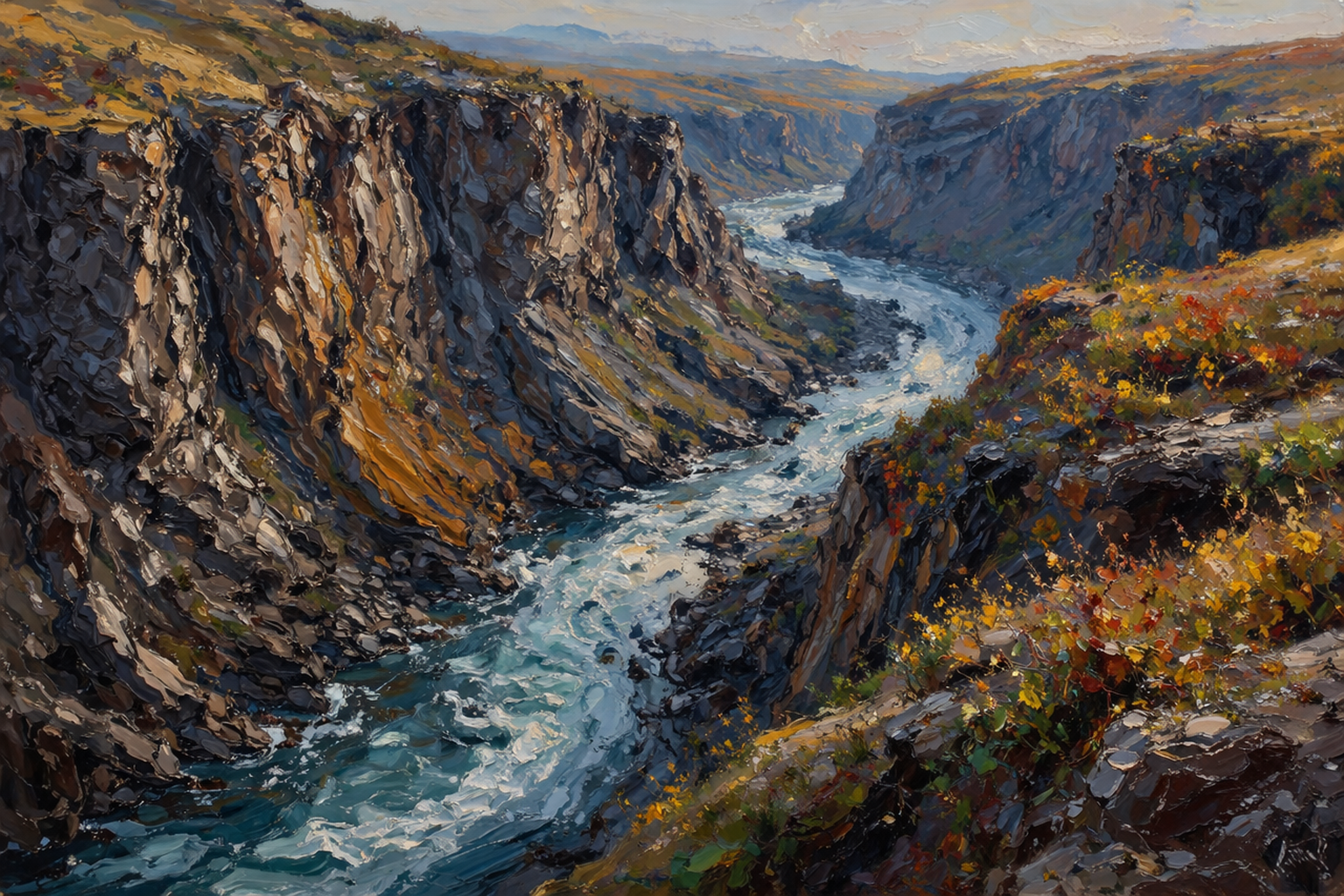
Echoes of the Ancient Current
Critique
1. Introduction This landscape painting depicts a turbulent river winding through a deep, precipitous canyon. It is characterized by a vibrant impressionistic style that employs bold, confident brushwork to capture the raw energy of the natural world. The generous application of paint across the canvas creates a tactile quality that emphasizes the physical presence of the scene. 2. Description The composition features two massive, rocky cliffs that dominate the sides of the frame, tapering toward a distant vanishing point. A powerful river flows between these vertical walls, its surface a mosaic of white foam, turquoise currents, and deep blue shadows. The rock faces are rendered in thick strokes of ochre, sienna, and cool grey, suggesting ancient geological layers. In the lower right foreground, scattered vegetation in shades of orange and yellow provides a seasonal accent against the stark stone. 3. Analysis Sharp lighting on the left canyon wall creates a dramatic interplay of light and shadow, defining the jagged geometry of the cliffs. The converging diagonal lines of the terrain generate a strong sense of perspective, drawing the viewer’s gaze into the heart of the valley. The impasto technique lends a three-dimensional relief to the surface, mimicking the rugged texture of the mountain side. A clear color contrast exists between the warm earthy tones of the land and the cool, reflective surface of the water. 4. Interpretation and Evaluation The work successfully evokes the sublime power and untamed beauty of a wilderness environment. The spirited brushwork effectively communicates the constant movement of both the rushing water and the ephemeral light. From a technical standpoint, the artist demonstrates a mastery of texture, using layered paint to build a convincing sense of form and weight. The overall balance between the heavy mineral mass and the fluid aquatic motion is exceptionally well-handled. 5. Conclusion This piece serves as an evocative study of both geological stability and fluid dynamics. The initial impact of the vast scale is gradually enriched by a closer examination of the intricate, rugged details of the landscape. It remains a powerful testament to the enduring majesty of the prehistoric environment.
Same Subcategory
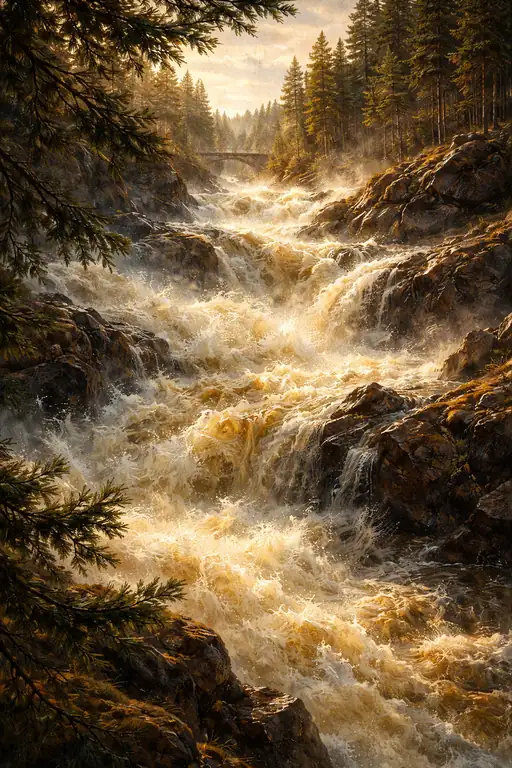 The Golden Energy of the Untamed Gorge
Similar Artworks
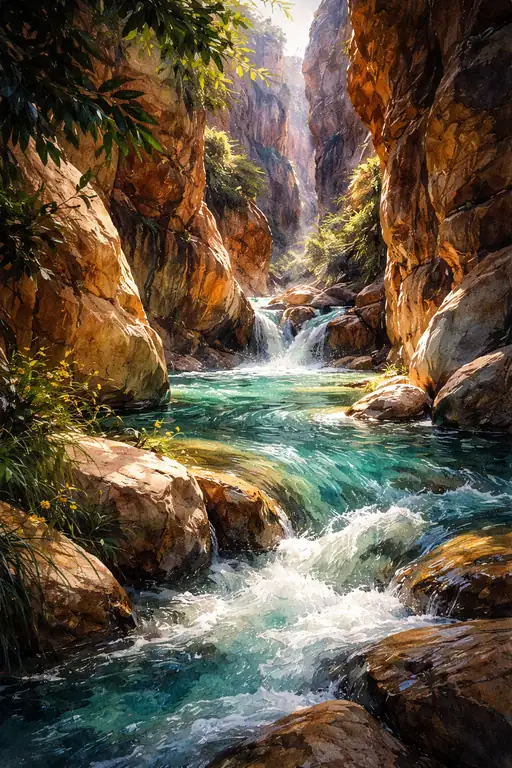 Rush of Turquoise: A Mountain Stream in the Gorge
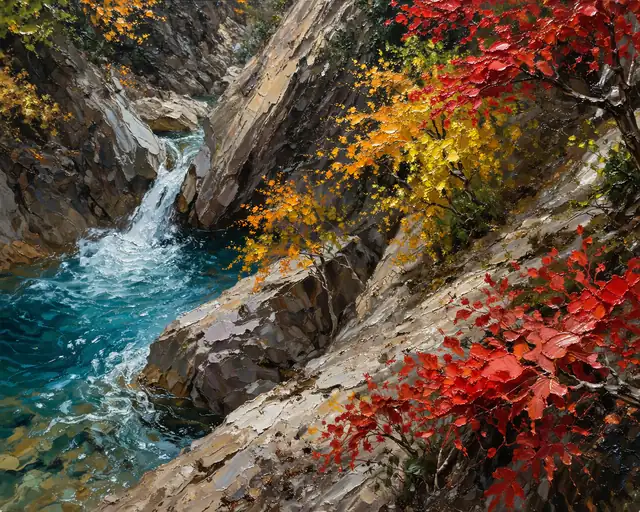 The Vigorous Rush of the Autumn Gorge
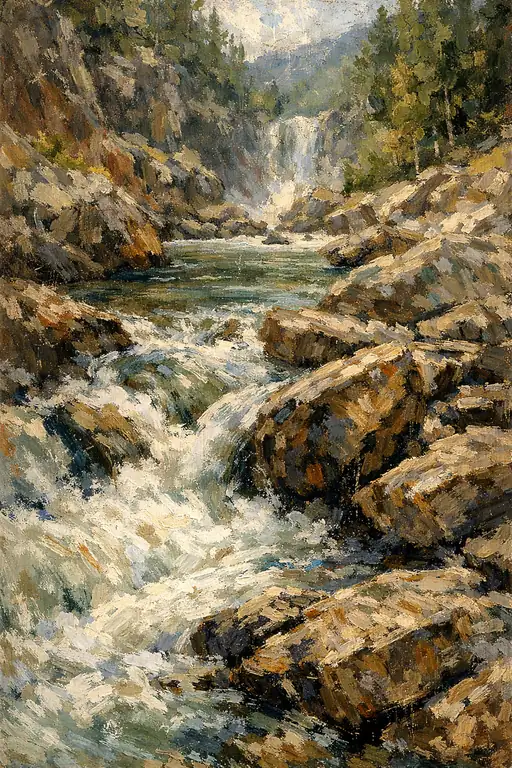 Roar of the Churning Abyss
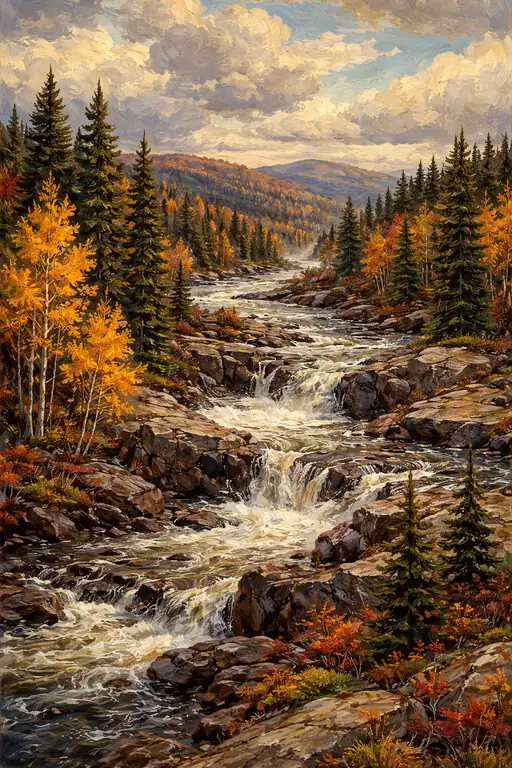 Dance of the Autumn Torrent
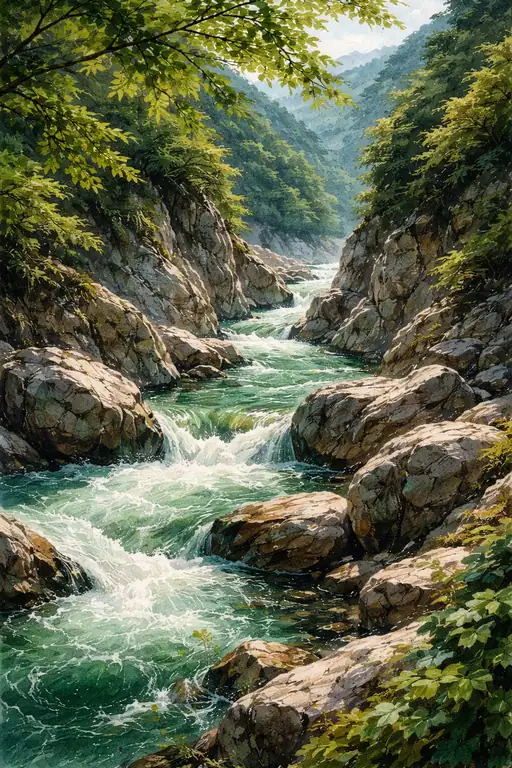 Echoes of the Emerald Gorge
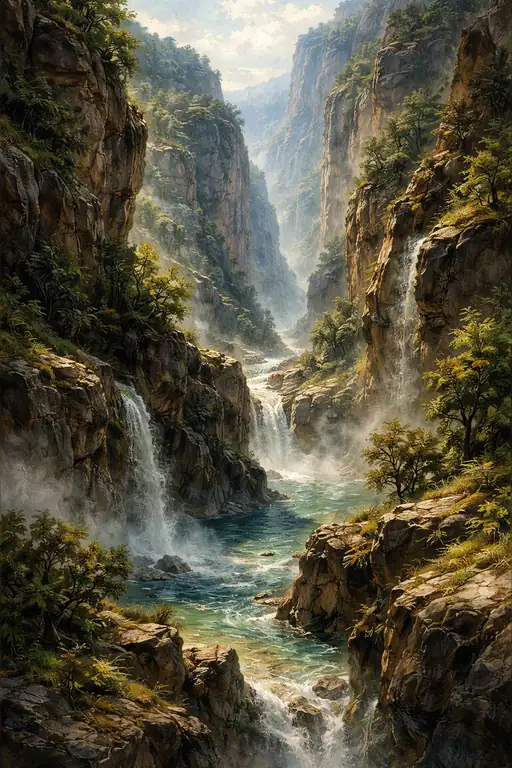 Song of the Wilderness
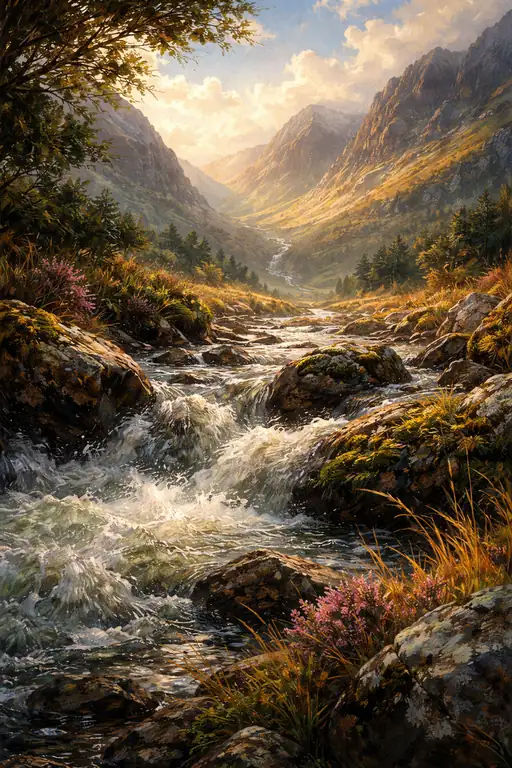 Mystical Morning Forest
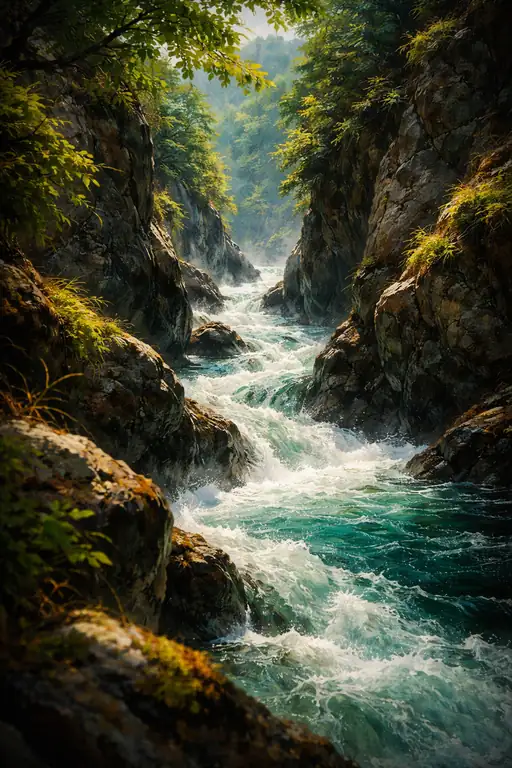 Sunlit Canyon: A Fast-Flowing Turquoise River Winding Through Narrow Rocks
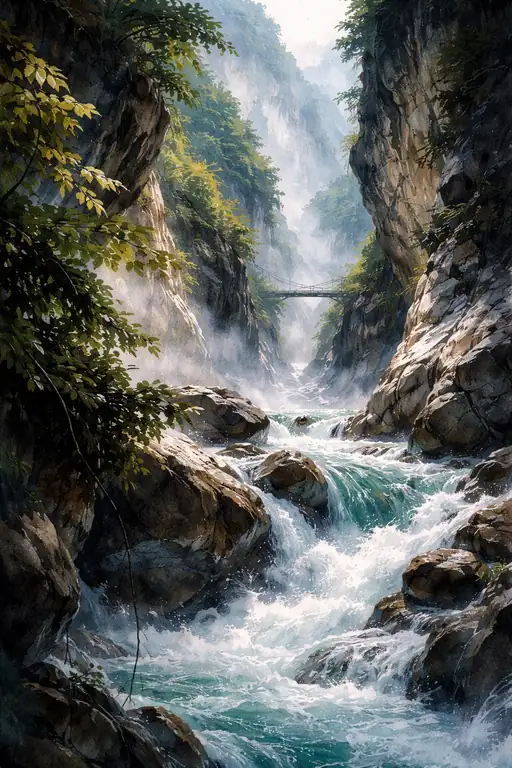 The Roaring Pulse of the Canyon
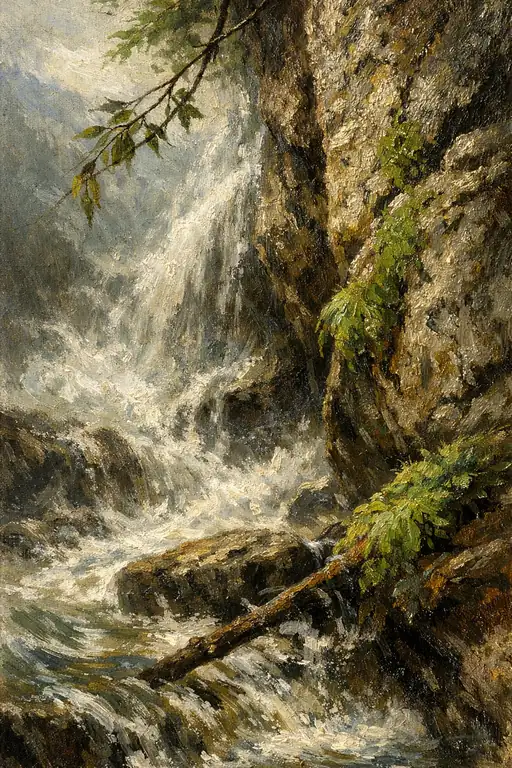 Turbulence Against the Fallen Wood