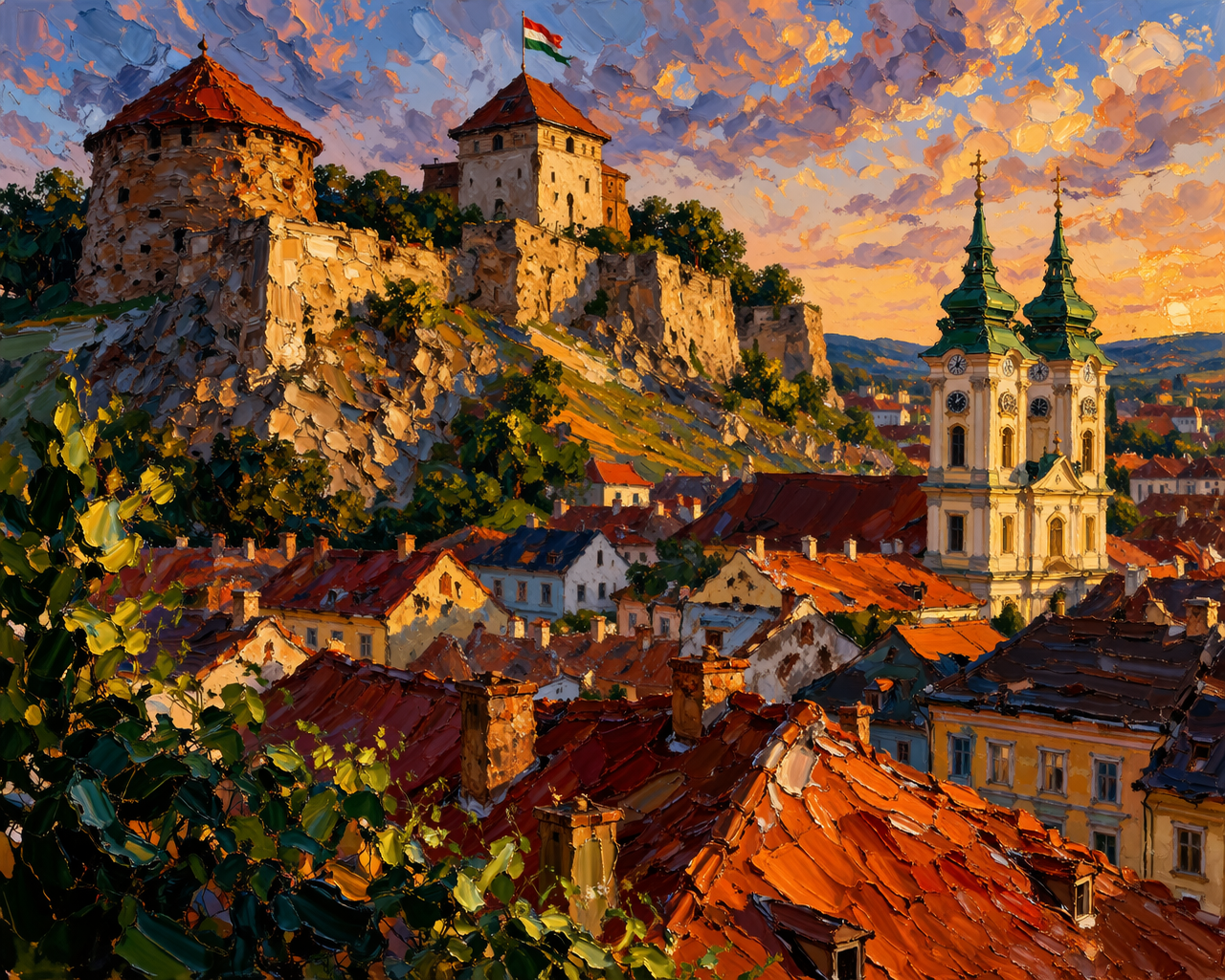
Pulse of the Crimson Twilight
Critique
1. Introduction This artwork depicts a majestic scene of an ancient fortress and a twin-spired church overlooking a town filled with vibrant red-tiled roofs at sunset. The sky, filled with fragmented clouds, and the intense evening light reflecting off the masonry create a dramatic sense of movement. This critique explores the bold, tactile brushwork and the sophisticated use of light that define the formal excellence of this landscape. 2. Description On the rugged hillside to the upper left, a formidable stone castle stands tall, its battlements catching the golden rays of the sun. To the right, a white church with elegant twin steeples emphasizes verticality against a background of swirling, sun-drenched clouds. The lower frame is occupied by a dense arrangement of traditional houses, while dark green foliage in the bottom left corner provides a fresh visual anchor for the composition. 3. Analysis The most prominent formal quality is the sculptural use of impasto, which provides a physical dimension to the surface. Individual roof tiles and rocky outcrops are rendered with thick layers of paint that create a complex play of shadows and highlights. Structurally, the balance between the vertical steeples and the horizontal spread of the houses, coupled with the weight of the castle, establishes a powerful and harmonious visual equilibrium. 4. Interpretation and Evaluation This piece reinterprets a historical vista as a dynamic drama of light and texture, transcending literal documentation. The harmony between the white facades, red roofs, and golden sky symbolizes a union between human heritage and the fleeting splendor of nature. The artist's ability to communicate through such a rich, tactile medium demonstrates high technical mastery and a creative vision that engages the viewer's primary senses. 5. Conclusion Ultimately, the painting succeeds in capturing the spiritual essence of an old world through an overwhelming display of color. As the analysis deepened, the detailed elements merged to reveal the underlying pulse of the city as a living entity. This work stands as a significant achievement in landscape painting, leaving a lasting impression of historical depth. The resulting composition is a timeless celebration of the intersection between architectural form and atmosphere.
Same Subcategory
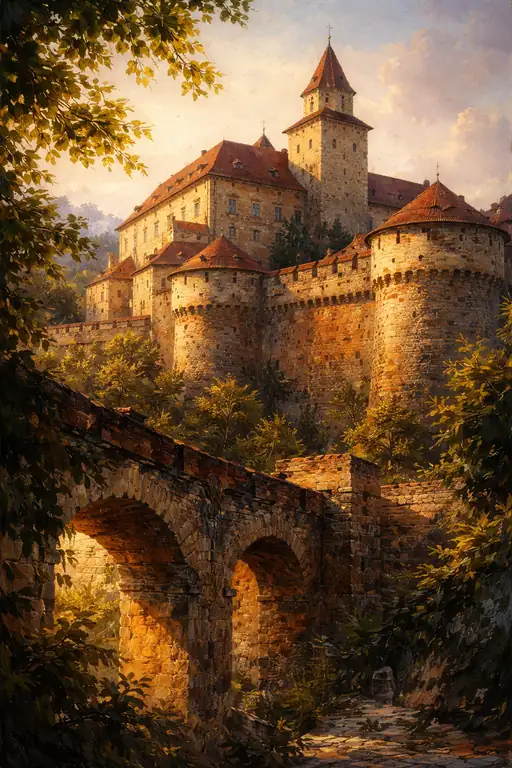 Golden Hour at the Ancient Fortress
Similar Artworks
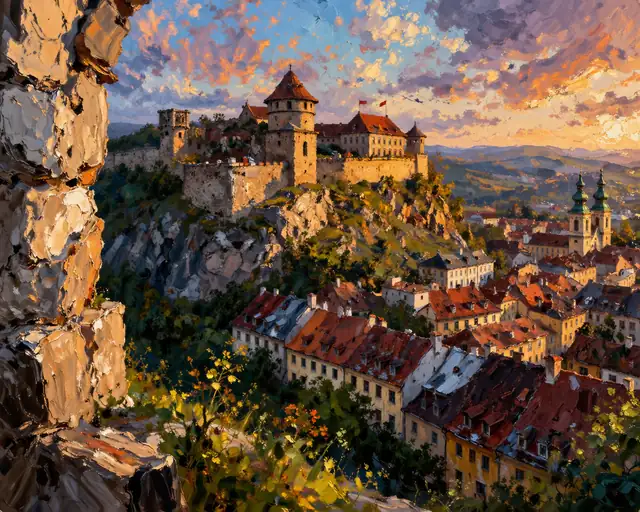 Whispers from the Ancient Bastion
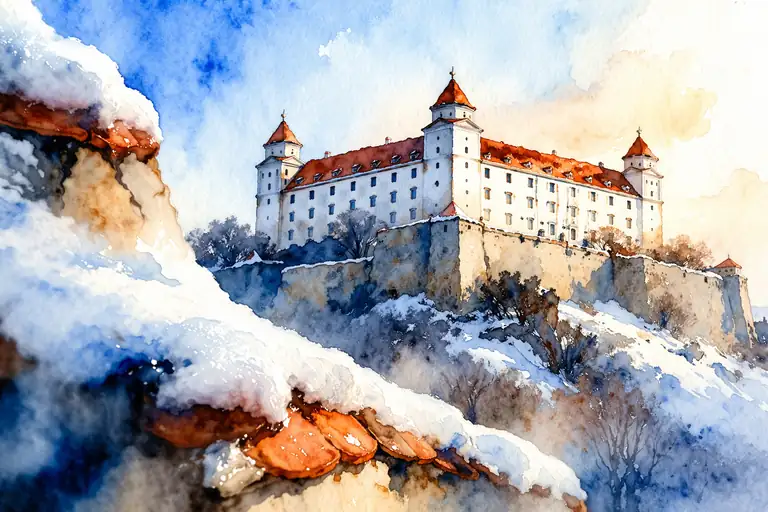 Sunset Glow on Snow-Covered Bratislava Castle
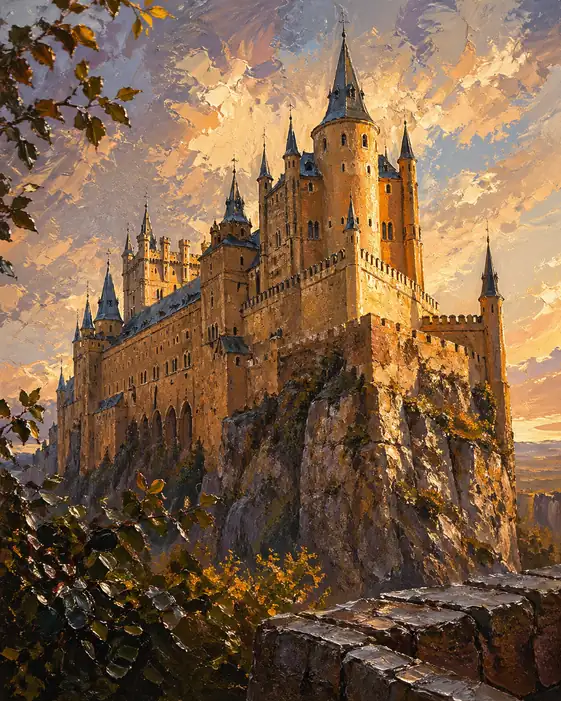 Majesty on the Sunlit Crag
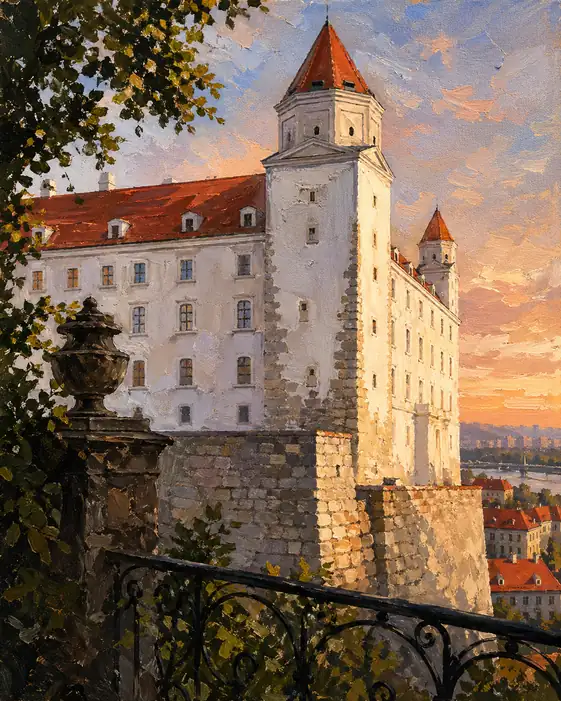 Twilight's Embrace on the Castle Walls
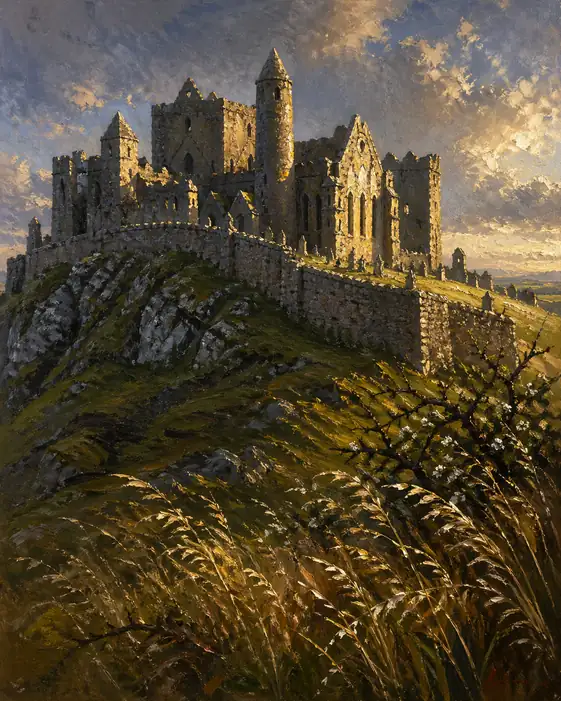 Majestic Castle Ruins at Sunset
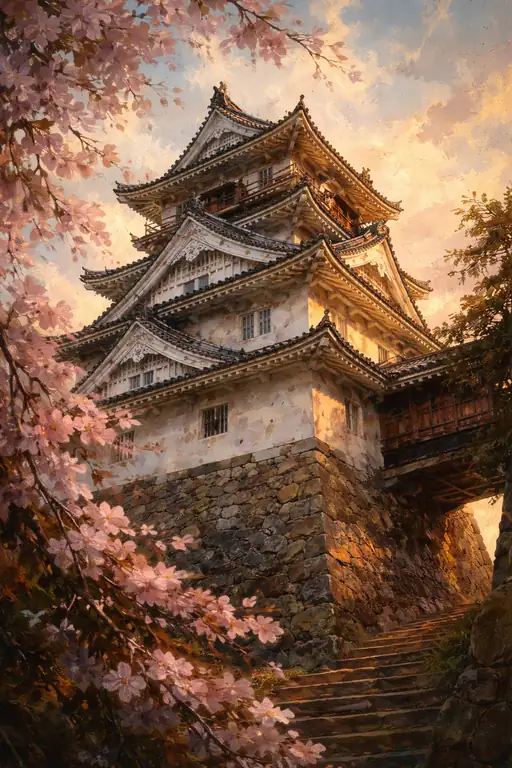 Marugame Glows in Twilight
 The Golden Bastion's Unyielding Watch
 The Golden Keep Amidst Rugged Slopes
 The Eternal Bastion of the Golden Heights
 The Golden Echo of Ancient Kings