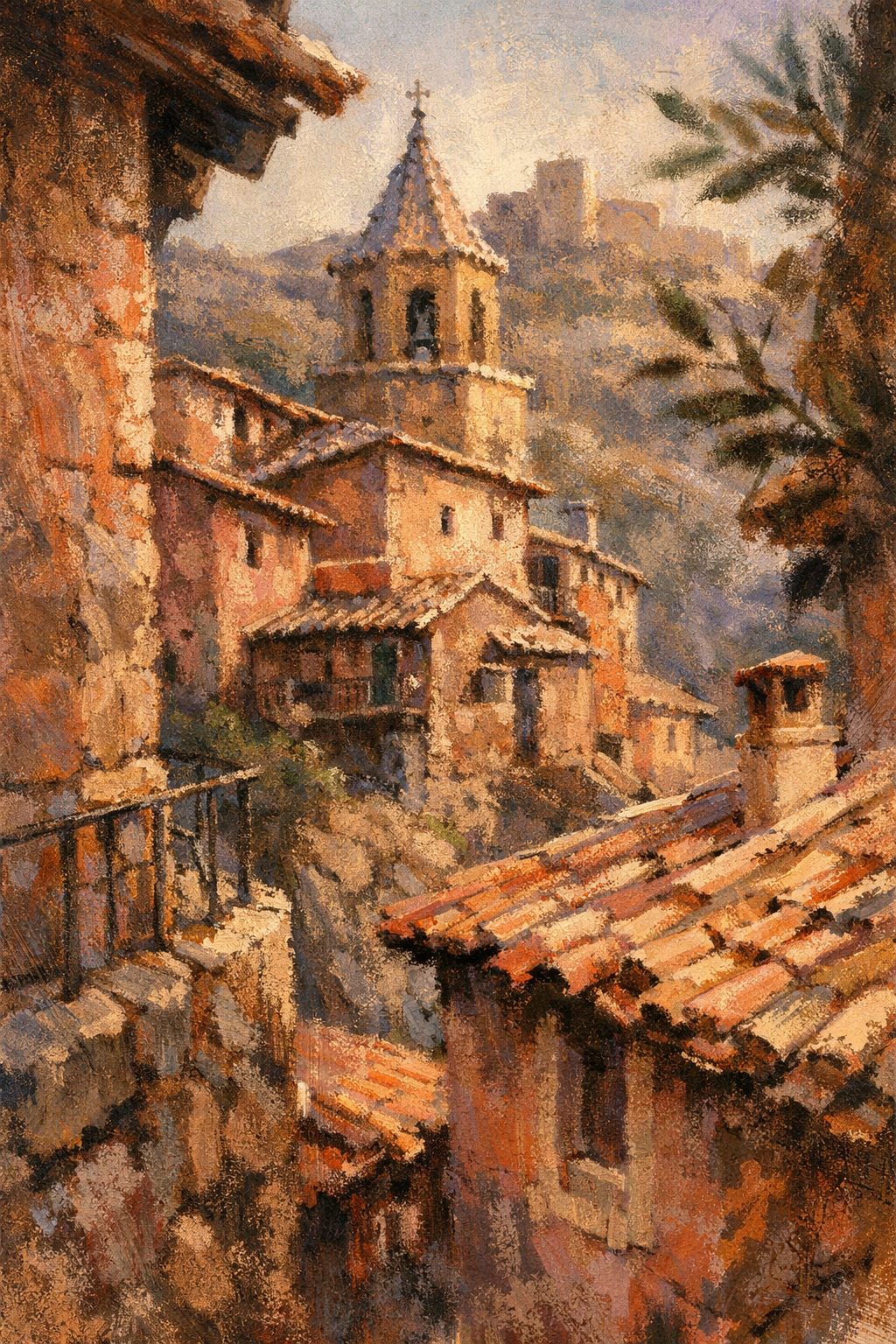
Golden Hour in Alquézar
Critique
1. Introduction This painting presents an exceptionally warm and atmospheric view of the historic Spanish village of Alquézar, captured from a high-angle, intimate street perspective. The composition masterfully emphasizes the rhythmic harmony of the stone architecture and its rugged integration into the surrounding cliffs. Bathed in the warm, direct light of a golden afternoon, the scene radiates a sense of historical resilience and the enduring cultural significance of this remarkable medieval sanctuary in the heart of Aragon. 2. Description The foreground is beautifully framed by dark, textured stone walls and a multi-story house on the right with a weathered terracotta-tiled roof. The central focus is a cluster of sun-drenched stone dwellings that lead the eye toward the iconic church bell tower, characterized by its distinct pointed and tiled roof. In the distant, hazy background, the silhouette of a medieval castle fortress sits atop the rugged hill, all set against a soft, sun-washed sky. 3. Analysis The artist employs a sophisticated approach to texture-rich urban landscape painting, using a color palette dominated by warm ochres, rich siennas, and earthy terracottas that effectively convey the aged texture of the stone. The composition utilize the strong verticality of the tower and the diagonal lines of the cliff-side rooftops to create a profound sense of scale and spatial depth. The expressive, heavily textured brushwork (impasto) on the masonry effectively suggests the movement of life and the play of light on the diverse surfaces. 4. Interpretation and Evaluation This work can be interpreted as a celebration of the "organic city" and the persistence of human presence within a challenging, monumental landscape. The village, standing as a lone monument to regional history amidst the shifting light of the afternoon, suggests a point of unchanging cultural focus. Technical proficiency is evident in the rendering of the complex lighting—specifically the way the sunlight appears to hit the rough-hewn stone walls with physical weight—demonstrating a high level of mastery in both architectural form and atmospheric mood. 5. Conclusion In summary, the painting successfully captures the radiant and serene spirit of a historic urban sanctuary with remarkable clarity and emotional strength. The artist has achieved a perfect balance between the detailed, close-range elements of the foreground and the grand, rhythmic architecture of the village's skyline. The initial impression of a sun-soaked historical retreat is reinforced by the consistent handling of light and perspective, resulting in a composition that feels both expansive and intimately significant.
Same Subcategory
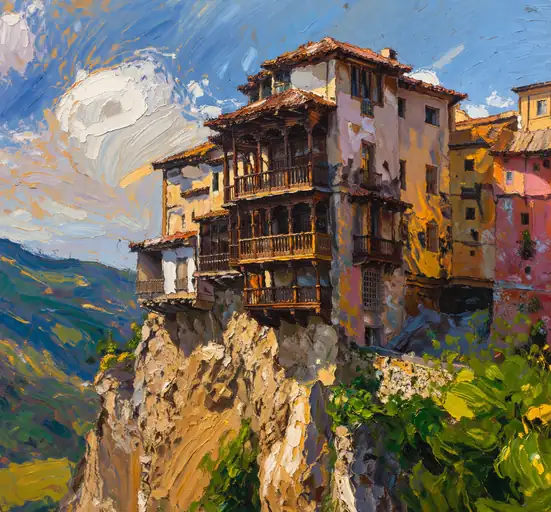 Edge of the Abyss
Similar Artworks
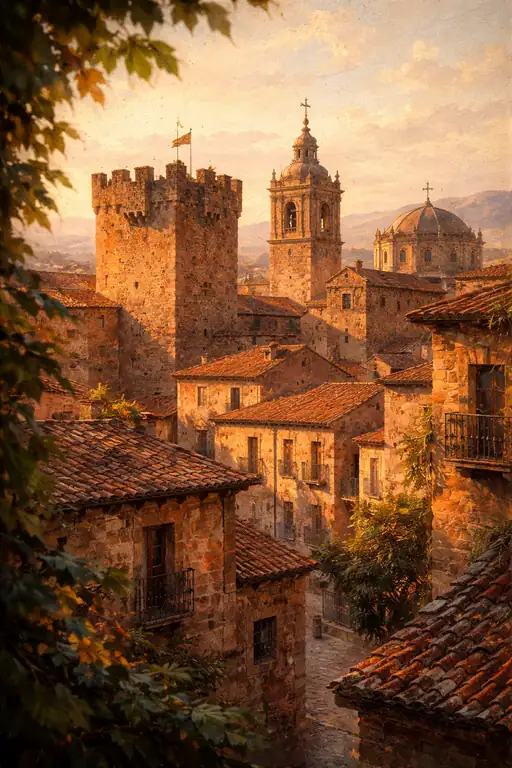 Tapestry of Time
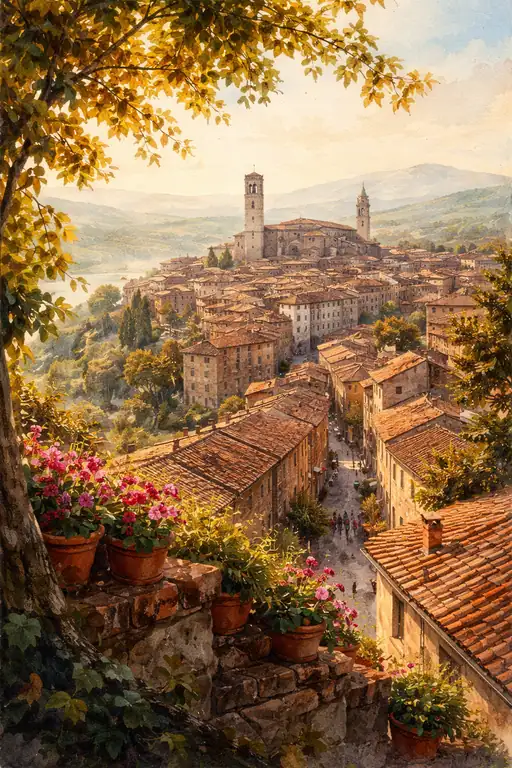 Tuscan Sunlit Terraces
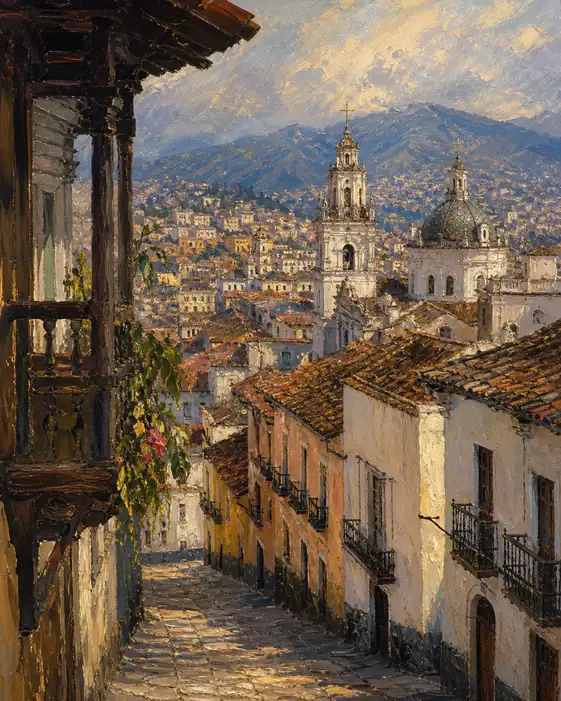 Terracotta Echoes of the High City
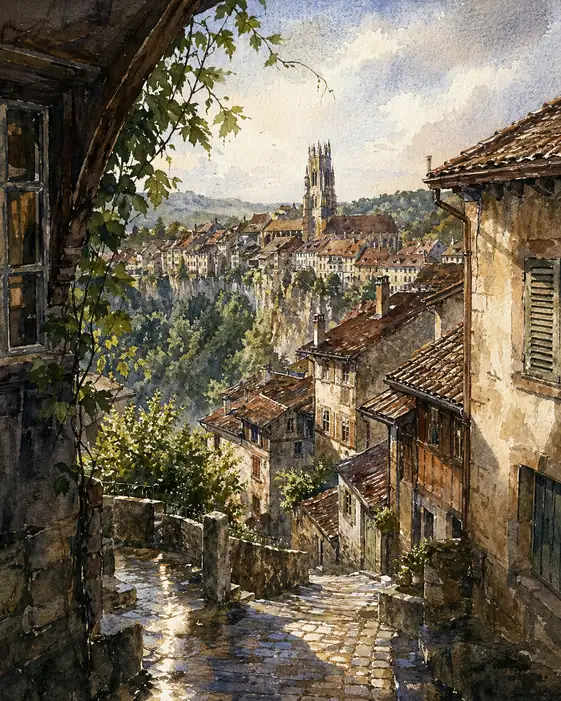 Sunlit Descent into the Verdant Valley
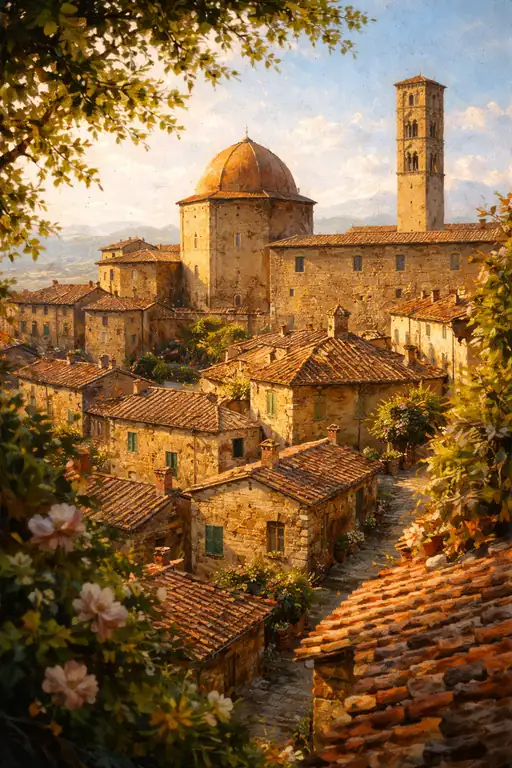 Sienna and Sunbeams
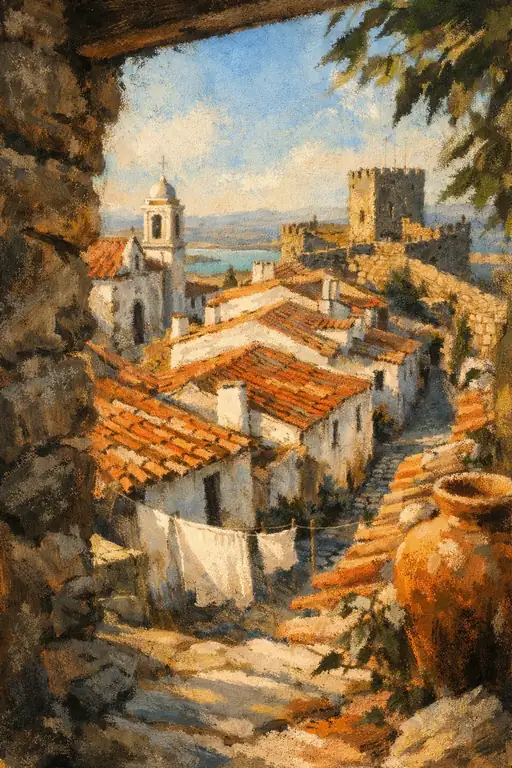 The Timeless Village
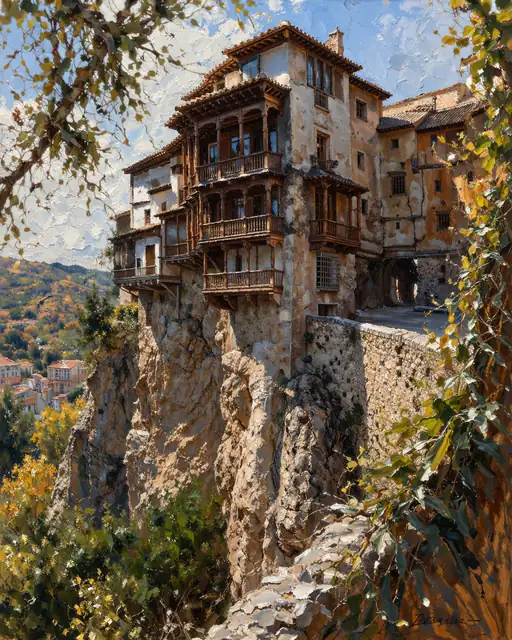 Precarious Beauty of the Hanging Houses
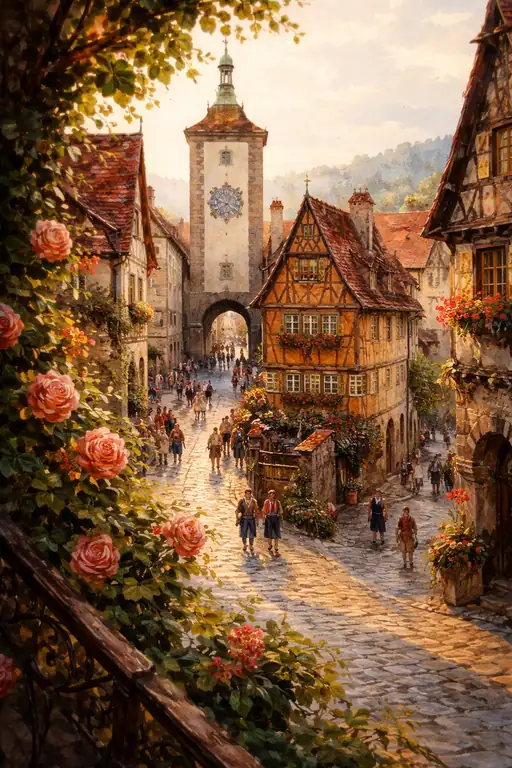 Golden Afternoon in the Medieval Square
 Village of Light Above the Calm Waters
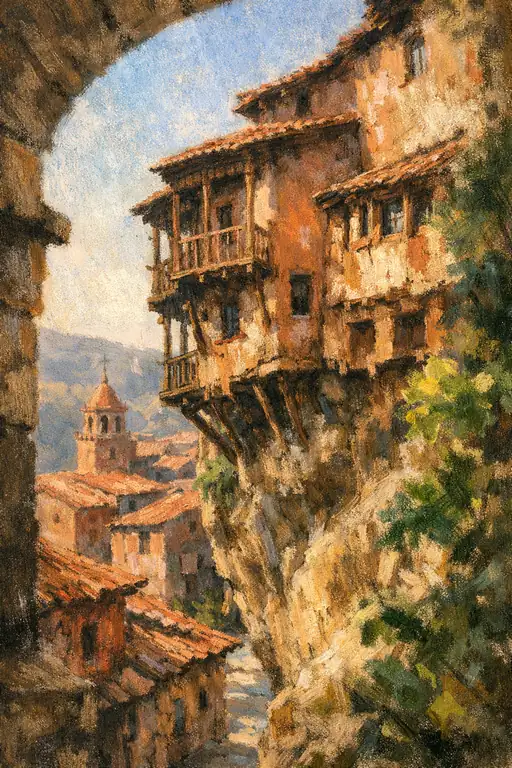 A Glimpse of Warmth Through the Stone Embrace