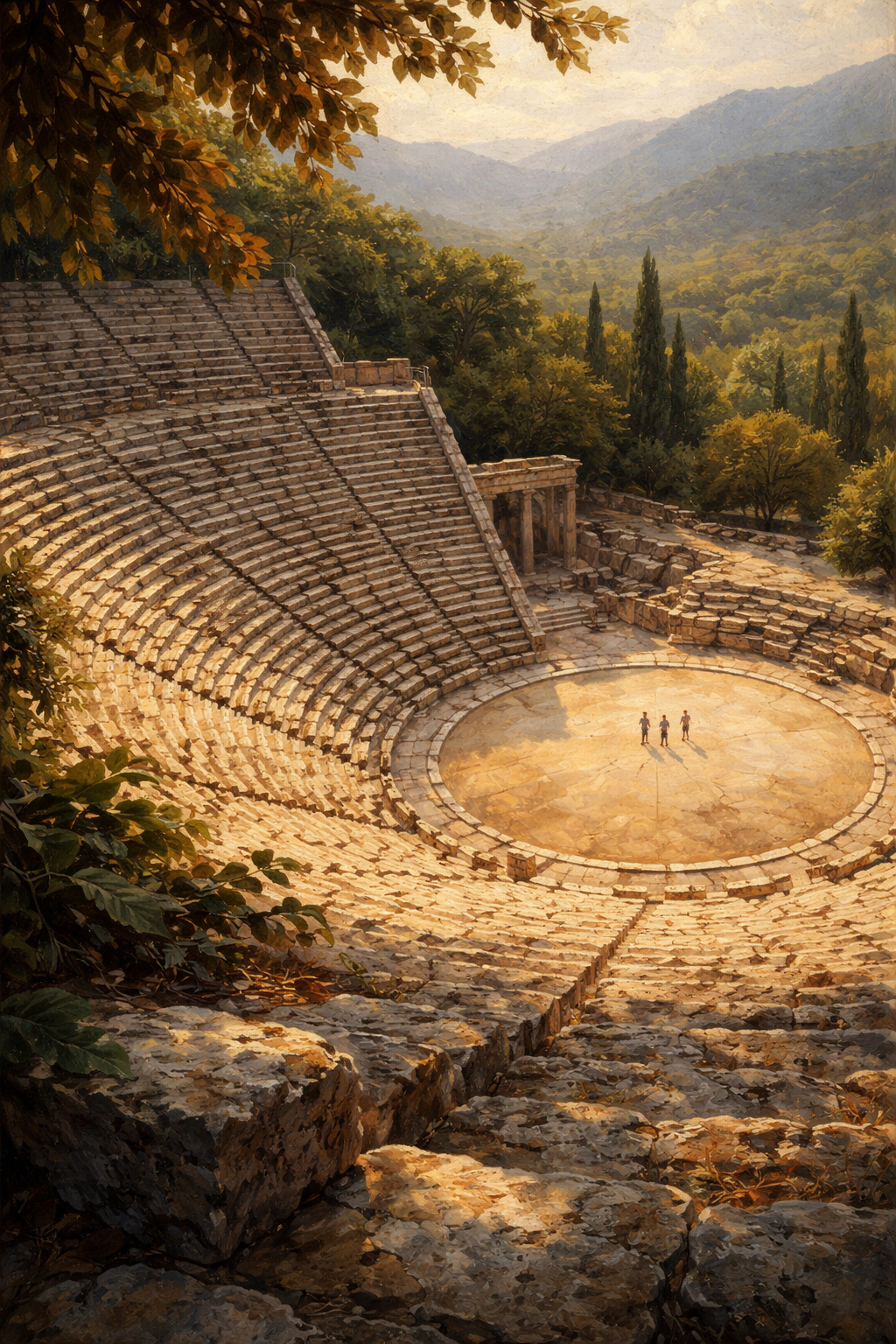
Echoes of the Past in Golden Light
Critique
1. Introduction This vertical landscape painting depicts a grand, ancient stone theater situated within a lush, mountainous environment. The composition utilizes a high-angle perspective, looking down over the semicircular rows of stone seating toward a central circular stage. The entire scene is bathed in the warm, golden light of the late afternoon, which emphasizes the textures of the weathered stone and the surrounding natural greenery. 2. Description In the center of the work, the vast stone theater expands across the frame, its tiered benches carved from the hillside. Three tiny figures are positioned in the middle of the circular orchestra, providing a sense of immense scale to the architecture. Surrounding the theater are dense clusters of trees, including tall, slender cypresses, while a hazy mountain range recedes into the distance under a pale sky. The foreground is partially obscured by dark, out-of-focus foliage and rough stone blocks, adding a voyeuristic depth to the image. 3. Analysis The artist employs a palette restricted to earthy tones—warm ochres and beiges for the stone—contrasted against various shades of forest green and the soft blues of the distant peaks. The radial symmetry of the theater’s curved seating creates a strong sense of visual rhythm, leading the eye directly to the illuminated stage. Dramatic shadows cast by the setting sun cross the rows of benches, defining the structural geometry and enhancing the three-dimensional quality of the ruins. 4. Interpretation and Evaluation The painting effectively evokes a sense of historical grandeur and the quiet passage of time. By placing small human figures within the massive ancient structure, the work highlights the relationship between human achievement and the sprawling power of nature. The technical merit is evident in the careful rendering of light and texture, particularly the way the sun glints off the uneven surfaces of the stone. The composition is highly intentional, using the foreground elements to frame the historical site and emphasize its isolation and monumental scale. 5. Conclusion At first glance, the theater appears as a silent monument to a bygone era, striking the viewer with its architectural precision. Further reflection reveals a deeper narrative about the permanence of stone versus the fleeting presence of humanity. The work succeeds in combining descriptive accuracy with an evocative atmospheric quality. It stands as a masterful representation of classical heritage within a living landscape, maintaining a consistent level of quality in its execution and conceptual depth.
Same Subcategory
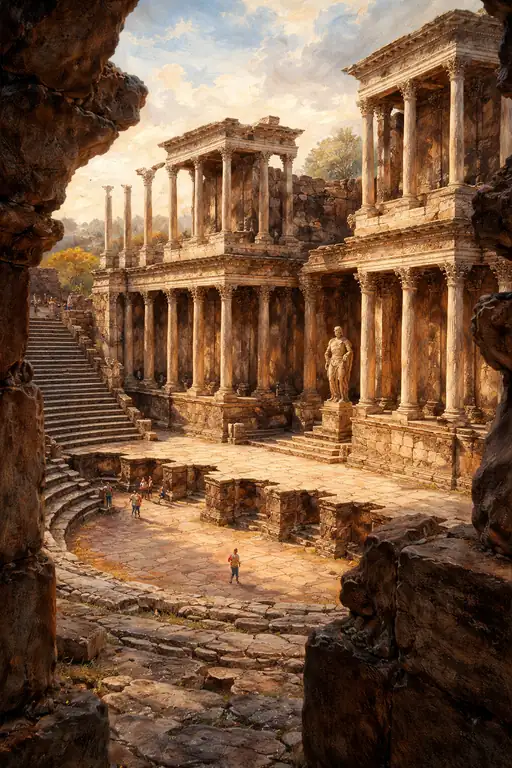 Echoes of Antiquity
Similar Artworks
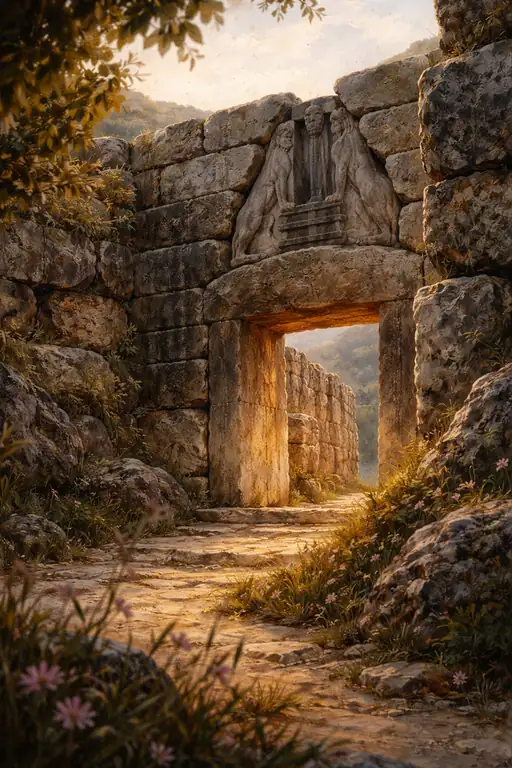 Lions Enduring the Test of Time
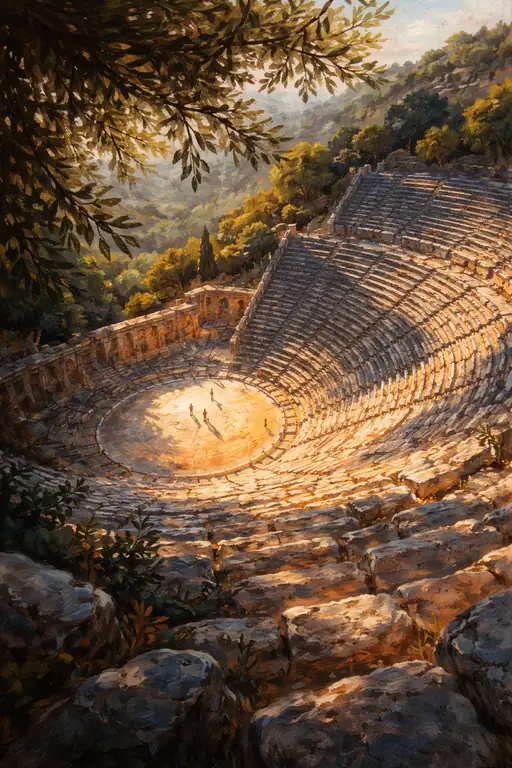 The Golden Ruin
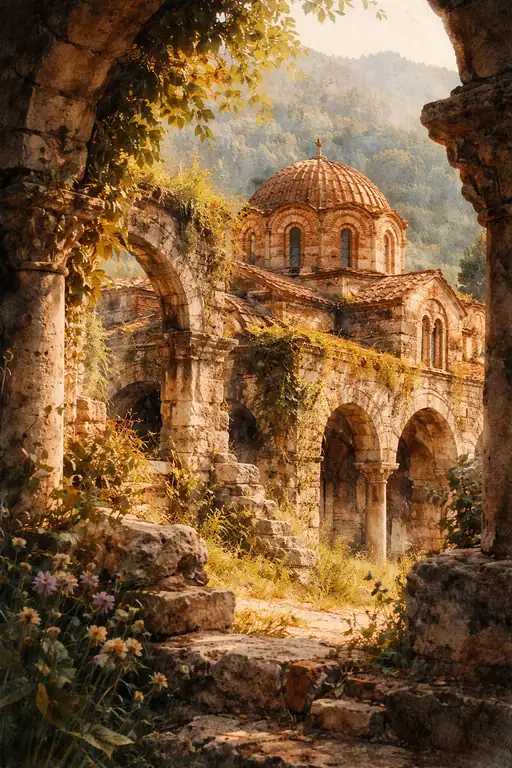 Sacred Silence in the Sunlit Ruins
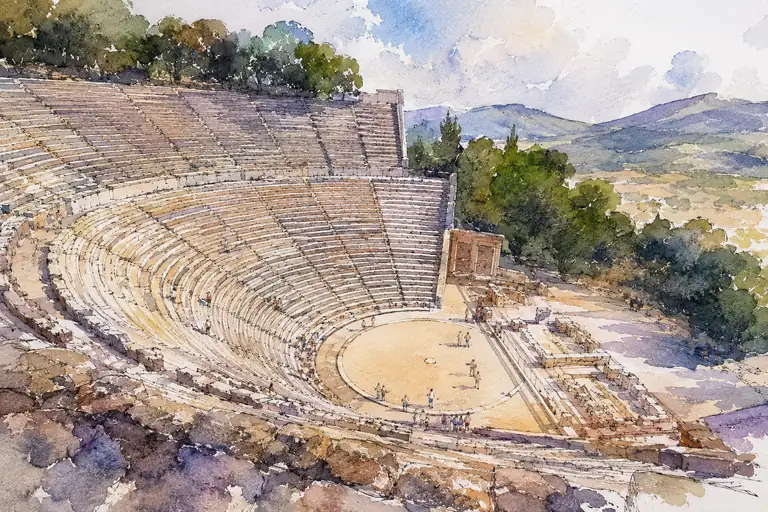 Whispers from the Ancient Tiers
 The Dwellings of Stone and Time
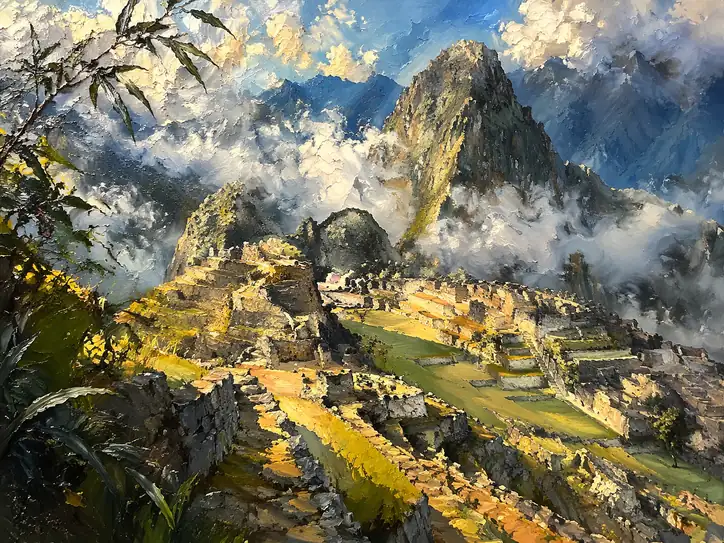 Echoes of the Ancients
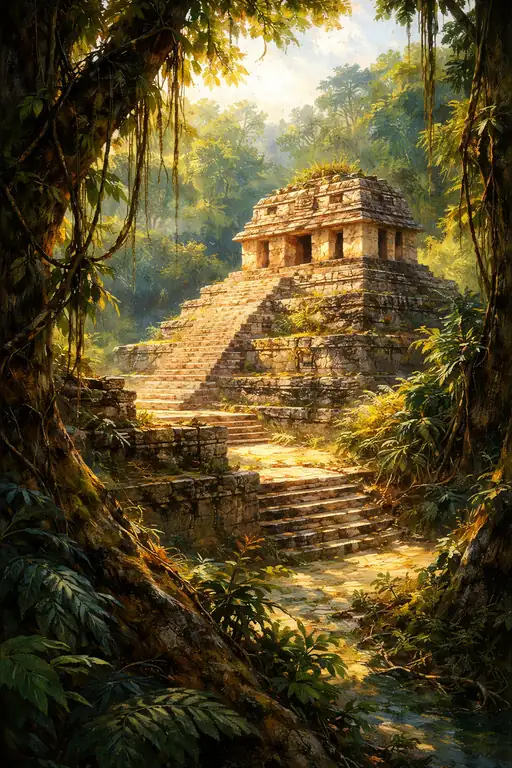 Sunlight Through the Canopy: The Temple's Awakening
 Where Antiquity Watches Over the Living
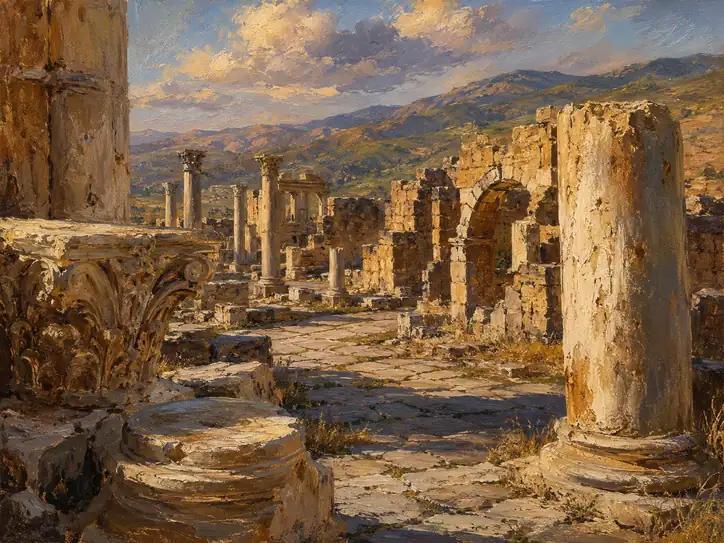 Where Glory Rests in Gold
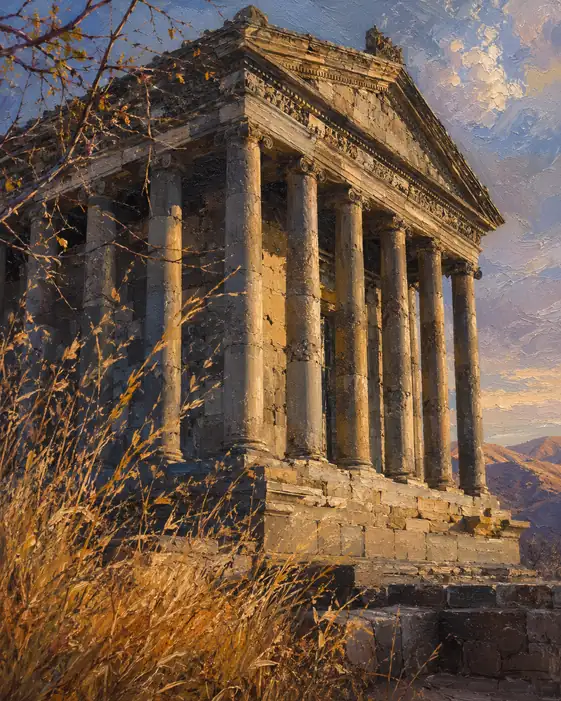 Symphony of Stone and Fading Light