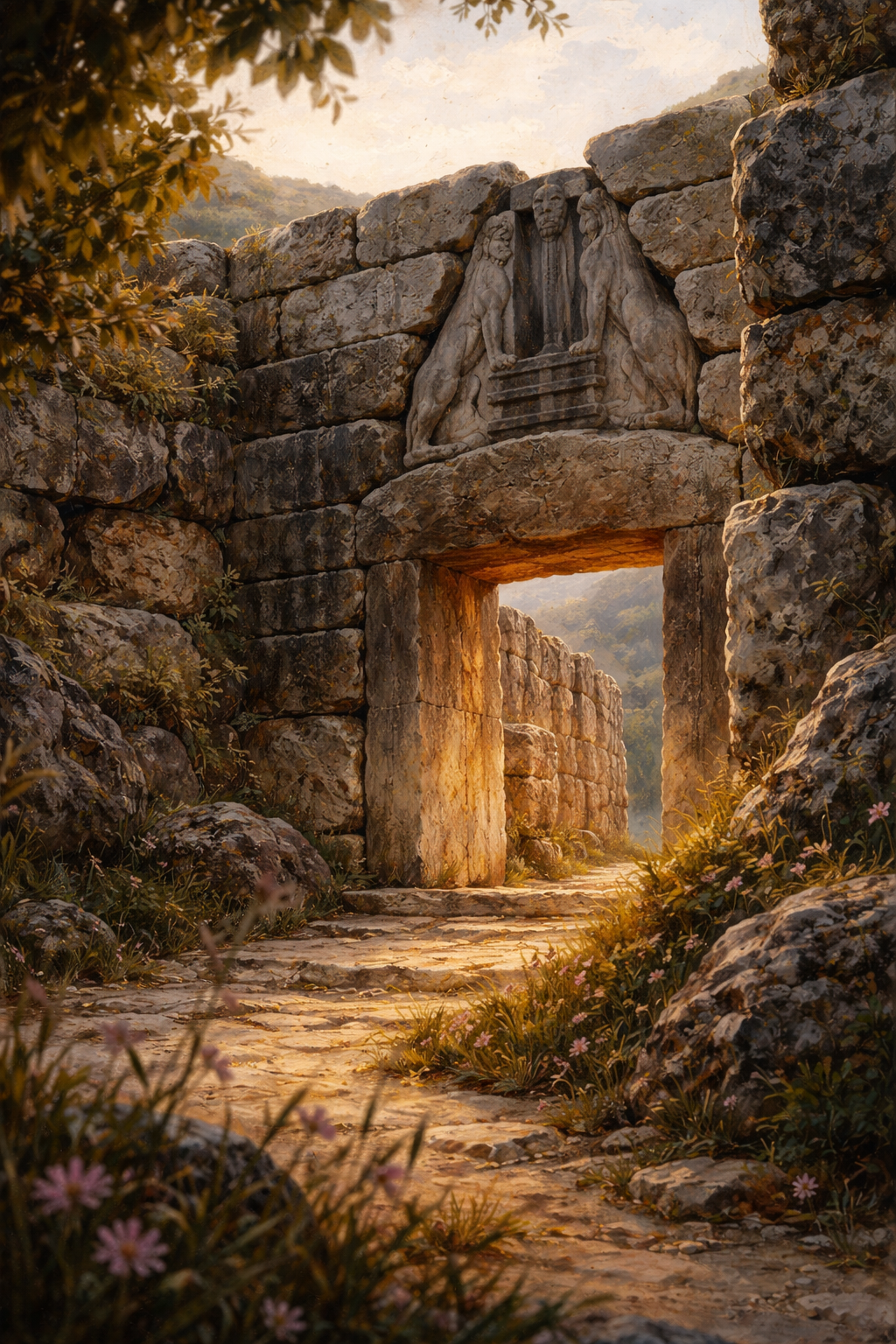
Lions Enduring the Test of Time
Critique
1. Introduction This vertical landscape painting captures the iconic Lion Gate of ancient Mycenae, rendered with a focus on atmospheric light and historical gravitas. The composition centers on the massive megalithic entrance, with its famous heraldic relief of two lions crowning the stone lintel. The scene is presented from a low perspective along a stone-paved approach, creating a powerful sense of arrival and reverence for the ancient site. 2. Description The gate itself is constructed from large, irregularly shaped stone blocks that exhibit a weathered, rough texture. Above the rectangular opening, the triangular relief panel depicts two feline figures flanking a central column, their forms still visible despite centuries of erosion. A sun-drenched path leads toward the gate, lined with small, delicate pink wildflowers that contrast with the heavy permanence of the rocks. Through the gateway, a bright, hazy landscape suggests an open valley beyond the fortress walls. 3. Analysis The artist uses a predominantly warm color palette, relying on golden ochres, soft greys, and muted greens to convey the age of the structure. The light source, positioned behind the gate, creates a brilliant focal point within the opening, casting long, soft shadows toward the viewer. This backlighting highlights the jagged edges of the stonework and gives the atmosphere a dusty, luminous quality. The contrast between the rigid geometry of the architecture and the organic textures of the surrounding flora enhances the visual interest. 4. Interpretation and Evaluation By focusing on the play of light through the gate, the work transforms a archaeological subject into a poetic meditation on history and endurance. The high level of descriptive detail in the stone surfaces demonstrates significant technical skill, while the inclusion of the wildflowers adds a layer of vulnerability and natural cycles to the scene. The composition is exceptionally strong, drawing the viewer into the frame and inviting them to step into the past. It is a well-balanced piece that successfully evaluates the monumental scale of Mycenaean architecture. 5. Conclusion Initially, the painting strikes the viewer with the imposing presence of the Lions, serving as a direct encounter with ancient history. Further engagement reveals a delicate interplay between the hardness of the ruins and the transient beauty of the light and flowers. This work effectively bridges the gap between historical documentation and artistic expression. It remains a consistent and evocative addition to the series, showcasing a mastery of both structural rendering and atmospheric depth.
Same Subcategory
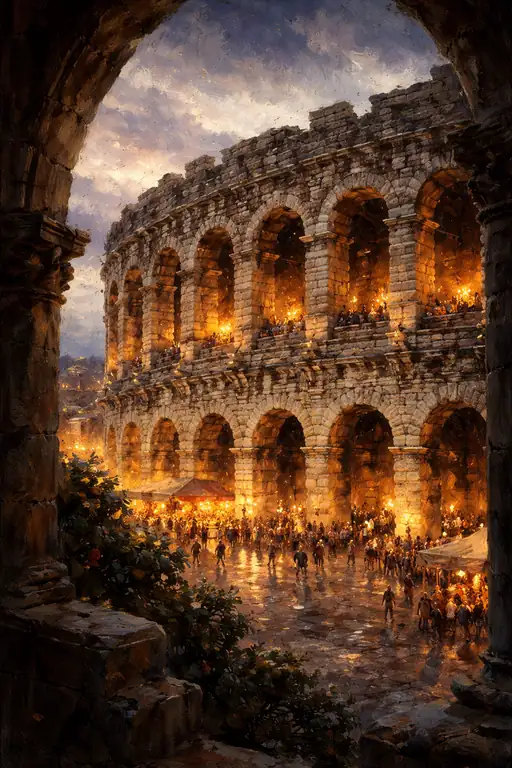 Festive Night at the Colosseum
Similar Artworks
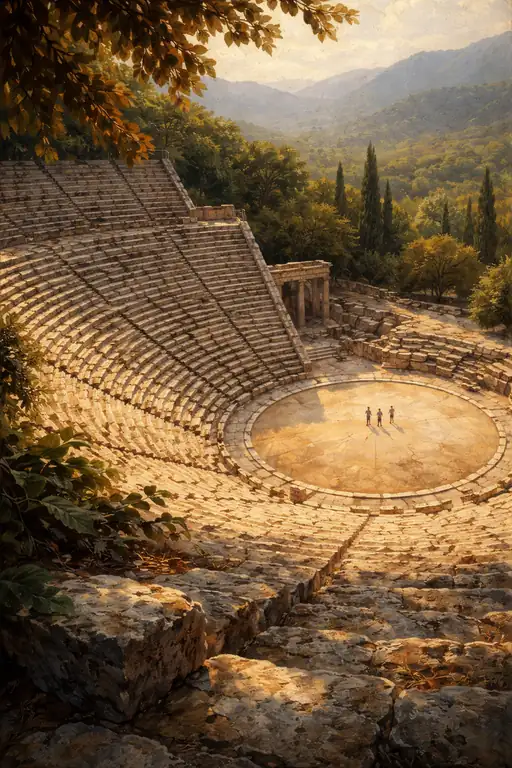 Echoes of the Past in Golden Light
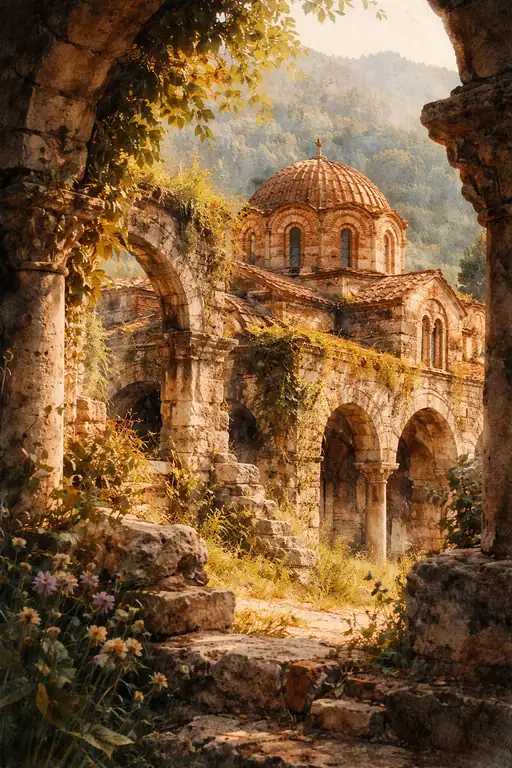 Sacred Silence in the Sunlit Ruins
 Guardian of the Sunken Empire
 Where Time Slumbers in Stone
 The Silent Roar of Hattusa
 The Eternal Watcher of the Emerald Sea
 Where the Sun Worships the Stone
 The Silent Dial of Time
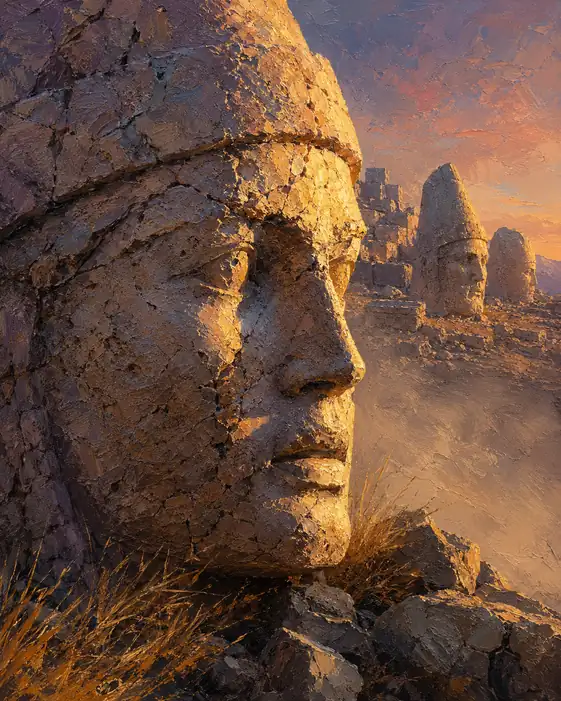 Gaze into the Golden Horizon
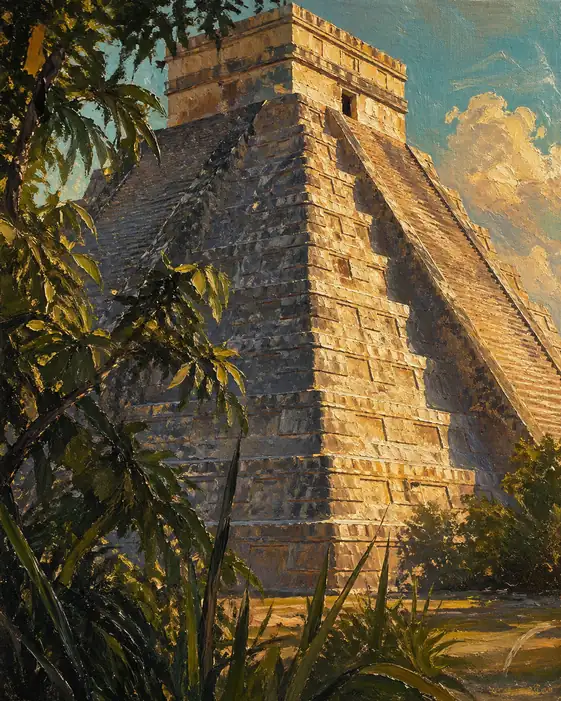 Echoes of the Golden Empire