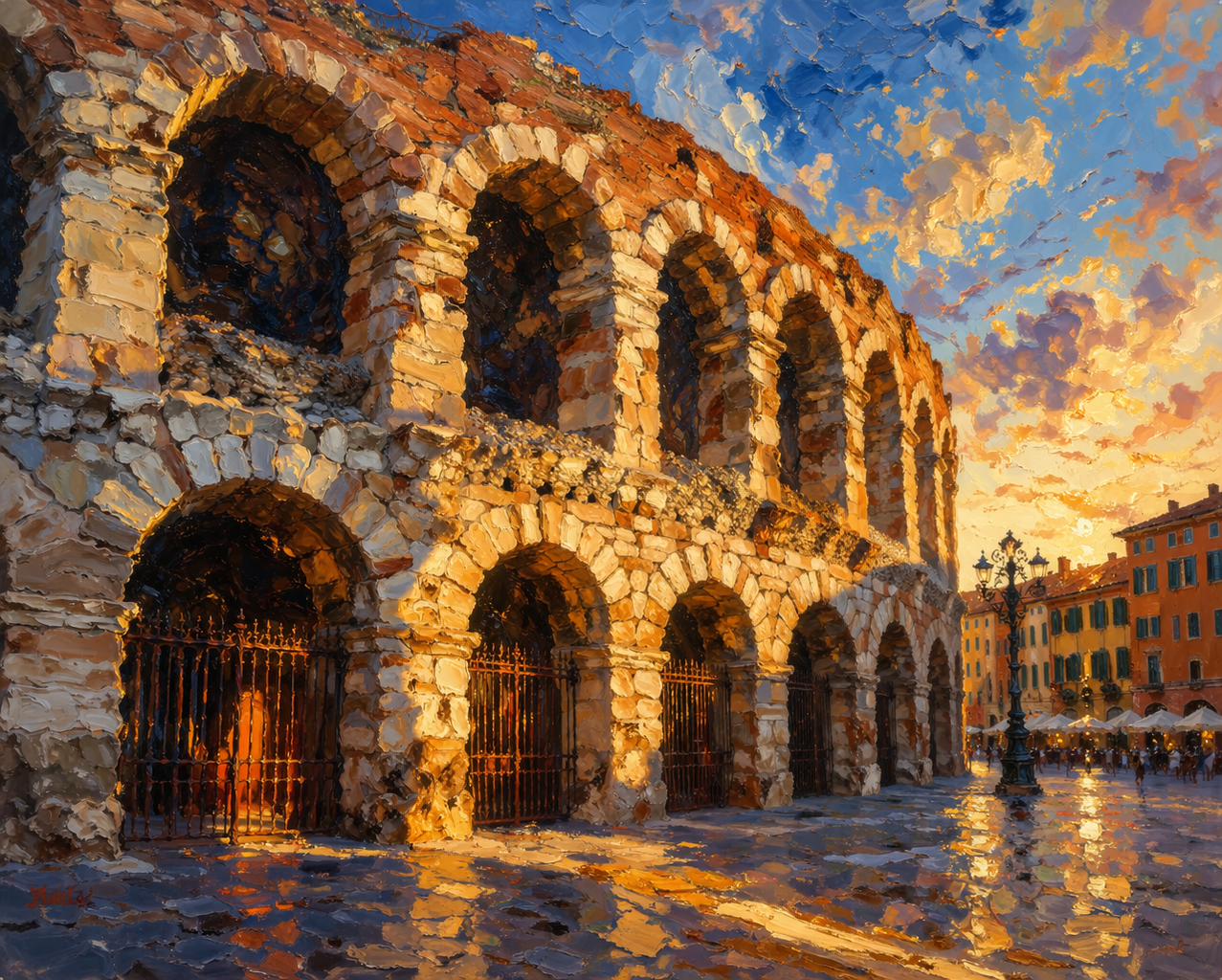
Verona's Arena in Flames
Critique
1. Introduction This painting presents an exceptionally vibrant and heavily textured view of the Roman Arena in Verona, captured during the peak of a radiant sunset. Executed in a bold, impasto style, the composition masterfully emphasizes the rugged physical presence and monumental scale of the ancient stone structure. Bathed in the intense, golden light of the late afternoon, the scene radiates a sense of historical resilience and the enduring harmony between classical architecture and the modern urban environment. 2. Description The foreground is dominated by a low-angle perspective of the arena's massive stone arches, their lower openings secured by detailed iron gates. The ground is rendered as a complex mosaic of heavy, expressive paint strokes representing sun-drenched, perhaps rain-slicked pavement. In the midground, the weathered, pinkish-orange stone facade glows with vibrant light, while to the right, a classical black lamp post and a row of colorful buildings bordering the square are visible. The background is a dramatic sky filled with thick, swirling clouds in shades of deep blue and bright orange. 3. Analysis The artist employs a highly sculptural technique, using thick dabs and swipes of a palette knife or brush to create a diverse range of textures that suggest the rough, weathered surfaces of the ancient masonry. The color palette is characterized by intense, saturated primaries, where the brilliant oranges and yellows of the stone facade contrast powerfully with the deep, cool blues of the sky. The composition utilizes the strong rhythmic repetition of the arches to create a sense of balanced, three-dimensional volume and monumental depth. 4. Interpretation and Evaluation This work can be interpreted as a celebration of the physical and emotional weight of cultural heritage. The arena, standing firmly as a silent witness to millennia of history, appears as a vibrant and living part of the city's current life. Technical proficiency is evident in the confident handling of light and the masterful use of texture, specifically in the way the sun appears to hit the stone with physical weight, demonstrating a sophisticated mastery of architectural form and atmospheric color harmony. 5. Conclusion In summary, the painting successfully captures the radiant and powerful spirit of a historic landmark with remarkable emotional strength. The artist has achieved a perfect balance between the rugged, tangible details of the foreground masonry and the monumental, simplified forms of the amphitheater. The initial impression of a sun-soaked historical sanctuary is reinforced by the expressive use of color and dramatic lighting, resulting in a composition that feels both expansive and intimately significant.
Same Subcategory
Similar Artworks
 Echoes of Empire at Sunset
 Festive Night at the Colosseum
 A Glimpse Through Time's Window
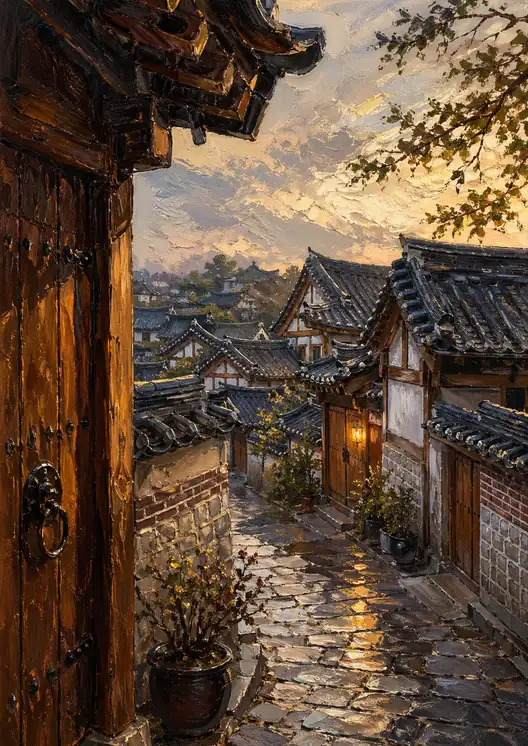 Nostalgic Glow of the Old Village
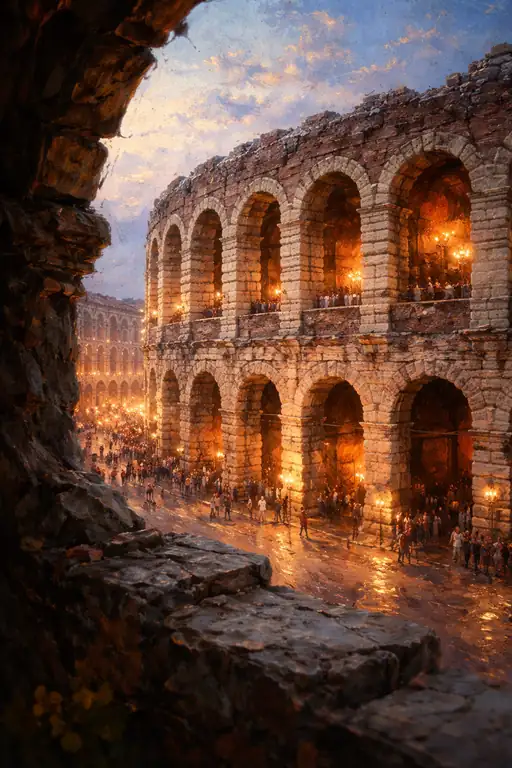 Gathering Under the Twilight Arches
 Solitary Descent into the Glowing Mist
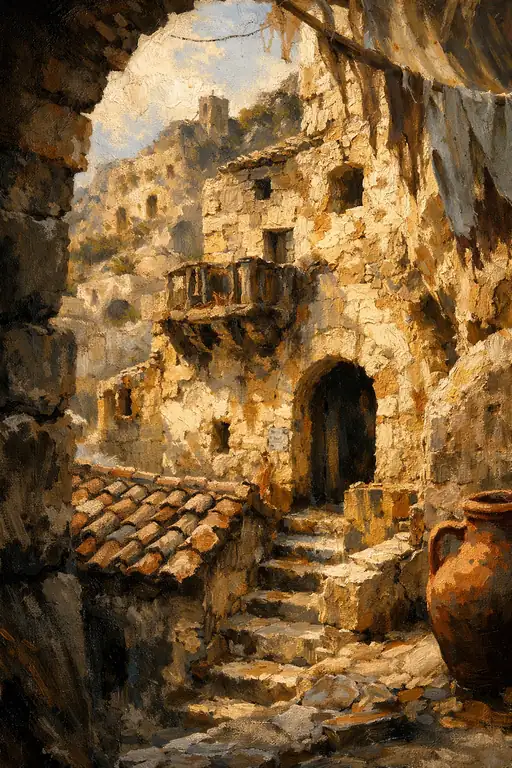 Silent Stones of Matera: A Deep Longing Carved in Time
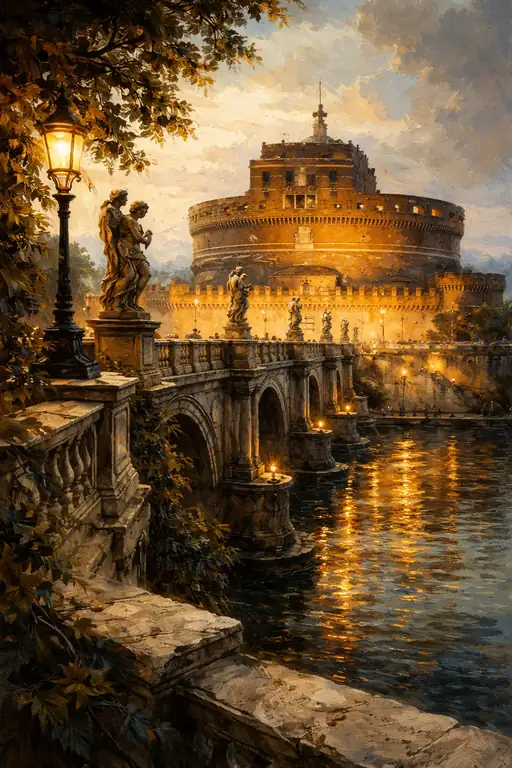 Golden Vigil of the Sant'Angelo
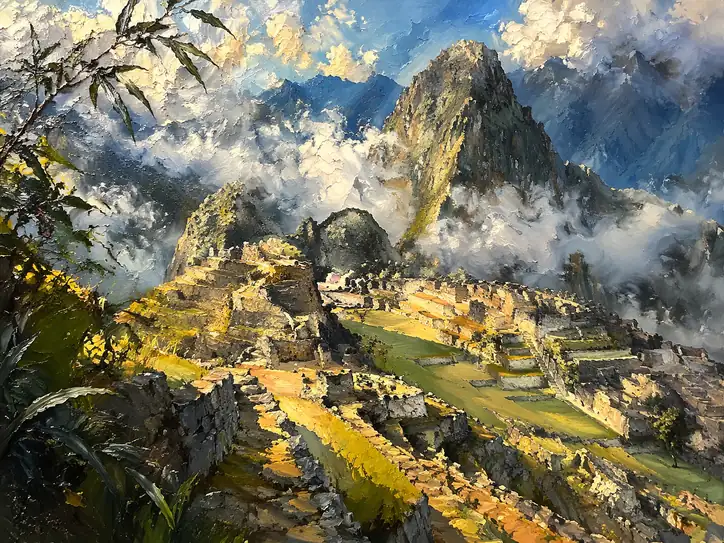 Echoes of the Ancients
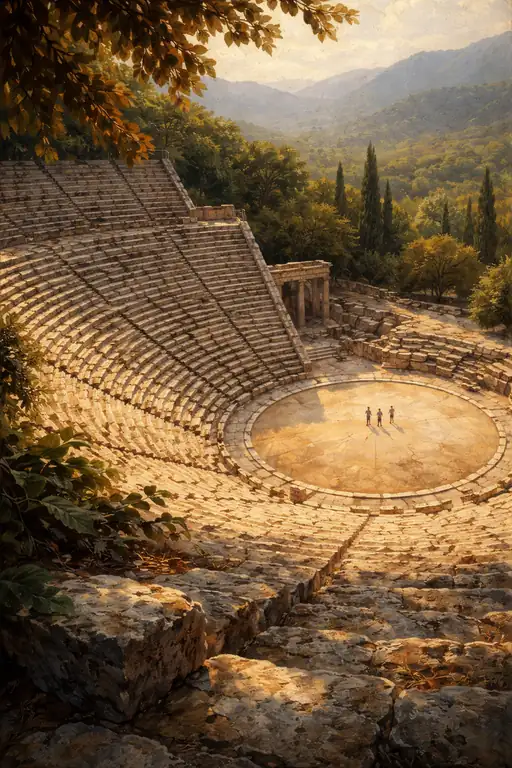 Echoes of the Past in Golden Light