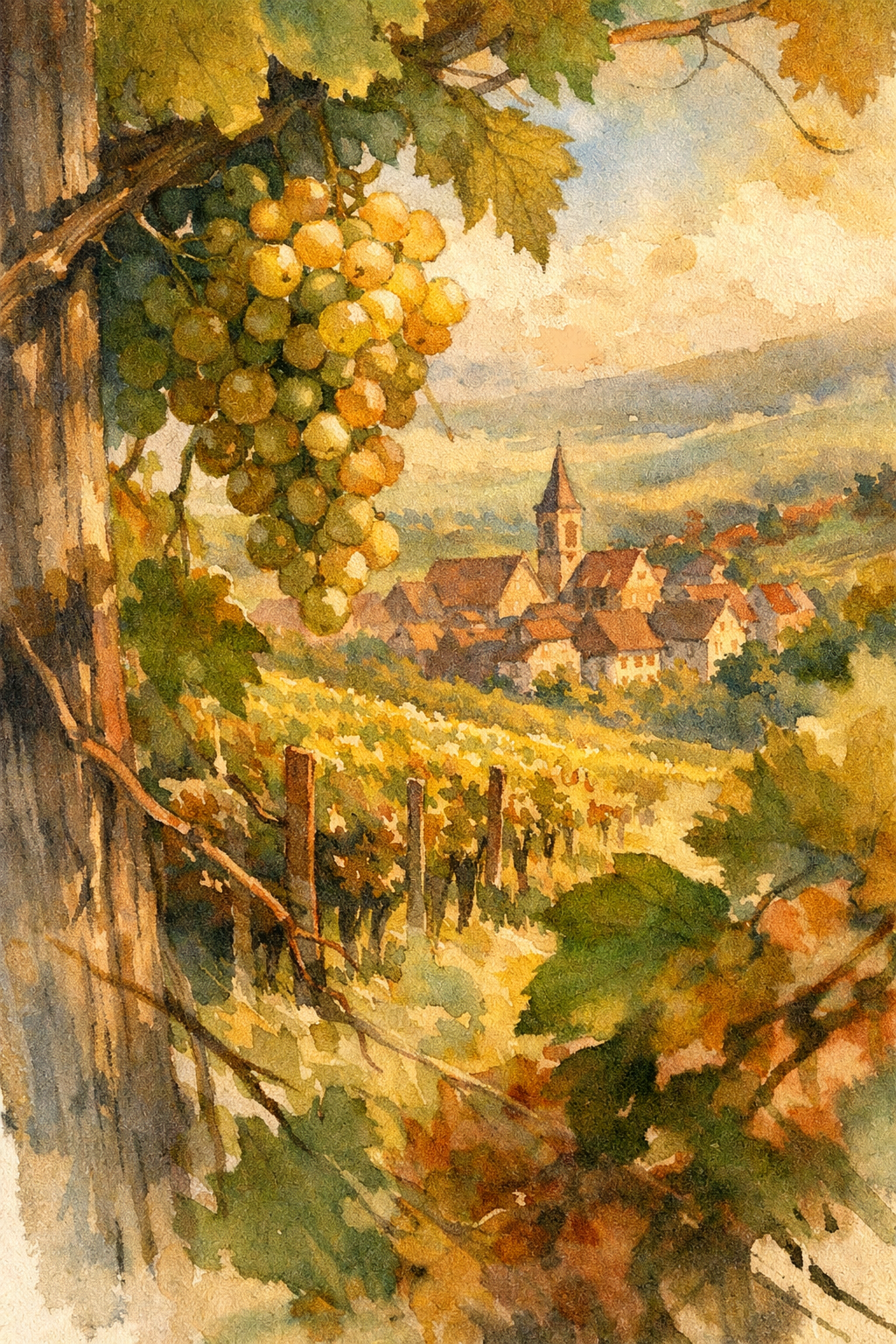
Tears of the Autumn Sun
Critique
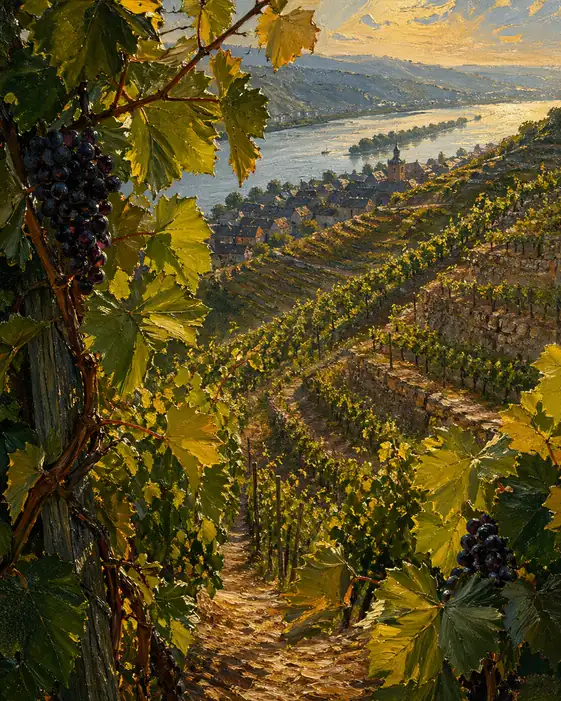
1. Introduction This painting presents an exceptionally radiant and luminous watercolor view of a European vineyard, likely inspired by the historic wine regions of the Rhine Valley or Alsace. From a focused, close-up perspective of the harvest, the composition masterfully emphasizes the tactile beauty of the grapes and their relationship with the surrounding village landscape. Bathed in the warm, hazy light of an autumn afternoon, the scene radiates a sense of rural harmony and the enduring cultural significance of viticulture. 2. Description The foreground is dominated by a thick, textured wooden vine support on the left, from which hangs a large, detailed bunch of ripening yellow and golden grapes. Lush green and yellowing leaves frame the top and bottom of the view, creating a natural window into the landscape. In the midground, the landscape opens to reveal terraced rows of a sun-drenched vineyard on a hillside, leading the eye toward a quaint village characterized by clustered stone houses and a church with a slender, dark spire. Hazy blue-green hills recede into the distance under a pale, sun-lit sky. 3. Analysis The artist employs a sophisticated approach to atmospheric watercolor, using a color palette of warm ochres, vibrant golds, and soft earthy greens to effectively convey the ripeness of the season. The composition utilize the strong diagonal lines of the terraced vines and the verticality of the vine post to create a profound sense of scale and spatial depth. The fluid, blended brushwork is particularly effective in the rendering of the grapes, where the play of light suggests a convincing sense of translucency and physical volume. 4. Interpretation and Evaluation This work can be interpreted as a celebration of the "bounty of the harvest" and the peaceful integration of human agrarian life and the natural world. The decision to highlight the individual grapes against the broader landscape suggests a deep appreciation for the specific products of the land, inviting the viewer to see the village as part of a larger ecological and cultural system. Technical proficiency is evident in the rendering of the varied textures—specifically the rough, weathered wood of the vine supports and the delicate, shimmering grapes—demonstrating a high level of mastery in atmospheric mood. 5. Conclusion In summary, the painting successfully captures the breathtaking and serene spirit of a historic wine country with remarkable clarity and mood. The artist has achieved a perfect balance between the detailed botanical elements of the foreground and the grand, rhythmic landscape of the valley. The initial impression of a sun-soaked harvest sanctuary is reinforced by the consistent handling of light and perspective, resulting in a composition that feels both expansive and intimately significant.
Same Subcategory
 The Golden Mirrors of the Silent Hill
Similar Artworks
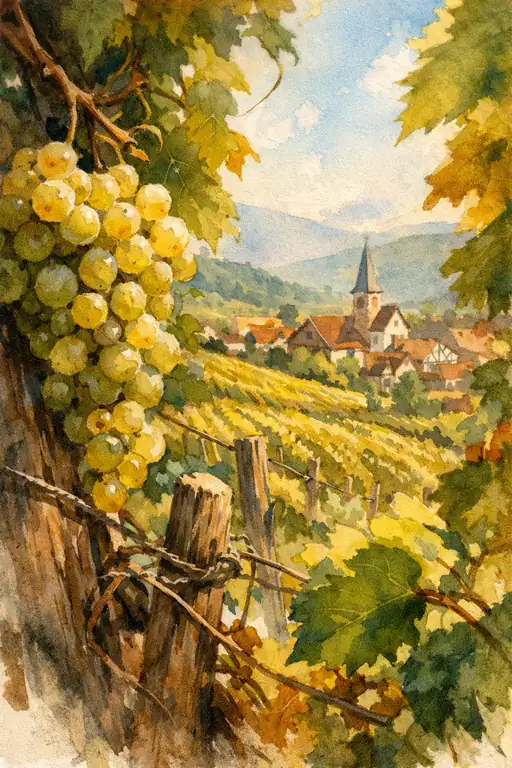 The Vine's Golden Promise
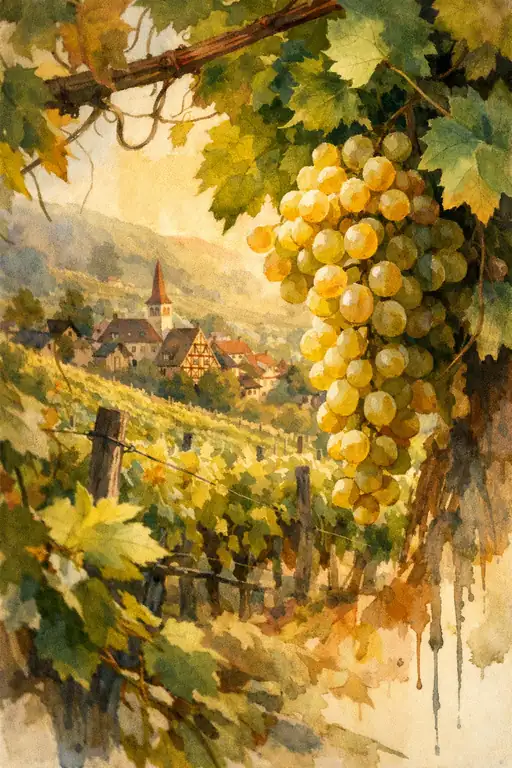 Vineyard Whispers in the Sun
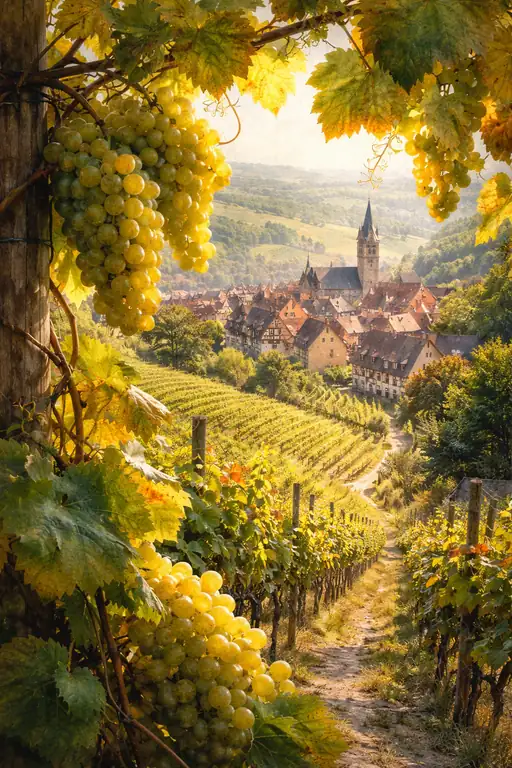 Golden Harvest Over the Valley
 Symphony of Earth and Light
 Golden Terraced Rice Fields in a Misty Mountain Range
 Golden Vineyard Village
 Golden Wheat in the Wind
 The Symphony of Sunlit Slopes
 Golden Terraces Touched by the Morning Mist
 Golden Terraces: The Rhythm of the Harvest