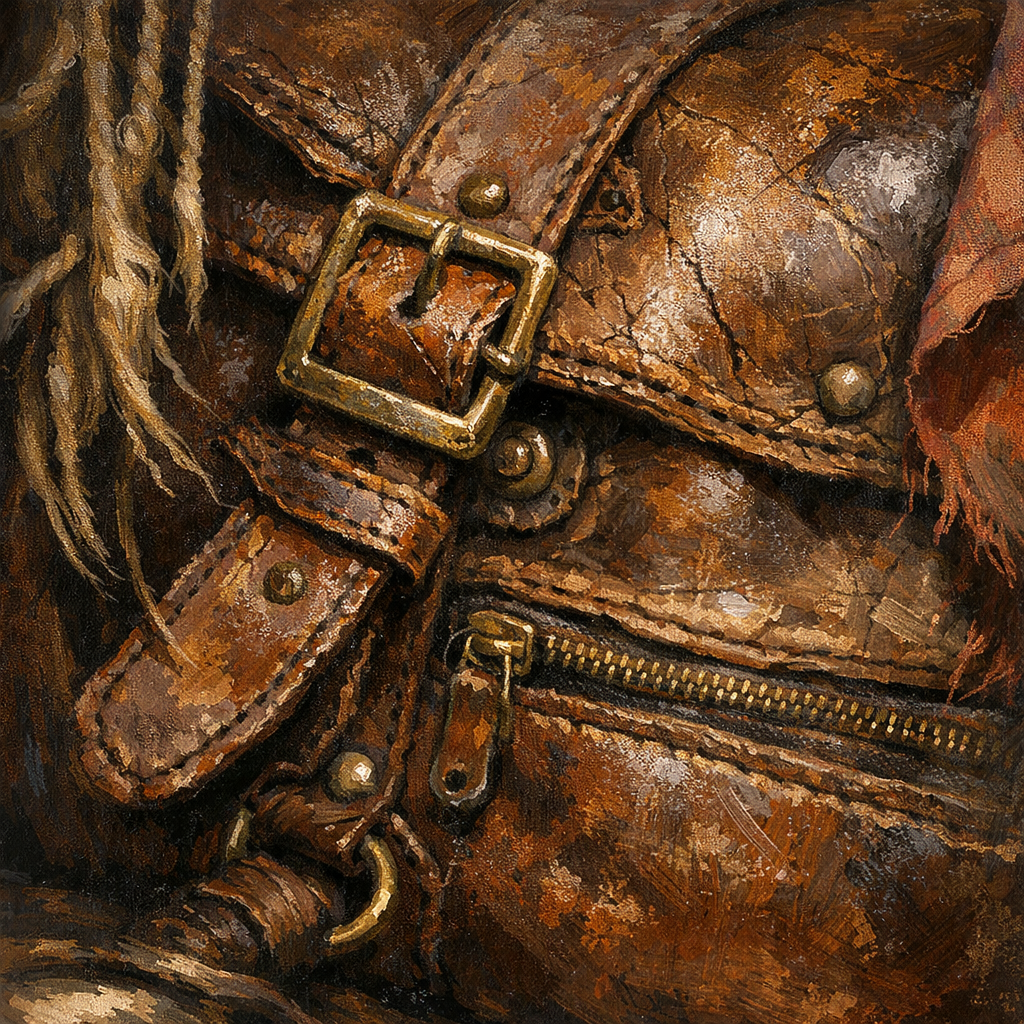
Scars of a Thousand Journeys
Critique
1. Introduction This painting presents an intimate and detailed study of a weathered leather satchel, emphasizing its rugged textures and functional beauty. The composition focuses on a central buckle and several intersecting straps, creating a visual narrative of durability and long-term use. By capturing the minute cracks and scuffs on the leather’s surface, the work invites the viewer to appreciate the character that objects acquire over time. The artist effectively uses a tactile approach to transform a everyday item into a subject of profound interest. 2. Description The primary subject consists of various components of a brown leather bag, including a large brass-colored buckle and a horizontal zipper. The leather surfaces are rendered with deep earthy tones, ranging from dark umber to warm sienna, and are marked by a complex network of creases and distress marks. To the left, a series of frayed threads hang loosely, while on the right, a piece of worn fabric with a ragged edge peeks into the frame. The metallic elements show a dull, reflective sheen, suggesting aged metal that has been handled frequently. 3. Analysis The artist utilizes a thick, expressive application of paint to replicate the varied textures of the subject. A strong contrast is established between the smooth, hard surfaces of the metal hardware and the soft, flexible, yet ravaged quality of the old leather. Light is handled with subtlety, picking out the raised edges of the scuffs and the teeth of the zipper, which adds to the three-dimensional presence of the bag. The composition is tightly cropped, which focuses all attention on the mechanical and organic details of the satchel’s construction. 4. Interpretation and Evaluation This work can be interpreted as an exploration of the themes of travel, endurance, and the passage of time. The visible wear on the bag suggests a history of movement and adventure, elevating the object from a simple container to a witness of past experiences. The technical execution is highly commendable, particularly in the artist’s ability to evoke a sense of touch through purely visual means. The painting successfully celebrates the beauty of imperfection, highlighting how a utilitarian object can develop a unique identity through the natural process of aging. 5. Conclusion Individual details of the satchel initially appear chaotic, but they eventually coalesce into a harmonious portrait of resilience and character. The masterful handling of texture and tonal range creates a deeply immersive and reflective experience for the viewer. Ultimately, the painting stands as a powerful testament to the aesthetic value found in the worn and the weathered, revealing the stories embedded within physical things.
Same Subcategory
 Whispers of the Pearlescent Tide
Similar Artworks
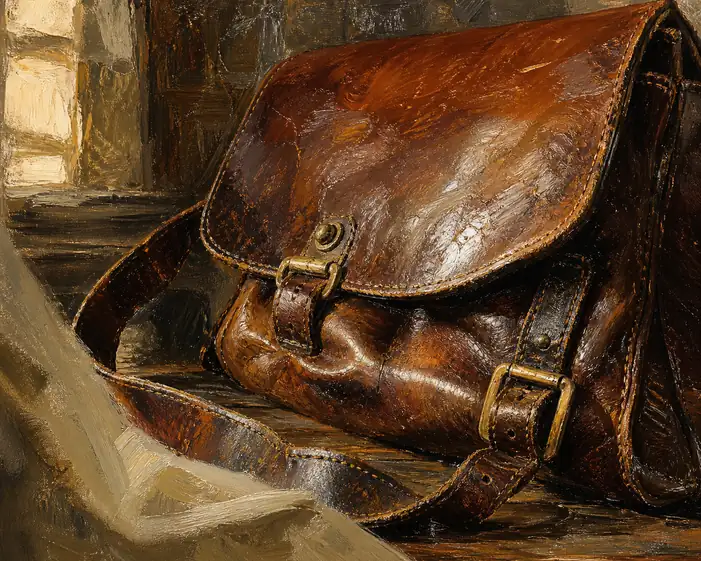 A Vessel of Time and Travel
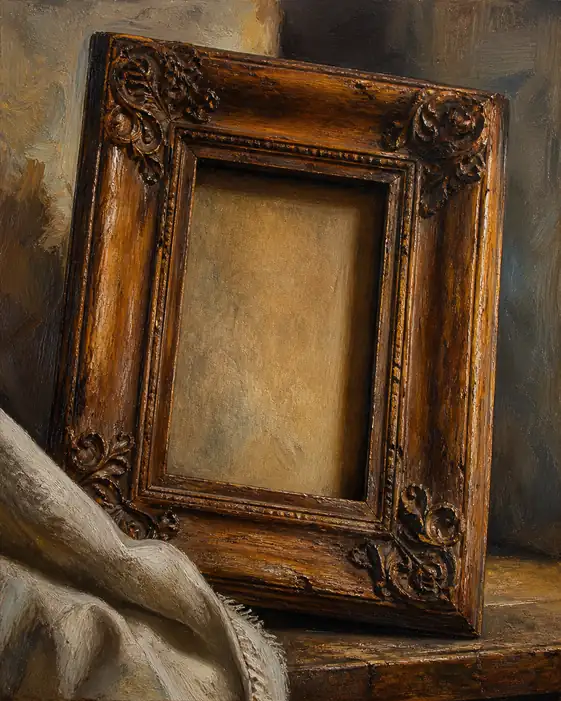 A Silence Waiting to be Painted
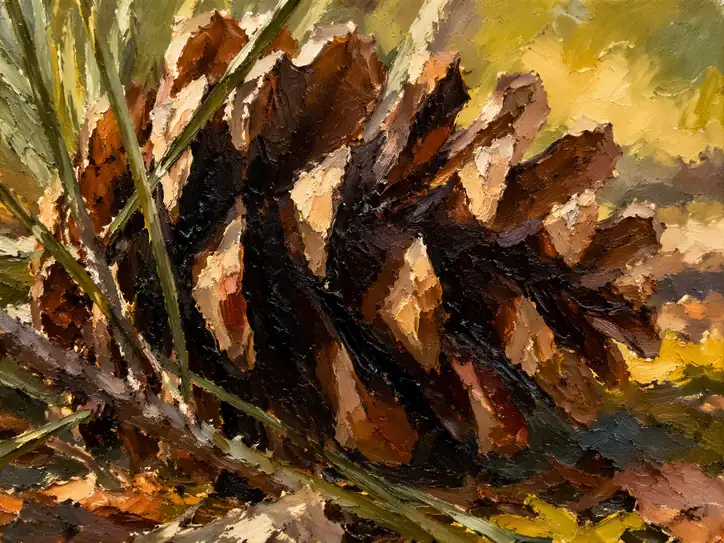 Symmetry in Pine and Amber
 Spark of the Old Soul
 The Golden Ratio of the Ancient Seas
 The Eternal Sparkle of a Promise
 A Refreshing Memory Frozen in Time
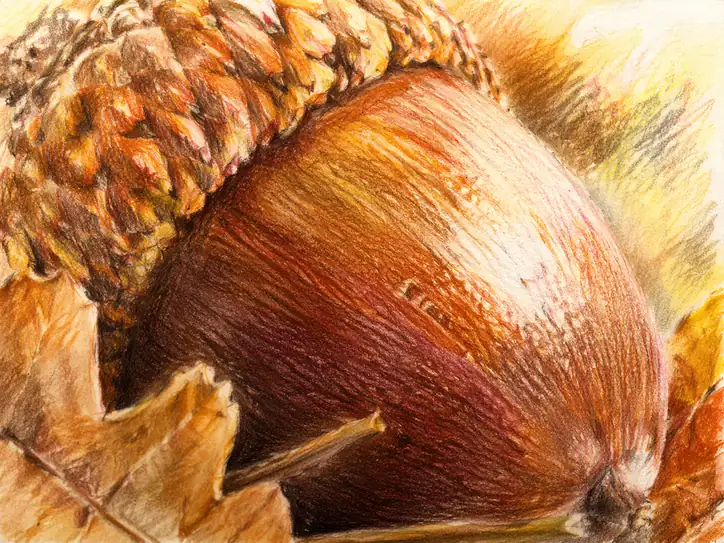 Fallen Acorn Among Amber Veins
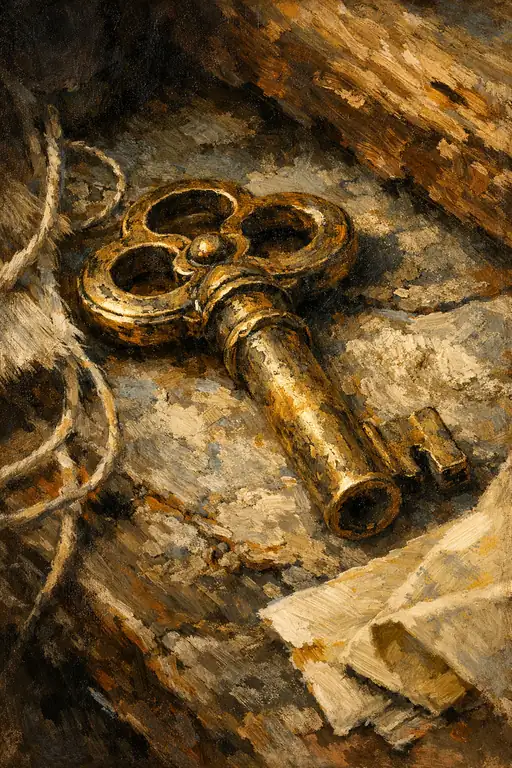 The Weight of Forgotten Doors
 Dazzling Symphony of Light and Reflections