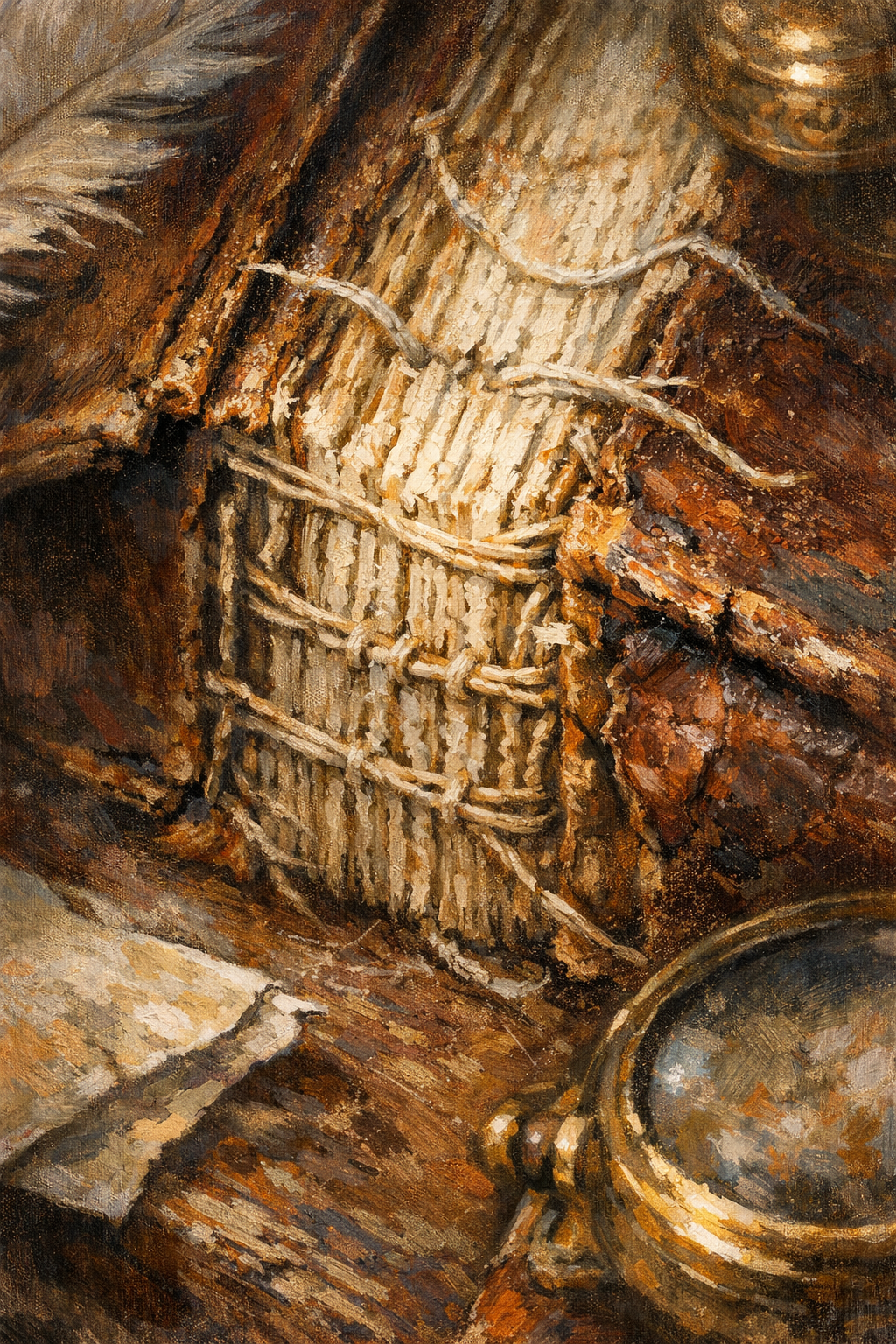
Whispers from the Frayed Threads of Time
Critique
1. Introduction This oil painting presents a powerful and tactile macro study of an ancient, weathered book and scholarly artifacts. The work focuses on the raw textures of deteriorating leather and exposed binding threads, capturing the physical essence of aged information. Through a rich application of paint and a focus on earthy, tonal contrasts, the artist creates an atmosphere of deep history and intellectual endurance. The composition is tight and dynamic, using the verticality of the book’s spine to ground a dense arrangement of traditional tools, immediately engaging the viewer in a close-up exploration of time's impact. 2. Description The primary subject is the spine and edge of a thick, heavily worn book, with its protective leather casing partially frayed to reveal the intricate network of internal stitching and layered paper. In the upper left, a gray-white quill pen enters the frame, while in the bottom right, a polished brass compass or magnifying glass reflects a hazy, amber light. The objects sit on a dark, scarred wooden surface that shows visible grain and scattered dust. Strong, lateral light from the left creates deep shadows within the book’s crevices and illuminates the rough, fiber-like textures of the binding and the metallic sheen of the brass. 3. Analysis The artist utilizes a heavy impasto technique, applying thick layers of paint to simulate the physical three-dimensionality of the frayed leather and the coarse threads. A key feature is the sophisticated control of texture, contrasting the sharp, rhythmic lines of the binding with the smoother, reflective surface of the brass instrument. The color palette is restricted to a range of scorched umbers, ochres, and siennas, which emphasizes the work’s aged and archaic mood. Diagonal lines formed by the quill and the book’s edge create a sense of movement and depth, leading the eye across the complex, weathered surfaces. 4. Interpretation and Evaluation This work can be interpreted as a meditation on the fragility and resilience of knowledge. The decaying book serves as a potent metaphor for the passage of time and the physical vulnerability of human memory, while the inclusion of the compass suggests the ongoing search for truth and direction. Technical execution is exceptional, particularly in the artist's ability to render the specific weight and decay of the various materials through expressive brushwork. The painting successfully evokes a sense of solemnity and profound respect for the past, inviting the viewer to contemplate the material history of thought. 5. Conclusion The initial impression of a rough and chaotic heap eventually gives way to an appreciation for the careful organization of light and fine material detail. The masterful rendering of textures and the warm, somber tonal balance create an immersive and reflective visual experience. Ultimately, the painting stands as a powerful testament to the beauty found in the weathered and the worn, revealing the poetic qualities of the physical artifacts that once held our collective wisdom.
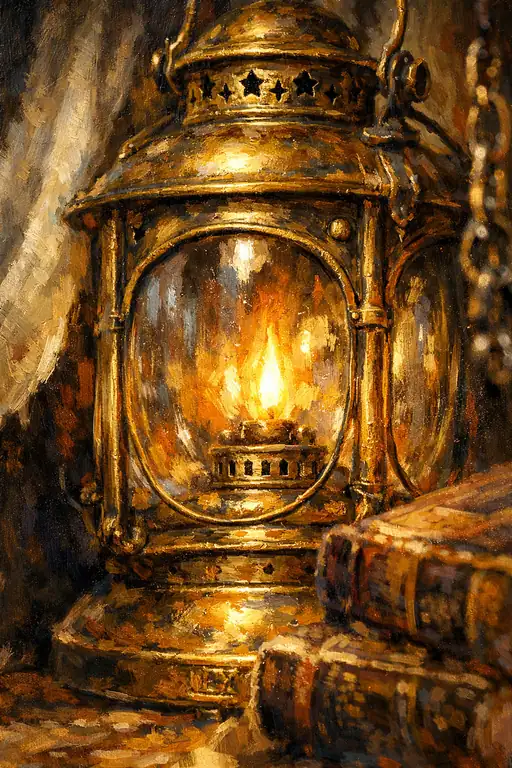 Guiding Light Through the Pages of Time
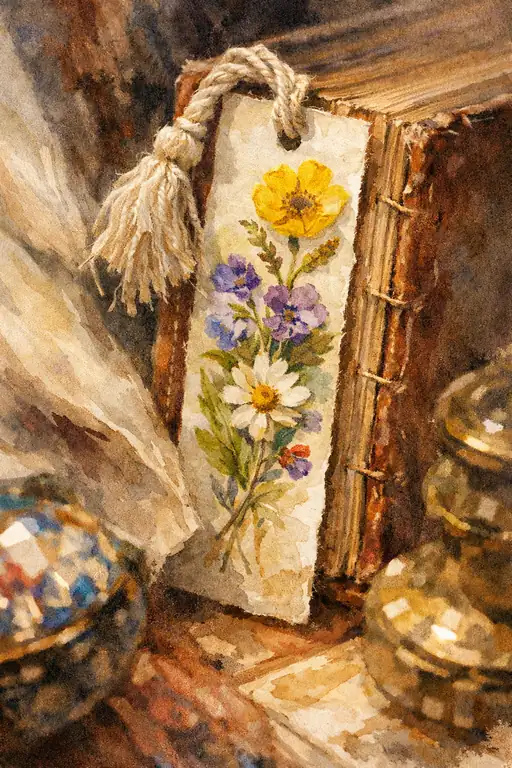 Whispers of the Wildflowers Within Worn Pages
 The Reverent Silence of Written History
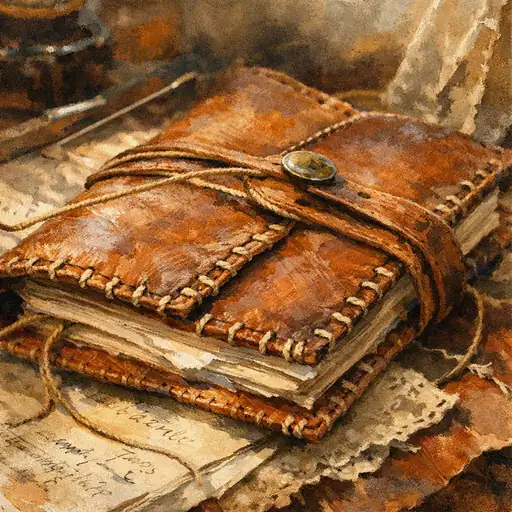 Tales Bound in Worn Leather
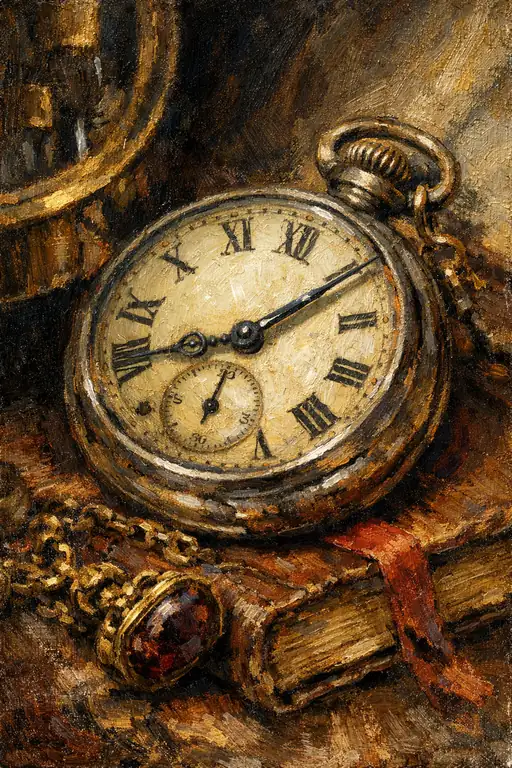 Whispers of the Past: The Silent Watch
 Monuments of Thought
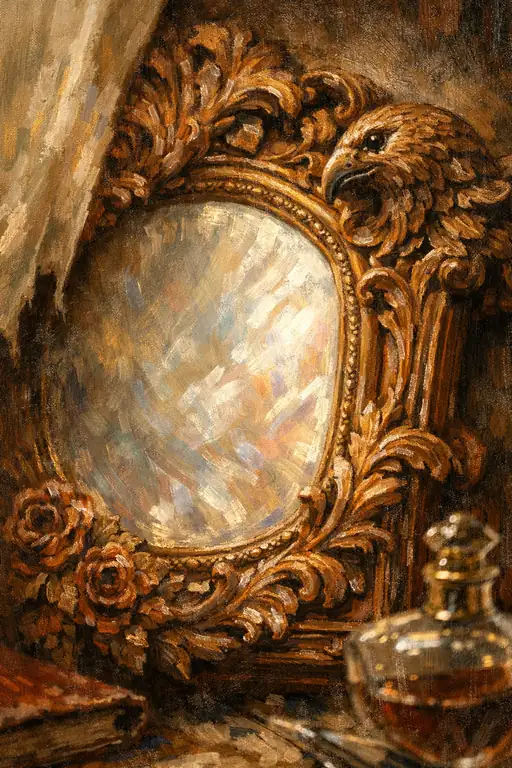 Gilded Memories in the Mirror
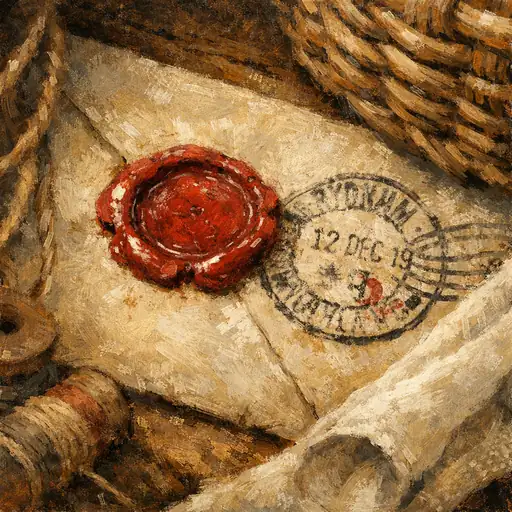 The Wax Seal
 Secrets the Key Protects
 Alchemy of Light