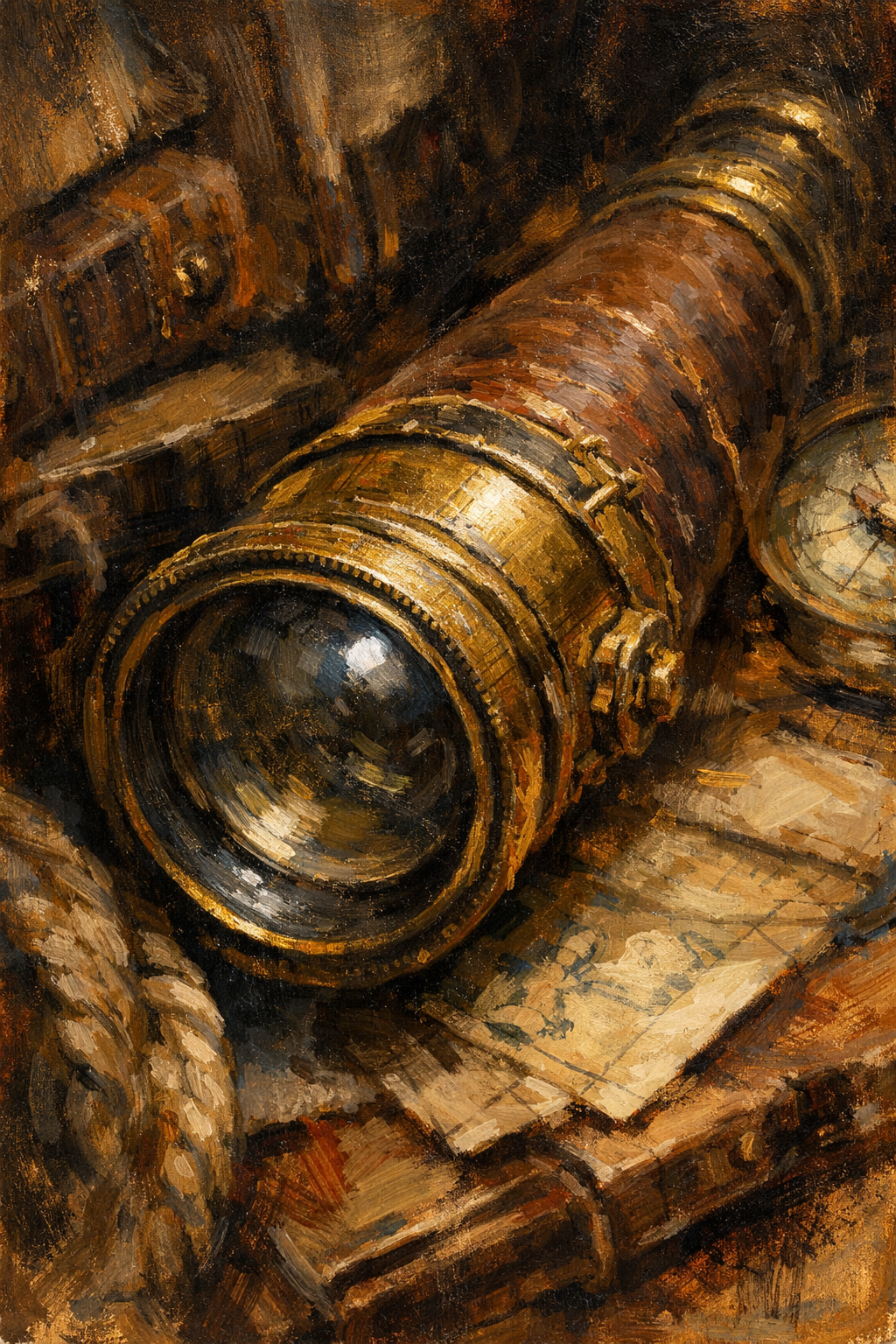
Echoes of the Uncharted Sea
Critique
1. Introduction This oil painting presents a powerful and tactile macro study of an antique brass telescope, surrounded by the artifacts of an explorer’s study. The work focuses on the weathered textures of the burnished metal and the coarse materials of maps and rope, capturing the physical essence of historical maritime adventure. Through a focus on earthy, amber-toned light, the artist creates an atmosphere of deep discovery and intellectual endurance. The composition is tight and dynamic, using the cylindrical form of the telescope to ground a dense arrangement of traditional tools, immediately engaging the viewer in a close-up exploration of time's impact. 2. Description The primary subject is the front end of a large, heavily worn brass telescope, with its ocular lens reflecting a hazy light. It sits atop a collection of objects, including a fragmented map on weathered parchment, a coiled hemp rope in the bottom left, and a compass visible in the upper right. The items rest on a dark, scarred wooden surface or a leather-bound case that shows visible signs of age. Strong, lateral light from the left creates deep shadows within the instrument’s crevices and illuminates the rough, impasto-laden textures of the brass fittings and the organic fibers of the rope. 3. Analysis The artist utilizes a heavy impasto technique, applying thick layers of paint with visible brushstrokes to suggest the physical three-dimensionality of the metal and the coarse materials. A key feature is the sophisticated control of texture, contrasting the sharp, rhythmic lines of the telescope’s construction with the smoother, reflective surface of its lens. The color palette is restricted to a range of warm golds, scorched browns, and deep ochres, which emphasizes the work’s aged and archaic mood. Diagonal lines formed by the telescope and the orientation of the map create a sense of movement and depth, leading the eye across the complex, weathered surfaces. 4. Interpretation and Evaluation This work can be interpreted as a meditation on human curiosity and the tools used to expand our understanding of the world. The telescope serves as a potent metaphor for focus, observation, and the search for new horizons, while the surrounding navigation tools represent the practical application of human intelligence throughout history. Technical execution is exceptional, particularly in the artist's ability to render the specific weight and luster of the various materials through expressive, almost sculptural brushwork. The painting successfully evokes a sense of solemnity and profound respect for the past, inviting the viewer to contemplate the material history of maritime exploration. 5. Conclusion The initial impression of a rough and chaotic heap eventually gives way to an appreciation for the careful organization of light and fine material detail. The masterful rendering of textures and the warm, somber tonal balance create an immersive and reflective visual experience. Ultimately, the painting stands as a powerful testament to the beauty of the navigational arts and the enduring appeal of objects that once guided our path through the unknown.
Same Subcategory
 Sunset Whispers Over the Horizon
Similar Artworks
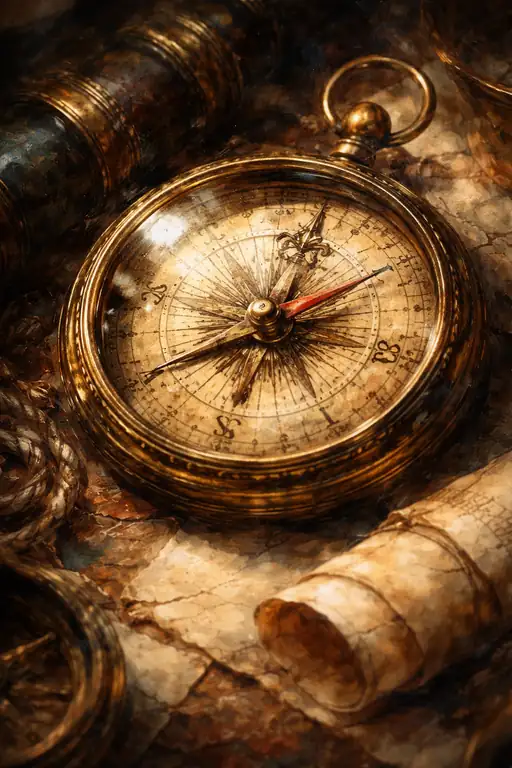 The Compass that Knows My Heart's Direction
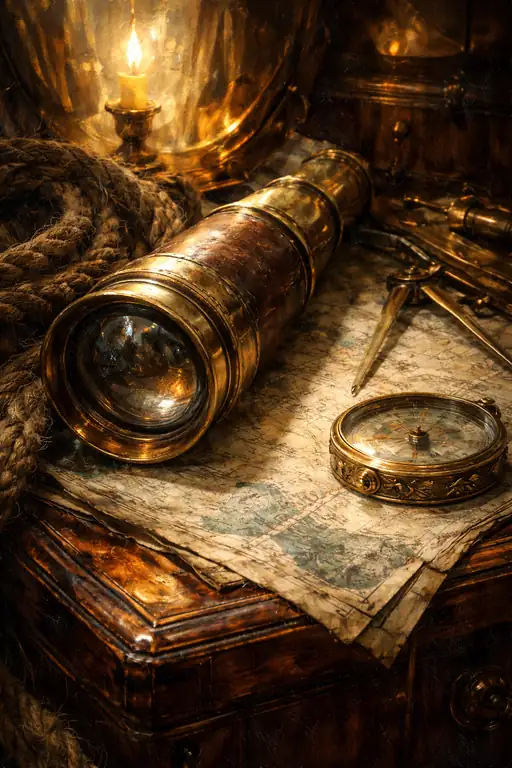 Whispers of the Uncharted Sea
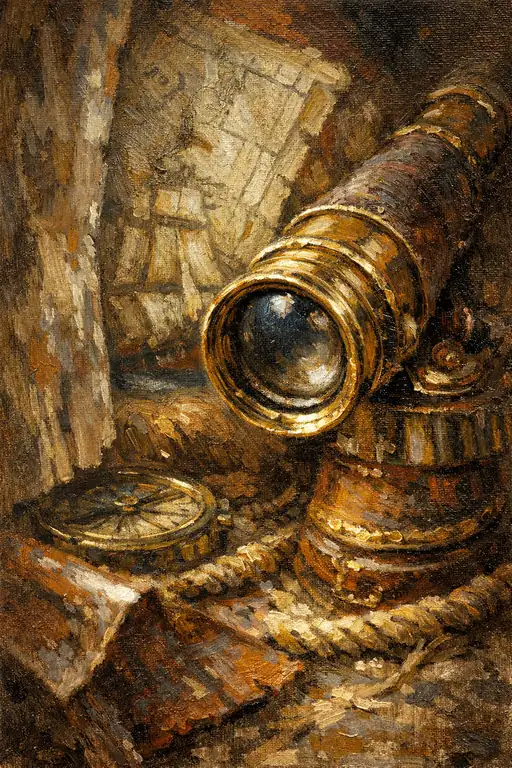 Voyage Through Amber Dust
 A Golden Globe of Forgotten Dreams
 Gaze into the Unknown
 Echoes of Eternity in a Solitary Flame
 Whispers of the Cosmos in Brass
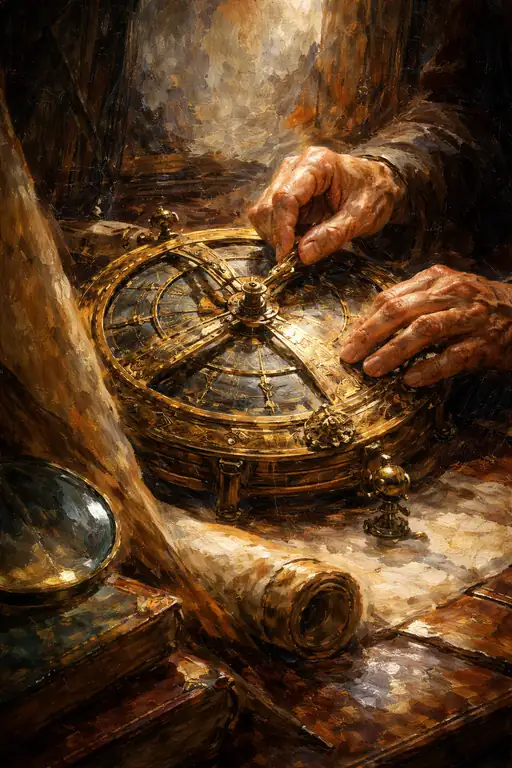 The Architect of Starlight
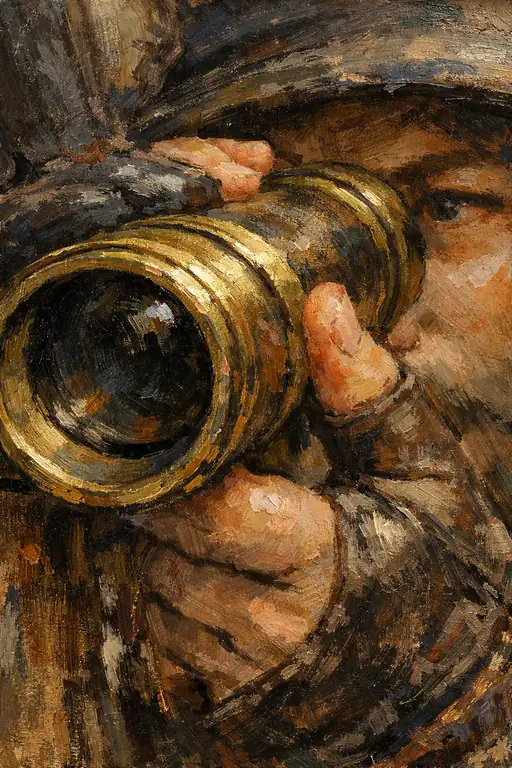 Reaching for the Horizon
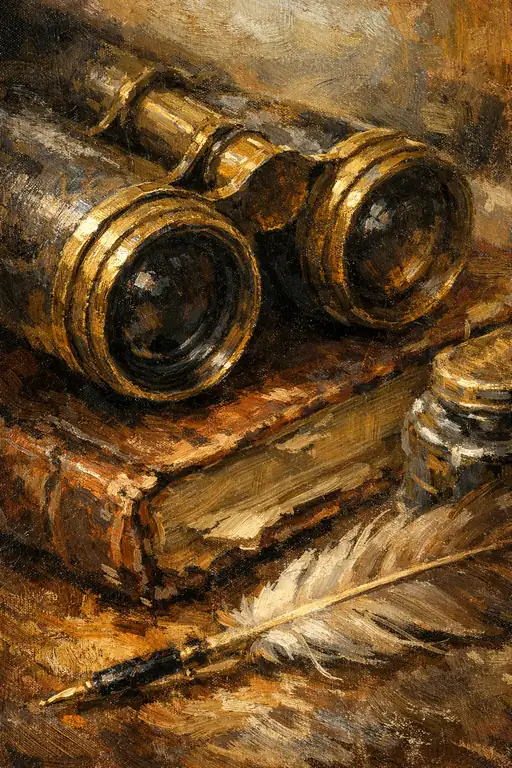 Echoes of Forgotten Journeys