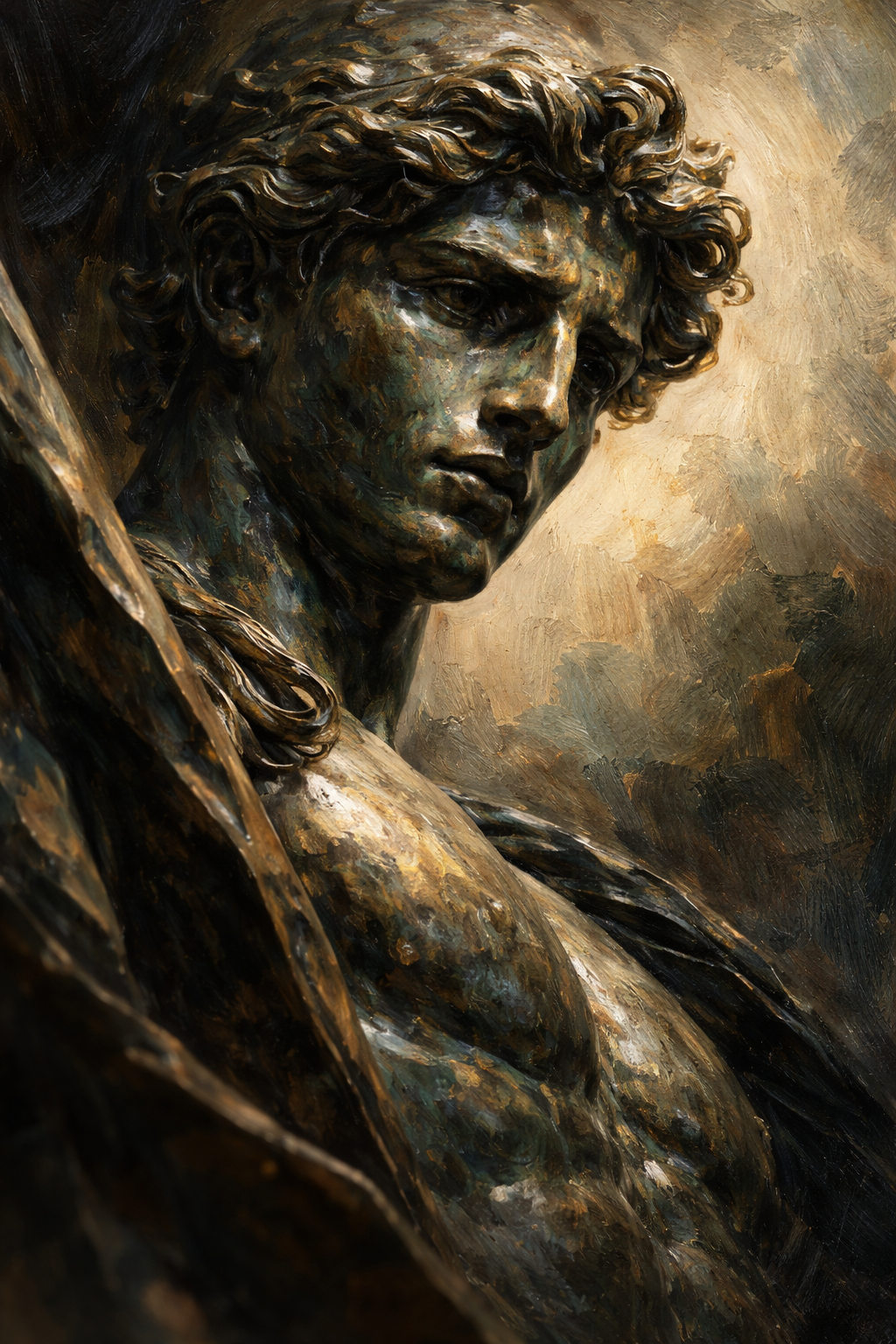
Silent Gaze of the Forgotten Gods
Critique
1. Introduction This oil painting presents a powerful and monumental study of a bronze or stone classical bust, capturing the idealized features of a young hero or deity. The work focuses on the intense, downward gaze and the intricate, swirling curls of the hair, creating a sense of heroic melancholy and timeless gravity. Through a heavy, expressive application of paint and a focus on dramatic, lateral light, the artist creates an atmosphere of spiritual weight and historical prestige. The composition is tight and dynamic, using the diagonal tilt of the head and the powerful form of the chest to anchor a dense arrangement of textures that immediately engages the viewer in a contemplation of heroic virtue. 2. Description The primary subject is the head and upper torso of a classical male figure, rendered with a patinated, metallic finish that suggests aged bronze or weathered stone. The figure has high cheekbones, a strong jawline, and deeply recessed eyes, with a crown of thick, curly hair. He is draped in what appears to be a heavy, folded garment or a fragment of architectural ruin. Strong, warm light from the upper right creates intense highlights on the forehead, nose, and chest, casting deep shadows that emphasize the figure’s three-dimensional form and the rough, tactile surface of the material. The background is dark and impressionistic, suggesting an ancient interior or an out-of-focus ruin. 3. Analysis The artist utilizes a heavy impasto technique, particularly in the rendering of the hair and the textures of the garment, to simulate the physical three-dimensionality of a sculpture. A key feature is the sophisticated control of light and dark (chiaroscuro), which gives the figure a monumental and dramatic presence. The color palette is restricted to a range of earthy bronzes, deep umbers, and scorched siennas, punctuated by cooler, oxidized greens that suggest aged metal. Diagonal lines formed by the figure’s posture and the folds of the drapery provide a structural framework that guides the viewer's eye through the complex layers of form and texture. 4. Interpretation and Evaluation This work can be interpreted as a meditation on the enduring power of classical ideals and the tragic nature of beauty and strength over time. The figure’s somber expression suggests themes of duty, sacrifice, and the quiet dignity of a fallen or forgotten hero. Technical execution is exceptional, particularly in the artist's ability to render the specific weight and patinated texture of the bronze through expressive, almost sculptural brushwork. The painting successfully evokes a sense of solemnity and profound respect for the past, inviting the viewer to appreciate the aesthetic value found in the enduring fragments of antiquity. 5. Conclusion The initial impression of a radiant and monumental presence eventually gives way to a deeper appreciation for the subtle layers of light and fine material detail. The masterful rendering of textures and the dramatic tonal balance create a deeply immersive and reflective visual experience. Ultimately, the painting stands as a powerful testament to the beauty of classical sculpture and the enduring allure of the human form as a symbol of our highest aspirations and historical memory.
Same Subcategory
 Silent Dialogue with the Ideal
Similar Artworks
 In the Embrace of Time and Tendrils
 Where Glory Rests in Gold
 Echoes of the Eternal Theater
 Whispers of the Golden Sanctuary
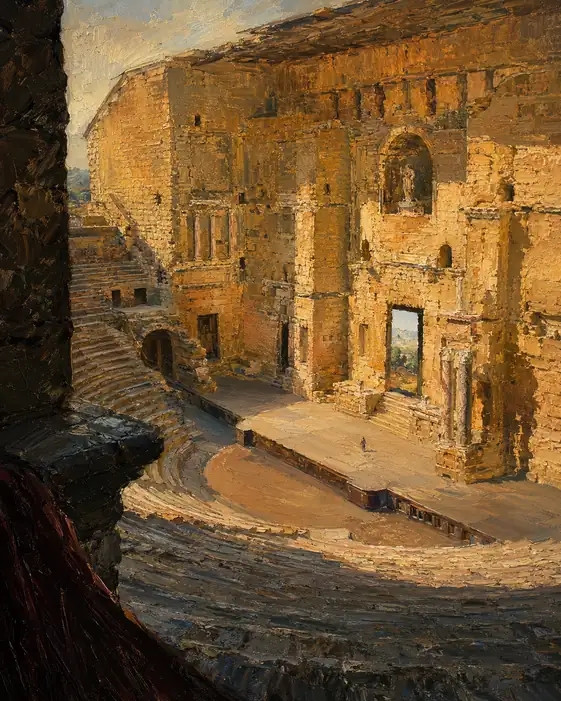 Solitude on the Golden Stage
 Eternal Glory in the Golden Dusk
 The Sea Knows the Hero's Name
 Peony and Crescent Moon Pendant
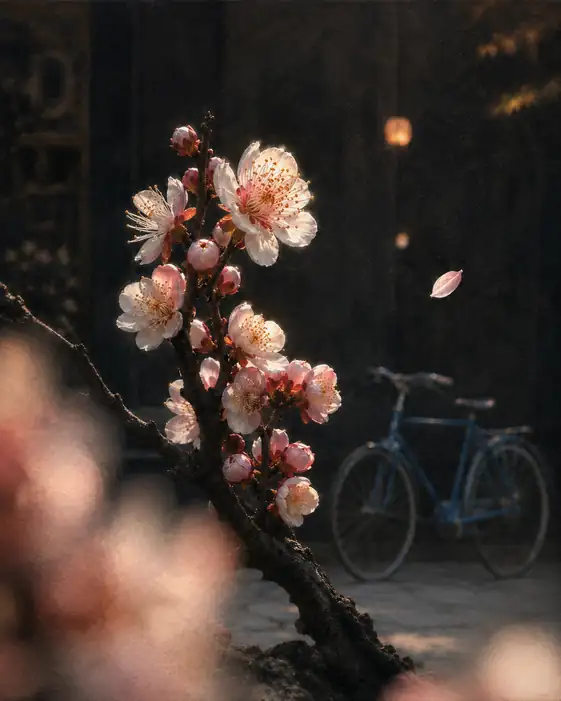 Drifting Petals and Blue Bicycle
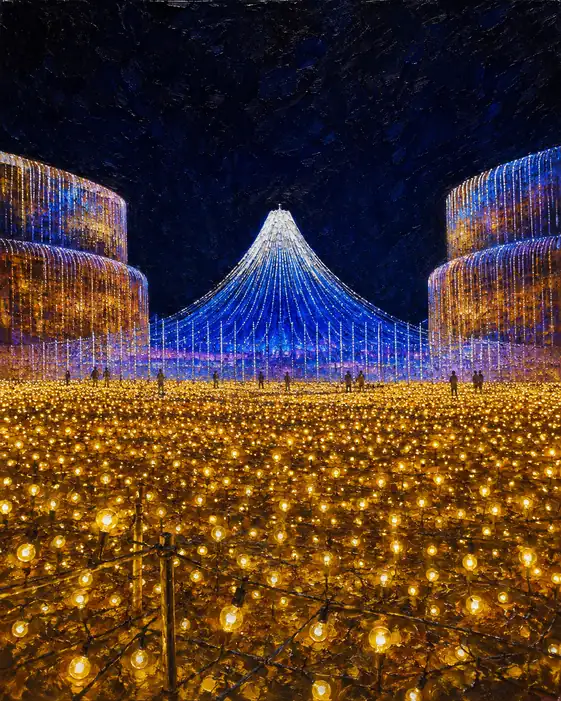 Golden Field Before the Sacred Beacon