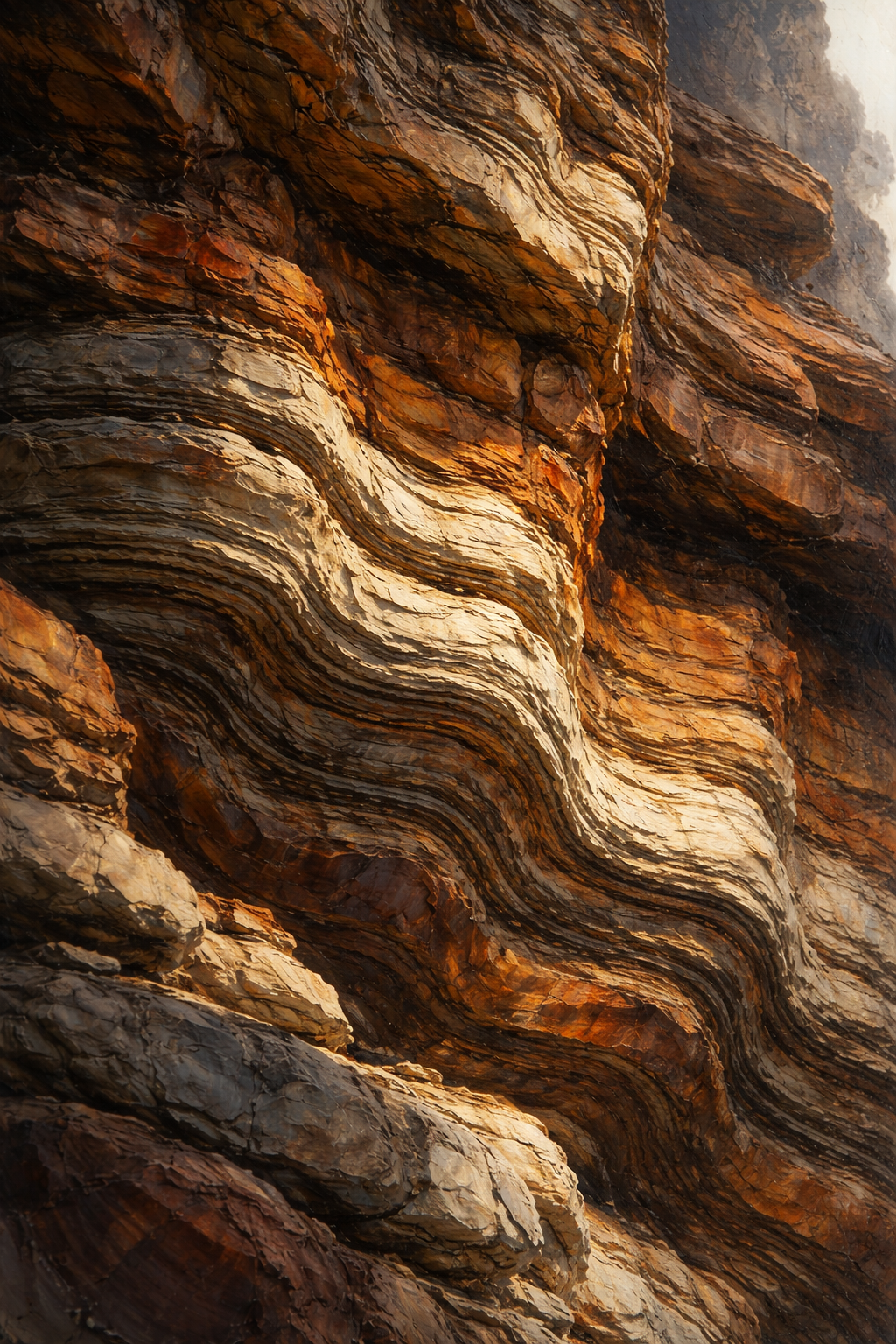
Rhythms of the Ancient Stone
Critique
1. Introduction This painting is a close-up, abstract-leaning study of a rugged rock face. The artist focuses exclusively on the undulating layers and intricate textures of sedimentary stone, creating a rhythmic and organic pattern across the canvas. By omitting a horizon or traditional landscape elements, the work invites the viewer to appreciate the inherent beauty of geological formations and the interplay of natural light on raw, unadorned surfaces. 2. Description The entire canvas is filled with wavy, horizontal strata in a diverse range of earthy tones. The colors shift from deep browns and burnt oranges to pale creams and cool grays. The lighting appears to originate from the side, casting deep shadows into crevices and highlighting the sharp, jagged edges of the stone. Each layer possesses a unique texture; some appear smooth and weathered by time, while others remain fractured and sharp. 3. Analysis The composition is defined by the serpentine lines of the rock strata, which impart a dynamic sense of motion to a static subject. The use of high-contrast light and shadow is central to the work, emphasizing the three-dimensional quality of the cliff’s surface. The brushwork is both deliberate and expressive, successfully capturing individual cracks as well as the broader geological flow. This creates a powerful sense of atmospheric unity. 4. Interpretation and Evaluation The work can be interpreted as a meditation on the passage of time and the immense forces of nature. These layers represent eons of history, compressed and sculpted by pressure and erosion. The artist demonstrates considerable technical skill in rendering the tactile qualities of the stone, making the hard surface feel almost fluid and alive. It is a compelling exploration of form that elevates a common natural feature into a subject of interest. 5. Conclusion In conclusion, the painting is a striking and immersive investigation of natural form. What initially appears simple reveals a complex world of light and texture upon closer inspection. By focusing solely on the rock face, the artist transforms a standard geological artifact into a profound artistic subject, resulting in a powerful and contemplative work that resonates with the raw beauty of the earth.
Same Subcategory
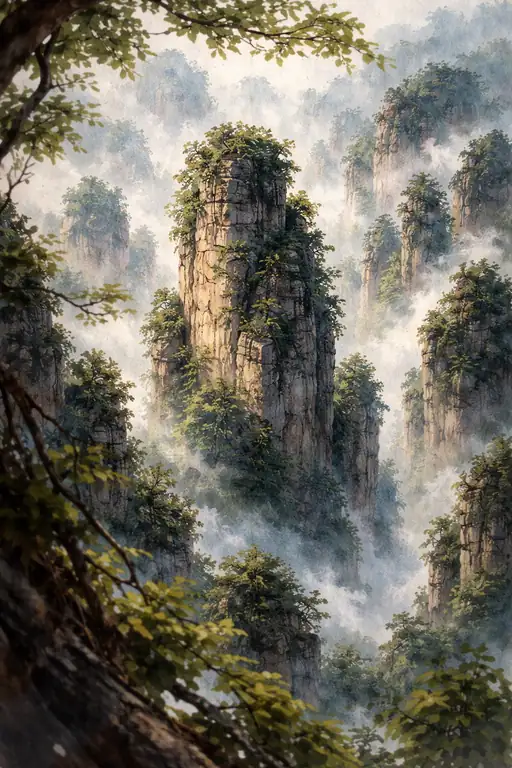 Ascension of the Stone Giants
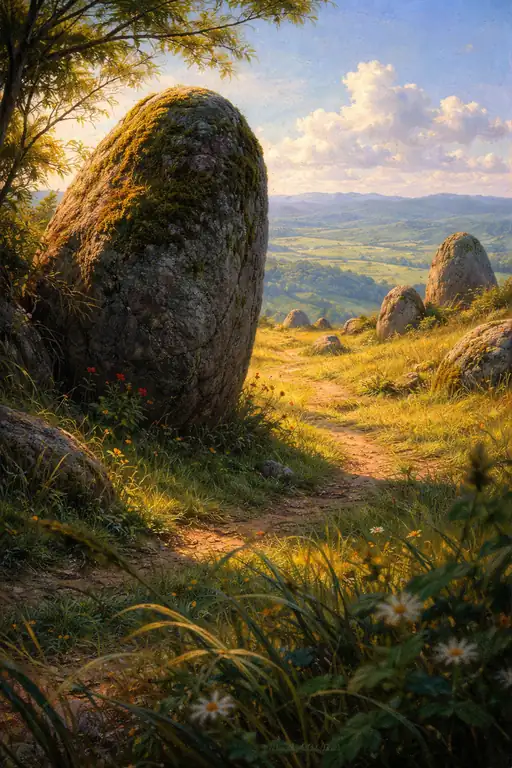 Golden Path of the Sleeping Giants
Similar Artworks
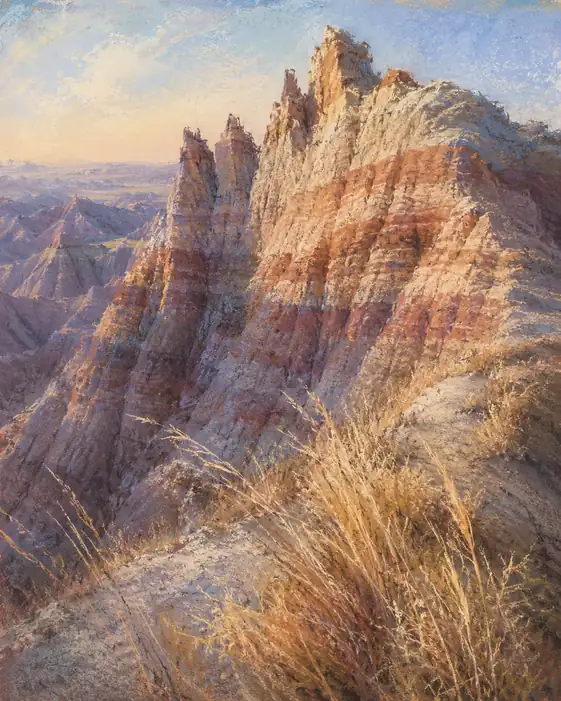 Echo of the Layered Earth
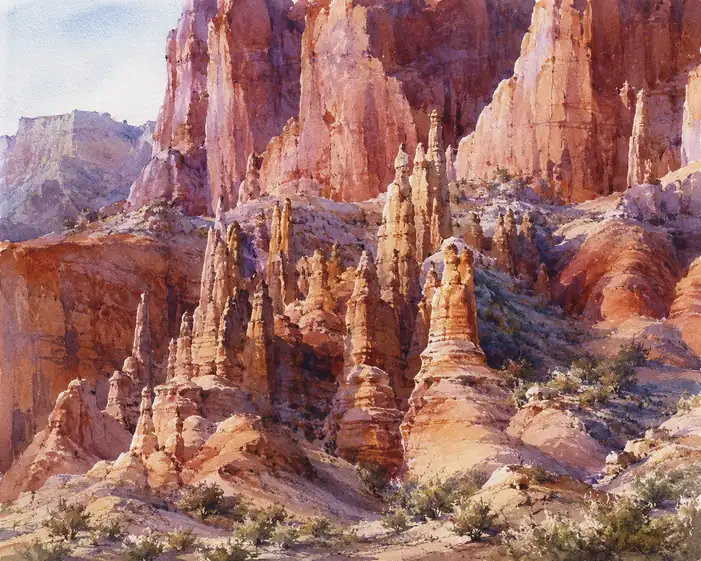 Spires of the Crimson Valley
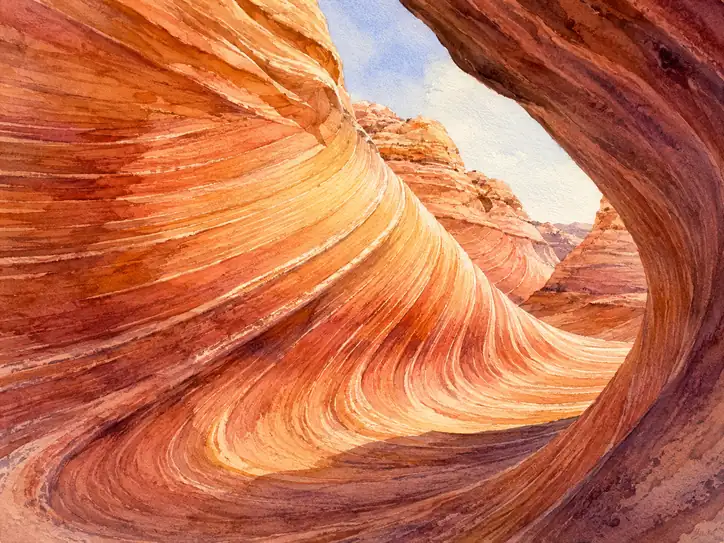 Passage of the Crimson Wave
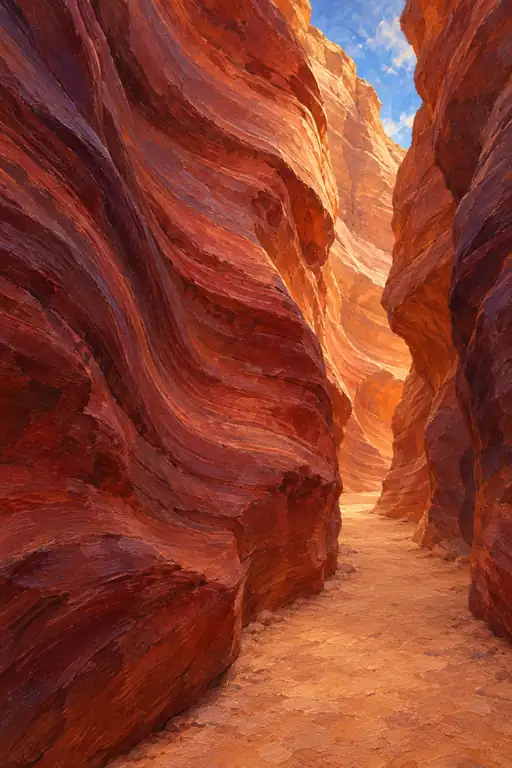 Hymn of the Sun within Crimson Waves of Stone
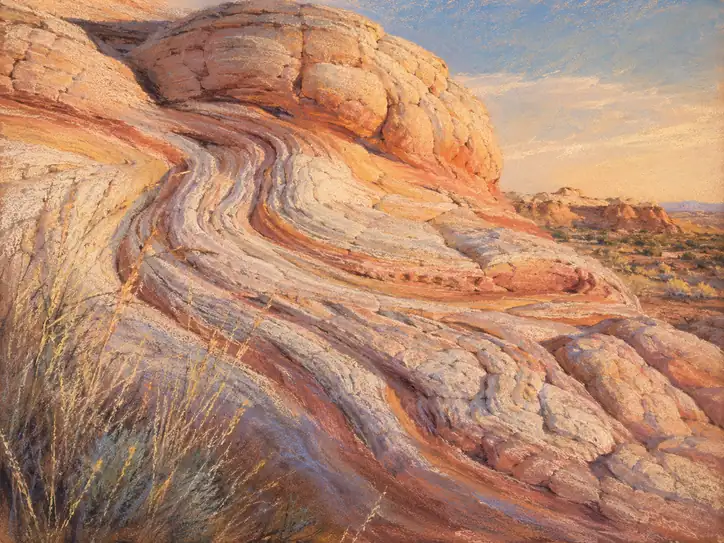 Echoes of the Sandstone Ocean
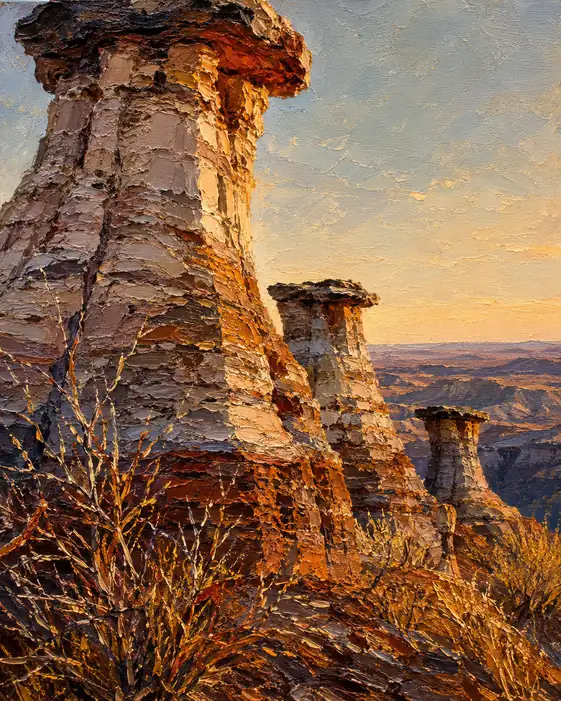 Monoliths of the Deep Time
 Whispers of the Golden Ravine
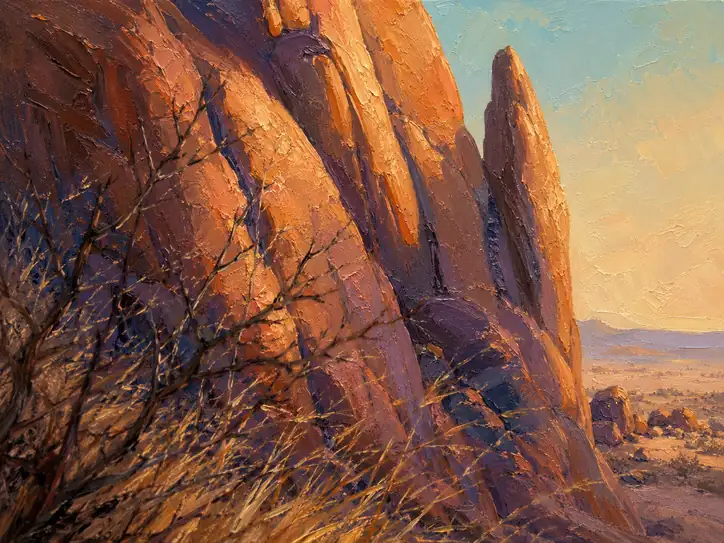 Monolith of the Crimson Waste
 The Solitary Sentinel of the Golden Gorge
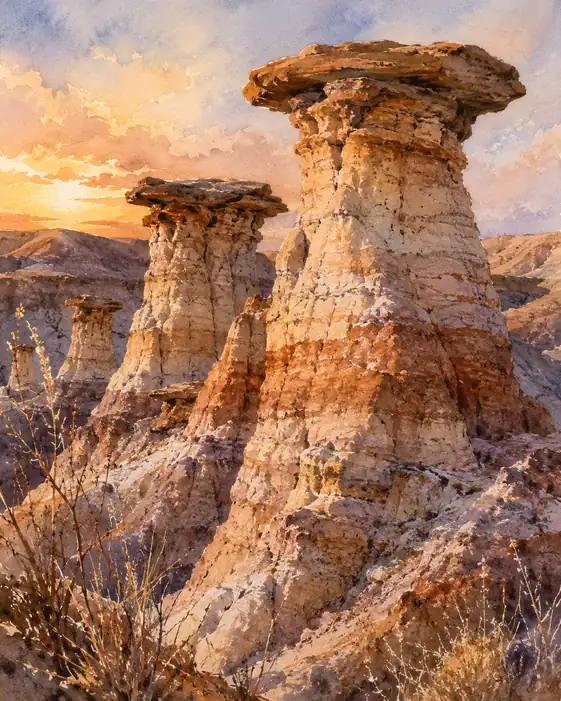 The Silent Spires of Time