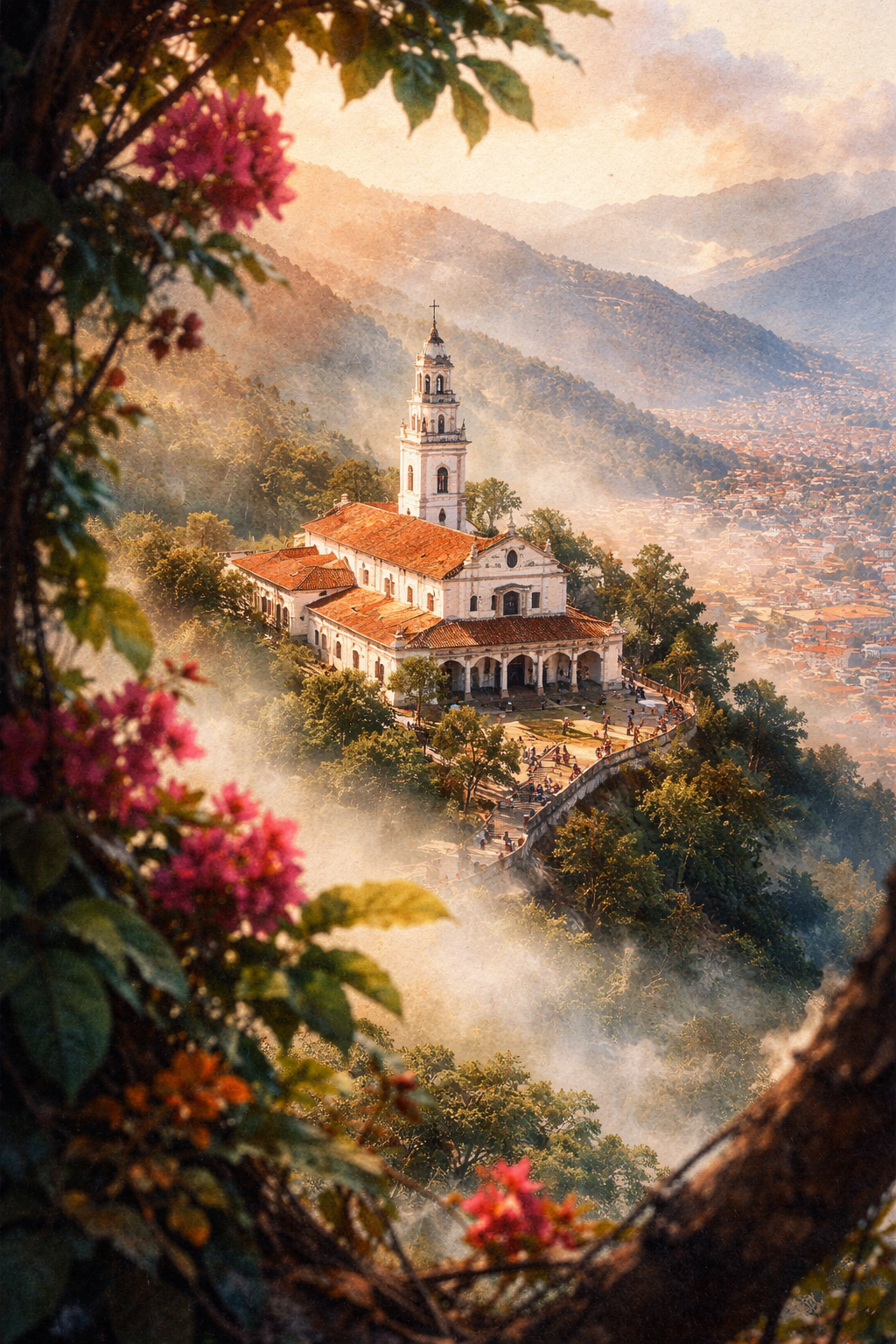
Sacred Elevation
Critique
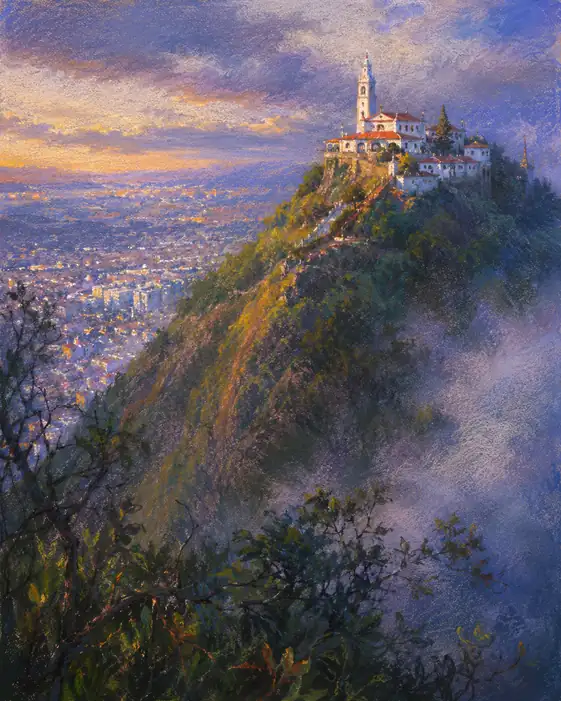
1. Introduction This painting depicts a white sanctuary on a mist-covered mountainside, overlooking a sprawling city. Framed by pink flowers, the work captures the church glowing under a warm sun. The scene juxtaposes sacred solitude with the scale of civilization. Overall, the piece evokes tranquility, blending architectural elegance with atmospheric natural beauty. 2. Description The focus is a symmetrical church with terracotta roofs and a bell tower. Tiny figures scatter along a walkway leading to the entrance. White mist drifts through evergreen trees, obscuring steep slopes. In the distance, a vast expanse of buildings appears as a hazy grid of warm tones stretching across the valley floor. 3. Analysis A framing technique uses blurred foreground flora to draw the eye toward the sanctuary. The light is exceptional, with golden highlights emphasizing vertical forms. Layered glazes render the drifting mist, contributing to a high-altitude atmosphere. This color hierarchy—from vivid magenta to muted city tones—generates impressive spatial depth and a sense of vastness. 4. Interpretation and Evaluation The artwork presents the sanctuary as a spiritual beacon observing urban life from above. Mist acts as a visual boundary between the mundane world and this elevated space. Technical skill is evident in the balance between structured architecture and organic landscape. This composition transforms a viewpoint into a profound meditation on the intersection of faith, nature, and society. 5. Conclusion While brilliant flowers attract notice, the gaze eventually rests on the sanctuary’s isolation amidst urban sprawl. One feels a sense of refuge from the world below. Consistent stylistic choices reflect a mature vision celebrating cultural heritage and light. Ultimately, the painting leaves a lasting impression of serenity, inviting the viewer to reflect on the beauty of existence.
Same Subcategory
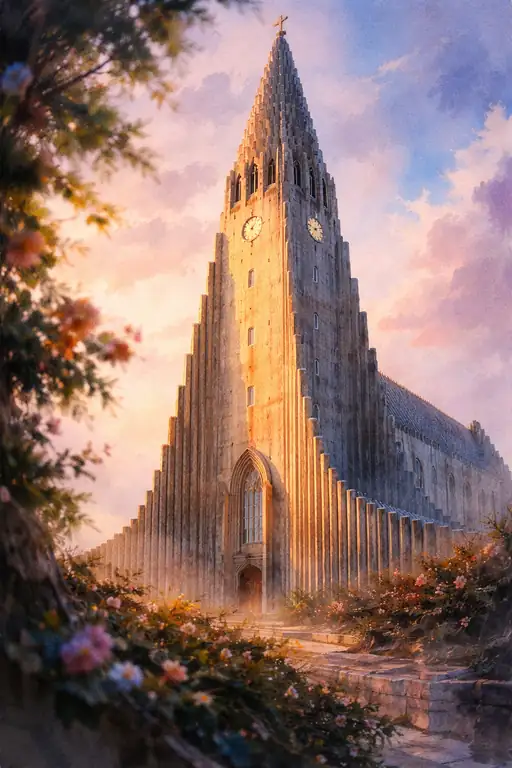 Ascending the Dawn's Embrace
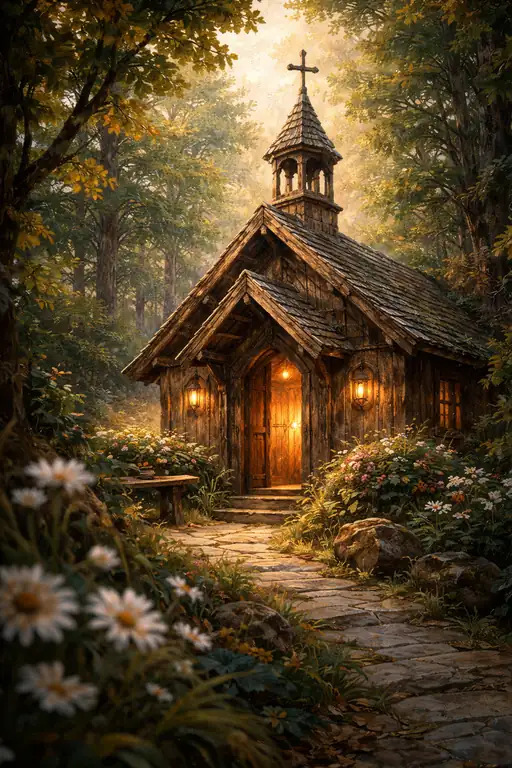 Dusk’s Golden Promise Within the Forest Sanctuary
Similar Artworks
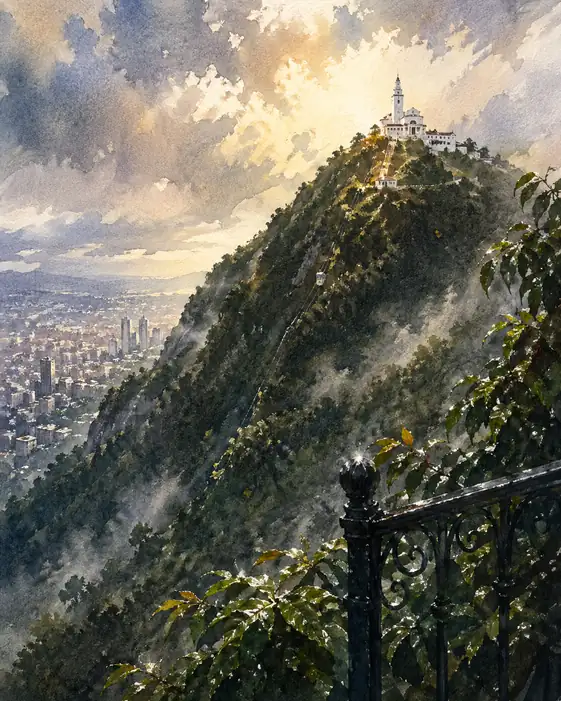 Sanctuary Above the Mist
 Sanctuary Above the Whispering Mist
 A Solitary Pause
 Enduring Shadows: The Spire and the Summit
 Footsteps of Time: The Sanctuaries' Slumber
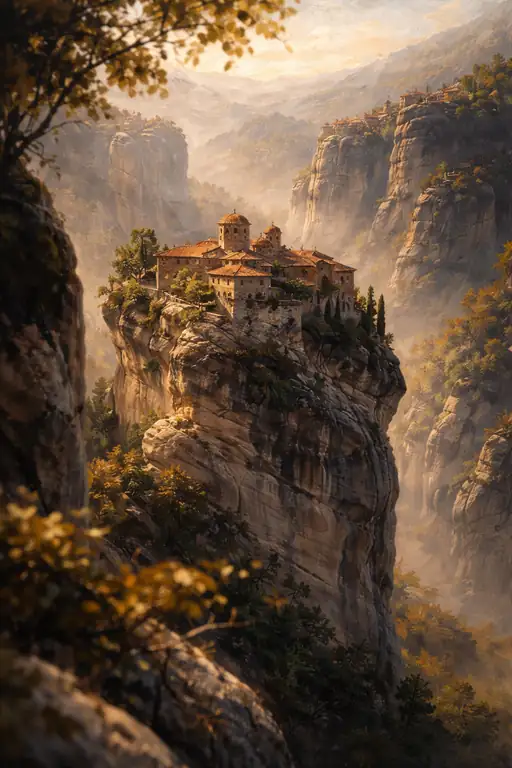 Sanctuary Above the Clouds
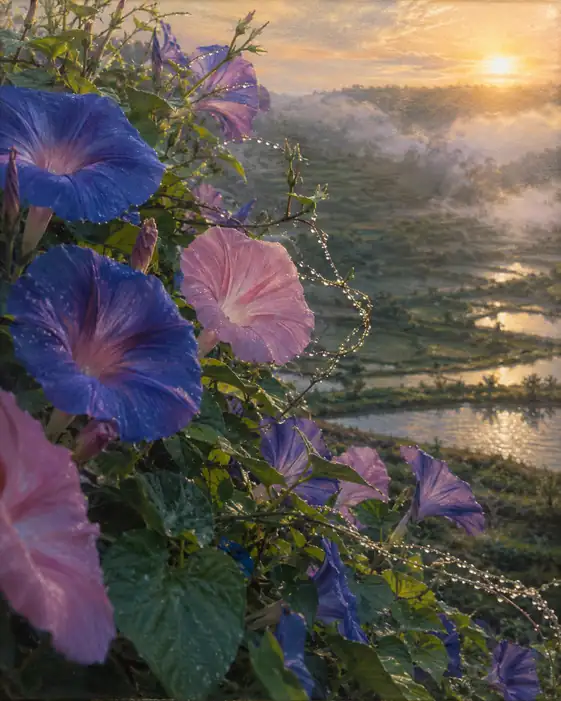 Morning Dew across the Terraced Valley
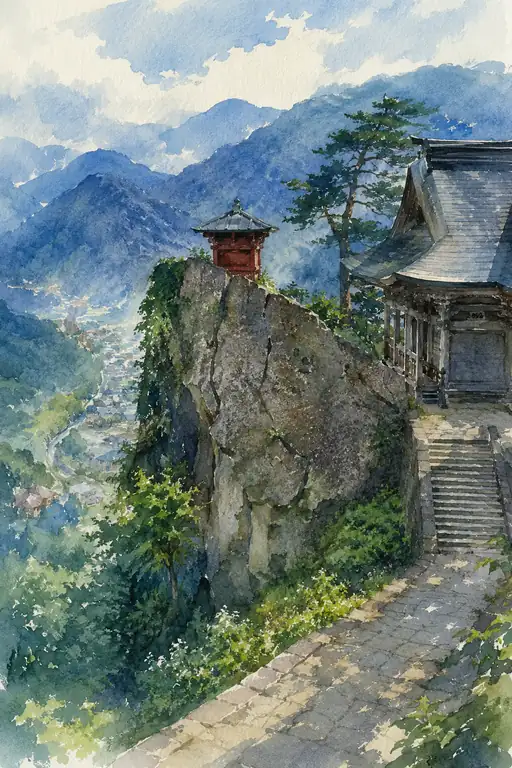 At the Edge Where Prayer Dwells
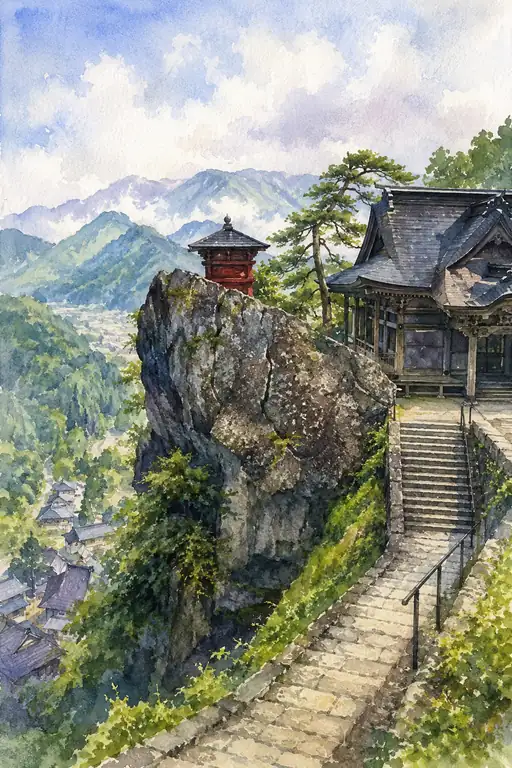 The Mountain Leaves No Easy Prayer
 Every Roof Is Another Prayer